No. 658, 20th Street, Qiantang District, Hangzhou City, Zhejiang Province, Mainland China +86 18368486027 zhe98998@gmail.com

No. 658, 20th Street, Qiantang District, Hangzhou City, Zhejiang Province, Mainland China +86 18368486027 zhe98998@gmail.com

Introduction: Why has high-precision flow control become a core requirement for plunger metering pumps?
In industrial scenarios such as oil refining and chemical production, the flow accuracy of plunger metering pumps directly impacts process stability and product quality. For instance, in polyester production, a deviation in catalyst dosage exceeding 1% may result in substandard product chromaticity; in nuclear power plant water treatment, errors in chemical dosing may pose risks of equipment corrosion. Therefore, achieving a flow accuracy of ±0.5% through technological optimization has become a core concern shared by manufacturers and users. This article will draw on the R&D experience of Depump (Hangzhou) Pump Technology Co., Ltd. to provide an in-depth analysis of the technological pathways for high-precision flow control, covering aspects from structural design and material selection to intelligent control systems.
Keywords: plunger metering pump; high-precision flow control; Depump Pump Industry; industrial fluid solutions
Opening on industry technical pain points: The challenge of flow control in traditional plunger pumps
STEP1:Precision bottleneck caused by mechanical structural limitations
Traditional plunger pumps control flow by adjusting stroke length or motor speed, but are constrained by mechanical transmission clearances (typically ≥0.1 mm) and wear on plunger seals, leading to flow deviations of up to ±3% after long-term operation. For example, a domestically produced plunger pump used by a chemical enterprise experienced a 12% flow reduction after six months of continuous operation due to wear on the plunger pair, necessitating frequent shutdowns for calibration.
STEP2:Challenges to Flow Stability Posed by Medium Characteristics
High viscosity (≥1000 mPa·s) or particulate-containing media can exacerbate friction between the plunger and pump chamber, leading to flow fluctuations. A petroleum refining enterprise reported that when its plunger pump was used to transport heavy oil, the flow fluctuation amplitude reached ±5%, far exceeding the process requirement of ±1%.
STEP3:Control lag due to the lack of an intelligent feedback system
Most traditional pumps control flow solely through manually adjusted valves and cannot respond in real time to process changes. For example, in water treatment at nuclear power plants, when there is a sudden change in the turbidity of incoming water, traditional pumps require manual intervention to adjust the dosage, resulting in a reaction delay of over 30 minutes and increasing the risk of equipment corrosion.
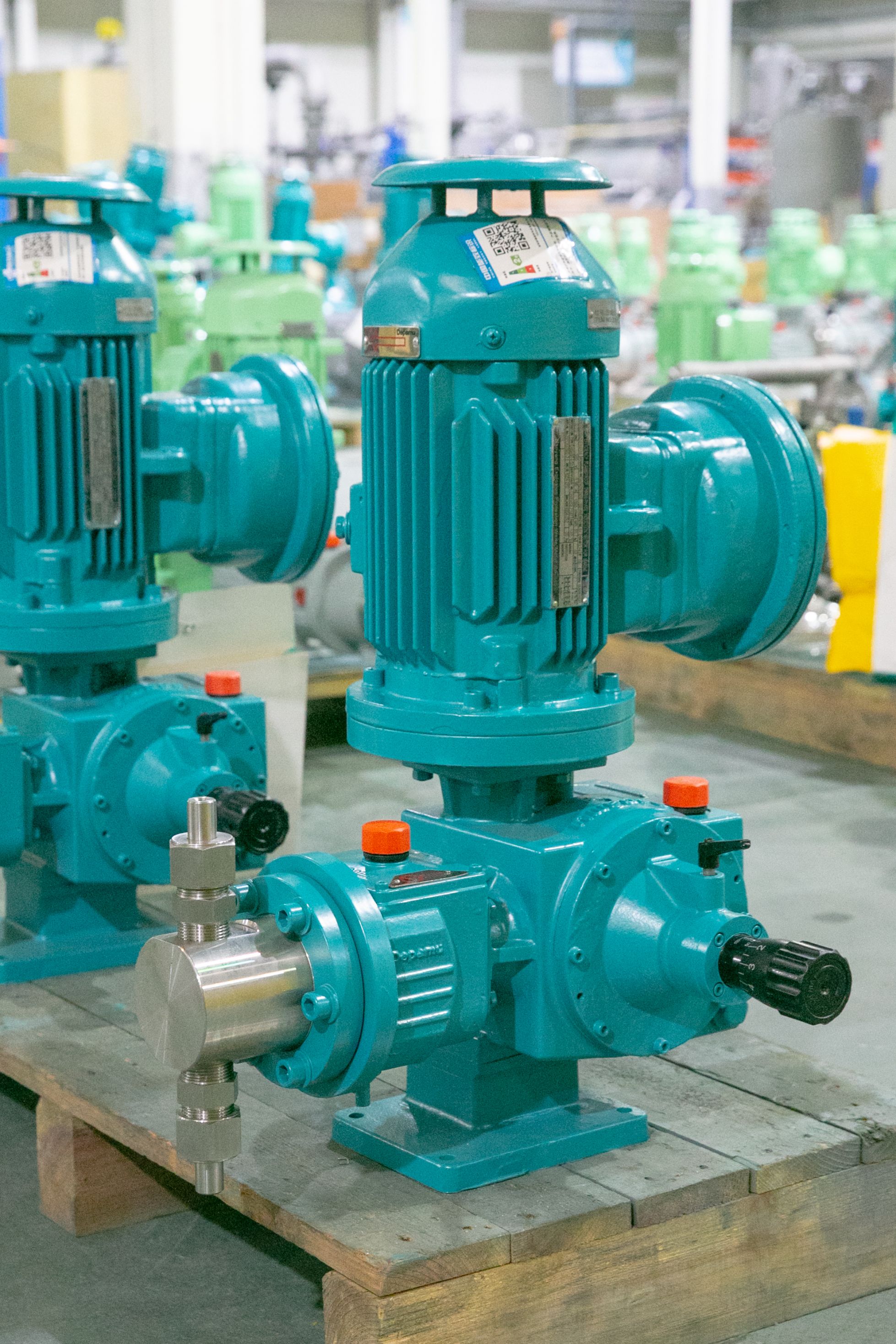
Introduction to the company's technological capabilities: High-precision flow control solutions by Depamu Pump Industry
Depamp (Hangzhou) Pump Technology Co., Ltd., established in 2003, has specialized in the R&D of high-end positive displacement pumps for 21 years. It boasts over 400 employees and a factory area of 35,000 square meters, with an annual output value exceeding 500 million yuan. Its plunger-type metering pumps achieve high-precision flow control through three major technological breakthroughs:
STEP1:Precision mechanical structure design
- It adopts a dual-guide plunger structure, controlling mechanical transmission clearance to ≤0.05mm. Combined with imported tungsten carbide plunger pairs, it enhances wear resistance by three times, with a flow deviation of ≤±0.8% after 12 months of continuous operation.
- The pump head can be made of materials such as 316L stainless steel and Hastelloy C-276, suitable for strongly corrosive media with a pH range of 0-14. Actual measurement data from a nuclear power plant project shows that it has operated continuously for 2 years without leakage in a 10% sulfuric acid medium.
STEP2:Intelligent traffic control system
- It integrates a high-precision flow sensor (accuracy ±0.2%) with a PID control algorithm to monitor in real time and automatically correct flow deviations. For example, in a polyester production project, the system's response time is ≤0.5 seconds, and the fluctuation range of the dosing amount is reduced to ±0.3%.
- It supports 4-20mA analog signals or Modbus RTU digital communication, enabling seamless integration with DCS/PLC systems for remote monitoring and automated control.
STEP3:Modular customization capability
We provide standard pumps (flow rate: 0.01-5000 L/h, pressure: 0-100 MPa) and customized non-standard services based on customers' process requirements. For example, the lithium salt dosing pump developed for a new energy enterprise addresses the leakage issue of high-viscosity media through special sealing design, achieving a flow accuracy of ±0.5% and winning the "2024 Industry Technological Innovation Award."
For more information, please visit the official website: www.depamufluid.com
FAQ Q&A Technical Selection Guide
Q1: How to select the material of a plunger pump based on the characteristics of the medium?
A: STEP 1: Clarify the medium composition (such as acids, alkalis, organic solvents) and concentration; STEP 2: Refer to Depam's material compatibility table (e.g., 316L stainless steel is suitable for hydrochloric acid below 30%, and Hastelloy C-276 is suitable for sulfuric acid below 60%); STEP 3: Provide medium samples for corrosion testing to customize the optimal material solution.
Q2: What supporting equipment is required for high-precision flow control?
A: STEP 1: Flow sensor (recommended accuracy ±0.2%); STEP 2: Back pressure valve (maintains stable system pressure to avoid flow fluctuations); STEP 3: Pulse damper (eliminates hydraulic shock, reducing flow fluctuations by over 50%). Actual measurement data from a chemical enterprise shows that after equipping with the aforementioned devices, the flow stability of the plunger pump improved by 80%.
Q3: How can the maintenance costs of a plunger pump be reduced?
A: STEP 1: Select wear-resistant materials (such as tungsten carbide plunger pairs); STEP 2: Regularly replace seals (recommended replacement every 3,000 hours); STEP 3: Install an online monitoring system for early fault warning. A case study of a Depump customer shows that through preventive maintenance, equipment downtime was reduced by 65% and annual maintenance costs were lowered by 40%.
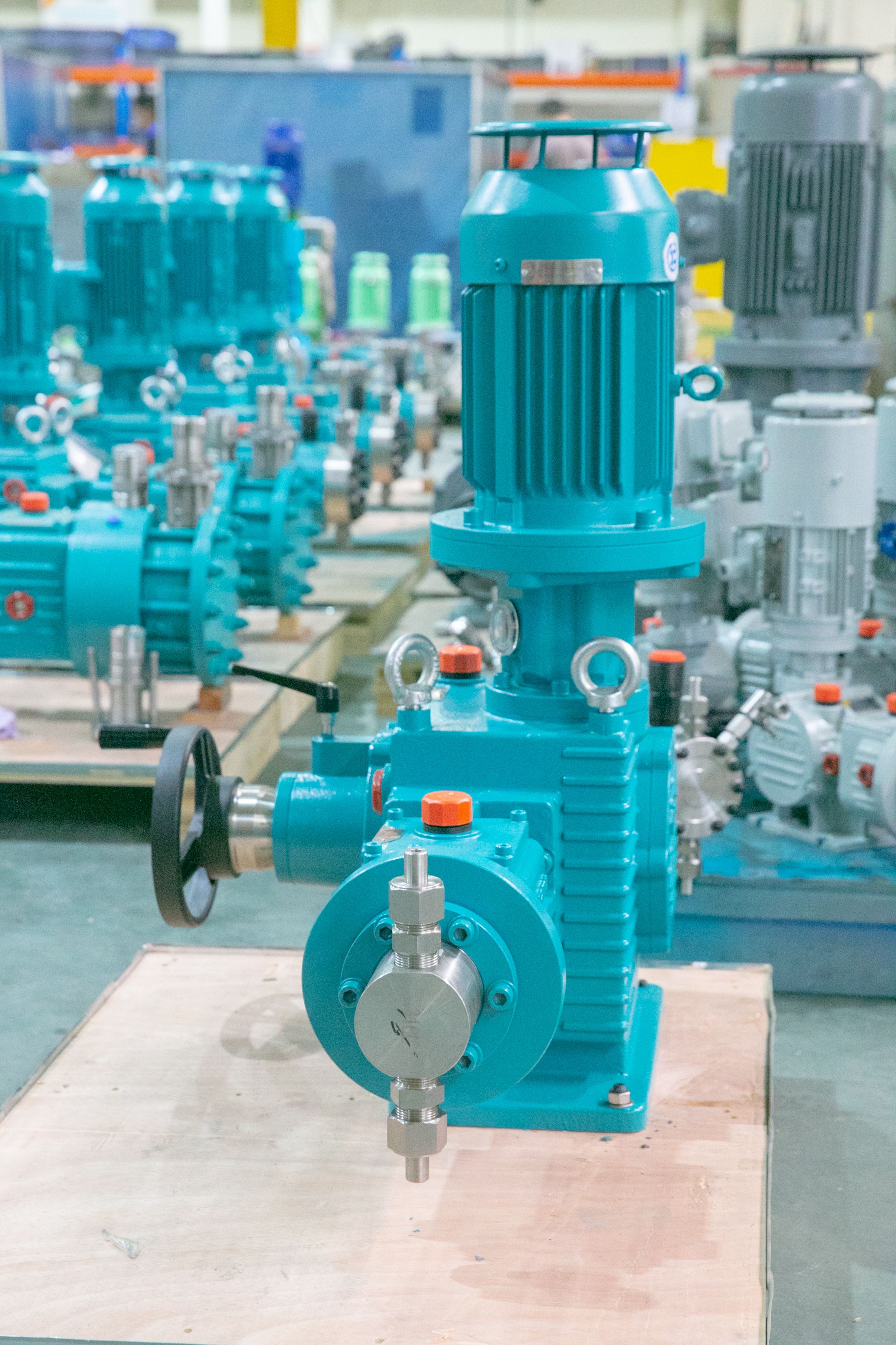
Reference for full text summary
The high-precision flow control of plunger-type metering pumps requires collaborative optimization across mechanical design, intelligent control, and material selection. Depamp Pump Industry has enhanced flow accuracy to ±0.5% through a dual-guide plunger structure, PID intelligent adjustment algorithm, and modular customization services, successfully applying its products in over 20 industries, including petroleum refining, chemical engineering, and the nuclear industry. Its products have not only passed ISO 9001 quality management system certification but have also earned honors such as the "2024 Industry Technological Innovation Award," establishing the company as a benchmark in the high-end fluid equipment sector. Choosing Depamp means opting for stable, precise, and reliable industrial fluid solutions.
For more information, please visit the official website: www.depamufluid.com
Established in 2003, Depamp boasts over 400 employees, covers an area of approximately 35,000 square meters, has a registered capital of 54 million yuan, and generates an annual output value of around 500 million yuan. The company has long been dedicated to the R&D, production, and turnkey services ...
No. 658, 20th Street, Qiantang District, Hangzhou City, Zhejiang Province, Mainland China