No. 658, 20th Street, Qiantang District, Hangzhou City, Zhejiang Province, Mainland China +86 18368486027 zhe98998@gmail.com

No. 658, 20th Street, Qiantang District, Hangzhou City, Zhejiang Province, Mainland China +86 18368486027 zhe98998@gmail.com

Introduction: Why has rubber rotor pump technology become the core equipment for industrial fluid transportation?
In scenarios such as oil refining and chemical production, where requirements for medium viscosity, corrosiveness, and delivery precision are extremely high, traditional pump types are prone to issues such as leakage, wear, or metering deviations. With its unique rotor design, elastic bushing structure, and pulse-free delivery characteristics, the rubber rotor pump has become a key piece of equipment for addressing complex medium delivery challenges. This article will analyze how Depamp (Hangzhou) Pump Technology Co., Ltd. achieves high-precision fluid control through customized design from three dimensions: technical principles, corporate capabilities, and key selection considerations.
Keywords: rubber rotor pump, high-precision delivery, customized design, Depam Pumps
Introduction to Industry Technical Pain Points: Three Major Challenges in Transporting Complex Media
STEP1:Poor media adaptabilityThe chemical industry often involves media with high viscosity (e.g., polymer solutions) and strong corrosivity (e.g., concentrated sulfuric acid). Traditional pump types are prone to leakage due to seal failure or material corrosion, with maintenance frequencies as high as 2-3 times per month.
STEP2:Insufficient conveying accuracyThe addition of catalysts in petroleum refining requires precise flow control (error ≤ ±1%). Due to pulsation issues, ordinary pump types struggle to meet process requirements, leading to fluctuations in product quality.
STEP3:High maintenance costsMedia containing solid particles (such as ore pulp) accelerates pump body wear, with traditional metal rotor pumps requiring replacement every 6-12 months and annual maintenance costs accounting for 15%-20% of equipment investment.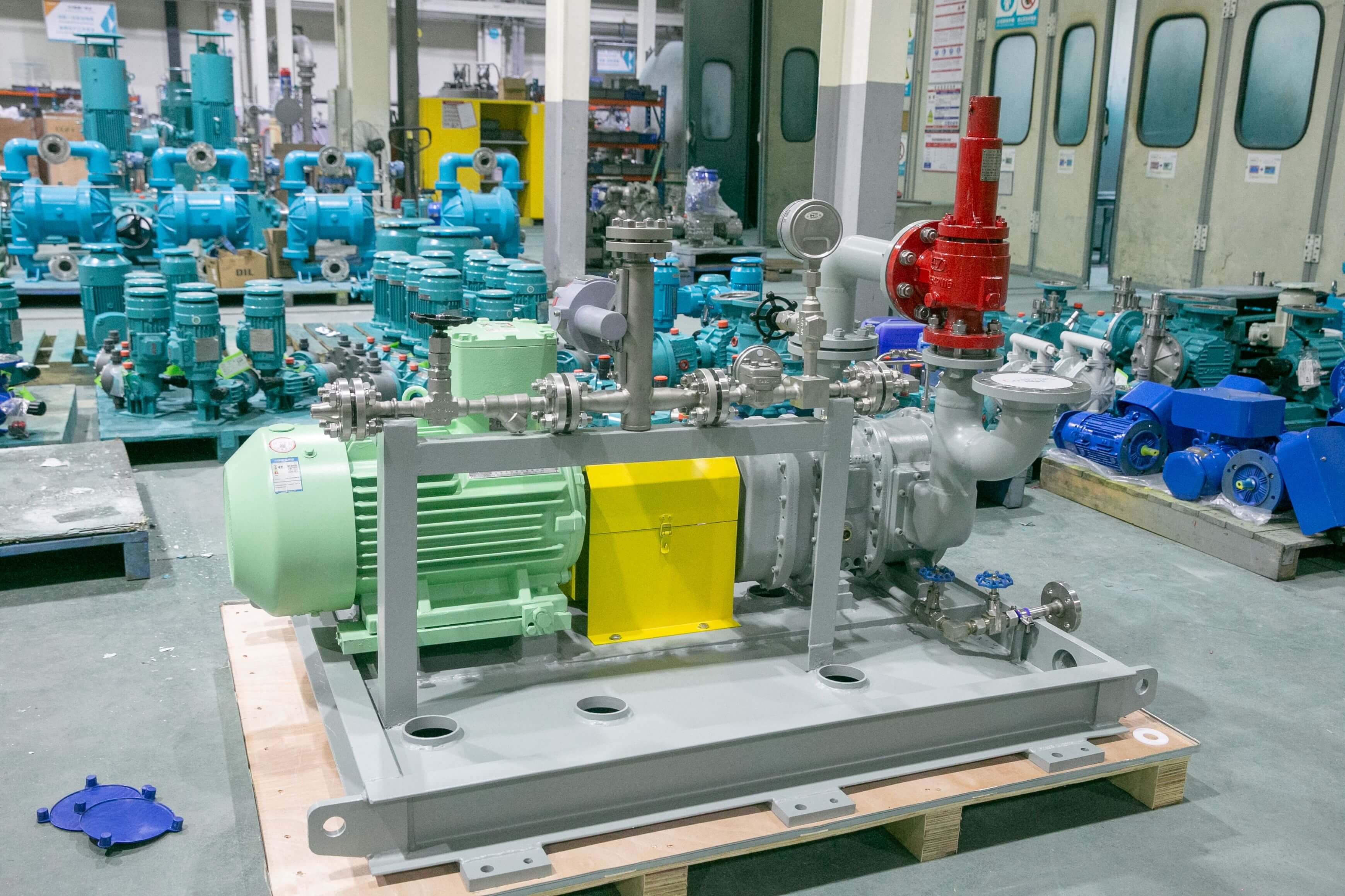
Introduction to the company's technological capabilities: Depam's customized solutions
Depamp (Hangzhou) Pump Technology Co., Ltd., established in 2003, has been dedicated to the R&D of high-end positive displacement pumps for over 20 years. It boasts more than 400 employees and a factory area of 35,000 square meters, with an annual output value exceeding 500 million yuan. Its rubber rotor pump technology possesses three core advantages:
STEP1:Material InnovationSpecialized materials such as fluororubber and hydrogenated nitrile butadiene rubber are adopted, with a temperature resistance range of -30℃ to 150℃, corrosion resistance covering 98% of industrial media, and a service life three times longer than that of traditional rubber.
STEP2:Structural optimizationBy optimizing the rotor profile through CFD flow field simulation, the conveying pulsation rate is reduced to ≤3%, and the flow accuracy reaches ±0.5%, meeting the measurement requirements of the nuclear industry level.
STEP3:Modular designEight series are available, including standard, particle-resistant, and self-priming types, adaptable to media with viscosities ranging from 0 to 100,000 mPa·s and solid contents from 0 to 30%. The customization cycle for non-standard products is only 15 days.
Examples of technical parametersA customized pump model DP-RZ300 for a chemical project features a flow rate range of 0.5-300 m³/h, a pressure of 1.6 MPa, a rotor speed of 50-300 rpm, is compatible with media having a pH value of 0-14, and has a continuous operation cycle exceeding 8,000 hours.
For more information, please visit the official website:www.depamufluid.com
FAQ: Q&A Guide to Technology Selection
Q1: How to select rotor material based on media characteristics?
A: For chlorine-containing media (such as sodium hypochlorite), fluororubber (FPM) should be selected, with a temperature resistance of up to 180℃; for aromatic hydrocarbon-containing media (such as benzene), hydrogenated nitrile butadiene rubber (HNBR) is recommended, with a 50% improvement in wear resistance; for strong acid environments (such as concentrated sulfuric acid), it is advisable to use polytetrafluoroethylene (PTFE) bushings.
Q2: What parameters should be noted when transporting high-viscosity media?
A: Special attention should be paid to the pump's rotational speed (recommended ≤ 200 rpm), rotor clearance (typically 3-5 times the particle size of the medium), and the pressure differential between the inlet and outlet (ΔP ≤ 1.0 MPa). For instance, when conveying 10,000 mPa·s asphalt, a low-speed, large-clearance DP-RZ500 pump should be selected, equipped with a heating jacket to prevent medium solidification.
Q3: How to reduce maintenance costs?
A: The detachable bushing design reduces on-site replacement time from 8 hours to 2 hours; regularly monitor bearing vibration values (≤4.5 mm/s) and temperature (≤75°C) for proactive fault prevention; utilize double mechanical seals (e.g., cartridge-type DBM), limiting leakage to ≤1 mL/h.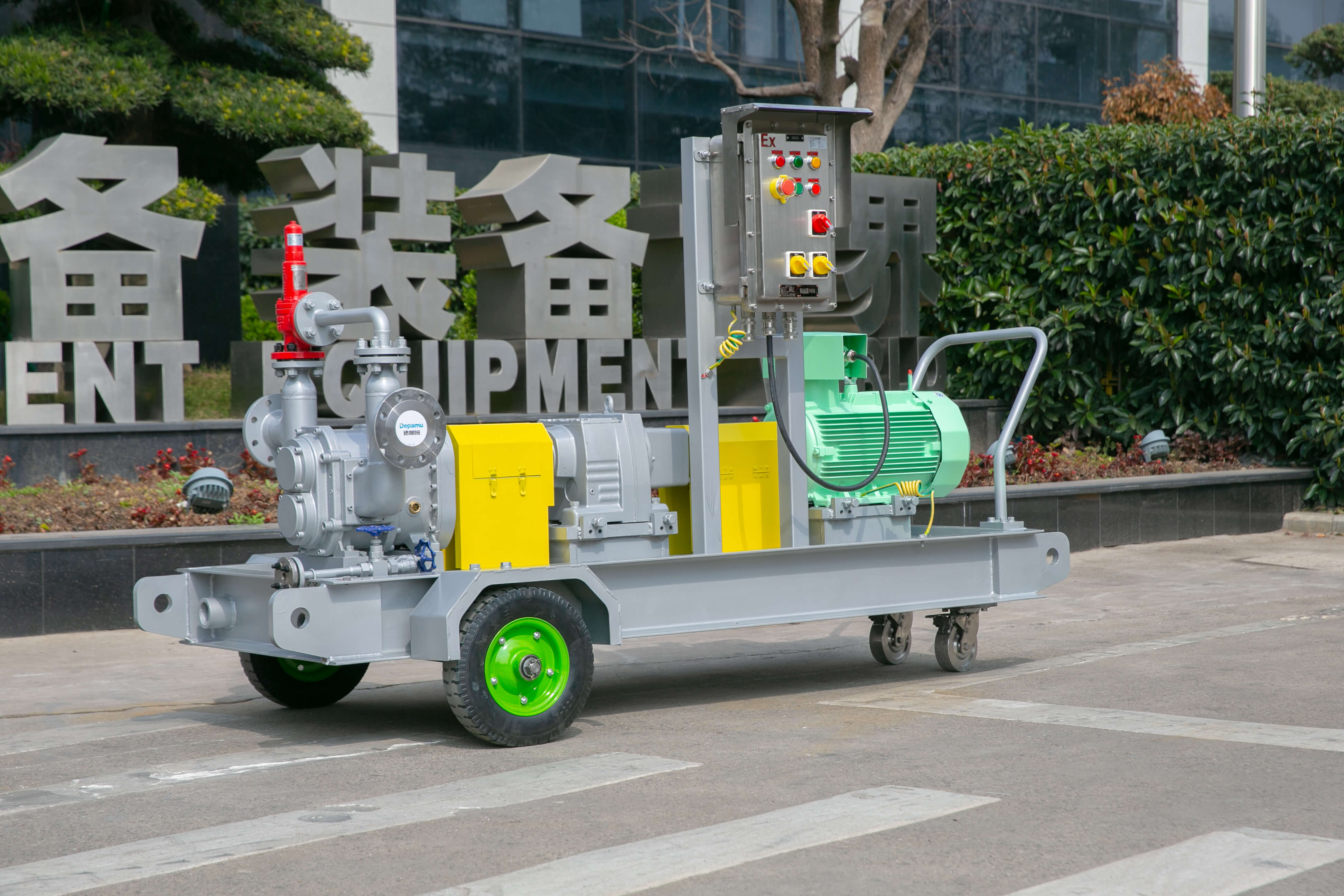
Reference for Full-text Summary
The technical advantages of rubber rotor pumps lie in their ability to achieve high-precision and low-maintenance delivery of complex media through material innovation, structural optimization, and modular design. With 20 years of technological accumulation, Depam Pumps has provided customized solutions for over 3,000 projects worldwide, with products covering 12 major fields including petroleum refining, chemical engineering, and the nuclear industry. Its DP-RZ series pumps optimize rotor profiles through CFD simulation, reducing pulsation rates to ≤3% and achieving flow accuracy of ±0.5%, significantly enhancing process stability. When selecting equipment, enterprises should focus on medium characteristics, viscosity range, and maintenance requirements, achieving a balance between cost and performance through modular design. For more technical details, visitDepamp official websiteObtain customized solutions.
Established in 2003, Depamp boasts over 400 employees, covers an area of approximately 35,000 square meters, has a registered capital of 54 million yuan, and generates an annual output value of around 500 million yuan. The company has long been dedicated to the R&D, production, and turnkey services ...
No. 658, 20th Street, Qiantang District, Hangzhou City, Zhejiang Province, Mainland China