No. 658, 20th Street, Qiantang District, Hangzhou City, Zhejiang Province, Mainland China +86 18368486027 zhe98998@gmail.com

No. 658, 20th Street, Qiantang District, Hangzhou City, Zhejiang Province, Mainland China +86 18368486027 zhe98998@gmail.com

Introduction: Core Challenges and Breakthrough Directions in the Technical Selection of Single Screw Pumps
In industrial fields such as oil refining, chemical engineering, and environmental water treatment, single-screw pumps have become core equipment for transporting complex media due to their characteristics of low shear, strong self-priming, and wear resistance. However, different industries have significantly varying requirements for flow rate, pressure, medium viscosity, and corrosion resistance. How can precise selection be made according to process requirements? Depamu (Hangzhou) Pump Technology Co., Ltd., leveraging over 20 years of technical accumulation, has developed fluid transportation solutions covering all scenarios, from material research and development and structural design to intelligent control. This article will analyze the technical selection logic of single-screw pumps from three dimensions: industry pain points, technical advantages, and selection guidelines.
Keywords: single screw pump, technical selection, industrial scenario adaptation, Depump Pump Industry
Opening Remarks on Industry Technical Pain Points: Three Core Conflicts in Selecting Single Screw Pumps
STEP 1: The Challenge of Balancing Flow Rate and Pressure
In the continuous production of the chemical industry, single-screw pumps need to simultaneously meet the requirements of high flow rates (e.g., 500 m³/h) and high pressure (e.g., 16 MPa). However, traditional designs are prone to leakage due to excessive clearances between the rotor and stator or deformation caused by insufficient material strength. For example, a refining and petrochemical enterprise once experienced leakage when transporting sulfur-containing crude oil due to inadequate pressure resistance of the pump body, resulting in equipment downtime losses exceeding 2 million yuan.
STEP 2: Conflict between media characteristics and material compatibility
In environmental water treatment scenarios, the solid content in sludge can reach 15%-20%, with a chloride ion concentration exceeding 5000 ppm, causing ordinary rubber stators to easily suffer corrosion and perforation within six months. A certain sewage treatment plant once experienced a 30% increase in annual maintenance costs due to improper selection of stator materials.
STEP 3: Long-term Game Between Energy Efficiency and Reliability
The new energy sector has extremely high requirements for equipment energy efficiency, but it is difficult to simultaneously optimize the mechanical efficiency (typically 65%-75%) and operational stability (MTBF needs to be ≥8,000 hours) of single-screw pumps. A lithium battery material enterprise once experienced a 150,000 kWh annual increase in electricity consumption for a single production line due to insufficient pump efficiency.
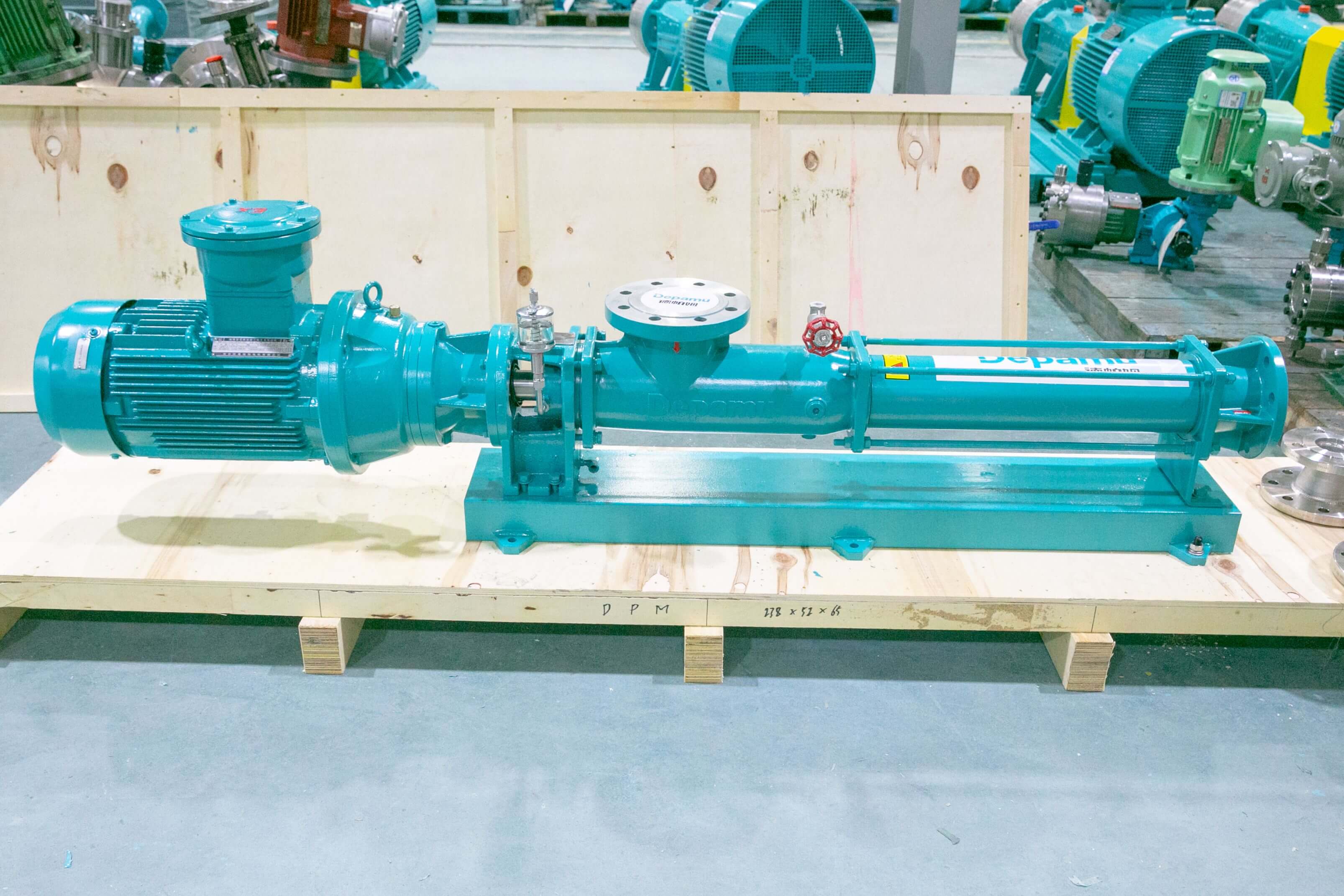
Introduction to the company's technological strength: The technological breakthrough path of Depam's single-screw pump
STEP 1: Material R&D System: From Basic Formulations to Customized Solutions
Depam has established a three-dimensional R&D model of "materials-processes-scenarios" and developed specialized rubber formulations for different media. For instance, for scenarios involving high-sulfur crude oil, a fluororubber + carbon fiber composite stator has been developed, capable of withstanding temperatures up to 180°C and offering three times improved corrosion resistance; for sludge with a 20% solid content, ultra-wear-resistant nitrile rubber is used, extending service life to 24 months. In 2023, the company's materials laboratory obtained ISO 17025 certification, enabling it to provide a full range of services from media analysis to material selection.
STEP 2: Structural Design Innovation: Precise Control of Flow and Pressure
By optimizing the rotor helix angle through CFD simulation (optimal range: 15°-25°) and incorporating variable clearance technology (minimum clearance: 0.1 mm), the pump efficiency was increased to 78%. For example, a single-screw pump designed for a nuclear power plant achieved a flow accuracy of ±1% and a pressure fluctuation of ≤0.5 MPa when transporting boron-containing water, meeting the stringent requirements of nuclear-grade equipment.
STEP 3: Intelligent Control System: Dual Guarantee of Energy Efficiency and Reliability
Integrating pressure sensors, flow meters, and frequency converters enables real-time monitoring and automatic adjustment of operational parameters. In an application at a chemical enterprise, the intelligent control system improved pump operational efficiency by 12%, resulting in annual electricity savings of 280,000 kWh; meanwhile, through predictive maintenance functionality, equipment failure rates were reduced by 40%.
Technical parameter support:
- Flow range: 0.5-1000 m³/h
- Pressure range: 0-16 MPa
- Medium viscosity: 1-100000 mPa·s
- Temperature range: -40℃ to 200℃
For more information, please visit the official website:www.depamufluid.com
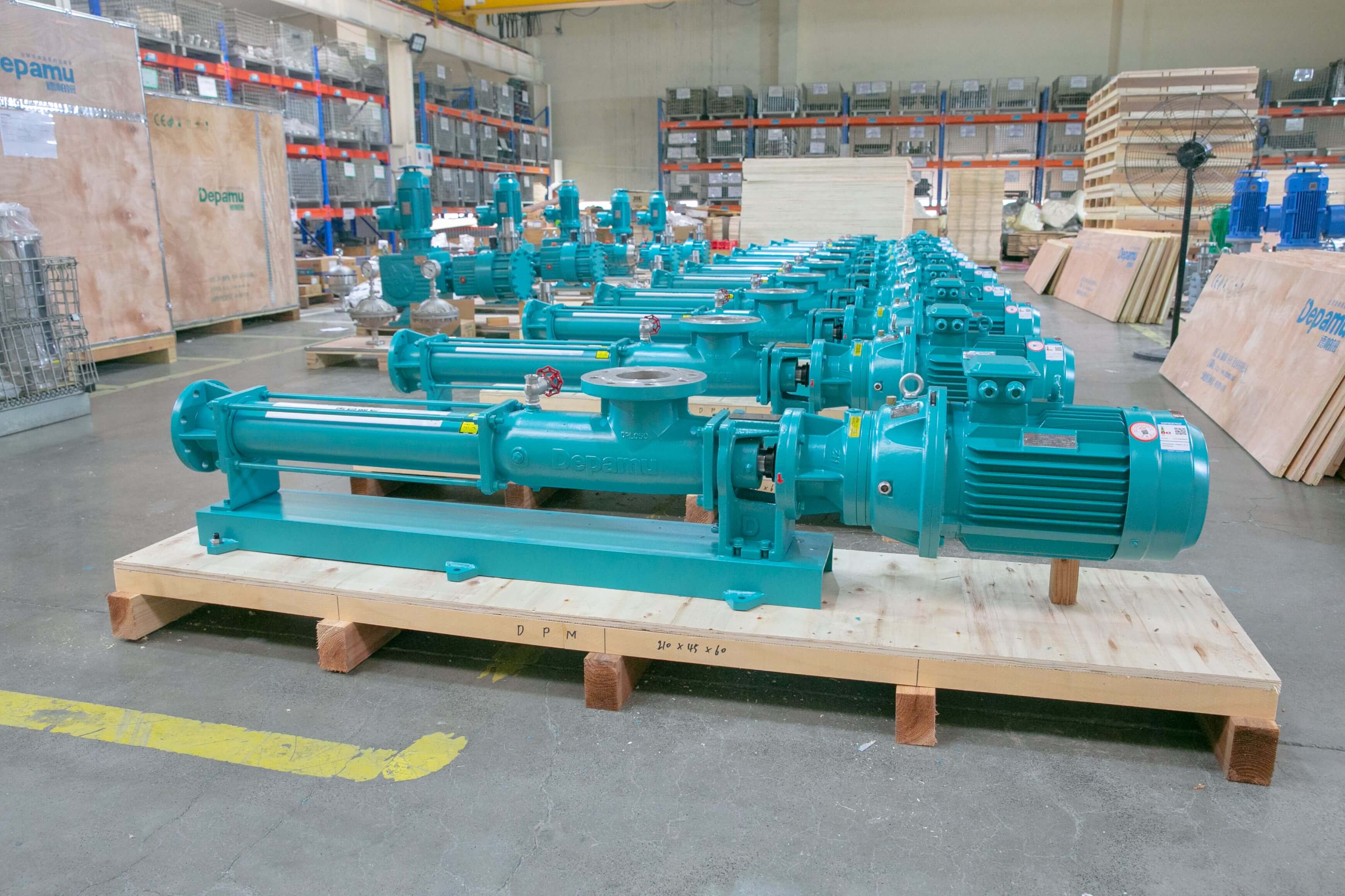
FAQ Q&A Technical Selection Guide: A Decision-Making Framework Covering All Scenarios
Q1: How to select stator materials based on medium characteristics?
A1: STEP 1: Analyze the composition of the medium (such as sulfur content, chloride ion concentration, and solid particle size); STEP 2: Match material properties (fluororubber is resistant to high temperatures and corrosion, nitrile rubber is wear-resistant, and polytetrafluoroethylene is resistant to strong acids); STEP 3: Verify compatibility (confirm no swelling/dissolution over 72 hours through medium immersion tests conducted by Depamu Material Laboratory). For example, when a new energy enterprise transported fluorine-containing electrolyte, it selected a polytetrafluoroethylene stator, which achieved a service life of 3 years.
Q2: How to optimize the pump body structure for the conveyance of high-viscosity media?
A2: STEP 1: Increase the rotor lead (recommended value ≥ 1.5D, where D is the rotor diameter) to reduce medium retention; STEP 2: Adopt a double-helix structure to enhance self-priming capability (self-priming height up to 8 m); STEP 3: Increase the stator flow area (flow diameter ≥ 1.2D) to reduce shear force. When a food enterprise transported honey (viscosity of 50,000 mPa·s), structural optimization resulted in a 30% increase in flow rate.
Q3: How to balance initial investment and long-term operating costs?
A3: STEP 1: Calculate the total cost of ownership (TCO = procurement cost + maintenance cost + energy consumption cost); STEP 2: Give priority to pump models with an efficiency ≥ 75% (energy consumption proportion can be reduced by 20%); STEP 3: Select modular designs (e.g., Depam's quick-replacement stator structure, which shortens maintenance time to 2 hours). A chemical enterprise selected Depam's high-end pump models through TCO analysis, reducing total costs by 15% over five years.
Technical Logic and Value Creation in the Selection of Single Screw Pumps
The technical selection of single-screw pumps should start with scenario-specific requirements, achieving maximum value through collaborative innovation in materials, structure, and control. Leveraging 20 years of technological expertise, Depam Pump Industry has established a solution repository covering 12 major industries, including petroleum refining, chemicals, and environmental protection. Its products are characterized by core advantages such as "high precision (flow error ≤ ±1%), long service life (MTBF ≥ 10,000 hours), and low energy consumption (efficiency ≥ 78%)," having served over 3,000 customers to date. In the future, with the application of intelligent control technologies and new materials, single-screw pumps will deliver even greater value in the transportation of complex media.
Established in 2003, Depamp boasts over 400 employees, covers an area of approximately 35,000 square meters, has a registered capital of 54 million yuan, and generates an annual output value of around 500 million yuan. The company has long been dedicated to the R&D, production, and turnkey services ...
No. 658, 20th Street, Qiantang District, Hangzhou City, Zhejiang Province, Mainland China