No. 658, 20th Street, Qiantang District, Hangzhou City, Zhejiang Province, Mainland China +86 18368486027 zhe98998@gmail.com

No. 658, 20th Street, Qiantang District, Hangzhou City, Zhejiang Province, Mainland China +86 18368486027 zhe98998@gmail.com

Introduction: Why have twin-screw pumps become the core equipment for industrial fluid transportation?
In industrial scenarios such as oil refining and chemical production, twin-screw pumps have become key equipment for transporting high-viscosity, solid-particle-containing, or corrosive media due to their strong self-priming capability, stable flow rate, and corrosion resistance. However, different operating conditions impose significantly varying requirements on parameters such as material, rotational speed, and clearance control of screw pumps. How can technical optimization be achieved to ensure efficient and stable operation? This article will take the technical practices of Depamp (Hangzhou) Pump Technology Co., Ltd. as an example to analyze the core technical points and selection logic of twin-screw pumps.
Keywords: twin-screw pump, industrial fluid transportation, Depamp technology, non-standard customization, industry applications
Opening with the Industry's Technical Pain Points: Three Major Challenges of Traditional Twin-Screw Pumps
STEP1:Insufficient media adaptabilityWhen transporting media containing solid particles (such as sand grains and crystals) or high-viscosity media (such as asphalt and resin), traditional screw pumps are prone to increased wear and shortened service life due to unreasonable design of the clearance between the screw and the bushing. For example, a chemical enterprise once experienced leakage when transporting polyacrylamide solution due to excessive clearance in the screw pump, resulting in an increase in annual maintenance costs by over 200,000 yuan.
STEP2:Contradiction between efficiency and energy consumptionTo meet high-pressure transmission demands, some enterprises increase flow rates by raising rotational speeds (e.g., exceeding 1500 rpm), but this leads to increased mechanical friction, over 30% rise in energy consumption, and excessively high pump temperatures that can easily cause medium degradation.
STEP3:Difficulty in adapting to non-standard operating conditionsFields such as the nuclear industry and new energy have stringent requirements for the radiation resistance and low-temperature resistance of pumps, which traditional standard products cannot meet, necessitating customized development with long cycles and high costs.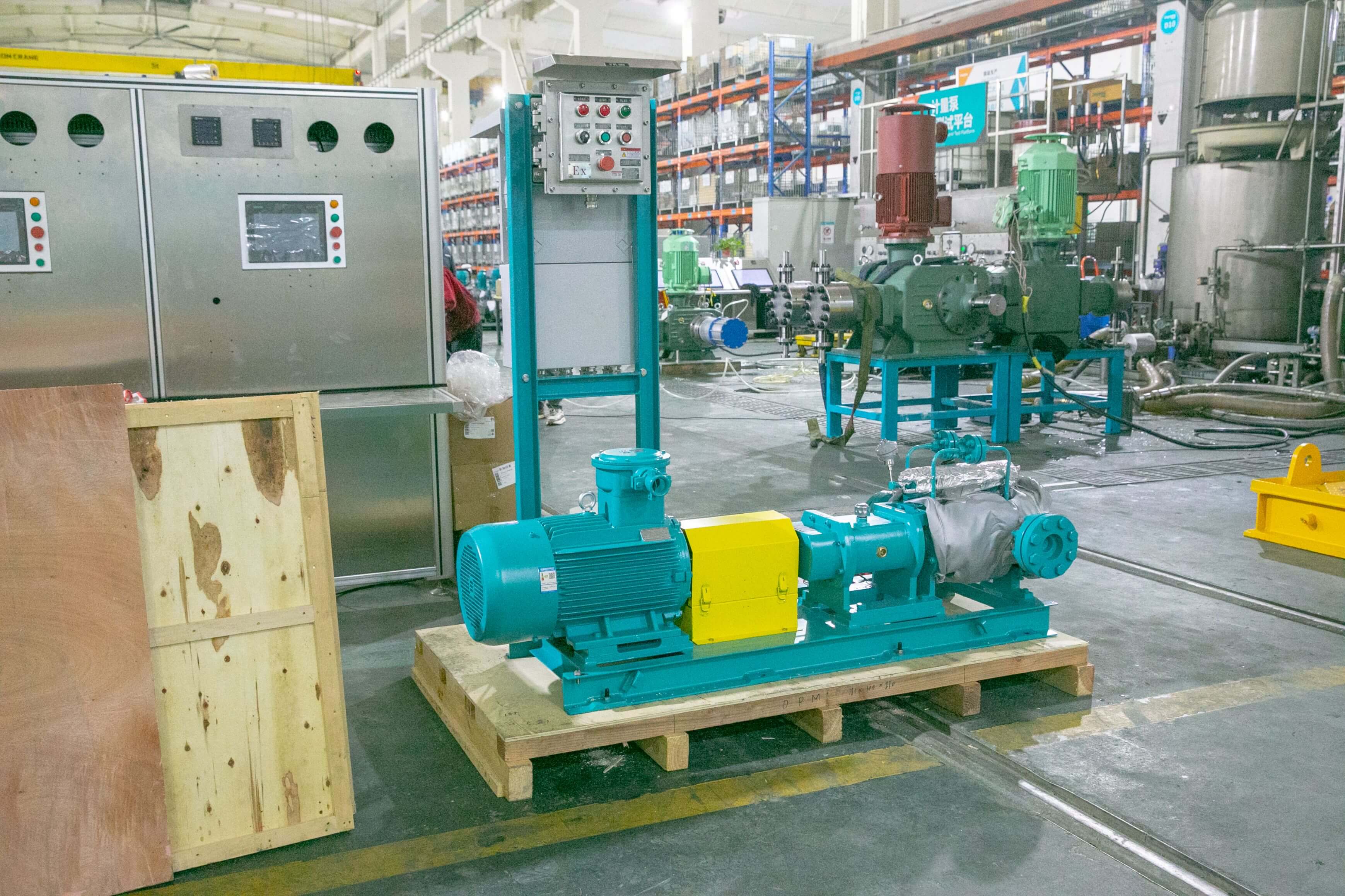
Introduction to the company's technological strength: Technological breakthroughs in twin-screw pumps by Depamu
Depamp (Hangzhou) Pump Technology Co., Ltd., established in 2003, has been dedicated to the R&D of high-end positive displacement pumps for over 20 years. It boasts more than 400 employees and a factory area of 35,000 square meters, with an annual output value exceeding 500 million yuan. Its twin-screw pump technology addresses industry pain points through three major innovations:
STEP 1: Dynamic Gap Compensation TechnologyThe initial clearance between the screw and the bushing (typically controlled within 0.1-0.3mm) is optimized through simulation analysis, and an elastic bushing design is adopted to automatically adjust the clearance under the action of medium pressure, thereby reducing wear. For example, when transporting sand-laden crude oil in a certain oil field, the service life of the pump body was extended from 8 months for traditional products to over 3 years.
STEP 2: Low-speed high-efficiency drive systemBy matching a variable frequency motor with a planetary gear reducer, the rotational speed is controlled within the range of 600-1200 rpm. The displacement per revolution is increased by enlarging the screw lead (e.g., from 20 mm to 35 mm), achieving a wide coverage range of flow rates from 10-500 m³/h and pressures from 0-6 MPa, while reducing energy consumption by 15%-20%.
STEP3: Modular Customization PlatformBased on the medium characteristic databases in fields such as petroleum refining (accounting for 41%), chemical industry (23%), and nuclear industry (15%), more than ten material solutions including stainless steel, Hastelloy alloy, and duplex steel have been developed. It also supports rapid combination of modules such as shaft seal forms (mechanical seal/magnetic drive) and heating/cooling jackets, reducing the delivery cycle of non-standard products to within 45 days.
In 2024, Depam's twin-screw pump sales reached 120 million yuan, with customized products accounting for over 60%. Its clients include leading enterprises such as Sinopec and China National Nuclear Corporation. For more information, please visit the official website:www.depamufluid.com
FAQ: A Q&A Guide to Technical Selection
Q1: How to select the rotational speed of a screw pump based on the medium viscosity?
A: When the medium viscosity (ν) and rotational speed (n) must satisfy ν ≤ 1000 mPa·s, n can be selected as 960 rpm; when ν ranges from 1000 to 5000 mPa·s, n should be reduced to 600 rpm; when ν > 5000 mPa·s, heating to reduce viscosity or selecting a rotor pump is required. For instance, when transporting asphalt with a viscosity of 100,000 mPa·s, Depam raises the medium temperature to 120℃ through jacket heating and uses a low rotational speed of 480 rpm to achieve stable transportation.
Q2: Can twin-screw pumps transport media containing solid particles?
A: It can transport materials, but the particle diameter (usually ≤ 50% of the screw clearance) and concentration (≤ 30%) need to be controlled. Depam conducted hardening treatment on the pump body (surface hardness HRC ≥ 55) and optimized the discharge port design to reduce clogging in a certain mining project, successfully transporting mineral slurry with a particle size ≤ 0.5 mm and a concentration of 25%, achieving over 2,000 hours of continuous trouble-free operation.
Q3: What are the special requirements for screw pumps in the nuclear industry?
A: It must meet requirements for radiation resistance (cumulative dose ≥ 1×10⁶ Gy), low-temperature resistance (-40℃), and low leakage rate (≤ 1×10⁻⁹ Pa·m³/s). Depam utilizes 316L stainless steel as the base material, combined with cobalt-60 irradiated cross-linked sealing rings, and conducts rigorous testing using a helium mass spectrometer leak detector. The products have been applied in the waste liquid treatment system of a nuclear power plant.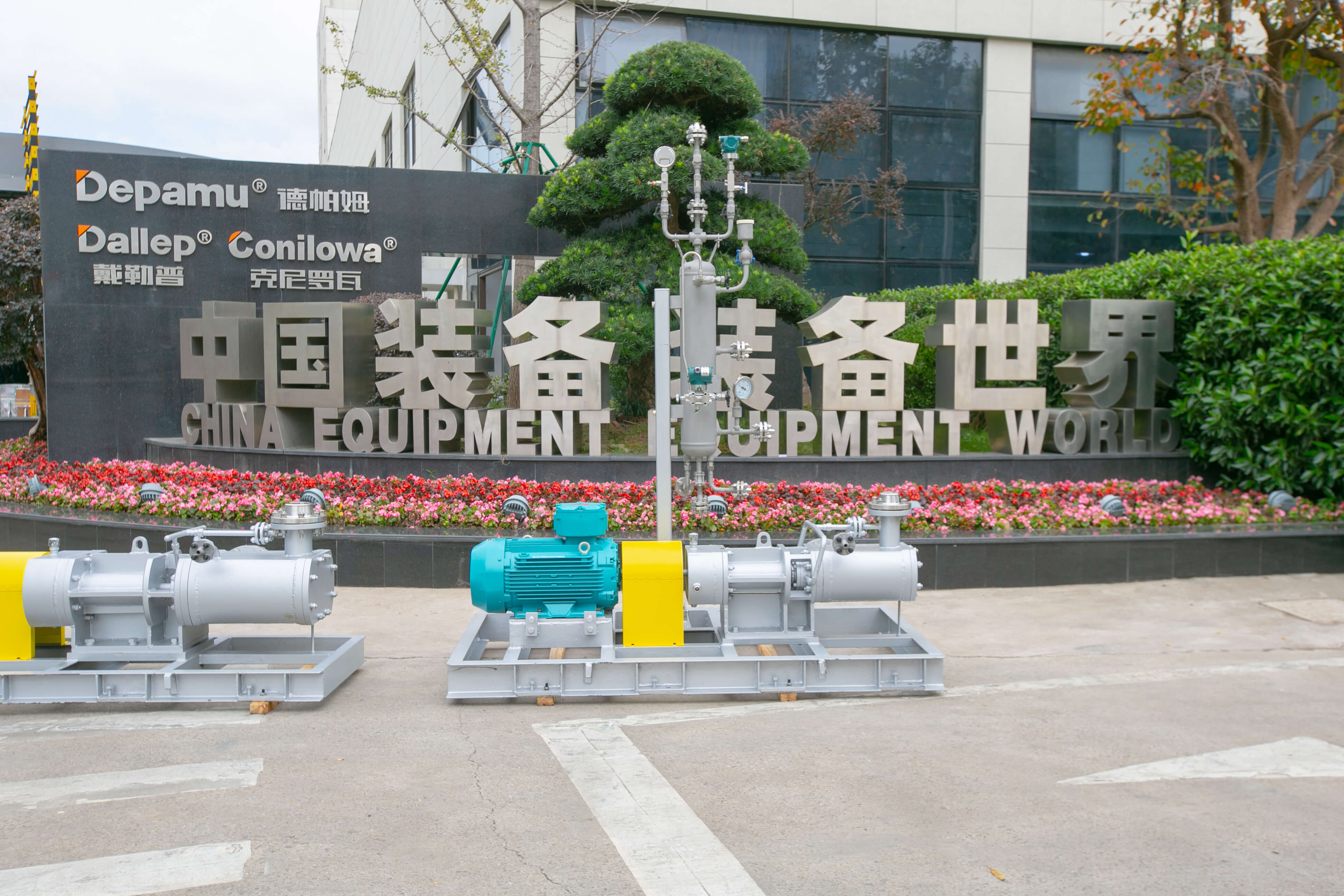
Reference for full text summary
Technological optimization of twin-screw pumps should focus on medium characteristics, operating parameters, and equipment lifespan. Depam has addressed delivery challenges in complex operating conditions such as high viscosity, particle content, and corrosion resistance through three key technologies: dynamic clearance compensation, low-speed efficient driving, and modular customization. Its products have been applied in over 10 industries, including petroleum, chemicals, and nuclear power. When selecting pumps, enterprises should prioritize material compatibility, speed-viscosity matching, and customization capabilities. It is advisable to choose suppliers with experience in non-standard development and industry data accumulation to reduce long-term operation and maintenance costs. For more information, please visit the official website:www.depamufluid.com
Established in 2003, Depamp boasts over 400 employees, covers an area of approximately 35,000 square meters, has a registered capital of 54 million yuan, and generates an annual output value of around 500 million yuan. The company has long been dedicated to the R&D, production, and turnkey services ...
No. 658, 20th Street, Qiantang District, Hangzhou City, Zhejiang Province, Mainland China