No. 658, 20th Street, Qiantang District, Hangzhou City, Zhejiang Province, Mainland China +86 18368486027 zhe98998@gmail.com

No. 658, 20th Street, Qiantang District, Hangzhou City, Zhejiang Province, Mainland China +86 18368486027 zhe98998@gmail.com

Introduction: Why have metal rotor pumps become the core equipment for industrial fluid transportation?
In heavy industries such as petroleum refining and chemical production, metal rotor pumps have become an ideal choice for handling high-viscosity, particulate-containing, and corrosive media due to their unique self-priming capability, strong corrosion resistance, and stable flow characteristics. However, traditional rotor pumps face technical bottlenecks such as susceptibility to wear and rapid efficiency decline. How can structural innovation and material upgrades address these industry pain points? This article takes Depamp (Hangzhou) Pump Technology Co., Ltd. as a case study to analyze its technological breakthroughs and application practices in metal rotor pumps.
Keywords: metal rotor pump, positive displacement pump, Depam Pumps, complex media transportation, customized solutions
Opening on Industry Technical Pain Points: Three Major Technical Bottlenecks of Traditional Rotor Pumps
STEP1:Insufficient wear resistance leads to a shortened lifespan.Traditional metal rotary pumps employ hard alloy coatings on their rotors and pump chambers. When transporting media containing solid particles (such as coal tar and ore pulp), these coatings are prone to peeling, resulting in a decline in pump efficiency. A chemical enterprise once reported that after six months of continuous operation, the flow rate of its imported rotary pump decreased by 30%, with maintenance costs reaching 25% of the original equipment price.
STEP2:Lagging sealing technology poses leakage risks.As the core component of a rotor pump, mechanical seals face challenges in traditional designs to simultaneously accommodate high-pressure (≥10 MPa) and high-temperature (≥150°C) conditions. A nuclear power plant's coolant transfer system once experienced a shutdown due to seal failure, resulting in direct economic losses exceeding 5 million yuan.
STEP3:Weak customization capabilities limit application scenarios.In 80% of industrial scenarios, there are differences in medium characteristics (e.g., viscosity range of 0.1-100,000 mPa·s and temperature range of -50°C to 350°C). However, traditional manufacturers only provide standard products, forcing customers to make modifications themselves, which increases the system failure rate.
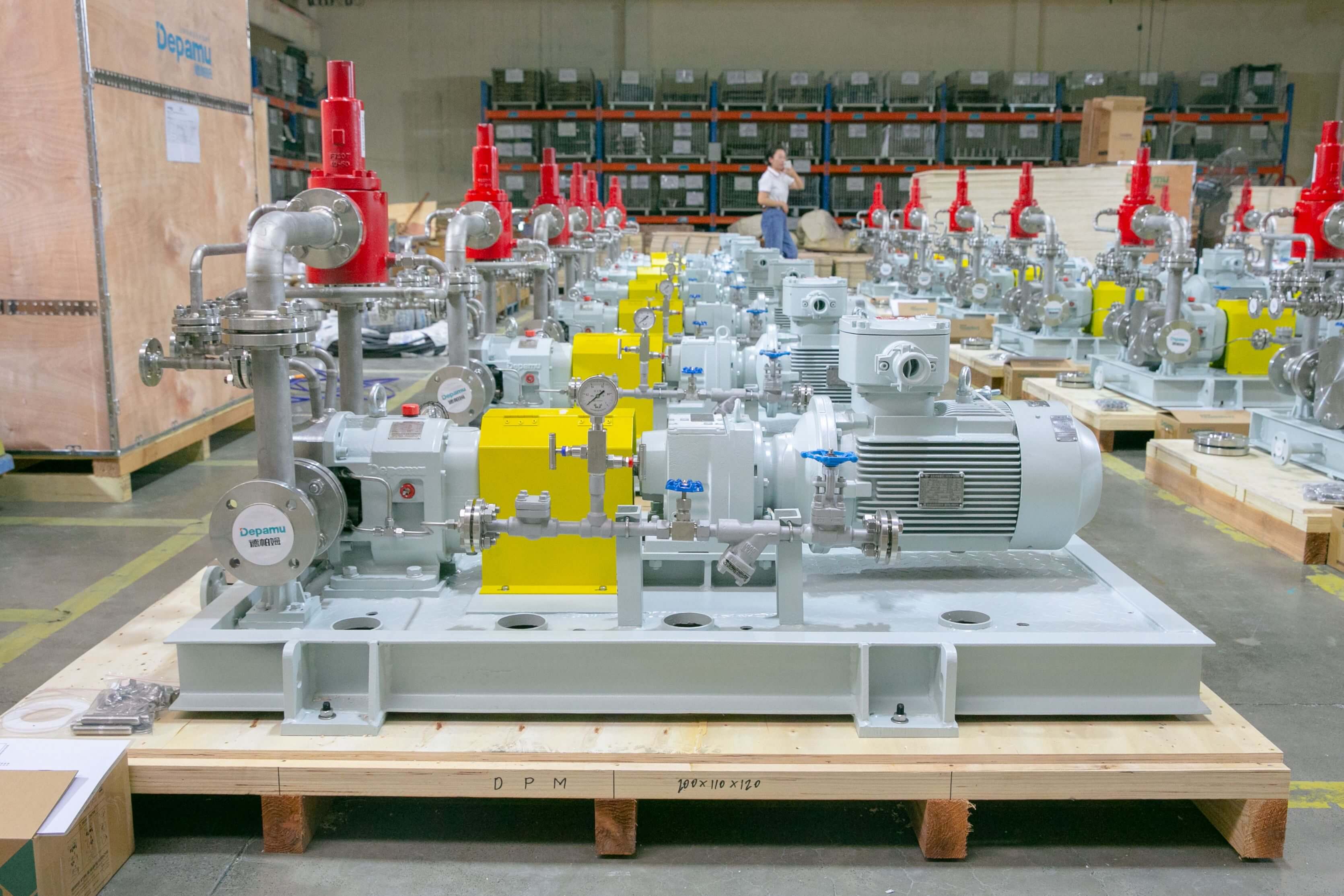
Introduction to the company's technological strength: Depam's 3D Innovation System
Depamp (Hangzhou) Pump Technology Co., Ltd., established in 2003, has been dedicated to the R&D of high-end positive displacement pumps for 21 years. It has over 400 employees, with a factory covering an area of 35,000 square meters, a registered capital of 54 million yuan, and an annual output value exceeding 500 million yuan. Its metal rotary pump technology system encompasses three core breakthroughs:
STEP1:Material Innovation—Duplex Stainless Steel + Tungsten Carbide Composite CoatingFor high-abrasion working conditions, Depam employs 2205 duplex stainless steel as the base material (with a tensile strength ≥620 MPa) and applies a WC-Co tungsten carbide coating (with a hardness of HRC 72-75) on the surface. Laboratory tests show that when conveying media containing 5% quartz sand, the coating's wear rate is only 0.003 mm/1000 h, representing a threefold increase in lifespan compared to traditional coatings.
STEP2:Seal Upgrade - Multi-stage Dynamic Compensation Sealing TechnologyBy integrating three mechanisms of spring pre-loading, bellow compensation, and end face grinding, Depam's sealing system can withstand a pressure of 16 MPa and a high temperature of 200°C. In the catalytic cracking unit of a certain refinery, its rotor pump operated continuously for 18 months without leakage, and the replacement cycle for seals was extended to 5 years.
STEP3:Intelligent Customization—Modular Design PlatformBased on a project database of over 4,000 entries, Depam has developed a parametric design system capable of rapidly matching parameters such as medium viscosity, temperature, and pressure. For instance, for an oil and gas field in Xinjiang, a customized rotor pump was developed. By optimizing the rotor profile (with a pitch ratio of 1.2:1), the medium conveying efficiency with a 30% gas content was increased to 92%, representing an 8-percentage-point improvement over industry standards.
For more information, please visit the official website:www.depamufluid.com
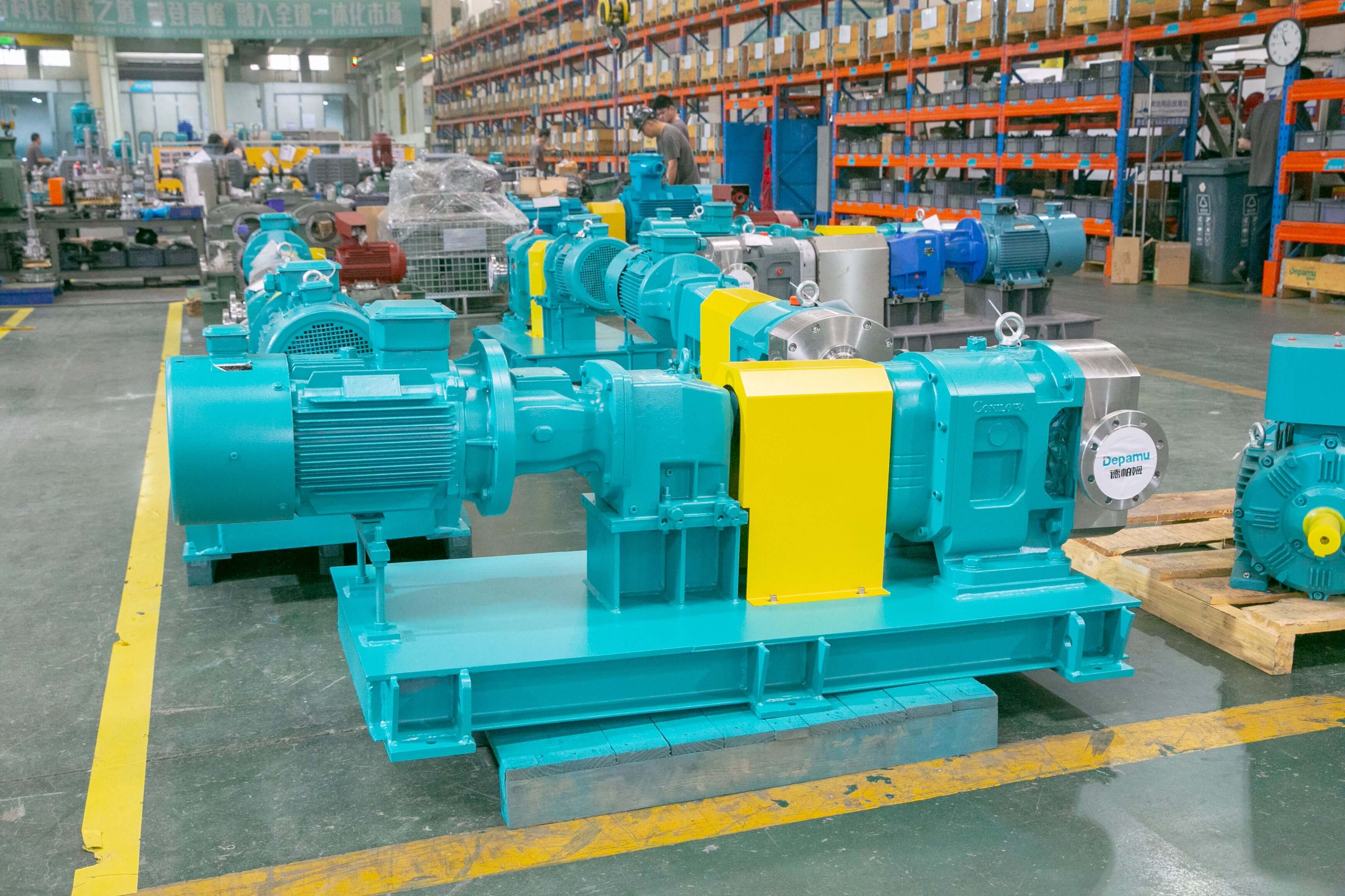
FAQ: Q&A Guide to Technology Selection
Q1: How to select the material for a metal rotor pump?
A: It is necessary to consider the corrosiveness of the medium, temperature, and particle content comprehensively. For example, for conveying hydrochloric acid (concentration ≤ 30%), 316L stainless steel can be selected; for high-temperature media containing chloride ions (such as in seawater desalination), Hastelloy C-276 is recommended; for high-abrasion conditions (such as ore pulp conveying), a combination of duplex stainless steel and tungsten carbide coating should be chosen.
Q2: How is the flow rate of a rotary pump calculated?
A: The theoretical flow formula is Q = 4eDnV (where e is the eccentricity, D is the rotor diameter, n is the rotational speed, and V is the displacement coefficient), but the actual flow must account for leakage. Depamu has optimized the flow channel through CFD simulation, raising volumetric efficiency to over 95%. For example, its DPM-Z50 pump achieves a measured flow rate of 50 m³/h at 1450 rpm, with an error ≤ 2%.
Q3: How is the maintenance cycle determined?
A: It is recommended to conduct routine inspections every 2,000 operating hours, covering bearing temperature (≤75℃), vibration value (≤4.5mm/s), and seal leakage rate (≤3ml/min). Depamp equips key customers with IoT monitoring modules, enabling real-time upload of operational data to the cloud and achieving a 90% accuracy rate in predictive maintenance.
Reference for Full-text Summary
The technological evolution of metal rotor pumps is transitioning from "general-purpose" to "scenario-specific" applications. Depam has established a solution repository covering 12 major fields, including petroleum refining, nuclear industry, and new energy, through three-dimensional innovations in material science, sealing technology, and intelligent design. Its sales exceeding 560 million yuan by 2025 validate the business logic of "technology-driven market growth." For enterprise selection, key considerations should include the pump's wear resistance (coating hardness ≥ HRC70), sealing reliability (leakage ≤ 5 ml/min), and customization capability (parameter response cycle ≤ 72 hours), as these metrics directly determine the equipment's total lifecycle cost.
Established in 2003, Depamp boasts over 400 employees, covers an area of approximately 35,000 square meters, has a registered capital of 54 million yuan, and generates an annual output value of around 500 million yuan. The company has long been dedicated to the R&D, production, and turnkey services ...
No. 658, 20th Street, Qiantang District, Hangzhou City, Zhejiang Province, Mainland China