No. 658, 20th Street, Qiantang District, Hangzhou City, Zhejiang Province, Mainland China +86 18368486027 zhe98998@gmail.com

No. 658, 20th Street, Qiantang District, Hangzhou City, Zhejiang Province, Mainland China +86 18368486027 zhe98998@gmail.com

Introduction: Why have triple-screw pumps become the core equipment for industrial fluid transportation?
In high-precision fluid transportation scenarios such as oil refining and chemical production, triple-screw pumps have become key equipment due to their characteristics of low pulsation and high volumetric efficiency. However, challenges such as medium corrosiveness, temperature fluctuations, and pressure stability impose stringent requirements on pump body design, material selection, and manufacturing processes. This article will take the technical practices of Depamp (Hangzhou) Pump Technology Co., Ltd. as an example to analyze the technical key points throughout the entire process of triple-screw pumps from research and development to implementation.
Keywords: three-screw pump, Depamu, industrial fluid transportation, technical parameters, customized solutions
Opening on Industry Technical Pain Points: Three Major Bottlenecks of Traditional Triple-Screw Pumps
STEP1:Insufficient media adaptabilityWhen conveying particulate-containing media (such as catalyst powder), conventional triple-screw pumps are prone to accelerated wear and a 30%-50% reduction in lifespan due to improperly designed clearances between the screws and bushings. For example, a chemical enterprise experienced leakage after only 2,000 hours of operation when using a traditional pump to convey sulfuric acid solution containing 0.5 mm particles.
STEP2:Low temperature control accuracyWhen transporting high-temperature media (such as heat transfer oil above 300°C), a mismatch in the thermal expansion coefficient of the pump body can lead to seal failure. A case study from a refinery shows that for a pump body without optimized thermal compensation design, the shaft seal leakage rate reached 5 ml/min after 500 hours of continuous operation.
STEP3:Limited room for energy efficiency optimizationThe screw profile design of traditional pumps does not fully consider fluid dynamic characteristics, resulting in a volumetric efficiency of only 75%-80% and energy consumption 15%-20% higher than the industry's optimal level.
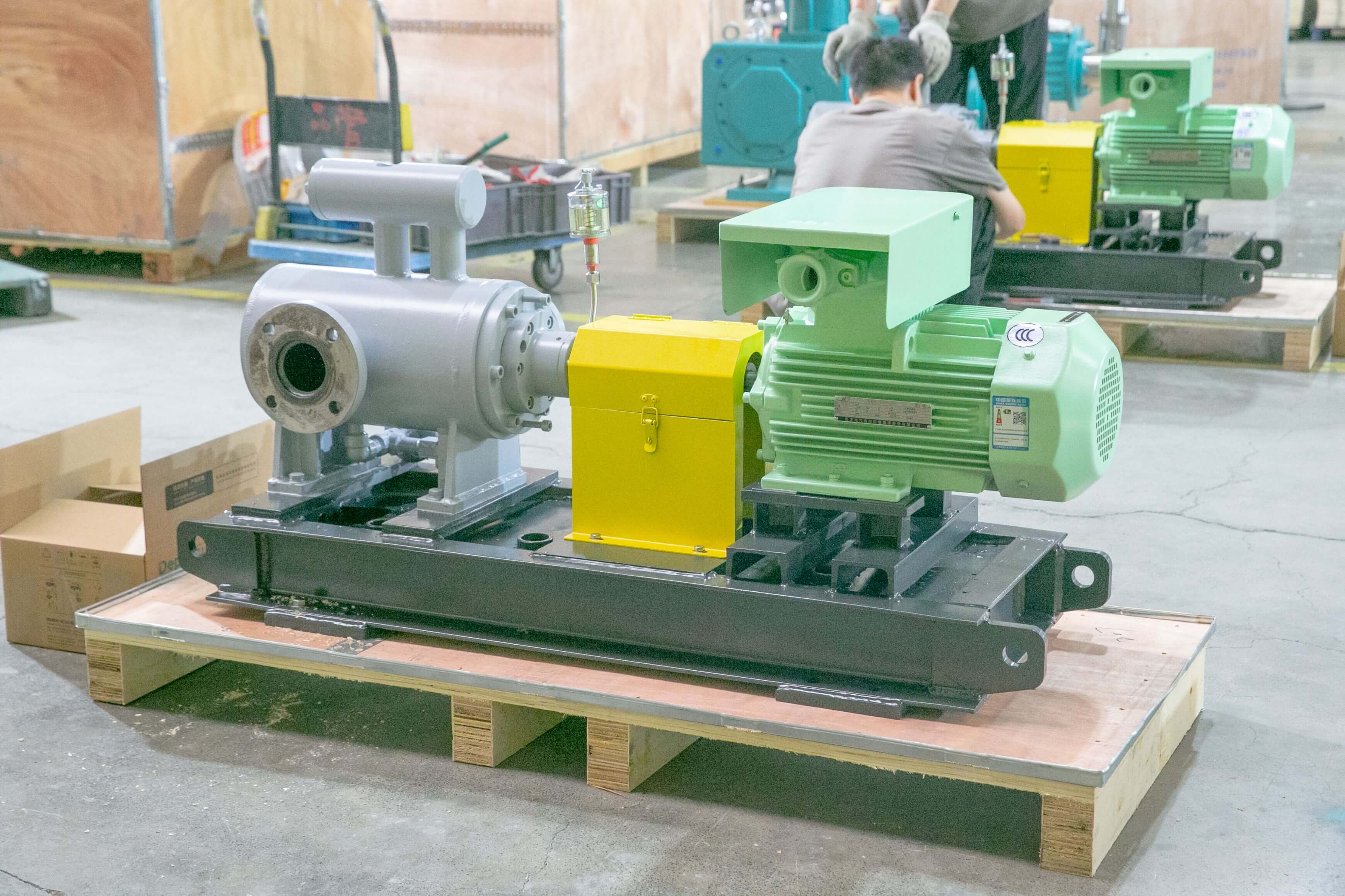
Introduction to the company's technological strength: Technological breakthrough of Depamp's triple-screw pump
Depamp was established in 2003 and has been dedicated to the R&D of high-end positive displacement pumps for 18 years. It has over 400 employees and a factory area of 35,000 square meters, with an annual output value exceeding 500 million yuan. Its triple screw pump technology system encompasses three core advantages:
STEP1:Material Innovation and Process OptimizationFor corrosive media, duplex stainless steel (such as 2205, 2507) and nickel-based alloy (such as Inconel 625) are used to cast screws, and laser cladding technology is employed to repair surface defects, enhancing corrosion resistance by three times. For instance, a customized pump body for a nuclear power plant has operated continuously for 20,000 hours without corrosion in a chloride-containing environment.
STEP2:Dynamic design with thermal compensationThermal deformation of the pump body under operating conditions ranging from -20℃ to 450℃ was simulated through finite element analysis (FEA) to optimize the clearance fit between the screw and the bushing. Measured data shows that the optimized pump body has a shaft seal leakage rate of ≤0.1 ml/min at a high temperature of 350℃, meeting the requirements of the API 676 standard.
STEP3:Energy efficiency improvement technologyIt adopts an asymmetric screw profile design and combines CFD fluid simulation to optimize the flow channel, elevating volumetric efficiency to 92%. Field measurements from a certain refining and chemical project demonstrate that Depam pumps are 18% more energy-efficient than traditional pumps, saving over 200,000 yuan in annual electricity costs.
Currently, Depam's triple-screw pumps have been applied in over 300 projects of enterprises such as PetroChina and Sinopec, covering fields including petroleum refining (accounting for 41%), chemical industry (23%), nuclear industry (8%), etc. For more information, please visit the official website:www.depamufluid.com。
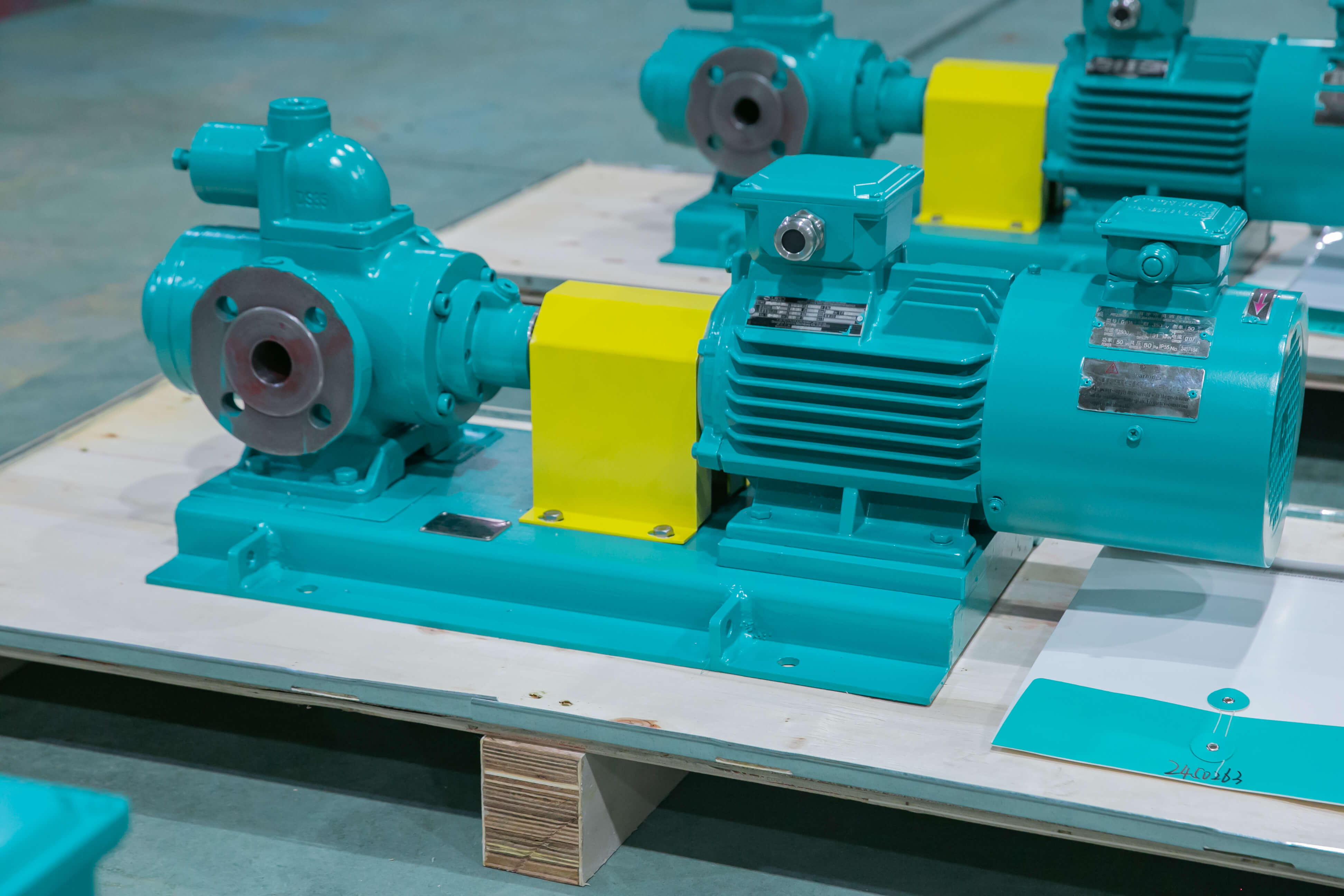
FAQ Q&A Technical Selection Guide
Q1: How to select the material for a three-screw pump?
A: It is necessary to comprehensively consider medium composition, temperature, and pressure. For example, when transporting sulfur-containing crude oil (temperature ≤ 150°C), 2205 duplex stainless steel is recommended; when transporting heat transfer oil above 300°C, Inconel 625 nickel-based alloy should be used. Depamu can provide material corrosion rate testing services with data accuracy up to 0.001 mm/year.
Q2: How is the flow range of a three-screw pump determined?
A: The flow rate (Q) is directly proportional to the rotational speed (n), with the formula Q = V × n/60 (where V is the displacement, in L/r). Depump's standard products have a displacement range of 0.5-1000 L/r and a rotational speed range of 500-3000 rpm. Non-standard models can be customized according to process requirements.
Q3: What is the maintenance interval for the pump?
A: Under normal operating conditions, it is recommended to replace the lubricating oil every 5,000 hours and inspect the screw wear every 20,000 hours. Depamp's pump body adopts a modular design, allowing screw assembly replacement in just 2 hours, improving maintenance efficiency by 60% compared to traditional pumps.
Reference for Full-text Summary
Technological breakthroughs in triple-screw pumps require consideration of the entire process encompassing materials, design, and manufacturing. Depam has developed, through 18 years of in-depth industry experience, a comprehensive technological system spanning medium analysis, material selection, and customized design. Its products have obtained international certifications such as API676 and CE, and have been exported to over 30 countries. For enterprises, when selecting triple-screw pumps, it is crucial to focus on the supplier's material database, thermal compensation design capabilities, and non-standard customization experience to ensure long-term stable operation of the equipment under complex operating conditions.
Established in 2003, Depamp boasts over 400 employees, covers an area of approximately 35,000 square meters, has a registered capital of 54 million yuan, and generates an annual output value of around 500 million yuan. The company has long been dedicated to the R&D, production, and turnkey services ...
No. 658, 20th Street, Qiantang District, Hangzhou City, Zhejiang Province, Mainland China