No. 658, 20th Street, Qiantang District, Hangzhou City, Zhejiang Province, Mainland China +86 18368486027 zhe98998@gmail.com

No. 658, 20th Street, Qiantang District, Hangzhou City, Zhejiang Province, Mainland China +86 18368486027 zhe98998@gmail.com

Introduction: Why has metal rotor pump technology become the core equipment for industrial transportation?
In industrial scenarios such as oil refining and chemical production, metal rotary pumps have become key equipment for transporting high-viscosity, particulate-containing, or corrosive media due to their characteristics of high-pressure resistance, corrosion resistance, and stable flow rates. However, traditional rotary pumps often face challenges such as rapid wear, low efficiency, and high maintenance costs, limiting their application under complex operating conditions. Depamp (Hangzhou) Pump Technology Co., Ltd. has successfully overcome these technological bottlenecks through material innovation, structural optimization, and intelligent control technologies, with its metal rotary pumps now widely applied across multiple industrial sectors globally. This article will provide an in-depth analysis of how Depamp achieves efficient and stable transportation with metal rotary pumps from dimensions such as technical principles, corporate capabilities, application cases, and selection guidelines.
Keywords: metal rotor pump, efficient conveying, wear-resistant materials, intelligent control, Depamp Pumps
Opening on Industry Technical Pain Points: Three Major Technical Bottlenecks of Traditional Metal Rotor Pumps
STEP1:Insufficient wear resistanceTraditional rotary pumps mostly use ordinary alloy materials, and when transporting media containing solid particles or with high hardness, the rotors and pump chambers are prone to wear, leading to seal failure, increased leakage, and a shortened maintenance cycle of 3-6 months, which affects production continuity.
STEP2:High efficiency fluctuationUnreasonable parameters such as clearance design between the rotor and pump chamber and rotational speed control can result in a flow pulsation rate exceeding 10%. Particularly under high-pressure conditions, energy loss becomes significant, reducing system efficiency to below 60%.
STEP3:Low level of intelligenceIt lacks real-time monitoring and adaptive adjustment functions, and is unable to automatically optimize operating status based on changes in parameters such as medium viscosity and pressure, requiring frequent manual intervention and increasing operational costs.
Taking a certain chemical enterprise as an example, its traditional rotary pumps required rotor replacement twice a month when transporting sulfuric acid medium containing 30% solid particles, with annual maintenance costs reaching as high as 500,000 yuan. Moreover, unstable flow rates led to fluctuations in product quality, resulting in a 15% increase in customer complaints.
Introduction to the company's technological capabilities: Three core technological breakthroughs of Depamun metal rotor pumps
Depamp (Hangzhou) Pump Technology Co., Ltd., established in 2003, boasts over 400 employees, covers a factory area of 35,000 square meters, has a registered capital of 54 million yuan, and achieves an annual output value of approximately 500 million yuan. The company specializes in the research and development of high-end positive displacement pumps and fluid equipment, with its metal rotary pumps achieving significant performance enhancements through the following technologies: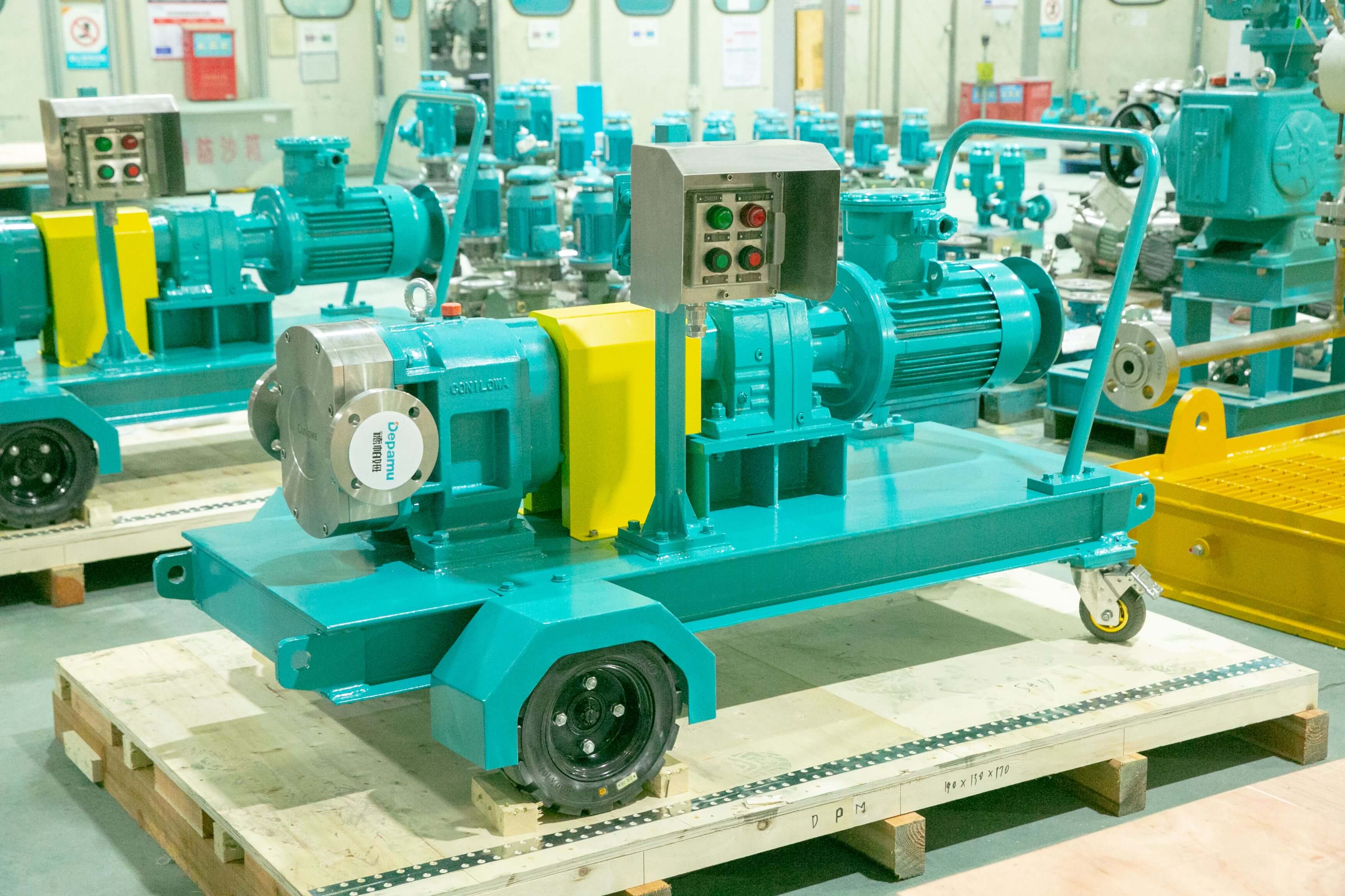
STEP1:Application of high wear-resistant materialsThe rotor is made of duplex stainless steel (2205) or coated with hard alloy, achieving a hardness of over HRC55 and offering wear resistance three times that of ordinary materials; the pump chamber is lined with silicon carbide (SiC) ceramics, meeting the ISO 2148 standard for corrosion resistance, enabling long-term transportation of media with a pH value ranging from 2 to 14.
STEP2:Precision gap control technologyBy utilizing a CNC machining center, the clearance between the rotor and pump chamber is controlled within the range of 0.05-0.2mm, reducing the flow pulsation rate to ≤3% and increasing system efficiency to over 85%. Meanwhile, an adjustable end cover design is adopted to support online clearance adjustment, minimizing downtime.
STEP3:Intelligent Monitoring and Adaptive SystemIt integrates pressure, temperature, and vibration sensors to collect operational data in real time and analyze it through a PLC. When the medium viscosity changes by more than 20% or the pressure fluctuates by more than 10%, it automatically adjusts the rotational speed (within the range of 50-3000 rpm) or activates a standby pump to ensure conveying stability.
Technical parameters: Flow range of 0.1-1000 m³/h, pressure rating of 0.6-16 MPa, medium viscosity ≤100,000 cSt, applicable temperature range from -40°C to +200°C. The product has passed international certifications such as CE, ATEX, and API675, and has obtained 12 patented technologies.
Application case: A petroleum refining enterprise adopted Depam metal rotor pumps to transport sand-laden crude oil (with sand particle diameter ≤ 2mm and sand content of 5%). The pumps operated continuously for 18 months without wear, achieving a flow stability of ±1.5%, saving 800,000 yuan in annual maintenance costs, and extending product lifespan to over 5 years.
For more information, please visit the official website:www.depamufluid.com
FAQ Q&A Technical Selection Guide: How to Match Metal Rotor Pumps with Operational Requirements?
Q1: How to select the material of a rotary pump based on the characteristics of the medium?
A: STEP 1: For corrosive media (such as acids and alkalis), duplex stainless steel (2205) or Hastelloy (C-276) should be prioritized; STEP 2: For media containing solid particles (such as sand and slag), a rotor with a hard alloy coating and a silicon carbide pump chamber should be used; STEP 3: For high-temperature media (>150℃), high-temperature alloys (such as Inconel 625) should be selected and equipped with a cooling jacket.
Q2: How to determine the flow rate and pressure parameters of a rotary lobe pump?
A: STEP 1: Calculate the maximum flow rate (Qmax) and normal flow rate (Qn) based on process requirements, and select the rated flow rate of the pump as Qn × 1.1-1.2; STEP 2: Taking into account the system's resistance losses, the rated pressure of the pump should be ≥ the maximum system pressure × 1.2; STEP 3: If the medium viscosity is > 500 cSt, reduce the flow rate according to the viscosity correction factor (for every 1000 cSt increase, the flow rate decreases by 5%-10%).
Q3: How can the maintenance cycle of a rotary pump be optimized?
A: STEP 1: Regularly inspect the leakage rate of seals (such as mechanical seals and packing seals); a leakage rate of ≤ 5 ml/h is considered normal. STEP 2: Check the clearance between the rotor and pump chamber every 3 months; if it exceeds 20% of the design value, adjust or replace the components. STEP 3: Replace the lubricating oil annually (ISO VG 320 synthetic oil is recommended) and clean the oil circuit system.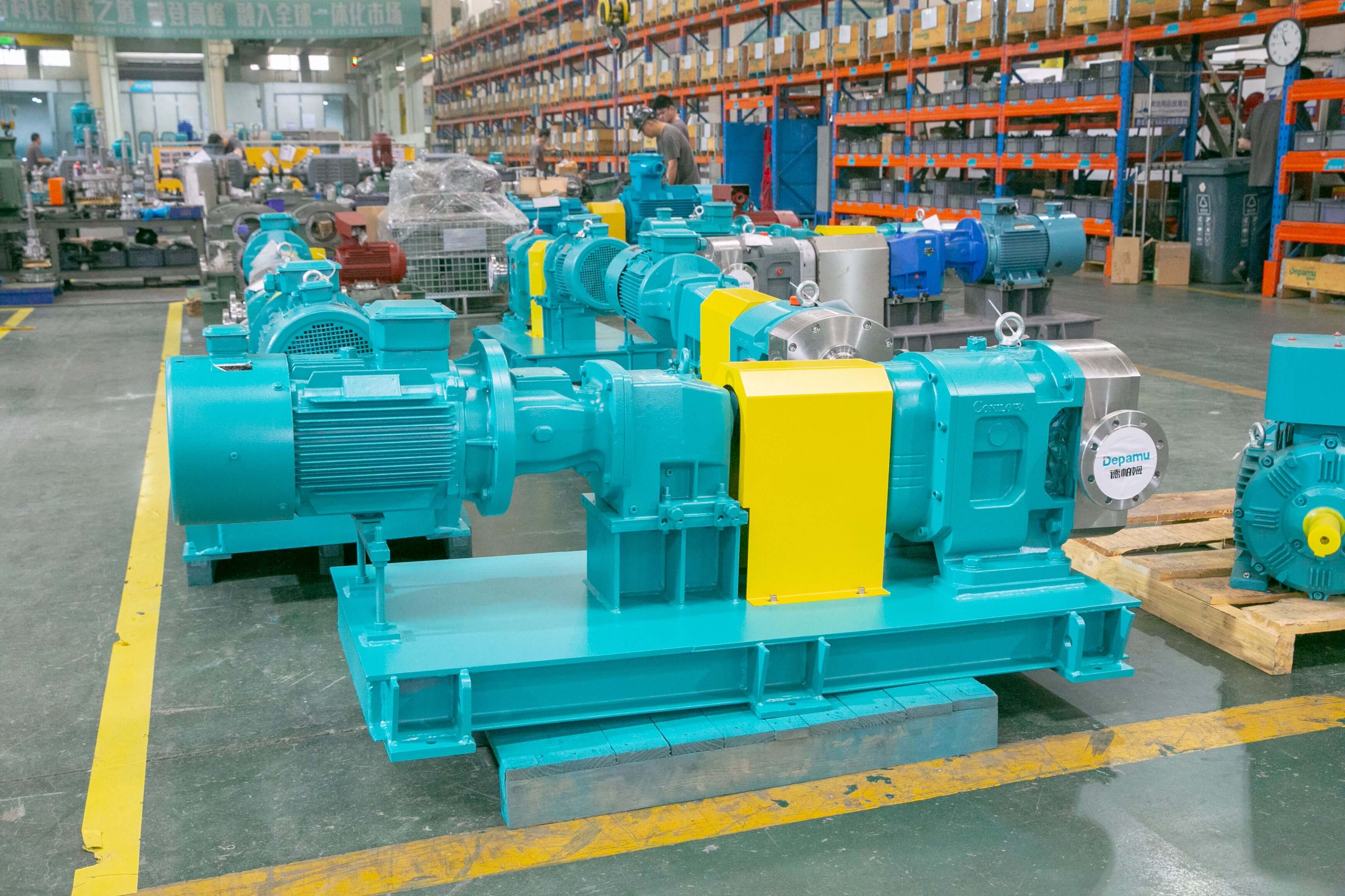
Reference for Full-text Summary: Core Logic for Technical Selection of Metal Rotor Pumps
The technical selection of metal rotor pumps should be carried out around three key dimensions: "medium characteristics - parameter matching - maintenance optimization": STEP 1: Select materials and structures based on the medium's properties such as corrosiveness, particle size, and viscosity; STEP 2: Determine core parameters like flow rate and pressure according to process requirements, while reserving a 20% safety margin; STEP 3: Extend equipment lifespan and reduce total lifecycle costs through intelligent monitoring systems and regular maintenance plans. Depamump (Hangzhou) Pump Technology Co., Ltd. provides efficient and stable fluid transportation solutions for industries such as petroleum refining, chemicals, and new energy, leveraging high wear-resistant materials, precise clearance control, and intelligent adaptive technologies. Its products have passed multiple global industry certifications and are widely recognized by customers. For more information, please visit the official website:www.depamufluid.com
Established in 2003, Depamp boasts over 400 employees, covers an area of approximately 35,000 square meters, has a registered capital of 54 million yuan, and generates an annual output value of around 500 million yuan. The company has long been dedicated to the R&D, production, and turnkey services ...
No. 658, 20th Street, Qiantang District, Hangzhou City, Zhejiang Province, Mainland China