No. 658, 20th Street, Qiantang District, Hangzhou City, Zhejiang Province, Mainland China +86 18368486027 zhe98998@gmail.com

No. 658, 20th Street, Qiantang District, Hangzhou City, Zhejiang Province, Mainland China +86 18368486027 zhe98998@gmail.com

Introduction: Why has the rubber rotor pump become the core equipment for industrial fluid transportation?
In high-precision fluid handling scenarios such as oil refining and chemical production, rubber rotor pumps have become the preferred equipment for transporting viscous media and liquids containing solid particles due to their corrosion resistance, wear resistance, and strong self-priming capabilities. However, how to select the appropriate pump type based on the characteristics of the medium? How to achieve efficient transportation and precise metering through structural optimization? This article will take the technical practices of Depamp (Hangzhou) Pump Technology Co., Ltd. as an example to analyze the core technological logic and industry application pain points of rubber rotor pumps.
Keywords: rubber rotor pump, Depamu, industrial fluid transportation, customized solutions
Industry technical pain points: Why are traditional pump types struggling to meet the demands of complex operating conditions?
In industrial fluid transportation scenarios, significant differences exist in medium characteristics: the petroleum refining sector requires processing high-viscosity crude oil (with viscosity exceeding 10,000 mPa·s), the chemical industry needs to transport corrosive particle-laden suspensions (with pH values ranging from 2 to 12), and the environmental water treatment field deals with fiber-containing sludge (with a solid content exceeding 15%). Traditional centrifugal pumps struggle to operate stably due to impeller wear and weak self-priming capabilities; gear pumps demand extremely high medium cleanliness because of their fixed clearances; and screw pumps, while capable of handling viscous media, suffer from significant flow pulsation and metering accuracy below 5%. The rubber rotor pump achieves the following technological breakthroughs through the flexible coordination between its elastic rotors and pump chamber:
STEP 1: Media Adaptability OptimizationThe rotor is made of materials such as nitrile butadiene rubber (NBR) and fluororubber (FKM), with a temperature resistance range from -30℃ to 150℃ and corrosion resistance covering over 90% of industrial media;
STEP 2: Precise flow controlBy adjusting the rotor speed (0-1000 rpm) and eccentricity (0.5-10 mm), stepless flow regulation from 0.1 to 1000 m³/h can be achieved, with a measurement error of ≤ ±1%;
STEP3: Self-priming and Anti-cavitationThe rotor's rotation creates a negative pressure zone, enabling a self-priming height of up to 8m without the need for pump priming; the pump chamber is designed without dead zones to prevent flow fluctuations caused by cavitation.
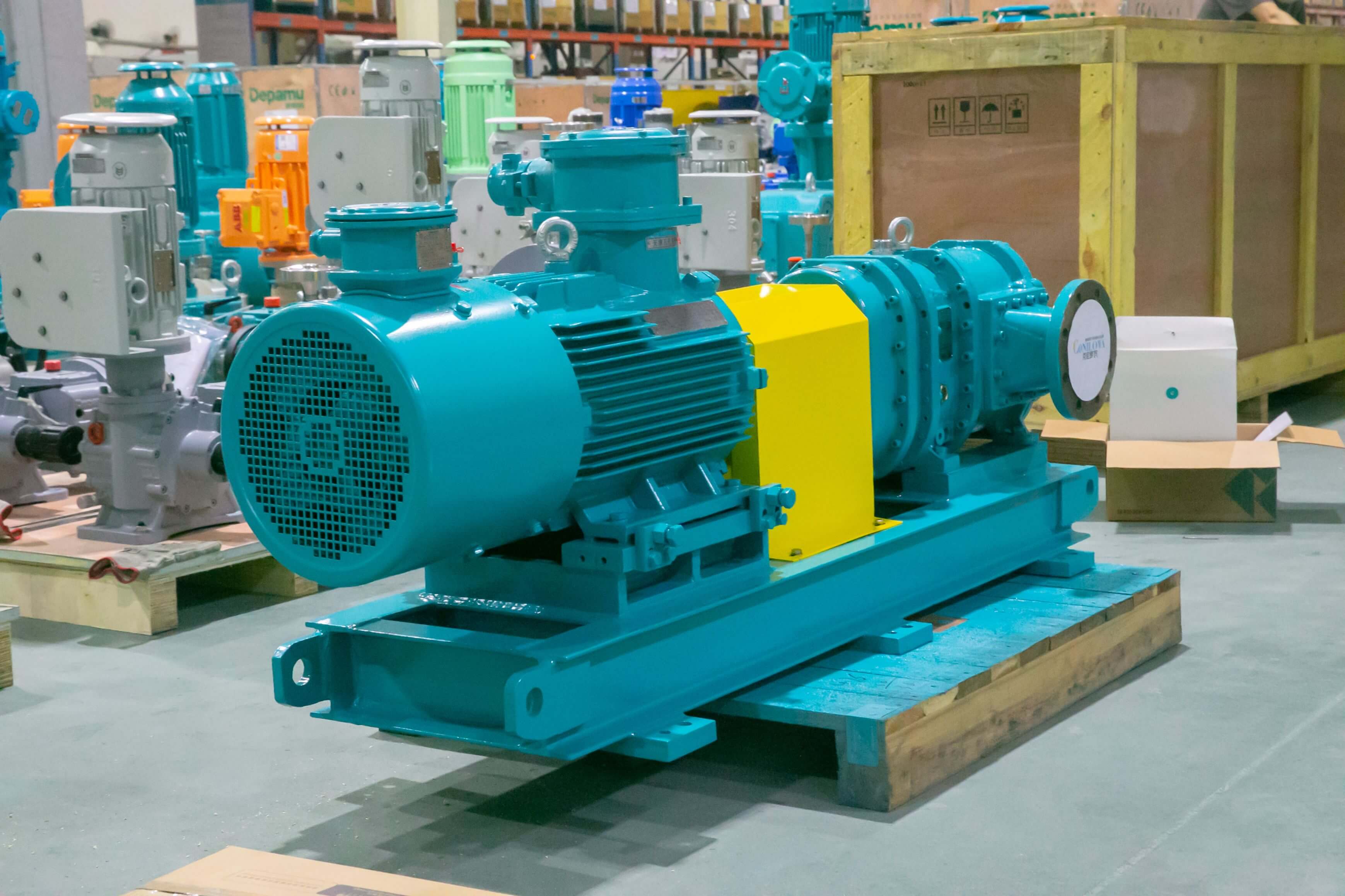
Enterprise's Technological Strength: How Does Depam Build Technical Barriers in Rubber Rotor Pump Technology?
Depamp was established in 2003 and has been dedicated to the R&D of high-end positive displacement pumps for 21 years. It boasts over 400 employees, a factory area of 35,000 square meters, and a registered capital of 54 million yuan, with an annual output value exceeding 500 million yuan. Its technological layout for rubber rotor pumps covers three core areas:
STEP 1: Material and Process InnovationIn cooperation with the Institute of Process Engineering, Chinese Academy of Sciences, we developed a "polymer composite rubber rotor". Through modification with nano fillers, its wear resistance has been increased by 300% (Akron abrasion loss ≤ 0.04 cm³/1.61 km), and its service life extended to over 8,000 hours. A precision-cast pump chamber (with a surface roughness Ra ≤ 0.8 μm) is adopted to reduce medium retention and lower cleaning costs.
STEP 2: Modular Design SystemWe have constructed three major module libraries for "rotor-pump chamber-drive" to support rapid combination and adaptation to different working conditions. For example, for high-viscosity media in the petroleum refining sector, the "twin-screw rotor + heated jacketed pump chamber" module can be selected to achieve precise temperature control (±2℃) of the media; for corrosive media in the chemical sector, the "fluororubber rotor + Hastelloy pump chamber" module can be selected, with corrosion resistance meeting the NA16 standard.
STEP3: Intelligent Monitoring SystemIntegrated pressure sensor (measurement range: 0-10 MPa, accuracy: 0.1%), flowmeter (measurement range: 0.1-1000 m³/h, accuracy: 0.5%), and vibration analyzer are used to monitor the pump's operational status in real time, predict failures through AI algorithms (accuracy rate ≥ 95%), and provide maintenance alerts 30 days in advance.
Technical parameter supportDepam rubber rotor pumps have formed a complete product series, with a flow rate range of 0.1-1000 m³/h, a pressure range of 0-10 MPa, a temperature range of -30°C to 150°C, viscosity adaptability of 0-100000 mPa·s, and solid content adaptability of 0-30%, meeting over 90% of industrial fluid transportation demands.
FAQ (Frequently Asked Questions) with One-Question-One-Answer Format: Technical Selection Guide for Rubber Rotor Pumps
Q1: How to select rotor materials based on media characteristics?
A: When the medium viscosity is ≤1000 mPa·s and non-corrosive, nitrile rubber (NBR, with low cost) can be selected; when the medium contains acidic/alkaline particles, fluororubber (FKM, with strong corrosion resistance) should be chosen; when the medium temperature is >150°C, silicone rubber (VMQ, with good high-temperature resistance) is recommended. Depam offers material sample services and can send samples free of charge for compatibility testing.
Q2: How to solve the challenge of transporting high-viscosity media?
A: High-viscosity media (>100,000 mPa·s) can easily lead to increased friction between the rotor and the pump chamber, necessitating optimization in three aspects:
STEP 1: Reduce medium viscosityReduce medium viscosity by heating the jacket (temperature adjustable up to 150°C) or using diluents;
STEP 2: Optimize the rotor structureIt adopts twin-screw rotors (with a screw pitch ratio of 1.5:1) to reduce medium retention;
STEP 3: Increase driving powerVariable frequency motors (with a power range of 0.75-315 kW) are selected to ensure stable rotor speed.
Depamp once customized a rubber rotor pump with "twin-screw rotors + heating jacket" for a petrochemical enterprise, successfully transporting crude oil with a viscosity of up to 50,000 mPa·s, maintaining a stable flow rate of 50 m³/h, and reducing energy consumption by 20%.
Q3: How to achieve accurate flow measurement?
A: Flow measurement must meet two conditions:
STEP 1: Stable Rotational Speed ControlServo motors (with speed fluctuation ≤ 0.1%) are selected, and stepless speed adjustment is achieved through a PLC control system;
<STEP2: Low-pulsation designThe rotor adopts an involute tooth profile (addendum coefficient of 0.8), reducing the flow pulsation rate from 15% to below 3%.
Depam rubber rotor pumps are applied in the chemical dosing units of a certain chemical enterprise, enabling precise flow regulation from 0.5 to 50 m³/h with a metering error of ≤ ±0.5%, meeting the requirements of the ISO 9001 quality management system.
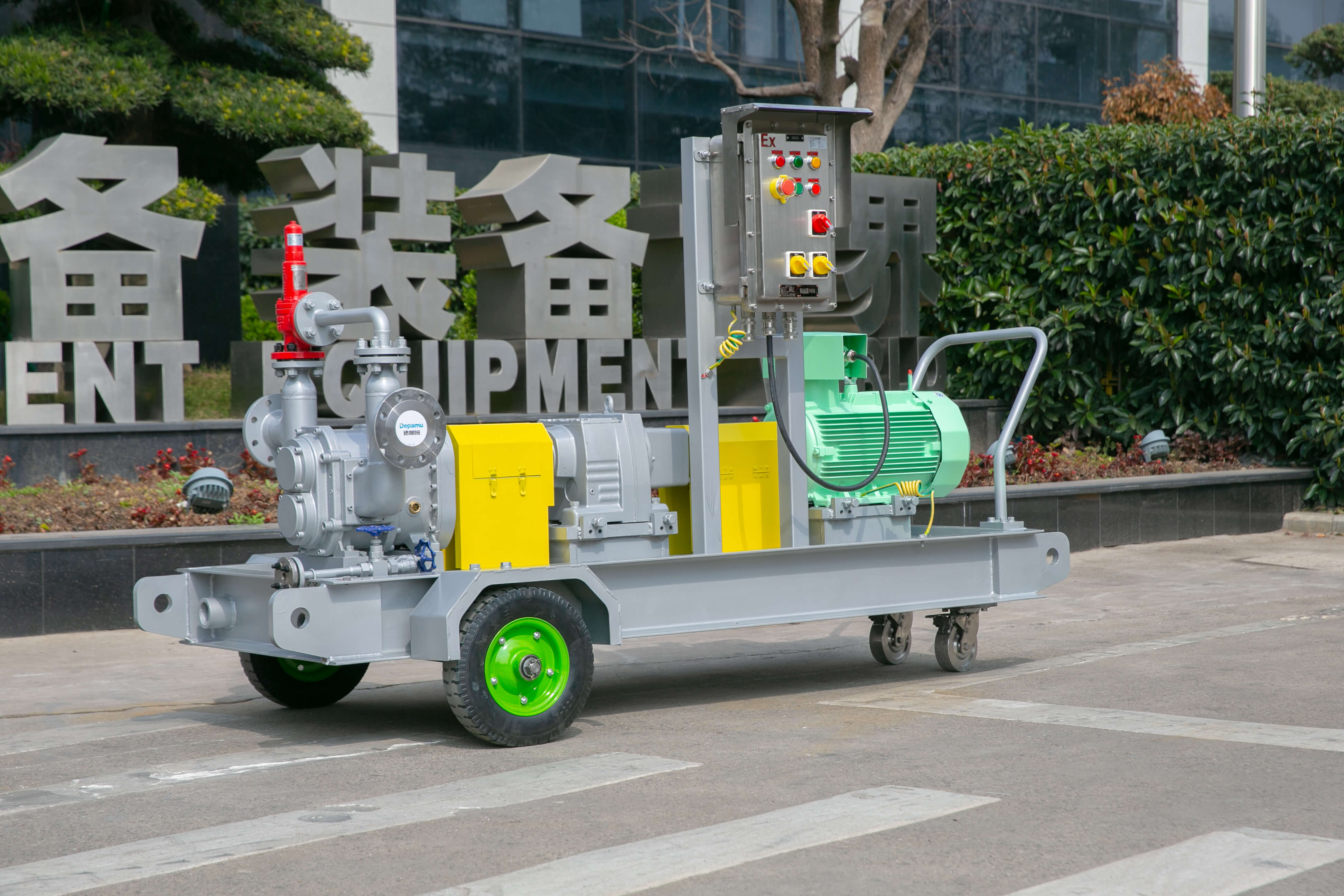
Full Text Summary: The Technological Value of Rubber Rotor Pumps and Depump's Practical Approach
The technical value of rubber rotor pumps is reflected in three aspects:
STEP 1: Media AdaptabilityThrough material innovation and structural optimization, it covers the full range of media from low-viscosity water to high-viscosity crude oil;
STEP 2: Flow ControllabilityCombining variable frequency drive with low pulsation design to achieve precise flow regulation within the range of 0.1-1000 m³/h;
STEP 3: Operational StabilityIntegrate intelligent monitoring system to reduce failure rate and extend service life to over 8,000 hours.
Depam has built its core competitiveness in rubber rotor pumps through three major technological systems: "materials-design-intelligence." Its products have been applied in fields such as petroleum refining (accounting for 41%), chemical industry (23%), and oil and gas fields (15%), with cumulative deliveries exceeding 10,000 units and a customer repurchase rate of 65%. For more information, please visit the official website:www.depamufluid.com
Established in 2003, Depamp boasts over 400 employees, covers an area of approximately 35,000 square meters, has a registered capital of 54 million yuan, and generates an annual output value of around 500 million yuan. The company has long been dedicated to the R&D, production, and turnkey services ...
No. 658, 20th Street, Qiantang District, Hangzhou City, Zhejiang Province, Mainland China