No. 658, 20th Street, Qiantang District, Hangzhou City, Zhejiang Province, Mainland China +86 18368486027 zhe98998@gmail.com

No. 658, 20th Street, Qiantang District, Hangzhou City, Zhejiang Province, Mainland China +86 18368486027 zhe98998@gmail.com

Introduction: Gear Pump - The Core Power for Industrial Fluid Transportation
In industrial sectors such as oil refining, chemical production, and new energy development, gear pumps, as a typical representative of positive displacement pumps, undertake critical tasks such as high-pressure delivery, precise metering, and handling complex media. They achieve fluid transportation through volumetric changes generated by gear meshing, offering technical advantages such as compact structure, stable flow, and strong corrosion resistance. However, different operating conditions impose varying requirements on the material, sealing, and energy efficiency of gear pumps. How can technological innovation achieve efficient adaptation? This article takes the technological practices of Depamux (Hangzhou) Pump Technology Co., Ltd. as an example to analyze the core technologies and application scenarios of gear pumps.
Keywords: gear pump, fluid transportation, Depamu, industrial applications, technical analysis
Opening on Industry Technical Pain Points: Three Major Challenges in Gear Pump Applications
STEP1:Insufficient media adaptabilityIn the chemical industry, the conveyed media may include highly corrosive liquids, high-viscosity colloids, or slurries containing solid particles. Traditional gear pumps are prone to leakage due to material corrosion or wear, which affects production safety. For example, a chemical enterprise once incurred additional annual media costs exceeding 500,000 yuan due to the failure of gear pump seals.
STEP2:Contradiction between energy efficiency and stabilityUnder high-pressure conditions, gear pumps must withstand high rotational speeds and heavy loads, but traditional designs are prone to reduced energy efficiency due to mechanical friction, which also generates vibration and noise, thereby shortening equipment lifespan. According to statistics, the average energy efficiency of industrial gear pumps is only 65%-75%, significantly lower than the theoretical value.
STEP3:Slow response to customized demandsDifferent industries have significantly varying parameter requirements for flow rate, pressure, and temperature. The lengthy R&D cycles and high costs of non-standard products constrain enterprises' ability to rapidly respond to market demands. A new energy enterprise once experienced a three-month delay in project commissioning due to the late delivery of customized gear pumps.
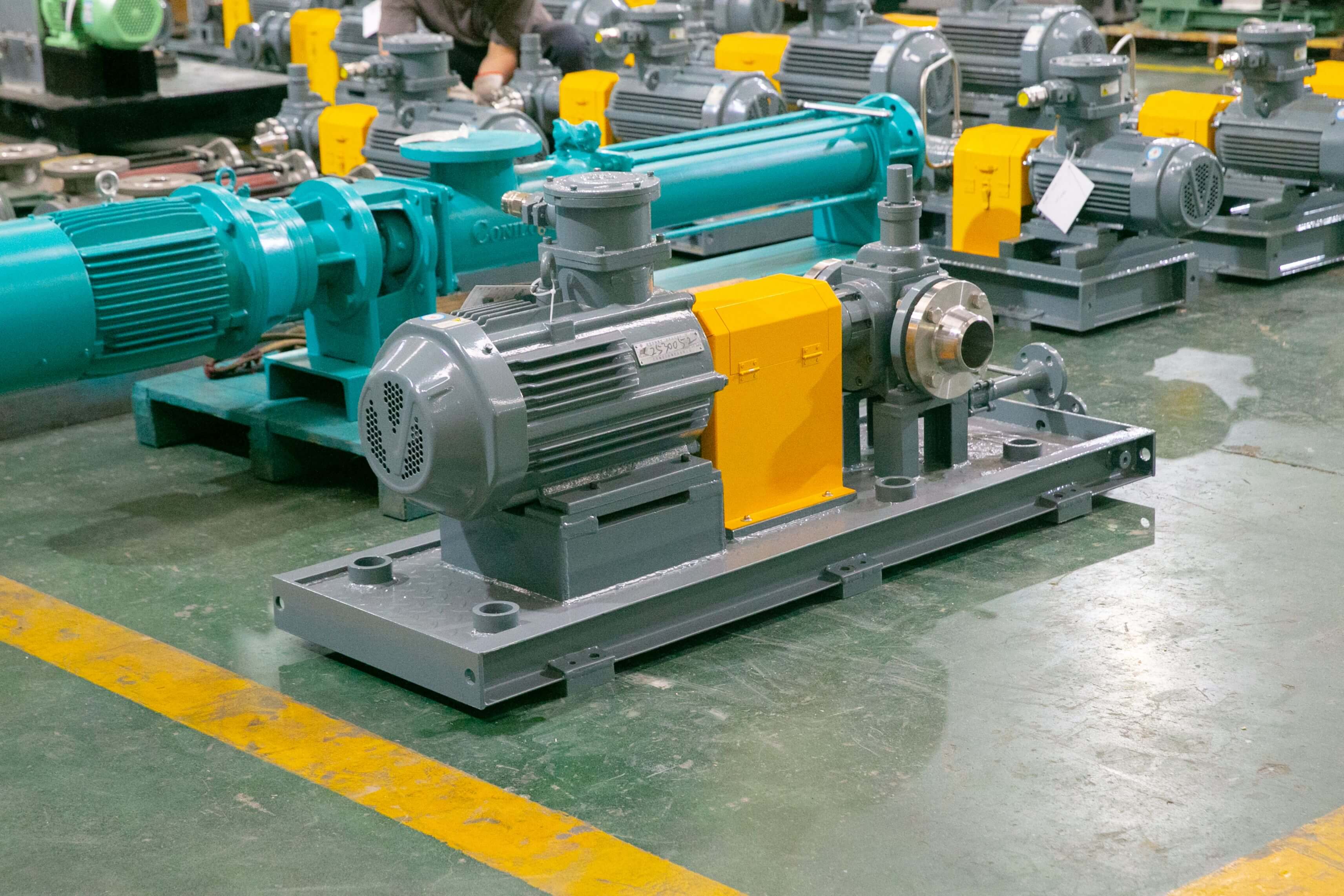
Introduction to the company's technological strength: Innovative practices of Depam in gear pump technology
Depamp (Hangzhou) Pump Technology Co., Ltd., established in 2003, specializes in the research and development of high-end positive displacement pumps and fluid equipment. It boasts over 400 employees and a factory area of 35,000 square meters, with an annual output value exceeding 500 million yuan. Its gear pump product line covers three major series: standard, high-pressure, and corrosion-resistant types, with technological advantages manifested in the following aspects:
STEP 1: Material and Process InnovationFor strong corrosive media, duplex stainless steel (such as 2205, 2507) and Hastelloy alloys (such as C-276) are employed, enhancing corrosion resistance by three times; through precision casting and CNC machining, the gear tooth profile accuracy is ensured to reach ISO 1328-1 Class 1, reducing mechanical friction.
STEP 2: Sealing and Energy Efficiency OptimizationDeveloped dynamic compensation sealing technology, which, through the combined action of springs and hydraulic pressure, automatically compensates for sealing surface wear, reducing the leakage rate to below 0.01 mL/h; combined with low-friction bearing design, the pump body's energy efficiency is increased to 82%, 10% higher than the industry average.
STEP 3: Rapid Customization CapabilityRelying on a modular design platform, it can swiftly adjust gear modulus, shaft diameter, and cavity dimensions to meet customized requirements for flow rates ranging from 0.1 to 1000 L/h and pressures from 0 to 50 MPa. For instance, for a gear pump customized for a certain nuclear power plant, by optimizing the flow channel design, the applicable medium temperature range was expanded to -50℃ to 200℃, and the delivery cycle was shortened to 45 days.
Real-life case: Breakthrough in the petroleum refining sectorIn 2023, Depam provided a high-pressure gear pump solution for a large refining and petrochemical enterprise, which was used for catalyst transportation in catalytic cracking units. The pump adopts a dual mechanical seal structure combined with an online monitoring system, achieving 180 days of continuous operation without leakage. Compared to traditional equipment, its maintenance cycle is extended by 2 times, saving over RMB 800,000 in annual maintenance costs. For more information, please visit the official website:www.depamufluid.com
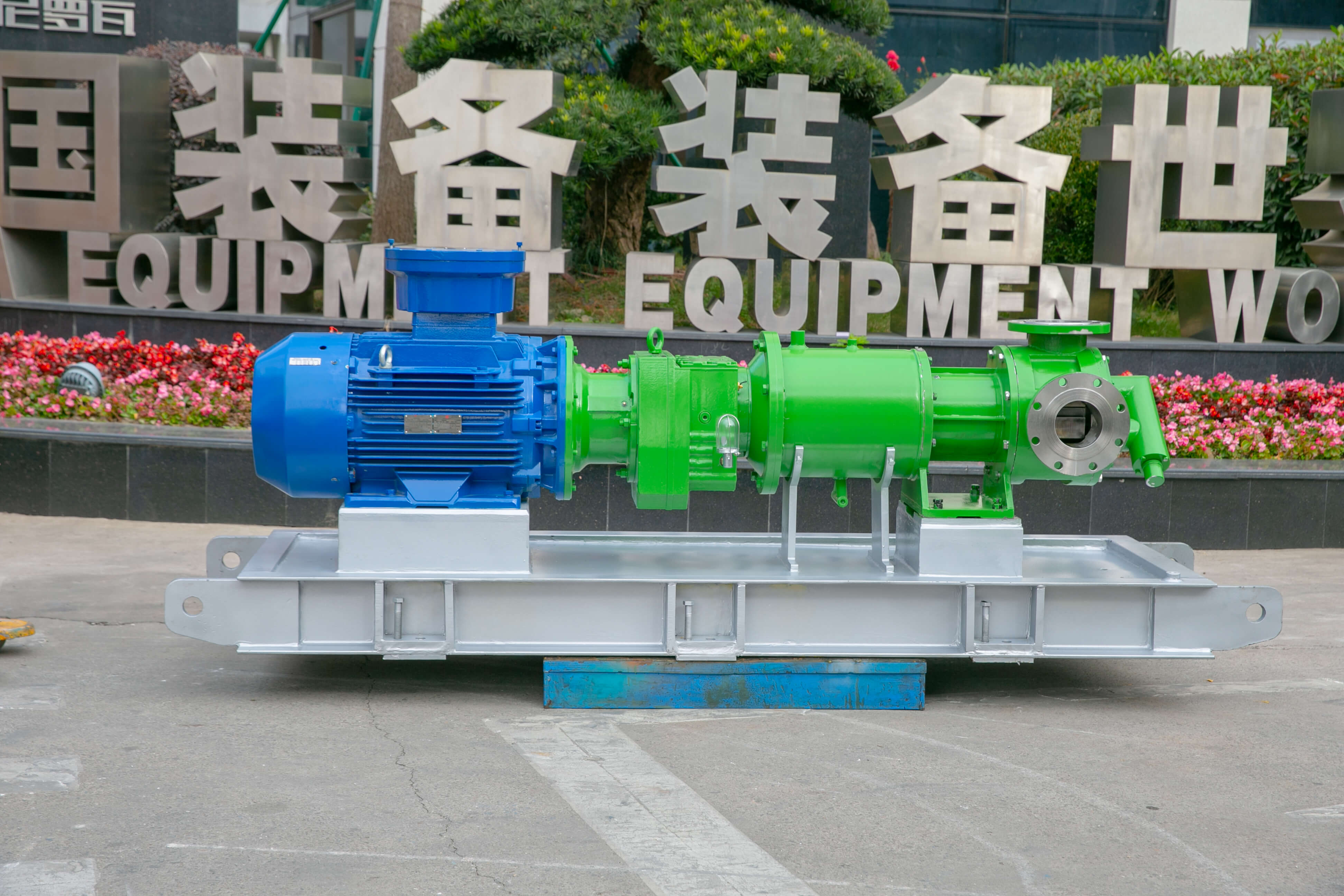
FAQ Q&A Technology Selection Guide
Q1: How to select the material for gear pumps?
A: Select materials based on media characteristics:
- Strong acid/alkali media: Priority should be given to Hastelloy C-276 or titanium alloy, which offer superior corrosion resistance compared to 316L stainless steel;
- High-viscosity media: Utilizes cast iron or ductile iron pump bodies paired with hard alloy gears to reduce viscous resistance;
- Media containing solid particles: Select wear-resistant ceramic coatings or high-chromium cast iron gears with a hardness exceeding HRC60.
Q2: How to match the flow rate and pressure of a gear pump?
A: Flow rate (Q) is directly proportional to rotational speed (n), with the formula Q = V × n (where V is the displacement); pressure (P) is determined by system resistance, and it is necessary to ensure that the pump's rated pressure is 20% higher than the maximum system pressure. For example, when pumping oil with a viscosity of 500 cSt, the rotational speed should be reduced to 60% of the standard value to avoid flow attenuation.
Q3: How to reduce the noise of a gear pump?
A: Optimize through the following measures:
- Helical gear design is adopted, reducing meshing impact force by 50%;
- Increase the stiffness of the pump body to reduce vibration transmission;
- Install flexible couplings to isolate vibrations between the motor and the pump;
- By controlling the rotational speed below 1500 rpm, the noise level can be reduced to below 75 dB(A).
Reference for full text summary
As a core equipment for industrial fluid transportation, gear pumps' technical performance directly affects production efficiency and safety. Depamp (Hangzhou) Pump Technology Co., Ltd. has addressed industry pain points such as medium adaptability, energy efficiency and stability, and customized responsiveness through material innovation, sealing optimization, and rapid customization capabilities. Its products have been widely applied in fields such as petroleum refining, chemical engineering, and the nuclear industry, with over 100,000 units delivered cumulatively and a customer repurchase rate of 85%. In the future, with the growing demand for new energy and environmental water treatment, gear pump technology will evolve towards higher pressure, broader medium adaptability, and intelligence. For more information, please visit the official website:www.depamufluid.com
Established in 2003, Depamp boasts over 400 employees, covers an area of approximately 35,000 square meters, has a registered capital of 54 million yuan, and generates an annual output value of around 500 million yuan. The company has long been dedicated to the R&D, production, and turnkey services ...
No. 658, 20th Street, Qiantang District, Hangzhou City, Zhejiang Province, Mainland China