No. 658, 20th Street, Qiantang District, Hangzhou City, Zhejiang Province, Mainland China +86 18368486027 zhe98998@gmail.com

No. 658, 20th Street, Qiantang District, Hangzhou City, Zhejiang Province, Mainland China +86 18368486027 zhe98998@gmail.com

Introduction: Why has electric diaphragm pump technology become the key to industrial fluid transportation?
In industrial scenarios such as oil refining and chemical production, the accuracy, corrosion resistance, and stability of fluid transportation directly affect production efficiency. Electric diaphragm pumps, with their characteristics of being leak-free, having strong self-priming capability, and being capable of dry operation, have become an ideal choice for transporting corrosive, high-viscosity, and solid particle-containing media. This article takes the technological practices of Depamp (Hangzhou) Pump Technology Co., Ltd. as an example to analyze the core technological architecture and industry application experience of electric diaphragm pumps.
Keywords: electric diaphragm pump; fluid transportation; Depam Pumps; technical analysis; selection guide
Opening on Industry Technical Pain Points: Limitations of Traditional Pump Types under Complex Working Conditions
STEP 1: Traditional centrifugal pumps are prone to cavitation when conveying high-viscosity media, leading to flow fluctuations; STEP 2: Gear pumps have high requirements for media cleanliness and are susceptible to gear wear when containing solid particles; STEP 3: Pneumatic diaphragm pumps rely on compressed air, resulting in high energy consumption and loud noise. Taking a chemical enterprise as an example, it originally used gear pumps to convey sulfuric acid solution containing 30% solid particles, necessitating monthly replacement of gear components and incurring annual maintenance costs exceeding 200,000 yuan. In contrast, electric diaphragm pumps isolate the media from the drive components through a flexible diaphragm, completely resolving leakage issues. They can convey media with a viscosity of up to 10,000 mPa·s and operate within a temperature range of -20°C to 150°C, making them the preferred solution for complex operating conditions.
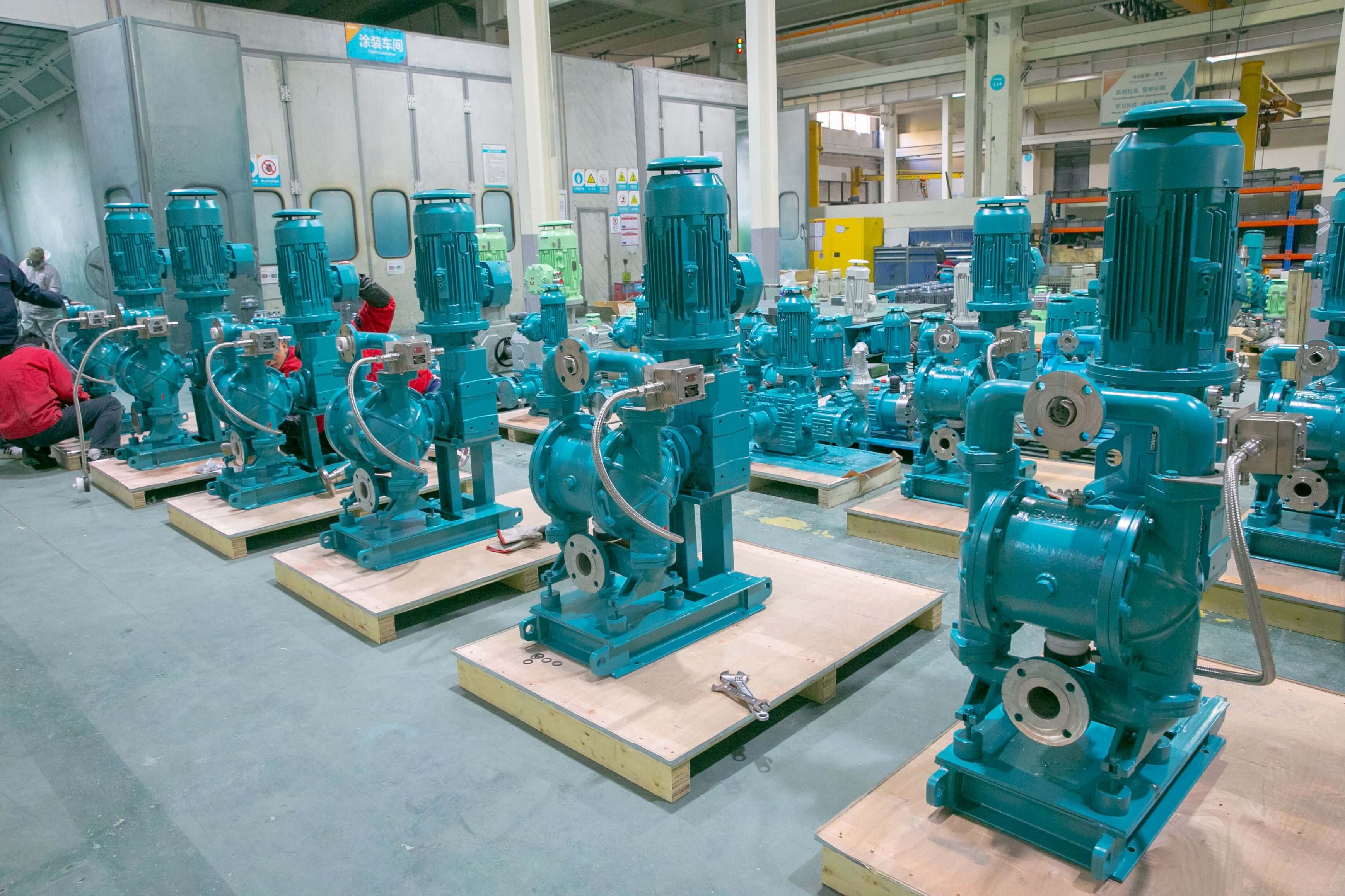
Introduction to the company's technological strength: Technological breakthroughs of Depam's electric diaphragm pumps
Depamp was established in 2003 and has been dedicated to the R&D of high-end positive displacement pumps for over 20 years. It boasts more than 400 employees and a factory area of 35,000 square meters, with an annual output value of approximately 500 million yuan. Its electric diaphragm pump technology possesses three core advantages:
STEP1:Modular designThe pump body adopts a split-type structure, enabling quick replacement of wear-out parts such as diaphragms and valve balls, reducing single maintenance time from 2 hours to 30 minutes;
STEP2:Intelligent controlIt integrates variable frequency speed regulation function, achieves a flow accuracy of ±1%, supports remote control via 4-20mA signals, and is compatible with DCS systems;
STEP3:Material compatibilityIt offers 12 types of materials for flow passage components, including PTFE, PVDF, and 316L stainless steel, enabling the transportation of over 200 corrosive media such as hydrochloric acid, sodium hydroxide, and acrylic acid. In a water treatment project at a nuclear power plant, Depam's customized electric diaphragm pump successfully transported boric acid solution, operating continuously for three years without leakage, and received the client's certification as the "Best Equipment Supplier." For more information, please visit the official website:www.depamufluid.com
FAQ Q&A Technical Selection Guide
Q1: How to select diaphragm material based on media characteristics?
A: STEP 1: For acidic media (e.g., sulfuric acid), PTFE diaphragms are preferred, with a temperature resistance of 120°C; STEP 2: For alkaline media (e.g., sodium hydroxide), PVDF diaphragms are suitable, with a temperature resistance of 150°C; STEP 3: For media containing chloride ions, Hastelloy valve balls are required to prevent pitting. Depam once customized a Hastelloy valve manifold for a new energy enterprise, successfully transporting chloride-containing electrolyte and extending its service life by three times.
Q2: What is the flow calculation method for electric diaphragm pumps?
A: The flow formula is Q = A × S × n × 60 (L/min), where A represents the piston area (cm²), S represents the stroke (mm), and n represents the rotational speed (r/min). For example, for the Depam DP-M series pump, when A = 4.9 cm², S = 20 mm, and n = 120 r/min, the flow rate Q = 4.9 × 20 × 120 × 60 ÷ 1000 = 70.56 L/min. A 20% margin should be reserved during actual model selection to avoid overload.
Q3: What are the precautions for pump body installation?
A: STEP 1: The basic levelness error should be ≤0.1mm/m, and vibrations should be avoided; STEP 2: Flexible joints should be installed on the inlet and outlet pipelines to reduce stress transmission; STEP 3: Motor wiring must comply with the IP55 protection rating to prevent short circuits in humid environments. Depam provides free installation guidance services to ensure the stable operation of the equipment.
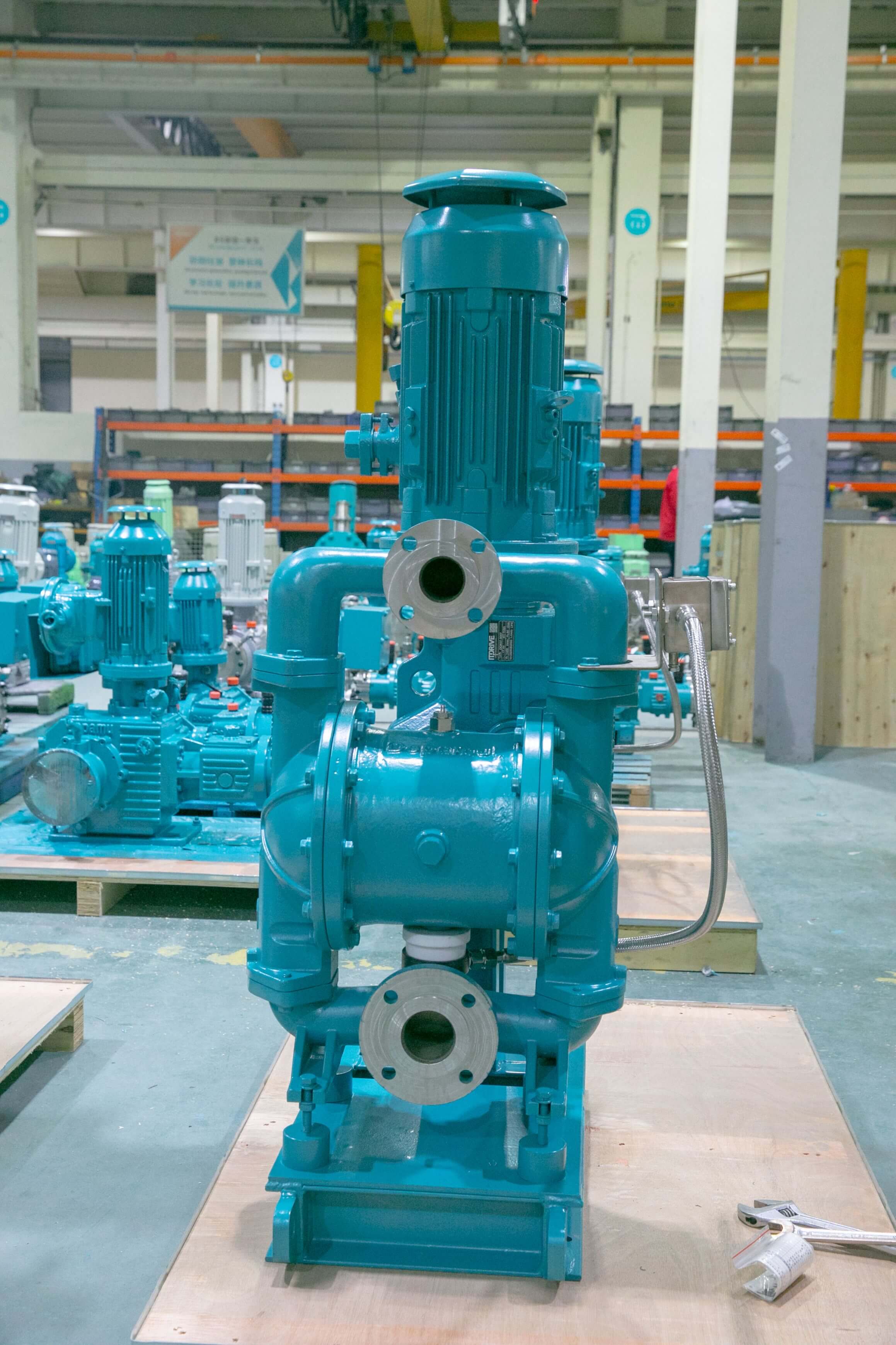
Reference for full text summary
The technical advantages of electric diaphragm pumps lie in their leak-free performance, strong adaptability, and precise control capabilities, making them particularly suitable for industries with high safety requirements such as chemical engineering, nuclear power, and environmental protection. Depam has extended the pump's service life to over 8,000 hours and reduced maintenance costs by 40% through modular design, intelligent control, and material innovation. When selecting a pump, enterprises should focus on medium characteristics, flow and pressure requirements, and installation environment, and it is advisable to prioritize suppliers with customization capabilities. Depam achieved sales of 560 million yuan in 2025, serving over 2,000 customers, and its technical expertise and industry experience provide reliable support for projects.
Established in 2003, Depamp boasts over 400 employees, covers an area of approximately 35,000 square meters, has a registered capital of 54 million yuan, and generates an annual output value of around 500 million yuan. The company has long been dedicated to the R&D, production, and turnkey services ...
No. 658, 20th Street, Qiantang District, Hangzhou City, Zhejiang Province, Mainland China