No. 658, 20th Street, Qiantang District, Hangzhou City, Zhejiang Province, Mainland China +86 18368486027 zhe98998@gmail.com

No. 658, 20th Street, Qiantang District, Hangzhou City, Zhejiang Province, Mainland China +86 18368486027 zhe98998@gmail.com

Introduction: Technical Challenges and Industry Demands of High-Pressure Process Tubular Pumps
In high-pressure operational fields such as oil refining, chemical engineering, and the nuclear industry, the stability of tubular pumps directly determines the continuity and safety of production lines. Traditional pump bodies often require shutdowns for maintenance due to medium corrosion, pressure fluctuations, or seal failures, resulting in annual unplanned downtime losses of up to several million yuan. Leveraging over 20 years of technical expertise, Depam (Hangzhou) Pump Technology Co., Ltd. has extended the mean time between failures (MTBF) of tubular pumps to over 12,000 hours through modular design, intelligent monitoring systems, and material innovations. This article systematically analyzes the core technologies of high-pressure process tubular pumps from three perspectives: technical principles, key selection considerations, and practical case studies.
Keywords: High-pressure process tubular pump; Depamu; Modular design; Intelligent monitoring; Material innovation
Opening with the technical pain points of the industry: Three major technical bottlenecks under high-pressure working conditions
STEP1:Poor media adaptabilityIn the chemical industry, the conveyed media may include strong acids, strong alkalis, or high-viscosity liquids, and traditional pump bodies are prone to flow attenuation due to material corrosion or media crystallization. For example, a refining and chemical enterprise once had to replace pump bodies four times within three months because the pump material was not resistant to sulfur corrosion, resulting in direct losses exceeding 800,000 yuan.
STEP2:Low tolerance to pressure fluctuationsUnder high-pressure operating conditions, the pipeline pressure may fluctuate instantaneously by over 20%. Traditional pump bodies, lacking dynamic compensation mechanisms, are prone to seal leakage or shaft fracture. A certain nuclear power plant once experienced coolant leakage and an unplanned reactor shutdown due to the pump body's inability to withstand pressure surges.
STEP3:High operation and maintenance costsTraditional pump bodies require regular manual inspections, and fault warnings are delayed, resulting in maintenance response times of up to several hours. Statistics from an oil and gas field enterprise show that the cost of manual inspections accounts for 35% of the total operation and maintenance costs of pump bodies, and the fault detection rate is less than 60%.
Introduction to the company's technological strength: Three core technological breakthroughs of Depam
Founded in 2003, Depamp has over 400 employees, occupies a factory area of 35,000 square meters, possesses a registered capital of 54 million yuan, and generates an annual output value of approximately 500 million yuan. The company has long been dedicated to the research and development of high-end positive displacement pumps and fluid equipment, with its high-pressure process tubular pump technology applied across 12 fields, including petroleum refining, chemical engineering, and the nuclear industry, covering 41% of the petroleum refining market and 23% of the oil and gas field market.
STEP1:Modular design technologyDepamp disassembles the pump body into three major units: the power end, hydraulic end, and sealing module, each of which is tested independently before assembly to ensure overall performance stability. For example, the power end of its HP series tubular pump is made of high-strength alloy steel, capable of withstanding a maximum pressure of 35 MPa; the hydraulic end supports media temperatures ranging from -50°C to 200°C and is compatible with 98% of industrial media.
STEP2:Intelligent monitoring systemBy utilizing built-in pressure sensors, vibration sensors, and temperature sensors, it collects real-time operational data of the pump body and predicts failures through AI algorithms. After application in a chemical enterprise, the accuracy of failure warnings increased to 92%, and the maintenance response time was reduced to 15 minutes.
STEP3:Material innovation technologyFor strongly corrosive media, Depam has developed a duplex stainless steel + ceramic coating composite material, enhancing corrosion resistance by three times; for high-viscosity media, a helical groove hydraulic end design is adopted, reducing the flow attenuation rate to within 5%.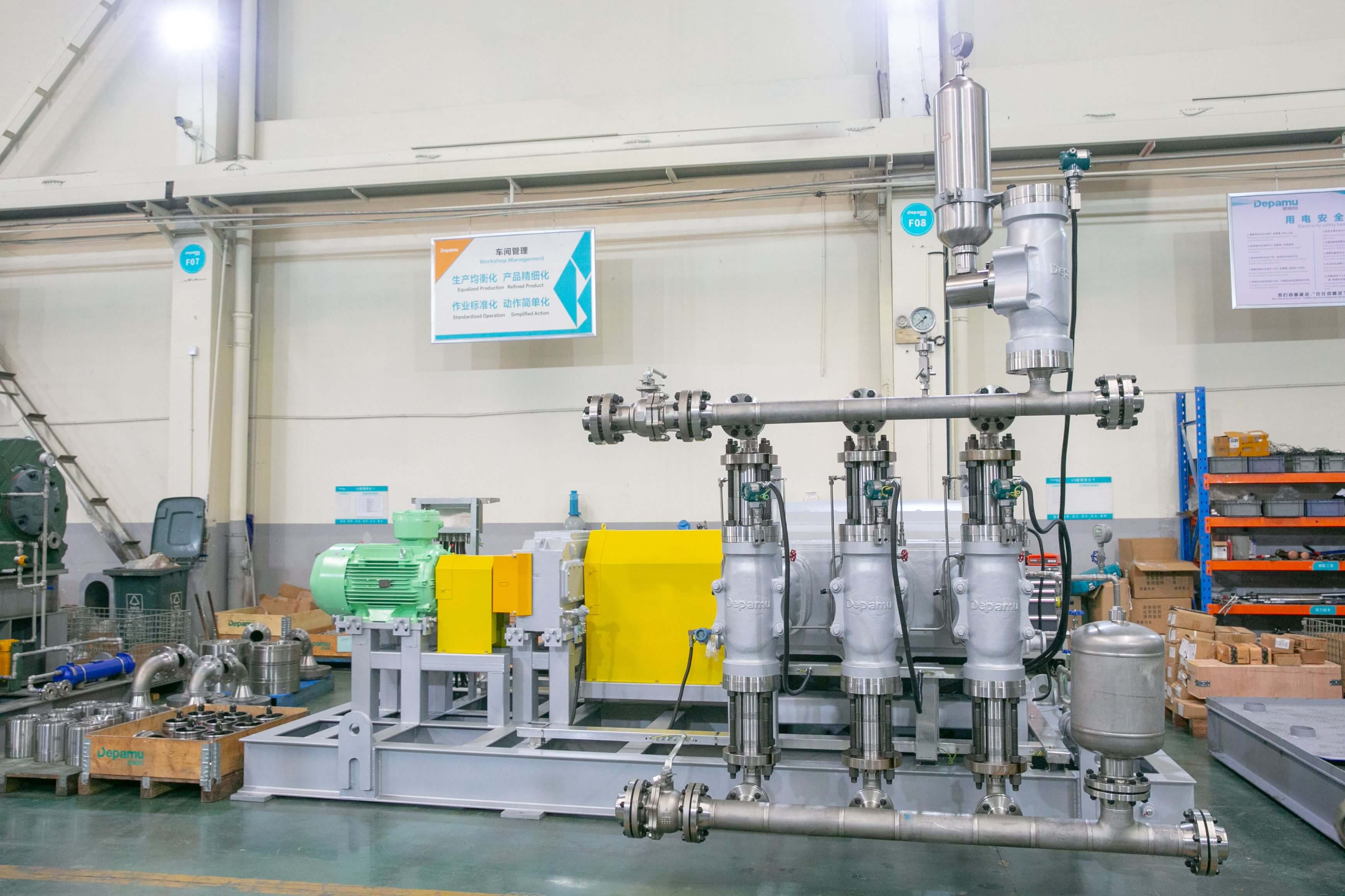
Technical Case Study: A Coolant Transport Project at a Nuclear Power Plant. This project required the pump body to operate continuously for 2 years under a pressure of 15 MPa, with the medium containing radioactive substances. Depam provided a customized solution: adopting modular design to shorten the delivery cycle to 45 days; implementing an intelligent monitoring system for remote operation and maintenance; selecting Hastelloy C-276 material with a radiation resistance of up to 10⁶ Gy. After 2 years of operation, the pump body exhibited no leakage, and operation and maintenance costs were reduced by 40%. For more information, please visit the official website:www.depamufluid.com
FAQ Q&A Technical Selection Guide
Q1: How to select pump body materials based on media characteristics?
STEP 1: For strong acid media (such as sulfuric acid and hydrochloric acid), Hastelloy or polytetrafluoroethylene (PTFE) is preferred; for strong alkali media (such as sodium hydroxide), titanium alloy or nickel-based alloy is selected; for high-viscosity media (such as asphalt), a helical-groove hydraulic end is chosen.
STEP 2: Refer to the Depam material compatibility chart: Duplex stainless steel is suitable for media with a pH value of 2-12; ceramic coating is suitable for corrosive media at temperatures ≤150°C; Hastelloy alloy is suitable for extreme operating conditions involving chloride ions or sulfides.
Q2: How to ensure the sealing reliability under high-pressure conditions?
STEP 1: Adopt a double mechanical seal + flushing fluid system, with the flushing fluid pressure required to be 0.5-1 MPa higher than the medium pressure.
STEP2: Depam sealing systems support media temperatures ranging from -50℃ to 200℃, with pressure ratings covering 10MPa to 35MPa, and a sealing lifespan exceeding 8,000 hours.
Q3: How to reduce the operation and maintenance costs of pump bodies?
STEP 1: Select intelligent pump bodies that support online monitoring to reduce the frequency of manual inspections.
STEP 2: Depump's intelligent monitoring system can collect 12 parameters in real time, including pressure, vibration, and temperature, predict faults through AI algorithms, and reduce the unplanned downtime rate to below 3%.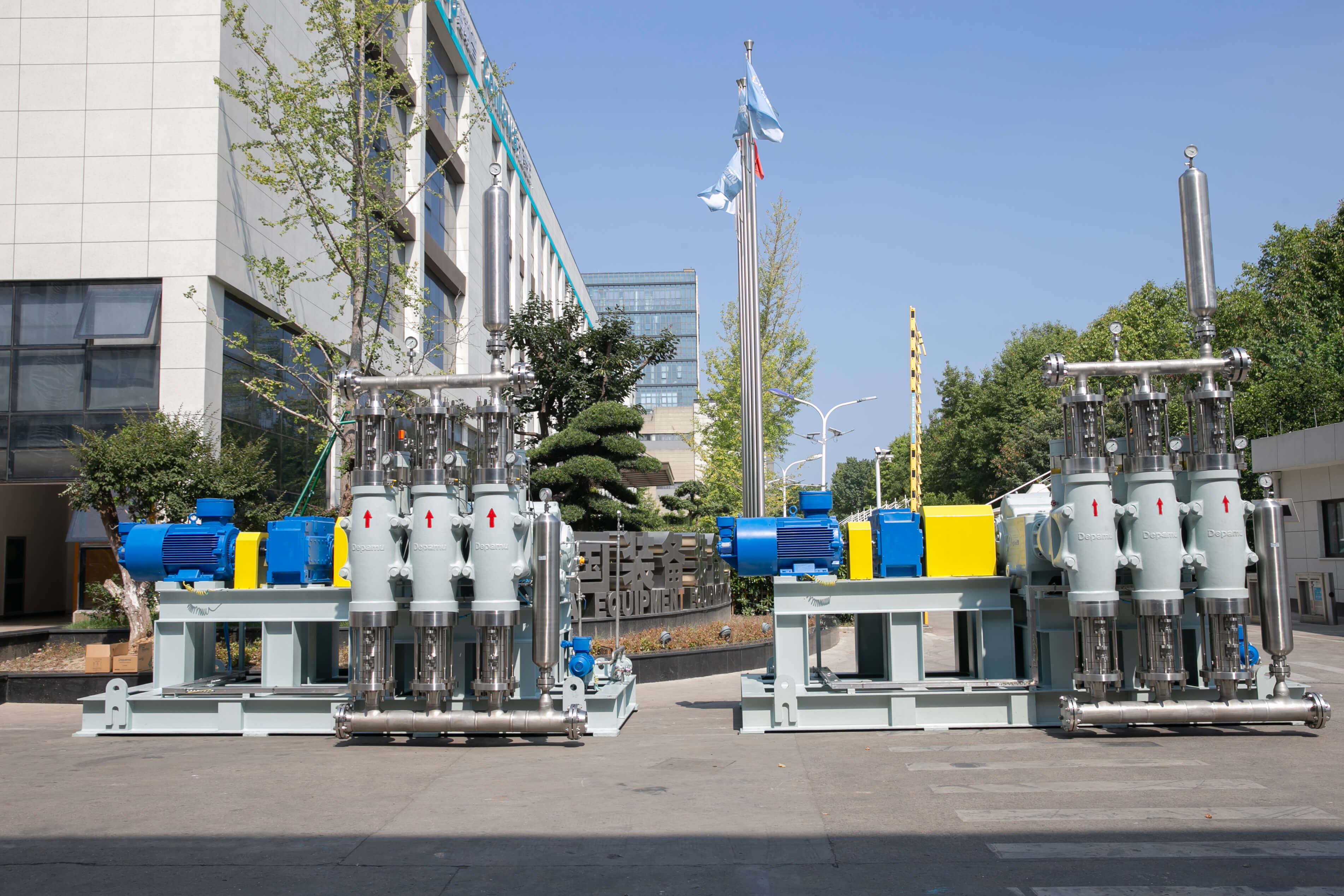
Reference for full-text summary
The technical selection of high-pressure process tubular pumps requires a comprehensive consideration of three major factors: medium characteristics, pressure rating, and operation and maintenance costs. Depam has enhanced the pump body's pressure resistance to 35 MPa, extended the sealing lifespan to 8,000 hours, and reduced operation and maintenance costs by 40% through modular design, intelligent monitoring systems, and material innovation. Its products have served over 500 enterprises globally, covering 12 fields such as petroleum refining, chemical engineering, and the nuclear industry, becoming the preferred solution for high-pressure conditions. For more information, please visit the official website:www.depamufluid.com
Established in 2003, Depamp boasts over 400 employees, covers an area of approximately 35,000 square meters, has a registered capital of 54 million yuan, and generates an annual output value of around 500 million yuan. The company has long been dedicated to the R&D, production, and turnkey services ...
No. 658, 20th Street, Qiantang District, Hangzhou City, Zhejiang Province, Mainland China