No. 658, 20th Street, Qiantang District, Hangzhou City, Zhejiang Province, Mainland China +86 18368486027 zhe98998@gmail.com

No. 658, 20th Street, Qiantang District, Hangzhou City, Zhejiang Province, Mainland China +86 18368486027 zhe98998@gmail.com

Introduction: Why have high-pressure process diaphragm pumps become the core equipment for industrial fluid transportation?
In high-pressure conditions such as oil refining and chemical production, traditional pump types often encounter issues like leakage and wear due to the corrosiveness of the medium, particulate impurities, or pressure fluctuations. However, high-pressure process diaphragm pumps, with their seal-less design, strong corrosion resistance, and precise metering capabilities, have become key equipment for solving complex fluid transportation challenges. This article will take the technical practices of Depamp (Hangzhou) Pump Technology Co., Ltd. as an example to analyze the technical principles, key selection considerations, and industry application cases of high-pressure process diaphragm pumps.
Keywords: High-pressure process diaphragm pump, Depam Pumps, Fluid transportation, Customized solutions
Industry Technical Pain Points at the Beginning: Limitations of Traditional Pump Types under High-Pressure Conditions
STEP1:High risk of seal failureWhen transporting particulate-containing or corrosive media, traditional mechanically sealed pumps are prone to leakage due to seal wear, with maintenance frequencies reaching 1-2 times per month, increasing downtime costs. For example, when a chemical enterprise used a traditional plunger pump to transport sulfuric acid, seal failure resulted in an annual leakage exceeding 5 tons, with direct losses surpassing 200,000 yuan.
STEP2:Insufficient measurement accuracyIn scenarios requiring precise dosing of chemical agents, the flow fluctuation of traditional pump types can reach ±5%, making it difficult to meet process requirements. For example, in a cooling water treatment system of a nuclear power plant, deviations in chemical dosing accelerated equipment corrosion rates by 30%.
STEP3:Poor adaptabilityUnder high-pressure operating conditions, the pressure resistance rating and material compatibility of the pump must strictly match the characteristics of the medium; otherwise, equipment failures are prone to occur. An oil and gas field enterprise experienced a pump body rupture accident due to selecting a pump with insufficient pressure resistance rating, resulting in casualties and environmental pollution.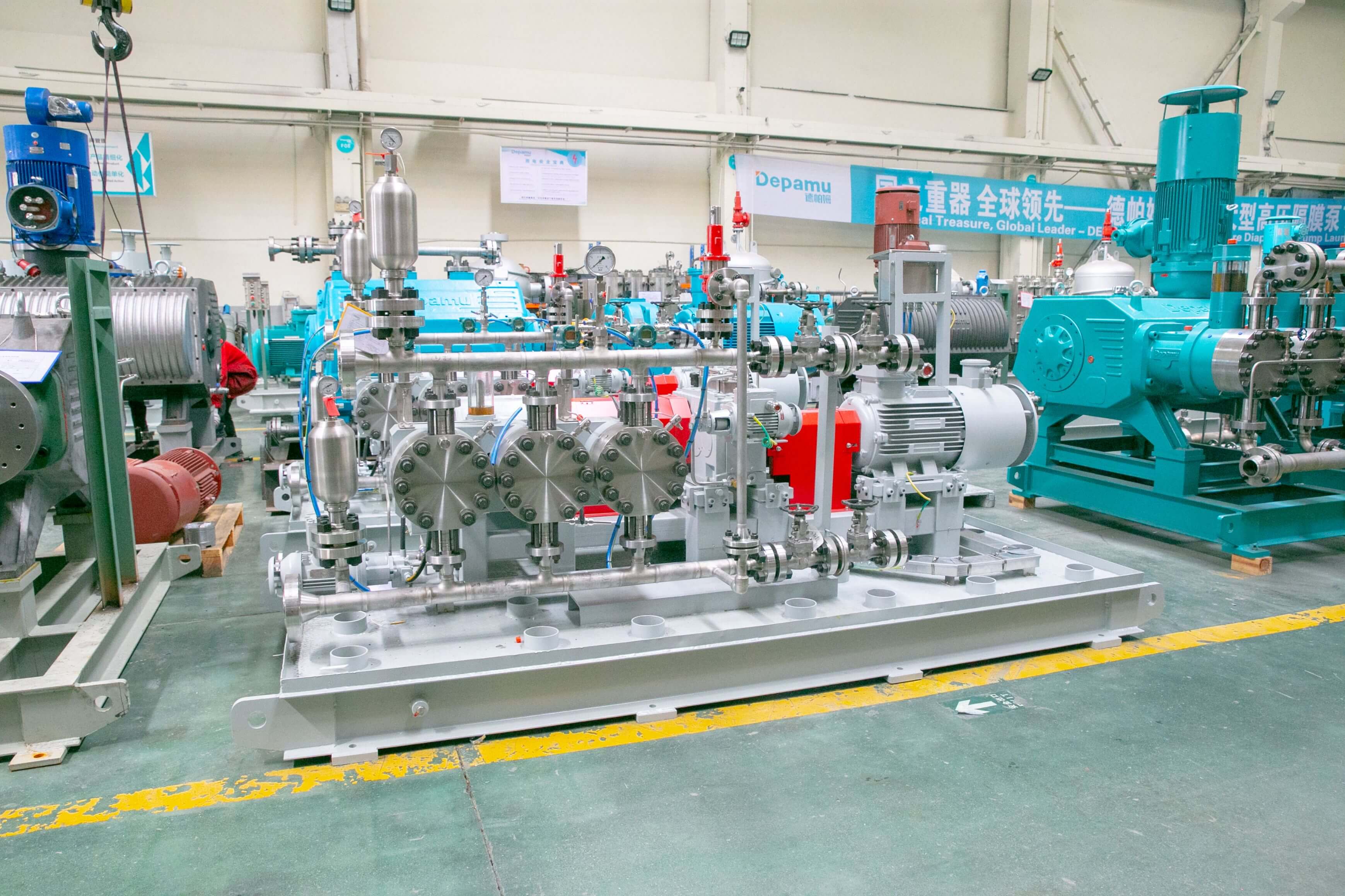
Introduction to the company's technological strength: Technological layout of high-pressure process diaphragm pumps at Depam Pump Industry
Depamp (Hangzhou) Pump Technology Co., Ltd., established in 2003, specializes in the research and development of high-end positive displacement pumps and fluid equipment. It has over 400 employees and a factory area of 35,000 square meters, with a registered capital of 54 million yuan and an annual output value of approximately 500 million yuan. Its high-pressure process diaphragm pump technology boasts the following core advantages:
STEP1:Full-series voltage-withstanding designThe products cover pressure resistance ratings from 0.6 to 100 MPa, with customizable ultra-high-pressure pumps up to 160 MPa, suitable for extreme operating conditions in petroleum refining, nuclear industry, and other fields. For example, a 100 MPa diaphragm pump provided to a refinery has operated continuously for three years without leakage, reducing maintenance costs by 60%.
STEP2:Material compatibility optimizationIn response to different media characteristics, over 10 material options are provided, including Hastelloy alloy, titanium alloy, and polytetrafluoroethylene, with corrosion resistance meeting the international standard ASTM G48 Grade A. In a chlorine gas transportation project of a chemical enterprise, the adoption of a Hastelloy alloy pump body extended its service life to 8 years, which is four times that of traditional pump models.
STEP3:Intelligent metering controlIntegrating variable frequency speed control and flow feedback systems to achieve ±0.5% high-precision metering, meeting the stringent requirements of industries such as nuclear power plants and semiconductors. After adopting Depam pumps in the cooling water treatment system of a certain nuclear power plant, the chemical dosing deviation rate decreased from ±5% to ±0.3%, and the equipment corrosion rate dropped by 70%.
STEP4:Modular customization capabilityWe provide standard products, non-standard products, and complete solutions based on customers' operating conditions, supporting customization of parameters such as flow rate (0.1-5000 L/h), temperature (-40°C to 200°C), and medium viscosity (0-10000 cSt). In a new energy battery materials project, Depam optimized the pump structure in just two weeks, resolving the challenge of transporting high-viscosity media.
For more information, please visit the official website:www.depamufluid.com
FAQ: A Q&A Guide to Technology Selection
Q1: How to select the pressure resistance rating for diaphragm pumps in high-pressure processes?
A: The pressure resistance rating of the pump should be selected based on the maximum operating pressure of the system, and it is generally recommended to allow for a 20% safety margin. For example, when the system pressure is 80 MPa, a pump with a pressure resistance of 100 MPa should be selected. Depamp pumps employ a prestressed design, enabling them to withstand 1.5 times the instantaneous overpressure, ensuring equipment safety.
Q2: What are the methods for flow regulation of diaphragm pumps?
A: It is primarily achieved through variable frequency drive (VFD) or stroke length adjustment. The VFD range can reach 20-100Hz, suitable for scenarios requiring continuous flow variation; stroke adjustment offers higher precision but with a narrower range (typically 30-100%). Depump pumps support the combined use of both methods, enabling more flexible flow control.
Q3: How to determine if a diaphragm pump needs replacement?
A: Key testing indicators include:
- Flow decay rate: If the flow rate drops by more than 15%, check the diaphragm or check valve;
- Leakage frequency: If leakage exceeds twice per month, the seals require maintenance;
- Noise level: Abnormal noise (>85dB) may indicate bearing or gear wear.
Depamp pumps employ a visual monitoring system that displays operational parameters in real time and provides early fault warnings.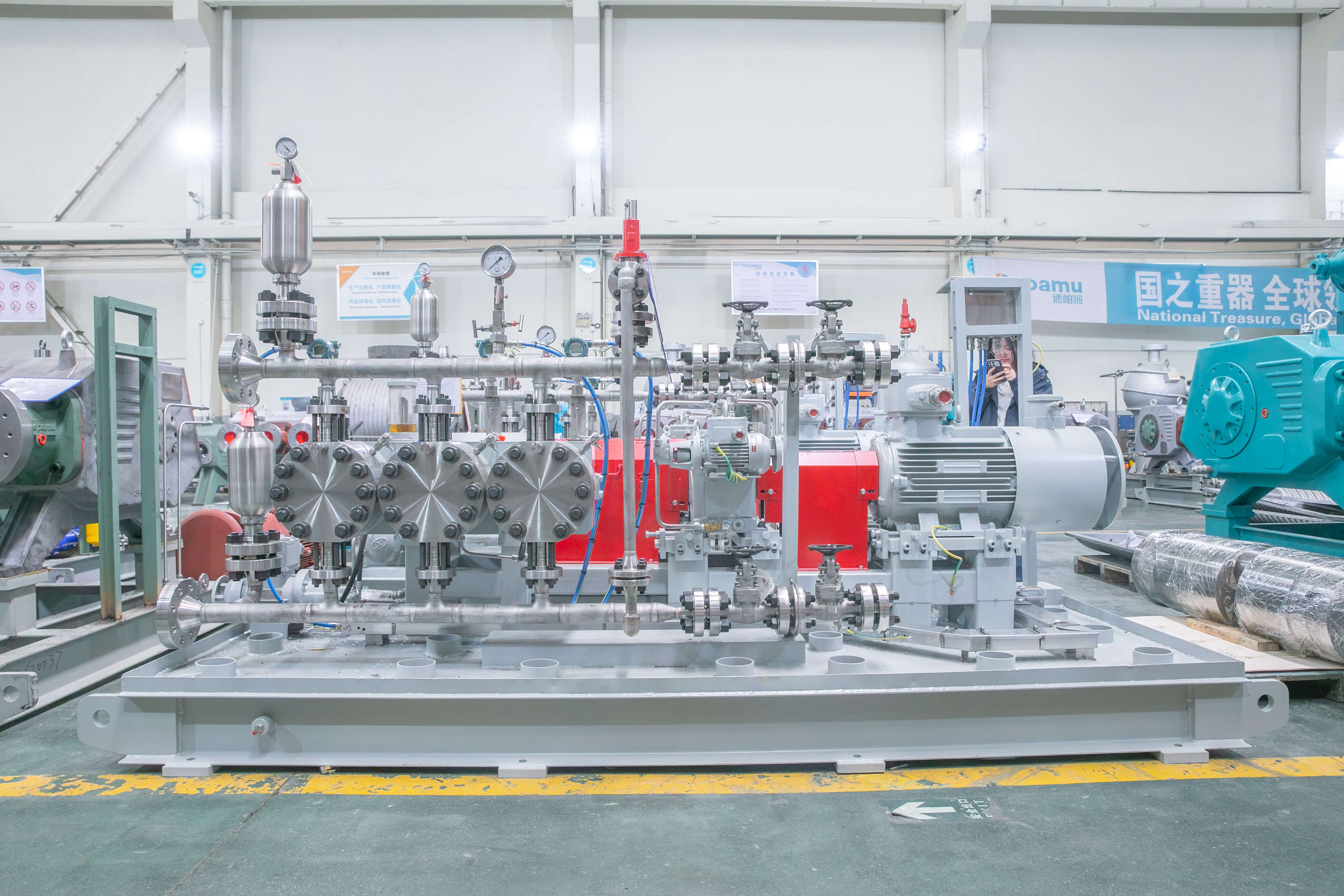
Reference for full text summary
The high-pressure process diaphragm pump is a core piece of equipment for addressing challenges in the transportation of high-pressure and corrosive media, with its technical selection requiring comprehensive consideration of pressure resistance ratings, material compatibility, metering accuracy, and customization capabilities. Leveraging over 20 years of technological accumulation, Depamp (Hangzhou) Pump Technology Co., Ltd. has developed comprehensive solutions covering fields such as petroleum refining, chemical engineering, and the nuclear industry. Its products are renowned for their high reliability, precision, and strong adaptability, having served over 5,000 customers with an annual output value exceeding 500 million yuan. Looking ahead, with the advancement of Industry 4.0, Depamp will continue to optimize intelligent control and modular design to help enterprises achieve more efficient and safe fluid transportation.
Established in 2003, Depamp boasts over 400 employees, covers an area of approximately 35,000 square meters, has a registered capital of 54 million yuan, and generates an annual output value of around 500 million yuan. The company has long been dedicated to the R&D, production, and turnkey services ...
No. 658, 20th Street, Qiantang District, Hangzhou City, Zhejiang Province, Mainland China