No. 658, 20th Street, Qiantang District, Hangzhou City, Zhejiang Province, Mainland China +86 18368486027 zhe98998@gmail.com

No. 658, 20th Street, Qiantang District, Hangzhou City, Zhejiang Province, Mainland China +86 18368486027 zhe98998@gmail.com

Introduction: Why has high-precision flow control become the core challenge for metering pump skids?
In industrial scenarios such as oil refining and chemical production, metering pump skids serve as the core equipment for chemical dosing and process pressurization, with their flow control accuracy directly influencing product quality and production safety. Industry data indicates that flow fluctuations exceeding ±1% can lead to a 15% increase in catalyst failure rates, while traditional metering pump skids often struggle to achieve control accuracy beyond ±2% due to factors such as mechanical wear and changes in medium viscosity. This article provides an in-depth analysis, from three perspectives—technical principles, operational procedures, and case studies—on how metering pump skid manufacturers achieve high-precision flow control through core component selection, system integration optimization, and dynamic compensation algorithms.
Keywords: metering pump skid, high-precision flow control, dynamic compensation algorithm, Depam Pumps
Opening on industry technical pain points: Three major control bottlenecks of traditional metering pump skids
STEP 1: Accumulation of mechanical transmission errors. Traditional metering pump skids mostly adopt plunger or diaphragm structures, with their flow output directly related to the plunger stroke and diaphragm deformation. Taking a domestically produced metering pump skid used by a petrochemical enterprise as an example, after 2000 hours of continuous operation, the stroke error reached 0.3 mm due to screw wear, causing the corresponding flow deviation to expand from the initial ±0.8% to ±1.5%.
STEP 2: Poor adaptability to medium characteristics. Chemical production often involves media with high viscosity (e.g., polymer solutions with viscosity up to 10,000 mPa·s) and strong corrosiveness (e.g., hydrochloric acid with a concentration of 37%). Traditional pump body materials (such as 316L stainless steel) are prone to corrosion upon prolonged contact, leading to seal failure and subsequent flow leakage. A new energy battery material manufacturer once experienced hydrogen fluoride leakage due to pump body corrosion, resulting in direct economic losses exceeding 2 million yuan.
STEP 3: Dynamic response lag. In scenarios requiring rapid adjustment of dosing quantities (such as pH regulation), traditional metering pump skids struggle to achieve real-time precision control due to motor start-stop delays (typically 3-5 seconds) and pipeline pressure fluctuations. Test data from a power desulfurization project revealed that when load changes abruptly, the response time for flow adjustment in traditional equipment reached up to 8 seconds, resulting in a 12% decline in desulfurization efficiency.
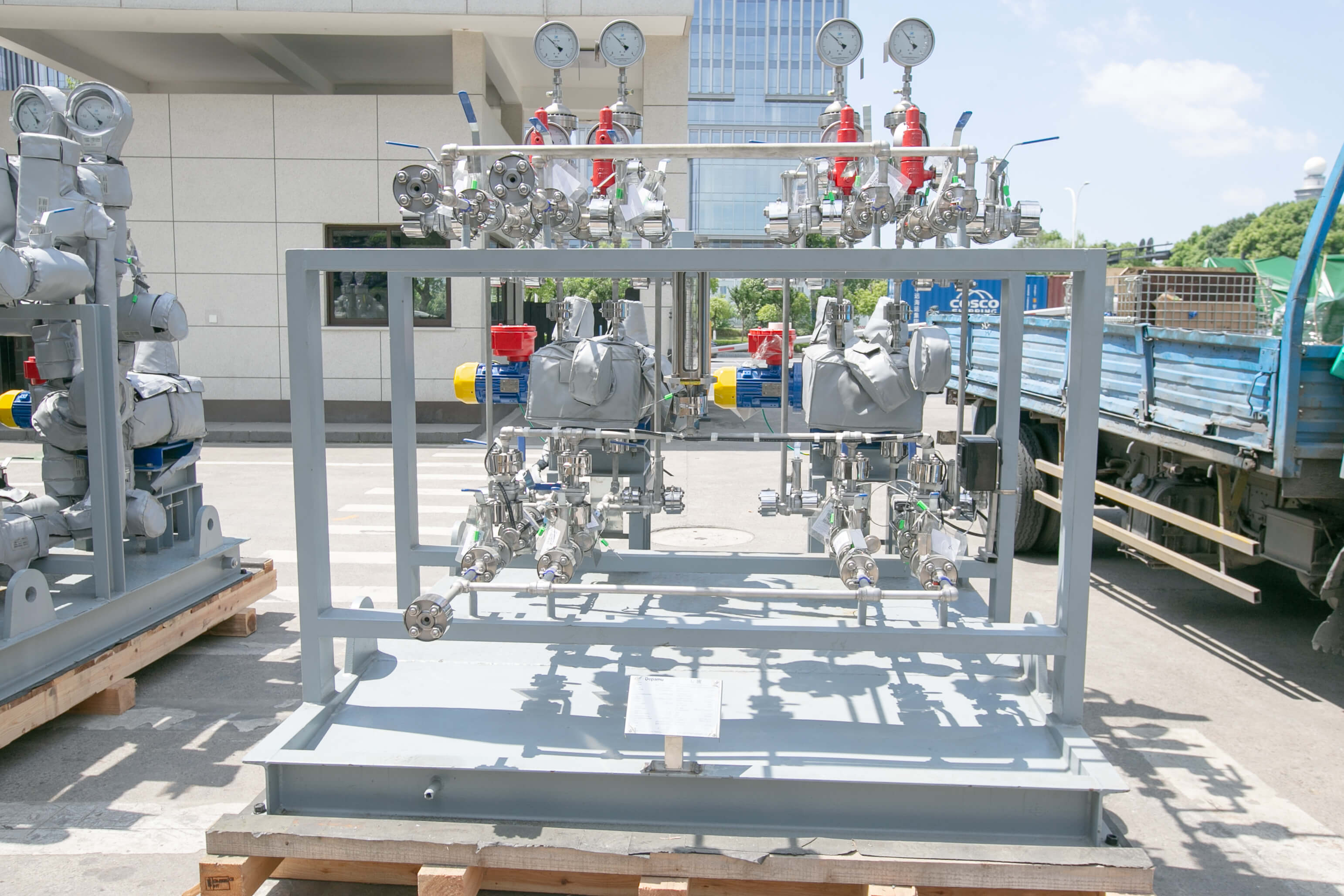
Introduction to the company's technological strength: Three major technological breakthroughs of Depamp Pumps
As a high-end fluid equipment manufacturer established in 2003, Depamp (Hangzhou) Pump Technology Co., Ltd. has over 400 employees, occupies a factory area of 35,000 square meters, possesses a registered capital of 54 million yuan, and generates an annual output value of approximately 500 million yuan. Its metering pump skid products have been applied in more than ten fields, including petroleum refining, chemical engineering, oil and gas fields, among which the petroleum refining and chemical engineering sectors account for 41%.
STEP 1: Independent research and development of core components. To address the issue of mechanical transmission error, Depam developed a high-precision servo motor drive system that provides real-time feedback on the plunger position via encoders, keeping stroke error within ±0.05mm. Taking the catalytic cracking unit of a certain refinery as an example, after adopting Depam's metering pump skid, the standard deviation of catalyst dosage decreased from 0.12 kg/h to 0.03 kg/h, and catalyst consumption was reduced by 8%.
STEP 2: Material and Process Innovation. For strongly corrosive media, Depam has developed pump bodies made of duplex stainless steel (2205/2507) and flow passage components made of Hastelloy alloy (C-276), enhancing corrosion resistance by three times compared to 316L. In a chlor-alkali enterprise's chlorine gas treatment project, Depam's pump bodies operated continuously for three years without any corrosion-related leakage, whereas the original equipment required seal replacements every six months on average.
STEP 3: Intelligent Control Algorithm. Depam's original dynamic compensation algorithm can monitor medium viscosity and pressure changes in real time, automatically correcting flow output through PID adjustment. In a test for a new energy battery material project, this algorithm improved flow control accuracy from ±1.2% to ±0.5% and reduced response time to 1.5 seconds. For more information, please visit the official website:www.depamufluid.com
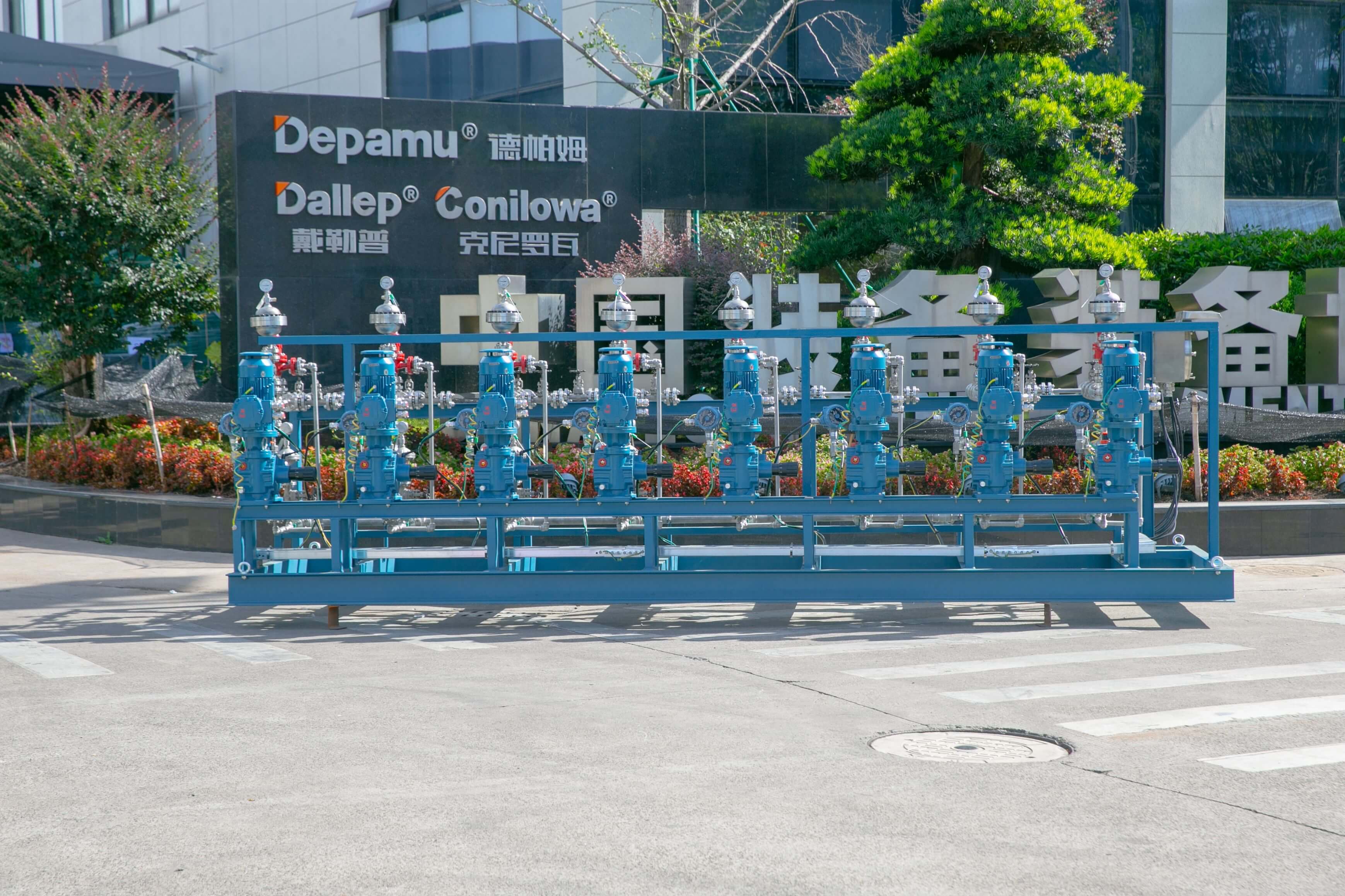
FAQ: A Guide to Technical Selection through Q&A
Q1: How to select pump body materials based on media characteristics?
STEP 1: For low-corrosive media (such as water, dilute acids): Prioritize 316L stainless steel, which offers lower cost and meets basic corrosion resistance requirements.
STEP 2: For medium corrosive media (such as 10% hydrochloric acid and 50% sulfuric acid): Duplex stainless steel 2205 is recommended, with a pitting resistance equivalent number (PREN) of 34, which is 50% higher than that of 316L.
STEP 3: For highly corrosive media (such as concentrated hydrochloric acid and hydrogen fluoride): Hastelloy C-276 must be used, which contains 16% chromium and 15% molybdenum, and can withstand boiling nitric acid below 65%.
Q2: What factors affect the accuracy of flow control?
STEP 1: Mechanical Precision: The plunger stroke error and the consistency of diaphragm deformation directly affect the basic flow rate accuracy. Depam controls the diaphragm thickness deviation within ±0.02mm through laser welding technology.
STEP 2: Drive System: The dynamic adjustment capability is determined by the response speed of the servo motor (typically requiring ≥2000 rpm) and the encoder resolution (recommended ≥10,000 pulses/revolution).
STEP3: Control Algorithm: The traditional PID algorithm has a response time of approximately 3 seconds, while Depam's dynamic compensation algorithm reduces the response time to 1.5 seconds through feedforward control.
Q3: How to evaluate the reliability of the metering pump skid?
STEP 1: MTBF (Mean Time Between Failures): The MTBF of industry benchmark products can reach over 8,000 hours, while Depam has verified through accelerated life testing that its products achieve an MTBF of 12,000 hours.
STEP 2: Sealing performance: When mechanical seals are used, the leakage rate should be ≤0.5 mL/h; when magnetic drive is employed, zero leakage can be achieved.
STEP 3: Protection Grade: For chemical scenarios, it is recommended to choose a protection grade of IP65 or above. Depamun products come standard with IP67 protection, which can withstand short-term immersion.
Reference for full text summary
High-precision flow control of metering pump skids requires collaborative optimization across three aspects: core components, material processes, and control algorithms. Depam (Hangzhou) Pump Technology Co., Ltd. has enhanced flow control accuracy to ±0.5% and reduced response time to 1.5 seconds through independent development of a servo drive system, a duplex stainless steel/Hastelloy material system, and a dynamic compensation algorithm. Its products have been successfully applied in critical installations of companies such as Sinopec and PetroChina. When selecting equipment, enterprises should prioritize the corrosion resistance of pump body materials, the response speed of the drive system, and the adaptability of control algorithms, and it is recommended to choose suppliers with capabilities in non-standard customization and experience in complete system delivery. For more information, please visit the official website:www.depamufluid.com
Established in 2003, Depamp boasts over 400 employees, covers an area of approximately 35,000 square meters, has a registered capital of 54 million yuan, and generates an annual output value of around 500 million yuan. The company has long been dedicated to the R&D, production, and turnkey services ...
No. 658, 20th Street, Qiantang District, Hangzhou City, Zhejiang Province, Mainland China