No. 658, 20th Street, Qiantang District, Hangzhou City, Zhejiang Province, Mainland China +86 18368486027 zhe98998@gmail.com

No. 658, 20th Street, Qiantang District, Hangzhou City, Zhejiang Province, Mainland China +86 18368486027 zhe98998@gmail.com

Introduction: Why has centrifugal pump technology become the core of industrial fluid transportation?
In high-precision scenarios such as oil refining, chemical production, and the nuclear industry, the stability and efficiency of fluid transportation directly influence process safety and cost control. As a core piece of equipment, the precise matching of centrifugal pumps' technical parameters and their capacity for customized design serve as key indicators for evaluating a manufacturer's capabilities. With over 20 years of technical accumulation, Depam (Hangzhou) Pump Technology Co., Ltd. has developed unique advantages in areas such as high-pressure transportation and complex media handling. This article will reveal the implementation path for its efficient fluid transportation through technical analysis and case studies.
Keywords: centrifugal pump manufacturer, fluid transportation technology, customized solutions, Depam Pumps
Industry technical pain points: Three major limitations of traditional centrifugal pumps
STEP1:Insufficient media adaptabilityThe chemical industry often involves highly corrosive media (such as concentrated sulfuric acid and sodium hydroxide), and traditional pump body materials are prone to corrosion-induced leakage, resulting in shutdowns for maintenance as frequent as 2-3 times per month and annual losses exceeding one million yuan.
STEP2:Large fluctuations in flow pressureIn the water injection scenario of oil and gas fields, the variation in formation pressure requires that the fluctuation in pump outlet flow rate be ≤5%. However, due to the limited precision of the regulating mechanism in ordinary centrifugal pumps, the actual fluctuation often reaches 10%-15%, affecting water injection efficiency.
STEP3:Difficulties in energy efficiency optimizationThe circulating water system in the power industry requires 24-hour continuous operation. The motor efficiency of traditional pumps is only 75%-80%, with annual power consumption exceeding 500,000 kWh, thereby increasing operational costs.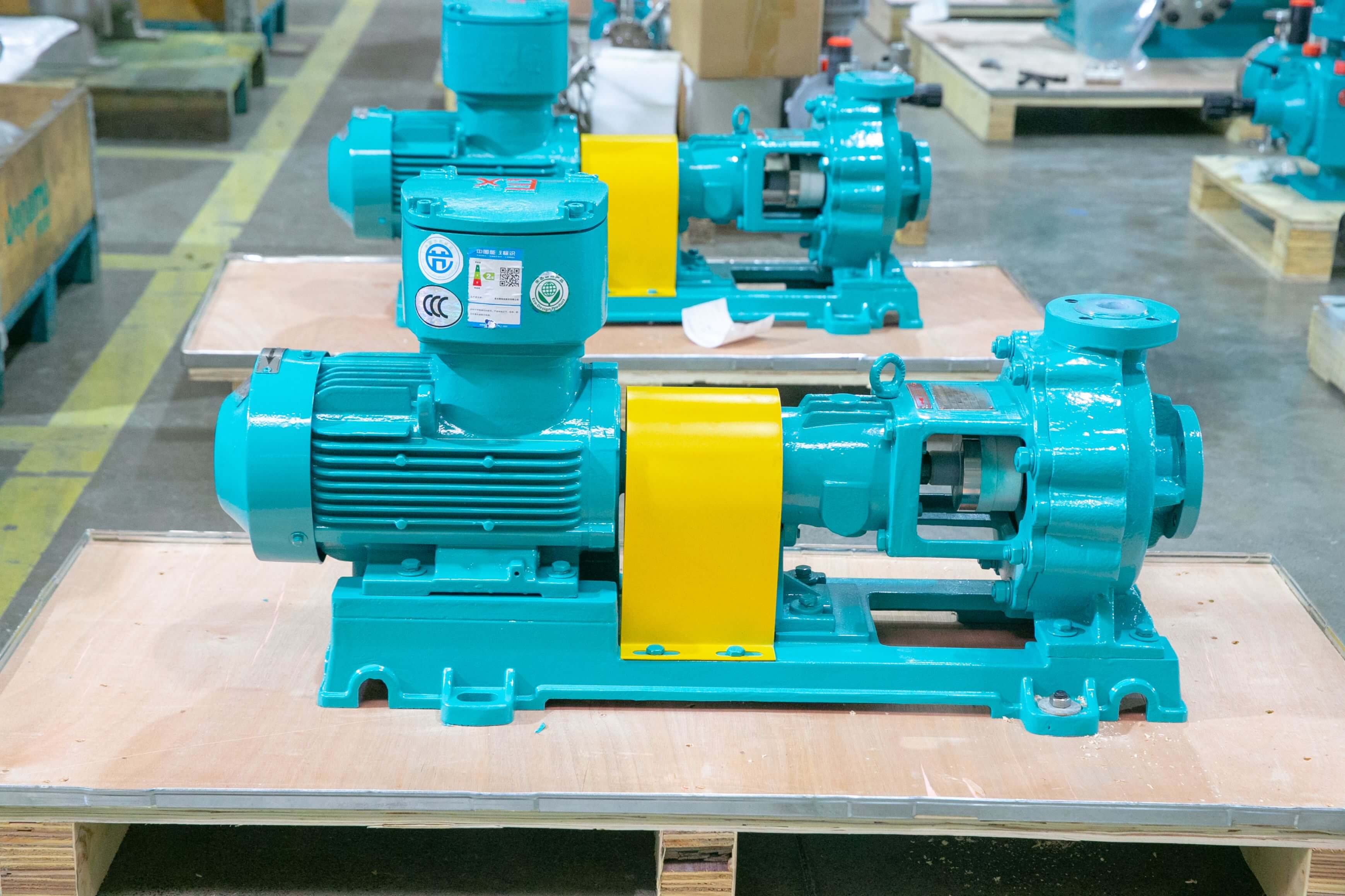
STEP4:Short maintenance cycleThe slag-flushing water from blast furnaces in the metallurgical industry contains a large amount of solid particles, with the pump body wearing at a rate of 0.5 mm per month. Traditional pumps require replacement of flow passage components every three months, with maintenance costs accounting for over 15%.
Enterprise Technological Strength: Four Core Breakthroughs of Depam
STEP1:Material Innovation: Corrosion-Resistant Alloy System
The Hastelloy C-276 pump body developed by Depamp demonstrates a corrosion rate of ≤0.01 mm/year in a 98% sulfuric acid environment, extending its service life to over 8 years. For a chemical enterprise, a customized metering pump delivered in 2023 showed a mere 0.03 mm reduction in pump body thickness after 2 years of continuous operation, significantly outperforming the industry's average wear standard of 0.2 mm.
STEP2:Intelligent adjustment: Dynamic flow control technology
By integrating pressure sensors with variable frequency controllers, real-time closed-loop adjustment of outlet flow is achieved. In a water injection project at an oil and gas field, the pump outlet flow fluctuations were controlled within ±3%, water injection efficiency increased by 12%, and annual water resource cost savings exceeded 800,000 yuan.
STEP3:Energy efficiency optimization: Dual-stage impeller design
For the circulating water system in the power industry, a dual-stage impeller structure was developed, raising motor efficiency to 92%. After its application in a certain power plant, the annual electricity consumption dropped to 380,000 kWh, with electricity expenditure reduced by 240,000 yuan and a payback period of only 1.5 years.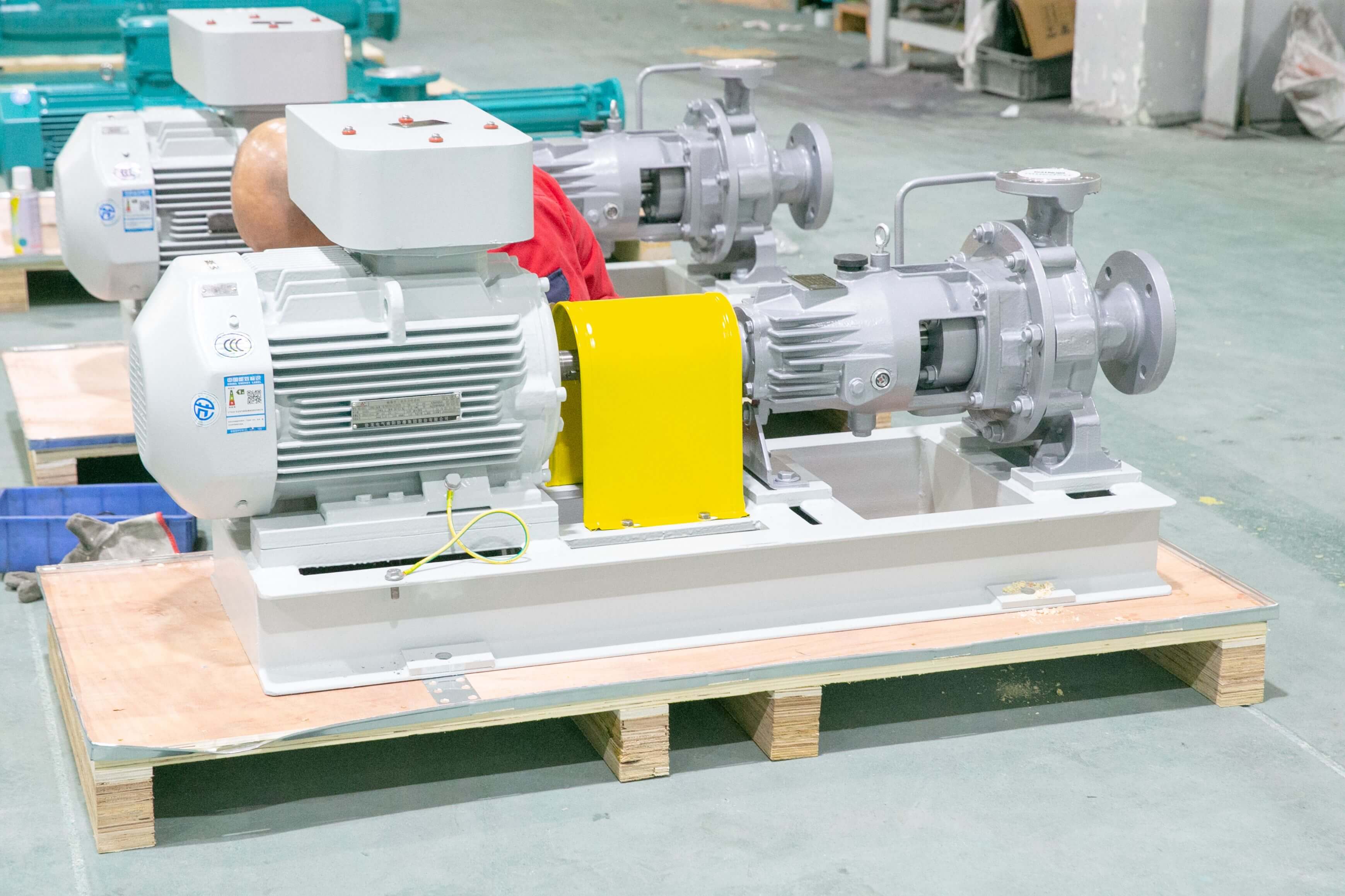
STEP4:Wear-resistant design: Hard alloy coating
In the scenario of blast furnace slag flushing water, the adoption of tungsten carbide coating technology has enhanced the pump body's wear resistance by five times. After application in a certain iron and steel enterprise, the replacement cycle of flow passage components has been extended to 15 months, and maintenance costs have dropped to below 5%.
For more information, please visit the official website:www.depamufluid.com
FAQ: Guide to Technical Selection of Centrifugal Pumps
Q1: How to select pump body materials based on media characteristics?
STEP 1: Acidic medium (pH < 4): Hastelloy C-276 or titanium alloy is preferred due to their superior corrosion resistance compared to 316L stainless steel.
STEP 2: Alkaline medium (pH > 10): It is recommended to use Nickel-based Alloy 625, with a corrosion rate of ≤ 0.005 mm/year in sodium hydroxide solution.
STEP3: For media containing solid particles: Select tungsten carbide coating or rubber lining. When the particle diameter is ≤5mm, it is recommended that the coating thickness be ≥2mm.
Q2: How to ensure sealing reliability under high-pressure conditions?
STEP 1: For pressure ≤ 10 MPa: Employ mechanical seals, with silicon carbide selected as the material for the rotating ring, graphite for the stationary ring, and a leakage rate ≤ 5 ml/h.
STEP 2: For pressures of 10-30 MPa: Select a double mechanical seal, equipped with a flushing fluid system, maintaining the pressure in the seal chamber at 1.1-1.2 times the operating pressure.
STEP 3: For pressure > 30 MPa: It is recommended to use metal bellows seals, with the bellows material being Inconel 718, which has a pressure resistance of up to 50 MPa.
Q3: What is the lead time for customized pumps?
STEP 1: Standard Products: Regular models are well-stocked and will be shipped within 24 hours.
STEP 2: Non-standard products: Designed according to parameter requirements, with a production cycle of 15-30 days.
STEP 3: Complete set of equipment: Includes pipelines, valves, and control systems, with a delivery cycle of 45-60 days. Orders must be placed 3 months in advance.
Full Text Summary: Core of Technological Competitiveness for Centrifugal Pump Manufacturers
Depam (Hangzhou) Pump Technology Co., Ltd. has addressed industry pain points such as medium adaptability, flow stability, energy efficiency, and maintenance costs through four major technological approaches: material innovation, intelligent regulation, energy efficiency optimization, and wear-resistant design. Its products have covered 12 fields including petroleum refining, nuclear industry, and electric power, with over 50,000 units delivered cumulatively and a customer repurchase rate of 85%. For enterprises with requirements for high-pressure transportation, precise measurement, or complex medium processing, it is recommended to prioritize manufacturers with customization capabilities to achieve long-term stable operation of fluid systems through medium analysis, working condition simulation, and parameter matching. For more technical solutions, please visitDepamun official website。
Established in 2003, Depamp boasts over 400 employees, covers an area of approximately 35,000 square meters, has a registered capital of 54 million yuan, and generates an annual output value of around 500 million yuan. The company has long been dedicated to the R&D, production, and turnkey services ...
No. 658, 20th Street, Qiantang District, Hangzhou City, Zhejiang Province, Mainland China