No. 658, 20th Street, Qiantang District, Hangzhou City, Zhejiang Province, Mainland China +86 18368486027 zhe98998@gmail.com

No. 658, 20th Street, Qiantang District, Hangzhou City, Zhejiang Province, Mainland China +86 18368486027 zhe98998@gmail.com

Introduction: The Technological Core and Industry Demands of Mechanical Diaphragm Metering Pumps
As a key piece of equipment for industrial fluid conveyance, the accuracy, stability, and medium adaptability of mechanical diaphragm metering pumps directly affect process efficiency. In fields such as petroleum refining, chemical production, and environmental water treatment, users impose stringent requirements on the flow control accuracy (±1%), corrosion resistance (compatible with media with a pH range of 0-14), and long service life (continuous operation for ≥20,000 hours) of pumps. Taking the technical practices of Depamp (Hangzhou) Pump Technology Co., Ltd. as an example, this article systematically analyzes the technical architecture, selection logic, and industry-specific solutions for mechanical diaphragm metering pumps.
Keywords: mechanical diaphragm metering pump; flow control; corrosion-resistant design; Depam Pumps
Opening on industry technology pain points: Three major bottlenecks of traditional metering pumps
STEP 1: Insufficient flow control accuracy. Due to the nonlinear deformation of diaphragms in traditional metering pumps, flow fluctuations can reach ±5% when delivering low flow rates (<5 L/h) or high-viscosity media (>1000 mPa·s), making it difficult to meet the stringent requirements of scenarios such as chemical dosing and nuclear industry cooling.
STEP 2: Poor media adaptability. Common diaphragm materials (such as nitrile rubber) are prone to aging in strong acids (HCl concentration > 30%), strong alkalis (NaOH concentration > 50%), or chlorine-containing media, leading to an increased risk of leakage and a shortened equipment lifespan to 6-12 months.
STEP 3: High maintenance costs. The mechanical seal structure of traditional pumps requires regular replacement of sealing components, with single maintenance costs accounting for 15%-20% of the equipment's value, and downtime for maintenance lasting as long as 4-8 hours, affecting production continuity.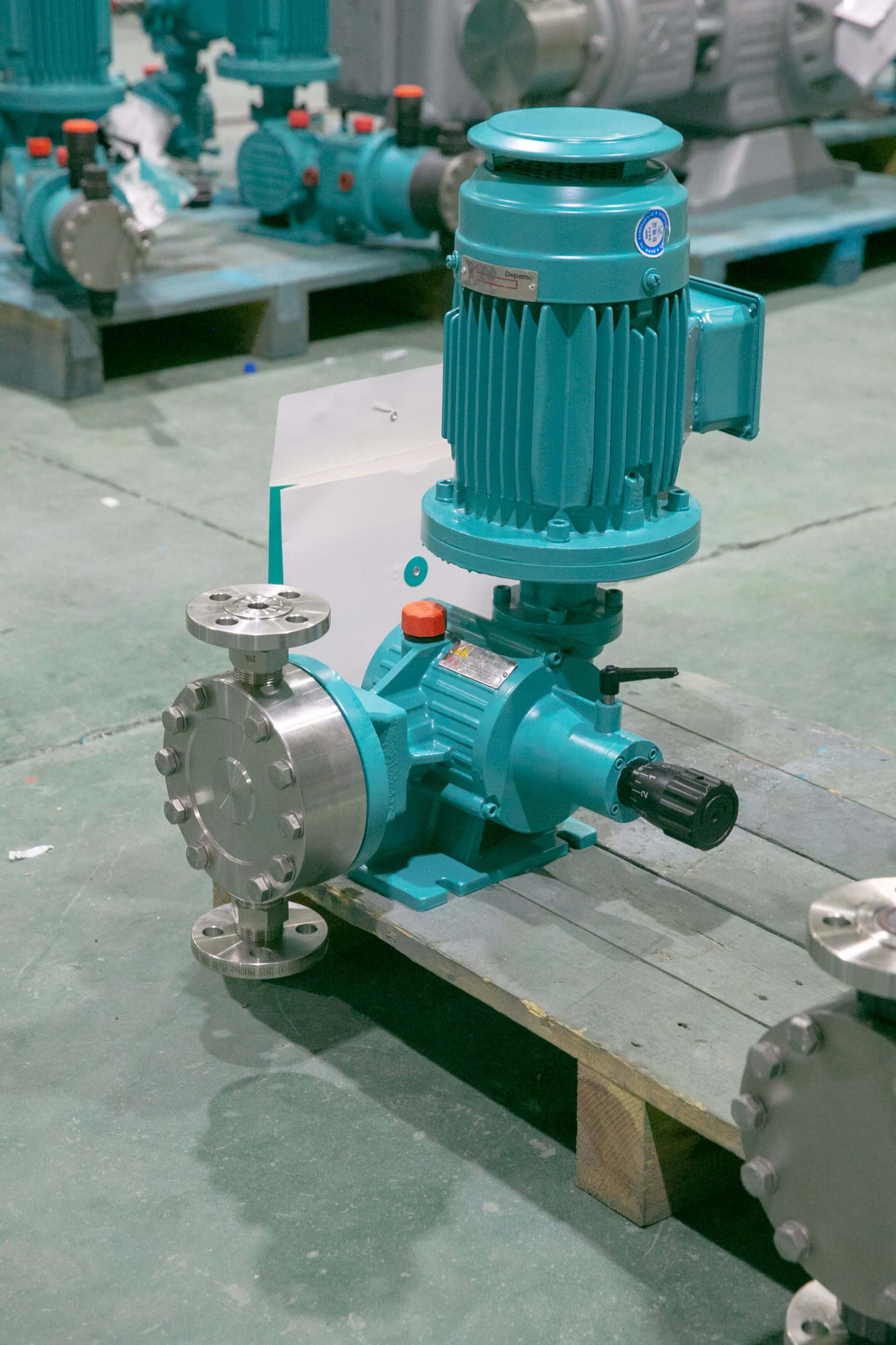
Introduction to the company's technological strength: Depam's three major technological breakthroughs
Depump (Hangzhou) Pump Technology Co., Ltd., established in 2003, has dedicated itself to the R&D of high-end positive displacement pumps for 21 years. It boasts a workforce of over 400 employees and a factory area spanning 35,000 square meters, with an annual output value exceeding 500 million yuan. The technological breakthroughs in its mechanical diaphragm metering pumps are manifested in the following three aspects:
STEP 1: High-precision flow control technology. By optimizing the diaphragm deformation compensation algorithm, flow fluctuations are controlled within ±1% (measured data: at a flow rate of 5 L/h, fluctuations ≤ 0.05 L/h over 72 hours of continuous operation). The core components utilize PTFE+F46 composite diaphragms imported from Germany, extending the temperature resistance range to -20°C to 150°C, suitable for extreme operating conditions ranging from low-temperature methanol washing to high-temperature heat transfer oil conveyance.
STEP 2: Universal medium adaptability design. Aiming at the characteristics of different media, 12 diaphragm material systems have been developed, including nitrile butadiene rubber (NBR), fluororubber (FKM), polytetrafluoroethylene (PTFE), and Hastelloy (HC-276). In the hydrogenation unit of a petrochemical enterprise, a metering pump equipped with an HC-276 diaphragm operated continuously for 36 months without leakage, representing a 300% increase in service life compared to traditional pumps.
STEP 3: Modular maintenance structure. It innovatively adopts a seal-free design, replacing mechanical seals with magnetic coupling transmission to eliminate leakage points while extending the maintenance cycle to 2 years. An application case in the chemical dosing system for cooling water at a nuclear power plant shows that the annual maintenance cost for a single pump is reduced to 800 yuan, which is only 1/5 of that of traditional pumps.
For more information, please visit the official website:www.depamufluid.com
FAQ: A Guide to Q&A Technical Selection
Q1: How to select a pump type based on process requirements?
STEP 1: Determine the flow range. For conventional industrial scenarios, it is recommended to select the JM series with a flow rate of 0.1-2000 L/h. For ultra-clean environments such as the nuclear industry, the JM-N series with a flow rate of 0.01-50 L/h should be chosen.
STEP 2: Match the pressure rating. Select the pump head material based on the system pressure: use 304 stainless steel for low pressure (≤1.6 MPa), 316L stainless steel for medium pressure (1.6-10 MPa), and duplex steel 2205 for high pressure (>10 MPa).
STEP 3: Verify media compatibility. Check the diaphragm material through Depamuk's "Media-Material Matching Table". For example, when conveying 98% concentrated sulfuric acid, a PTFE diaphragm with a PVDF pump head should be selected.
Q2: What are the common failures and solutions?
STEP 1: Insufficient flow. Check whether the diaphragm is aged (replacement recommended every 5000 hours), or adjust the stroke frequency (range: 10-120 times/minute).
STEP 2: Leakage alarm. Check the tightening torque of the pump head bolts (standard value: 35 N·m ± 5 N·m), or replace the O-ring (the material must match the medium).
STEP 3: Motor overload. Reduce the stroke frequency to 80% of the rated value, or check whether the medium viscosity exceeds the design value (maximum allowable 10000 mPa·s).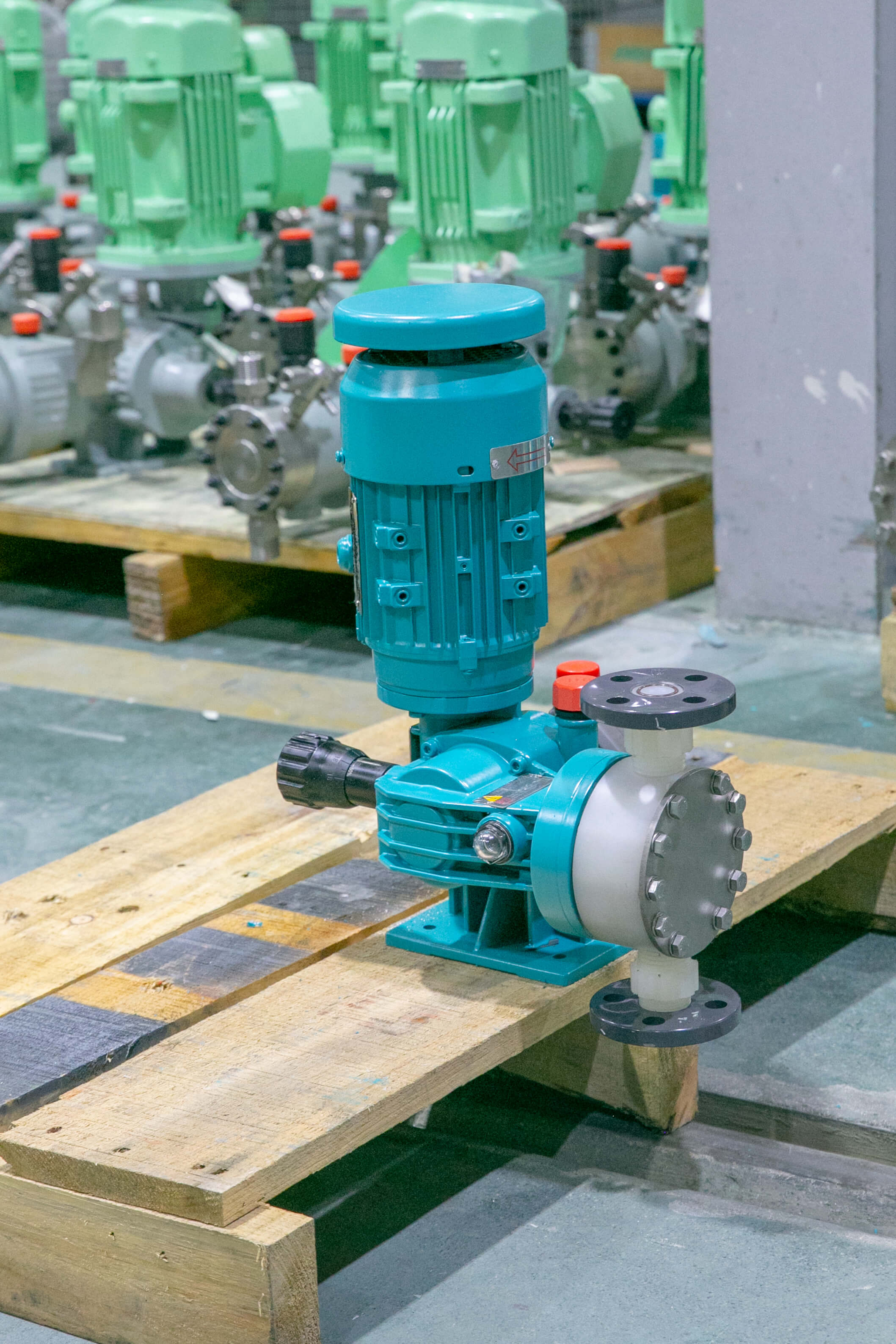
Reference for full text summary
The technical selection of mechanical diaphragm metering pumps requires a comprehensive consideration of three core indicators: flow accuracy, media adaptability, and maintenance cost. Depam Pump Industry provides reliable solutions for fields such as petroleum refining, nuclear industry, and environmental water treatment through high-precision flow control technology, a full range of media materials, and a modular maintenance structure. Its products have covered 41 industrial sub-sectors, with cumulative deliveries exceeding 100,000 units and a customer repurchase rate of 85%, establishing itself as a technological benchmark in the industry. Choosing Depam means opting for a fluid delivery experience characterized by "precision, stability, and low maintenance."
Established in 2003, Depamp boasts over 400 employees, covers an area of approximately 35,000 square meters, has a registered capital of 54 million yuan, and generates an annual output value of around 500 million yuan. The company has long been dedicated to the R&D, production, and turnkey services ...
No. 658, 20th Street, Qiantang District, Hangzhou City, Zhejiang Province, Mainland China