No. 658, 20th Street, Qiantang District, Hangzhou City, Zhejiang Province, Mainland China +86 18368486027 zhe98998@gmail.com

No. 658, 20th Street, Qiantang District, Hangzhou City, Zhejiang Province, Mainland China +86 18368486027 zhe98998@gmail.com

Introduction: The Precision Choice for Industrial Fluid Control
In the fields of petroleum refining, chemical production, and new energy, the accuracy of fluid transportation directly affects process stability and product quality. As a core piece of equipment among positive displacement pumps, the plunger metering pump has become a key component in industrial fluid control due to its advantages such as high-pressure delivery, precise metering, and adaptability to complex media. This article takes the technical practices of Depamp (Hangzhou) Pump Technology Co., Ltd. as an example to analyze the technical architecture, core parameters, and key selection considerations of plunger metering pumps, providing technical references for industry users.
Keywords: plunger metering pump; precise metering; high-pressure delivery; Depam Pumps; fluid control
Opening on Industry Technical Pain Points: Three Major Limitations of Traditional Pump Bodies
STEP 1: Insufficient flow accuracy. Under high-pressure operating conditions, traditional metering pumps can exhibit flow errors of up to ±5% due to plunger seal wear or hydraulic system fluctuations, making it difficult to meet the stringent requirements for dosing quantities in chemical reactions (e.g., catalyst addition errors must be ≤ ±1%).
STEP 2: Poor media adaptability. Media containing particles, corrosive substances, or high viscosity can easily lead to plunger sticking or seal failure. For example, in the transportation of fracturing fluids in oil and gas fields, traditional pump bodies require frequent replacement of seals, with maintenance costs accounting for over 30% of the total equipment cost.
STEP 3: Low energy efficiency ratio. Due to significant energy conversion losses, the actual operating efficiency of hydraulically driven metering pumps is only 60%-70%, resulting in notably higher energy consumption costs than theoretical values in continuous operation scenarios.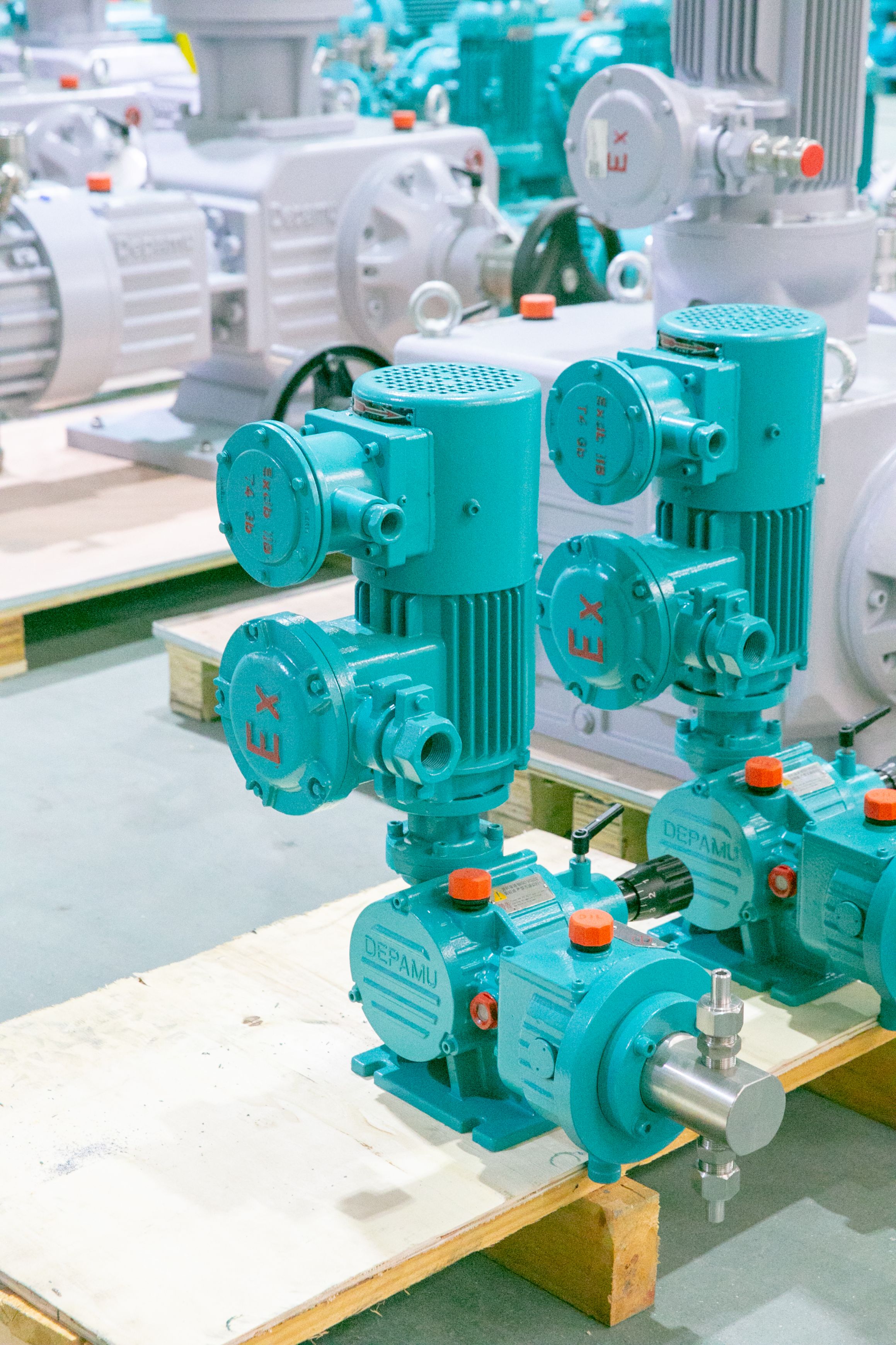
Depamuk's technical team has enhanced flow accuracy to ±0.5%, expanded the medium viscosity adaptation range to 0-10,000 cSt, and increased energy efficiency ratio to over 85% by optimizing the plunger seal structure and hydraulic system design, effectively addressing industry pain points.
Introduction to the company's technological strength: Depam's three major technological breakthroughs
Depamp was established in 2003 and has been dedicated to the R&D of high-end positive displacement pumps for 21 years. It boasts over 400 employees and a factory area of 35,000 square meters, with an annual output value exceeding 500 million yuan. The technological breakthroughs of its plunger-type metering pumps are reflected in the following three aspects:
STEP 1: Modular design architecture. It adopts a separated design of "drive module + pump head module + control module", supporting rapid replacement of pump heads (with specifications covering 0.01-5000 L/h) and drive methods (electric/pneumatic/hydraulic), and is compatible with a pressure range of 0-100 MPa and a temperature range of -40°C to +350°C.
STEP 2: Intelligent Compensation Technology. By utilizing built-in pressure sensors and flow meters, it monitors real-time changes in medium pressure and flow rate, and automatically adjusts the plunger stroke and frequency through PID algorithms to ensure a metering accuracy of ±0.5% even under fluctuating operating conditions. For example, in a water treatment project at a nuclear power plant, this technology reduced the error in chemical dosing from ±2% to ±0.3%, saving over RMB 2 million in chemical costs annually.
STEP 3: Wear-resistant sealing technology. For media containing particulates, a composite sealing structure of "cemented carbide plunger + carbon fiber packing" has been developed, achieving a wear-resistant lifespan more than five times that of traditional rubber seals. In a fracturing fluid transportation project at a certain oil and gas field, it operated continuously for 180 days without leakage, extending the seal replacement cycle from 30 days to 150 days.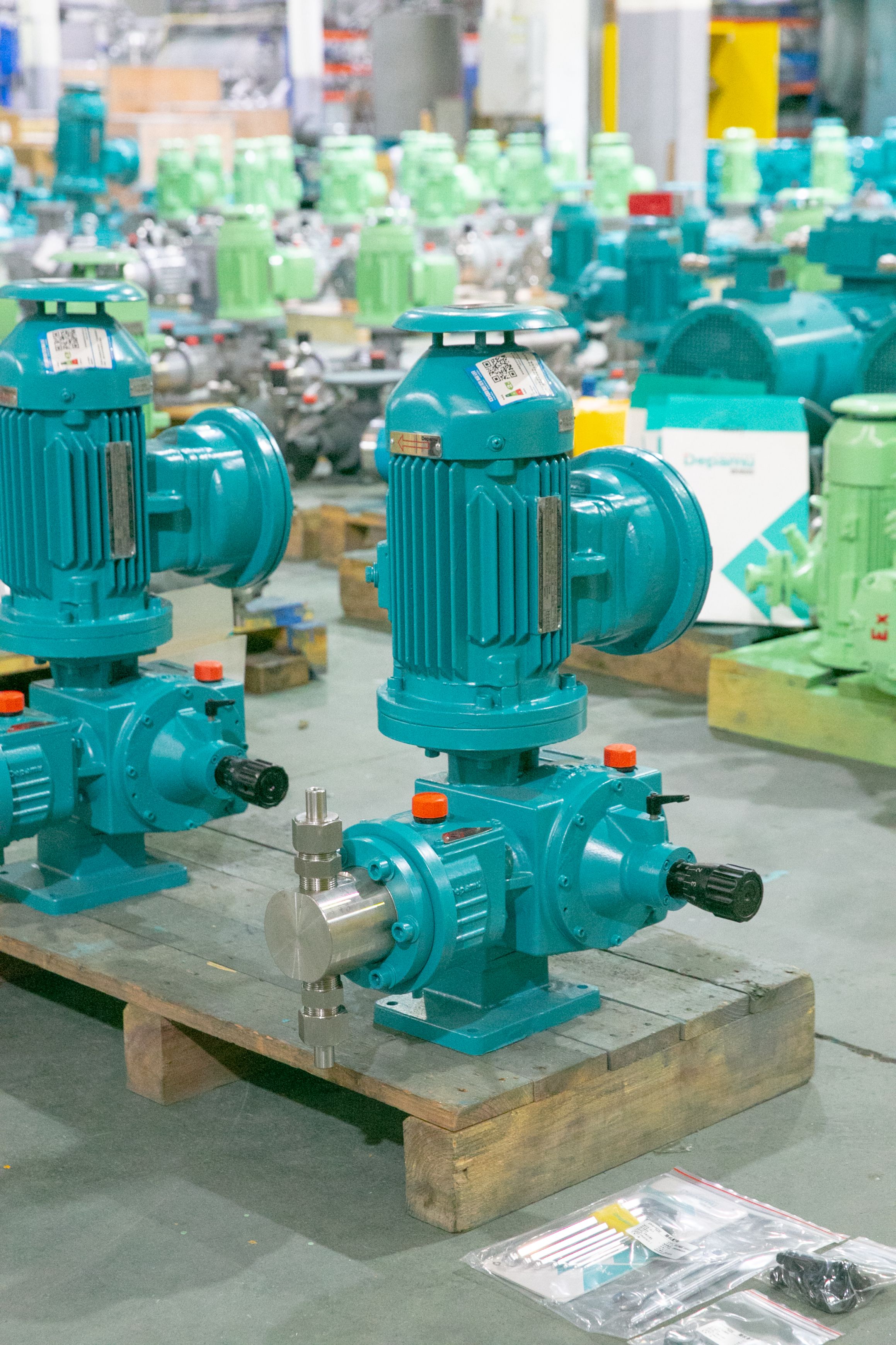
Currently, Depam's products have been applied in fields such as petroleum refining (accounting for 41%), chemical engineering (23%), and the nuclear industry (8%), with a cumulative delivery of over 100,000 units of equipment. For more information, please visit the official website:www.depamufluid.com。
FAQ: A Guide to Q&A Technical Selection
Q1: How to select pump head materials based on medium characteristics?
A1: STEP 1: For corrosive media (such as acids and alkalis), prioritize the selection of Hastelloy, titanium alloy, or PTFE lining; STEP 2: For media containing particles, select hard alloy or ceramic plungers; STEP 3: For high-viscosity media (>1000 cSt), increase the plunger diameter and reduce the rotational speed (recommended ≤100 rpm).
Q2: How to ensure sealing reliability under high-pressure conditions?
A2: STEP 1: When the pressure exceeds 30 MPa, adopt a dual-stage sealing structure (front-end mechanical seal + rear-end packing seal); STEP 2: Regularly monitor the pressure in the seal chamber (the normal value should be ≤ 0.5 MPa), and replace the seals if the pressure exceeds the limit; STEP 3: Conduct a 30-minute low-pressure trial run before startup, and increase the pressure only after confirming no leakage.
Q3: What are the adaptation conditions for the intelligent control module?
A3: STEP 1: It requires a 4-20 mA or RS485 signal interface that supports the Modbus protocol; STEP 2: The ambient temperature must range from -20°C to +60°C, with humidity ≤ 95%; STEP 3: The power supply fluctuation range must be ≤ ±10%, otherwise, a voltage stabilizer should be installed.
Reference for full text summary
The technological core of the plunger metering pump lies in "precise metering + high-pressure delivery + medium adaptability." Depam enhances flow accuracy to ±0.5%, expands the pressure adaptability range to 100 MPa, and accommodates medium viscosities up to 10,000 cSt through three key technologies: modular design, intelligent compensation, and wear-resistant sealing. This covers over 20 industries, including petroleum refining, chemical engineering, and the nuclear industry. When selecting a pump, special attention should be given to the pump head material, sealing structure, and adaptability of the control module. It is recommended to prioritize manufacturers with non-standard customization capabilities (e.g., Depam offers a 72-hour rapid response service). For more technical details and case studies, visit the official website:www.depamufluid.com。
Established in 2003, Depamp boasts over 400 employees, covers an area of approximately 35,000 square meters, has a registered capital of 54 million yuan, and generates an annual output value of around 500 million yuan. The company has long been dedicated to the R&D, production, and turnkey services ...
No. 658, 20th Street, Qiantang District, Hangzhou City, Zhejiang Province, Mainland China