No. 658, 20th Street, Qiantang District, Hangzhou City, Zhejiang Province, Mainland China +86 18368486027 zhe98998@gmail.com

No. 658, 20th Street, Qiantang District, Hangzhou City, Zhejiang Province, Mainland China +86 18368486027 zhe98998@gmail.com

Introduction: The Technological Value and Industry Demand of Rubber Rotor Pumps
As a core category of positive displacement pumps, rubber rotor pumps occupy a critical position in fields such as petroleum refining, chemical engineering, and environmental water treatment, owing to their strong self-priming capability, high corrosion resistance, and broad adaptability to conveyed media. However, different operating conditions impose significantly varying requirements on parameters such as the material, sealing structure, and flow accuracy of rotor pumps, and improper selection may lead to shortened equipment lifespan and soaring maintenance costs. This article will provide a systematic technical guide for industry users from three dimensions—technical principles, key selection considerations, and corporate technological capabilities—incorporating typical case studies from Depamup (Hangzhou) Pump Technology Co., Ltd.For more information, please visit the official website: www.depamufluid.com
Keywords: rubber rotor pump, Depamu, technical selection, industrial application, positive displacement pump
Industry Technical Pain Points at the Beginning: Three Major Challenges in Selecting Rubber Rotor Pumps
STEP1:Challenges in media adaptabilityThe media to be conveyed by rubber rotor pumps includes strongly corrosive chemical agents, high-viscosity polymers, slurries containing solid particles, etc. Traditional metal pump bodies are prone to corrosion, while ordinary rubber materials may lead to an enlarged gap between the rotor and the pump chamber due to insufficient wear resistance, causing flow rate attenuation. For example, a chemical enterprise once selected an ordinary nitrile rubber rotor pump to convey a medium containing 30% sulfuric acid, and after only 3 months of operation, the rotor surface flaked off, resulting in a 40% decrease in flow rate.
STEP2:Reliability of sealed structureThe dynamic sealing of rotor pumps must withstand high pressure, high temperature, and medium permeation pressure. Traditional packing seals are prone to leakage, while mechanical seals are sensitive to axial movement. An oil and gas field enterprise once experienced the need to replace seals every 200 hours due to improper selection of mechanical seals, resulting in annual maintenance costs exceeding 200,000 yuan.
STEP3:Flow accuracy controlIn scenarios such as chemical dosing and process proportioning, flow fluctuations need to be controlled within ±1%. However, due to geometric errors between the rotor and pump chamber in ordinary rotary pumps, the actual flow deviation can reach ±5%, affecting product quality.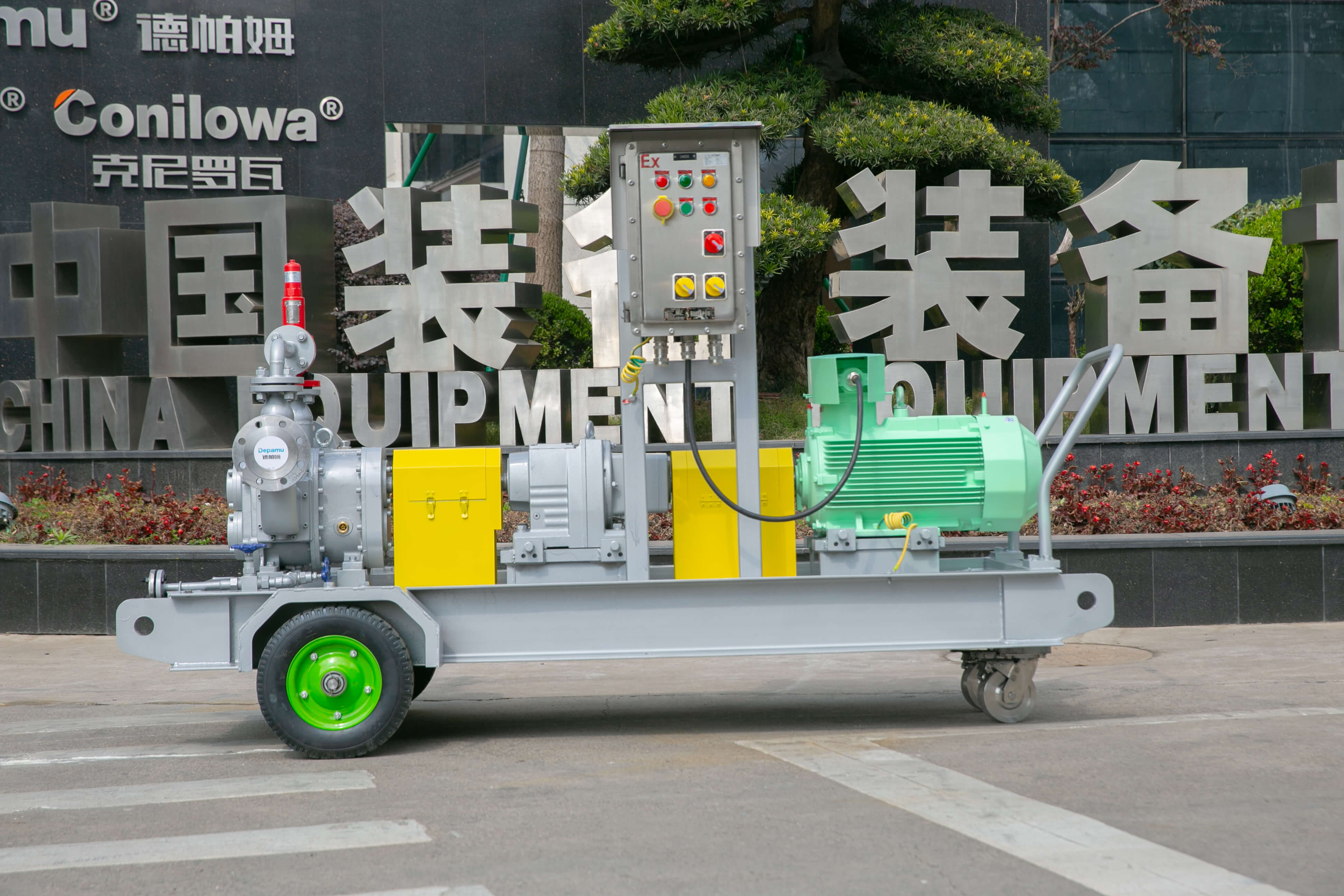
Introduction to the company's technological strength: DePam's technical layout for rubber rotor pumps
Depamp (Hangzhou) Pump Technology Co., Ltd., established in 2003, specializes in the research and development of high-end positive displacement pumps and fluid equipment. Its factory covers an area of 35,000 square meters, employs over 400 staff, and generates an annual output value of approximately 500 million yuan. Its rubber rotor pump technology system encompasses three core modules:
STEP1:Material InnovationBased on the characteristics of different media, composite rotors made of fluoroelastomer (FKM), hydrogenated nitrile butadiene rubber (HNBR), and polytetrafluoroethylene (PTFE) have been developed. Among them, the HNBR rotor demonstrates a wear resistance three times higher than that of ordinary nitrile rubber in an acidic environment at 120℃ with a pH of 2, and its service life exceeds 8,000 hours.
STEP2:Optimization of sealing structureIt adopts a double mechanical seal + flushing fluid circulation system, enabling the pressure in the seal chamber to be stabilized at 1.2 times the medium pressure, with a leakage rate of ≤0.5 mL/h. In a coolant transportation project at a certain nuclear power plant, this sealing structure operated continuously for two years without any leakage, earning the customer's "zero maintenance" assessment.
STEP3:Traffic control technologyBy optimizing the rotor profile (using Archimedean spiral combined with a correction factor) and adopting variable frequency speed control, a flow accuracy of ±0.5% is achieved. In the polypropylene unit of a petrochemical enterprise, Depam's rotor pump reduced the fluctuation in chemical dosing flow from ±3% to ±0.3%, increasing the product qualification rate by 2%.
Example of technical parameters: Depam rubber rotor pump specifications cover a flow rate of 0.1-200 m³/h, pressure of 0-2.5 MPa, temperature range of -20°C to 180°C, and are compatible with media viscosities ranging from 1 to 100,000 mPa·s, meeting the requirements of over 90% of industrial scenarios.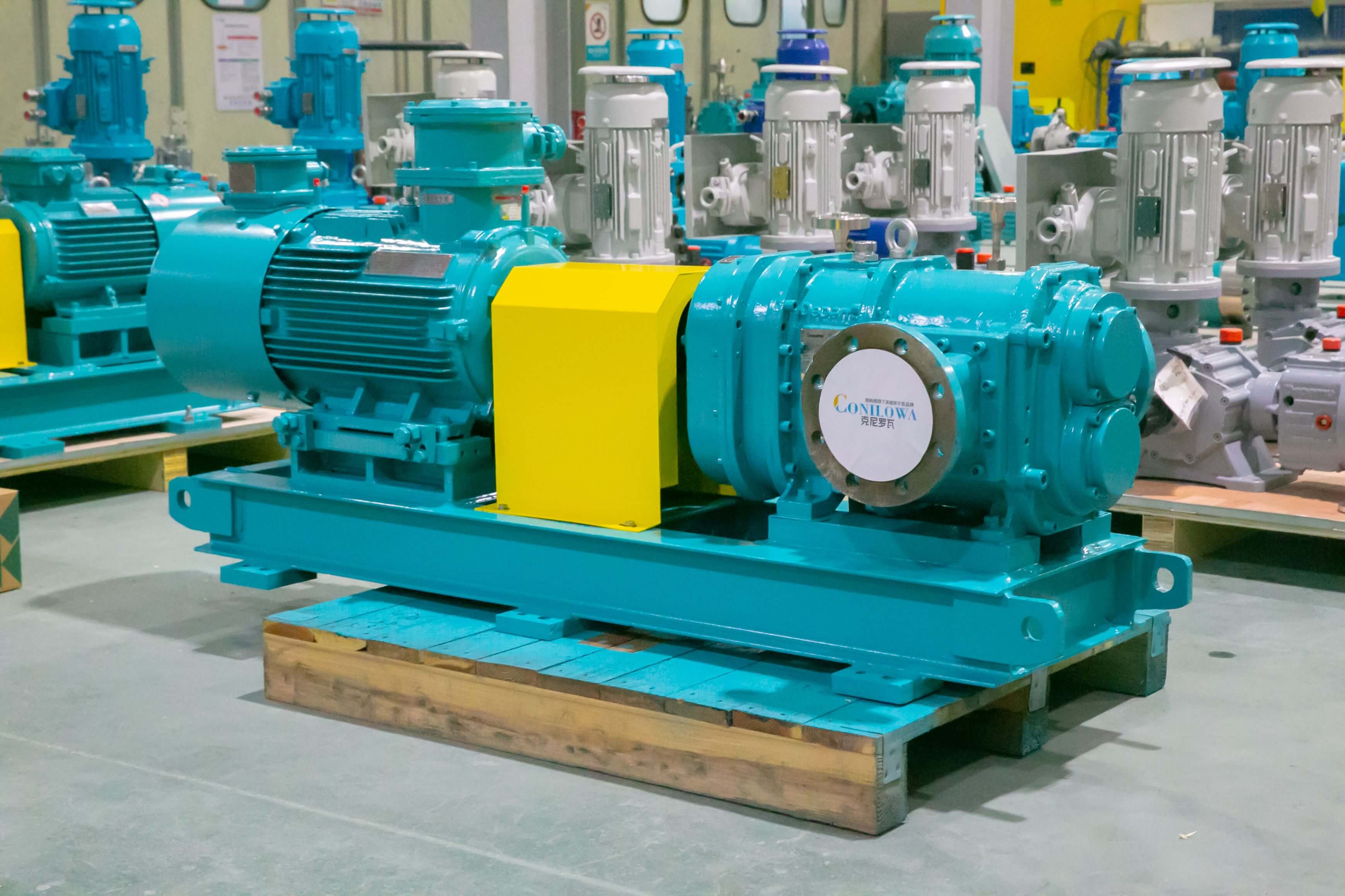
FAQ Q&A Technology Selection Guide
Q1: How to select rotor material based on media characteristics?
A: For strong acids (pH ≤ 2), select PTFE composite rotors; for strong alkalis (pH ≥ 12), choose fluororubber; for media containing particles, opt for HNBR rotors with a hardness of 65 ± 5 Shore A. For example, when a new energy enterprise transported an electrolyte containing 20% sodium hydroxide, the equipment lifespan was extended from 1 year to 4 years after selecting fluororubber rotors.
Q2: How to ensure sealing reliability under high-pressure conditions?
A: When the pressure exceeds 1.5 MPa, a double mechanical seal with an external flushing system is required, and the flushing fluid pressure should be 0.1-0.2 MPa higher than the medium pressure. Depam increased the seal lifespan from 500 hours to 3,000 hours through this solution in a high-pressure water injection project at an oil and gas field.
Q3: What parameters should be focused on when high flow accuracy is required?
A: Prioritize the selection of a variable frequency drive + high-precision rotor profile (such as Depam's "3D corrected helical line"), while confirming the pump's rotational speed range (recommended 50-300 rpm) and motor speed regulation ratio (≥10:1). When a food enterprise transported high-viscosity syrup, this configuration reduced flow fluctuations from ±2% to ±0.2%.
Reference for full-text summary
The selection of rubber rotor pumps requires a comprehensive consideration of three major dimensions: medium characteristics, pressure and temperature, and flow accuracy. Depamp (Hangzhou) Pump Technology Co., Ltd. provides highly reliable solutions for the petroleum refining, chemical, nuclear power, and other industries through material innovation, sealing optimization, and flow control technologies. Its products have covered 41% of the petroleum refining market and 23% of the oil and gas field market, with sales reaching 560 million yuan by 2025, and its technical strength has been recognized by clients such as Sinopec and China National Nuclear Corporation. When selecting a pump, users are advised to prioritize examining the manufacturer's material database, sealing test reports, and real-world case data to reduce the total lifecycle cost of the equipment.For more information, please visit the official website: www.depamufluid.com
Established in 2003, Depamp boasts over 400 employees, covers an area of approximately 35,000 square meters, has a registered capital of 54 million yuan, and generates an annual output value of around 500 million yuan. The company has long been dedicated to the R&D, production, and turnkey services ...
No. 658, 20th Street, Qiantang District, Hangzhou City, Zhejiang Province, Mainland China