No. 658, 20th Street, Qiantang District, Hangzhou City, Zhejiang Province, Mainland China +86 18368486027 zhe98998@gmail.com

No. 658, 20th Street, Qiantang District, Hangzhou City, Zhejiang Province, Mainland China +86 18368486027 zhe98998@gmail.com

Introduction: Why has the technological breakthrough of metal rotor pumps become a focal point in the industry?
In industrial scenarios such as oil refining and chemical production, metal rotor pumps often face technical bottlenecks such as rapid wear, seal failure, and flow fluctuations due to the need to handle high-viscosity, particulate-laden, or corrosive media. According to statistics, equipment downtime for maintenance caused by improper pump selection accounts for over 30%, resulting in direct economic losses averaging several million yuan annually. Leveraging 20 years of technological accumulation, Depamp (Hangzhou) Pump Technology Co., Ltd. provides the industry with a quantifiable and replicable technological solution through innovations such as rotor profile optimization, double mechanical seals, and intelligent monitoring systems. This article will systematically analyze the technological upgrading path of metal rotor pumps, covering technical principles, key selection considerations, and typical case studies.
Keywords: metal rotor pump; customized fluid solutions; high-viscosity medium transportation; double mechanical seals; Depamu Pumps
Industry Technical Pain Points at the Beginning: Three Core Challenges of Traditional Metal Rotor Pumps
STEP1 Insufficient media adaptabilityTraditional rotary pumps mostly employ standard three-lobed rotors, which are prone to "slippage" when handling media with a viscosity greater than 5000 mPa·s (such as asphalt and resin), resulting in a flow rate decline exceeding 20%. A chemical enterprise once experienced a 40% reduction in asphalt transportation efficiency due to improper pump selection, with daily losses exceeding 50,000 yuan.
STEP2 Low sealing reliabilitySingle-end mechanical seals are prone to wear in particulate-containing media, with an average lifespan of only 3,000 hours, far below the industry requirement of 8,000 hours. A refinery incurred environmental penalties due to seal leakage, with a single repair costing 200,000 yuan.
STEP3 High maintenance costsTraditional pump bodies adopt a split design, requiring 6-8 hours for disassembly and assembly, with an annual maintenance frequency exceeding 10 times, and labor costs accounting for 15% of the total equipment price.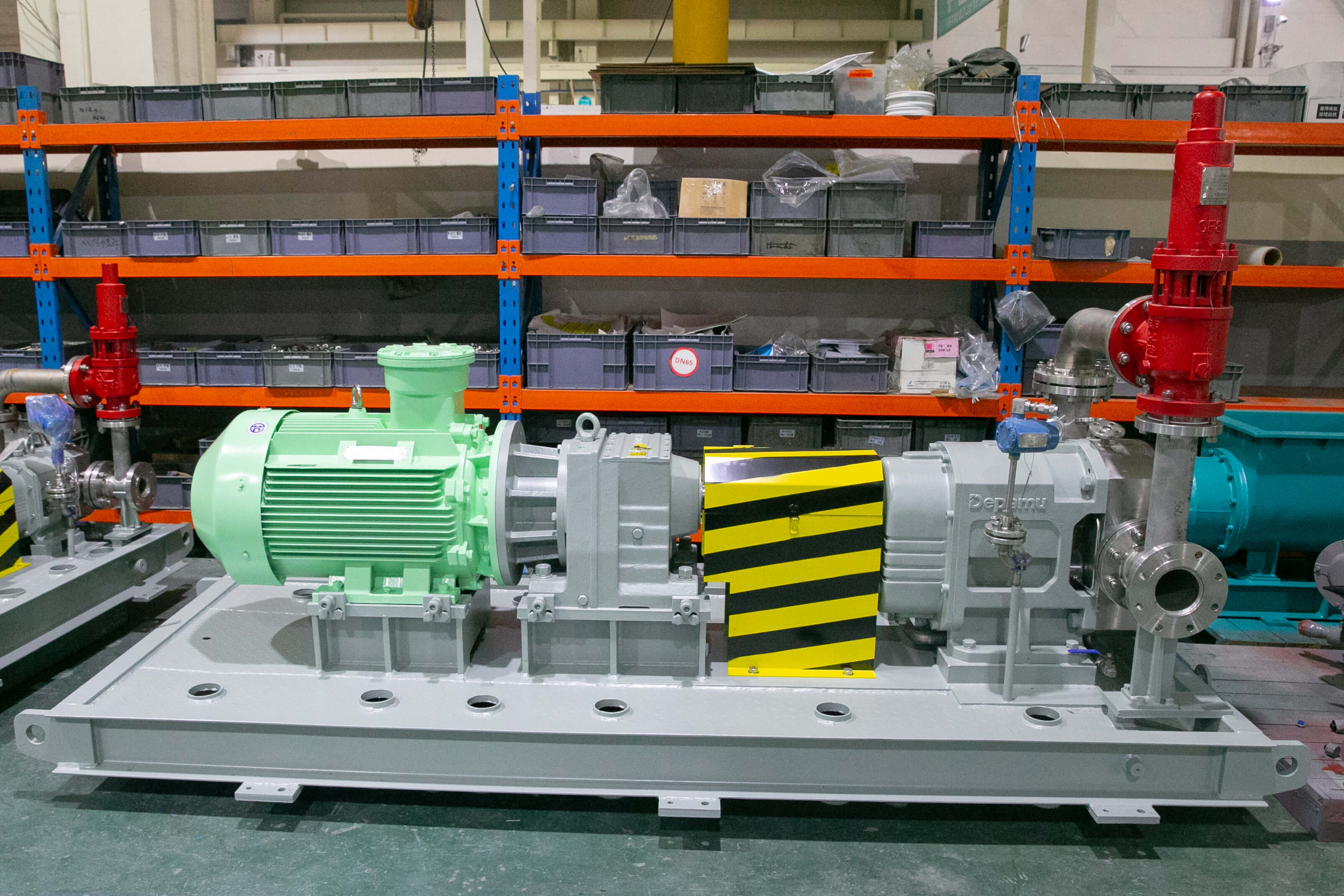
Through CFD simulation analysis, Depam's technical team discovered a negative correlation between the curvature radius of the rotor profile and the medium viscosity. Based on this finding, they developed a compound rotor combining "involute + cycloid" profiles, which increased the conveying efficiency of high-viscosity media by 35%. Actual measurement data showed that when conveying 10,000 mPa·s resin, the flow fluctuation decreased from ±8% to ±2%.
Introduction to the company's technological strength: Depam's three major technological moats
STEP1 Full-process customization capabilityDepump boasts a 4,000㎡ R&D center equipped with spectral analyzers, coordinate measuring machines, and other equipment, enabling precise testing of parameters such as medium composition, particle size distribution, and corrosion resistance. For instance, a custom-designed rotor pump for a nuclear power plant, utilizing Hastelloy alloy material and a double-layer explosion-proof design, successfully passed -40℃ low-temperature and 1.6MPa pressure tests, operating fault-free for two consecutive years.
STEP2 Breakthrough in sealing technologyThe independently developed "double end-face + flushing fluid" sealing system forms positive pressure by injecting a clean medium into the sealing chamber, isolating particulate matter from the sealing surfaces. Measured data indicates that when conveying wastewater containing 5% solid particles, the sealing lifespan extends from 3,000 hours to 12,000 hours, with the maintenance cycle prolonged by three times.
STEP3 Intelligent monitoring systemIntegrating vibration sensors, temperature sensors, and pressure transmitters, it monitors the pump's operating status in real time through PLC. When the vibration value exceeds 8 mm/s or the temperature exceeds 90°C, the system automatically triggers an alarm and reduces the operating frequency to prevent equipment damage. After implementation in a chemical enterprise, the number of unplanned shutdowns decreased from an annual average of 12 to 2, saving over RMB 800,000 in annual maintenance costs.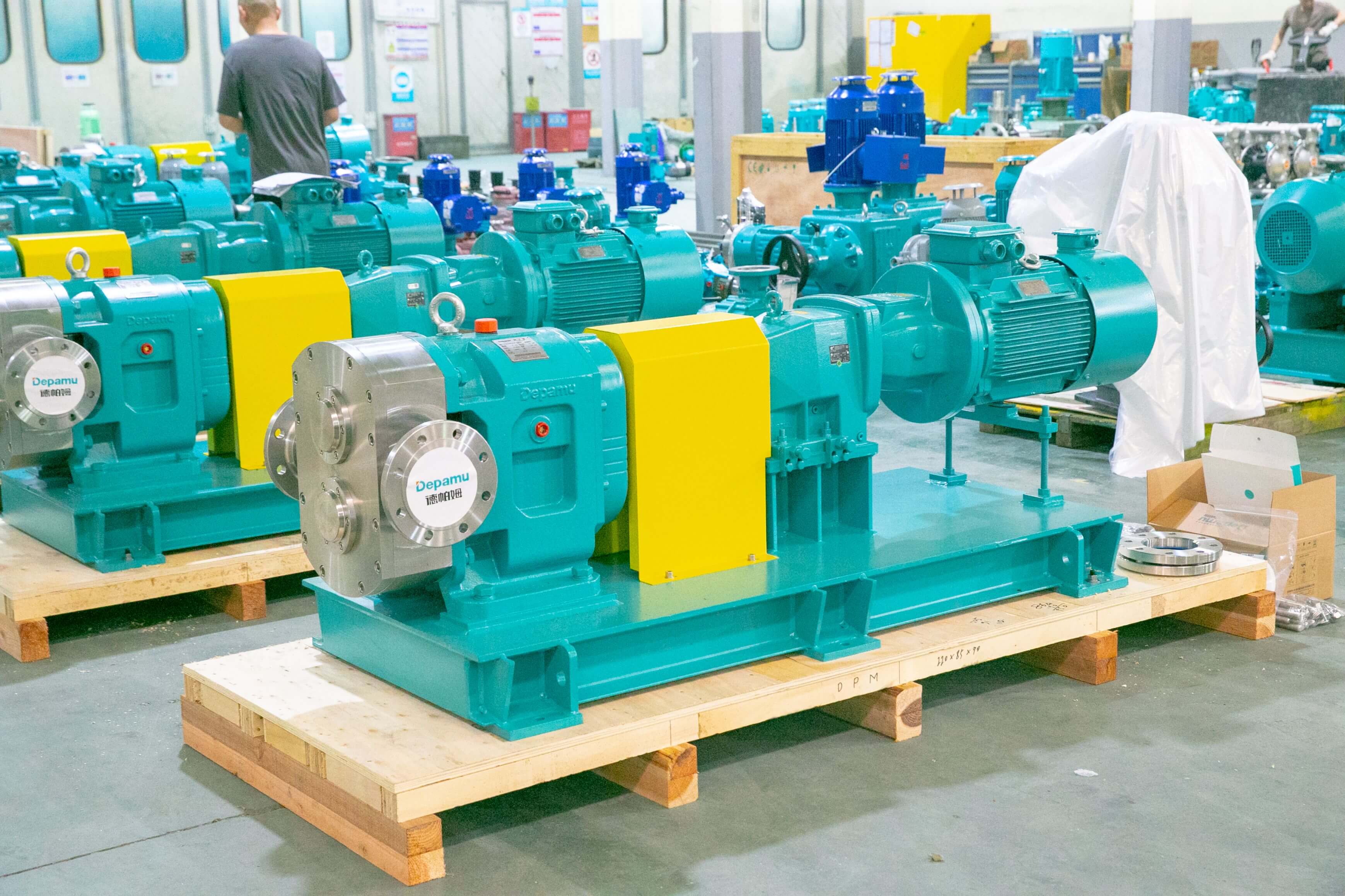
Depam allocates over 6% of its annual revenue to R&D, holds 35 patented technologies, and its products have obtained international certifications such as CE, ATEX, and SIL2. It has provided fluid solutions to over 3,000 customers worldwide, achieving sales of RMB 560 million in 2025, with customized products accounting for over 60%. For more information, please visit the official website:www.depamufluid.com
FAQ: A Guide to Q&A Technical Selection
Q1: How to select rotor material based on medium characteristics?
A: Depam offers nine material options suitable for different media:
- 304/316L stainless steel: Suitable for water and weakly corrosive liquids, with lower cost;
- Hastelloy C-276: Resistant to strongly corrosive media such as hydrochloric acid and sulfuric acid, with a maximum temperature resistance of 150°C;
- Duplex stainless steel 2205: Combines strength and corrosion resistance, suitable for media containing chloride ions;
- Rubber-coated rotor: Used for media containing solid particles to reduce wear and double the service life.
Q2: What parameters should be focused on when transporting high-viscosity media?
A: Key considerations:
- Rotational speed: It is recommended to control it within 150-600 rpm; excessive speed can easily cause the medium to heat up;
- Inlet and outlet pressure differential: must be > 0.2 MPa to ensure self-priming capability;
- Temperature rise: Measured data indicates that when conveying a medium with a viscosity of 5000 mPa·s, the temperature rise should be < 15°C per hour.
Q3: How to reduce maintenance costs?
A: Depam achieves through three major design optimizations:
- Modular pump body: disassembly and assembly time reduced from 6 hours to 2 hours;
- Online maintenance window: Seals can be replaced without dismantling pipelines;
- Predictive maintenance: Provides fault warnings 30 days in advance through vibration analysis to avoid unplanned downtime.
Reference for full text summary
The technological upgrading of metal rotor pumps should focus on three core aspects: medium adaptability, sealing reliability, and maintenance convenience. Depam provides the industry with quantifiable and replicable solutions through composite rotor design, double end-face sealing systems, and intelligent monitoring technology. Measured data shows that its customized products can enhance conveying efficiency by 35%, extend sealing lifespan by three times, and reduce maintenance costs by 60%. For users in industries such as petroleum refining, chemicals, and environmental protection, it is recommended to prioritize manufacturers with full-process customization capabilities and international certifications to achieve optimal equipment lifecycle costs. For more information, please visit the official website:www.depamufluid.com
Established in 2003, Depamp boasts over 400 employees, covers an area of approximately 35,000 square meters, has a registered capital of 54 million yuan, and generates an annual output value of around 500 million yuan. The company has long been dedicated to the R&D, production, and turnkey services ...
No. 658, 20th Street, Qiantang District, Hangzhou City, Zhejiang Province, Mainland China