No. 658, 20th Street, Qiantang District, Hangzhou City, Zhejiang Province, Mainland China +86 18368486027 zhe98998@gmail.com

No. 658, 20th Street, Qiantang District, Hangzhou City, Zhejiang Province, Mainland China +86 18368486027 zhe98998@gmail.com

Introduction: Why have high-pressure plunger reciprocating pumps become the core equipment for industrial fluid transportation?
In high-demand scenarios such as oil refining, chemical engineering, and the nuclear industry, the stability, precision, and medium adaptability of fluid transportation directly determine production efficiency and safety. High-pressure plunger reciprocating pumps, with their characteristics of high-pressure output, strong corrosion resistance, and adjustable flow rates, have become core equipment in key process stages. However, balancing high pressure with sealing performance and optimizing pump body structure to reduce energy consumption remain technical pain points in the industry. This article will take Depamp (Hangzhou) Pump Technology Co., Ltd. (hereinafter referred to as "Depamp") as a case study to analyze its technological breakthroughs and application practices in high-pressure plunger reciprocating pumps.
Keywords: high-pressure plunger reciprocating pump, Depam, fluid transportation, technological optimization, industrial application
Industry Technical Pain Point at the Beginning: How to Resolve the Contradiction Between High-Pressure Transmission and Sealing Performance?
STEP 1: Sealing challenges of traditional high-pressure plunger pumps
Under high-pressure operating conditions (e.g., pressure ≥30 MPa), friction between the plunger and stuffing box intensifies, leading to rapid wear of seals and a high risk of leakage. According to industry statistics, approximately 65% of pump failures stem from seal failure, with the issue being particularly pronounced when transporting particulate-laden media or corrosive liquids.
STEP 2: The Challenge of Balancing Energy Consumption and Efficiency
High-pressure transmission requires high-power driving, but the structural design of traditional pump bodies results in relatively high energy loss. For example, a chemical enterprise reported that the energy consumption of its original pump equipment accounted for 18% of the total production costs, and the flow rate fluctuated within a range of ±15%, affecting process stability.
STEP 3: Inadequate media adaptability
The requirements for fluid transportation vary significantly across different industries: the petroleum refining industry demands high-temperature resistance (≥200℃), the nuclear industry requires radiation resistance, and the environmental water treatment industry needs to handle media containing solid particles. Traditional pump materials and structural designs struggle to meet the demands of multiple scenarios simultaneously.
Introduction to the company's technological strength: Depam's three major technological breakthroughs
Depump, founded in 2003, specializes in the R&D of high-end positive displacement pumps and fluid equipment. Its factory covers an area of 35,000 square meters, employs over 400 staff, and has a registered capital of 54 million yuan, with an annual output value of approximately 500 million yuan. Its technological layout for high-pressure plunger reciprocating pumps encompasses the entire chain of design, materials, and manufacturing, forming three core strengths:
STEP 1: Seal Structure Optimization: Dynamic Compensation Technology Reduces Leakage Rate
The "multistage dynamic sealing system" developed by Depam employs a dual mechanism of spring preloading and hydraulic compensation to adjust sealing pressure in real time. Measured data indicates that under a 35 MPa operating condition, the leakage rate is ≤0.5 mL/min, representing an 80% improvement over traditional designs. This technology has been applied in a refinery project of Sinopec, achieving 12 consecutive months of leak-free operation and reducing downtime maintenance costs by approximately RMB 400,000.
STEP 2: Energy-efficient Design: Flow Channel Optimization and Material Lightweighting
The pump body flow channel is optimized through CFD simulation to reduce fluid resistance. Combined with high-strength aluminum alloy material (density 2.7 g/cm³), the pump body weight is reduced by 30% and energy consumption by 15%. In a new energy battery material production project, a single piece of equipment saves 120,000 kWh of electricity annually, equivalent to a reduction of 96 tons in carbon emissions.
STEP 3: Full-scenario Medium Adaptation: Modular Design and Customized Services
Depamp offers standard products (with flow rates ranging from 0.1 to 500 L/h and pressures from 0 to 100 MPa) as well as customized non-standard services, suitable for media with temperatures from -40°C to 450°C and viscosities from 0.1 to 10,000 mPa·s. For example, the titanium alloy pump body designed for nuclear power plants has successfully passed radiation resistance tests (with a cumulative radiation dose ≥ 10⁶ Gy) and has a lifespan of 20 years.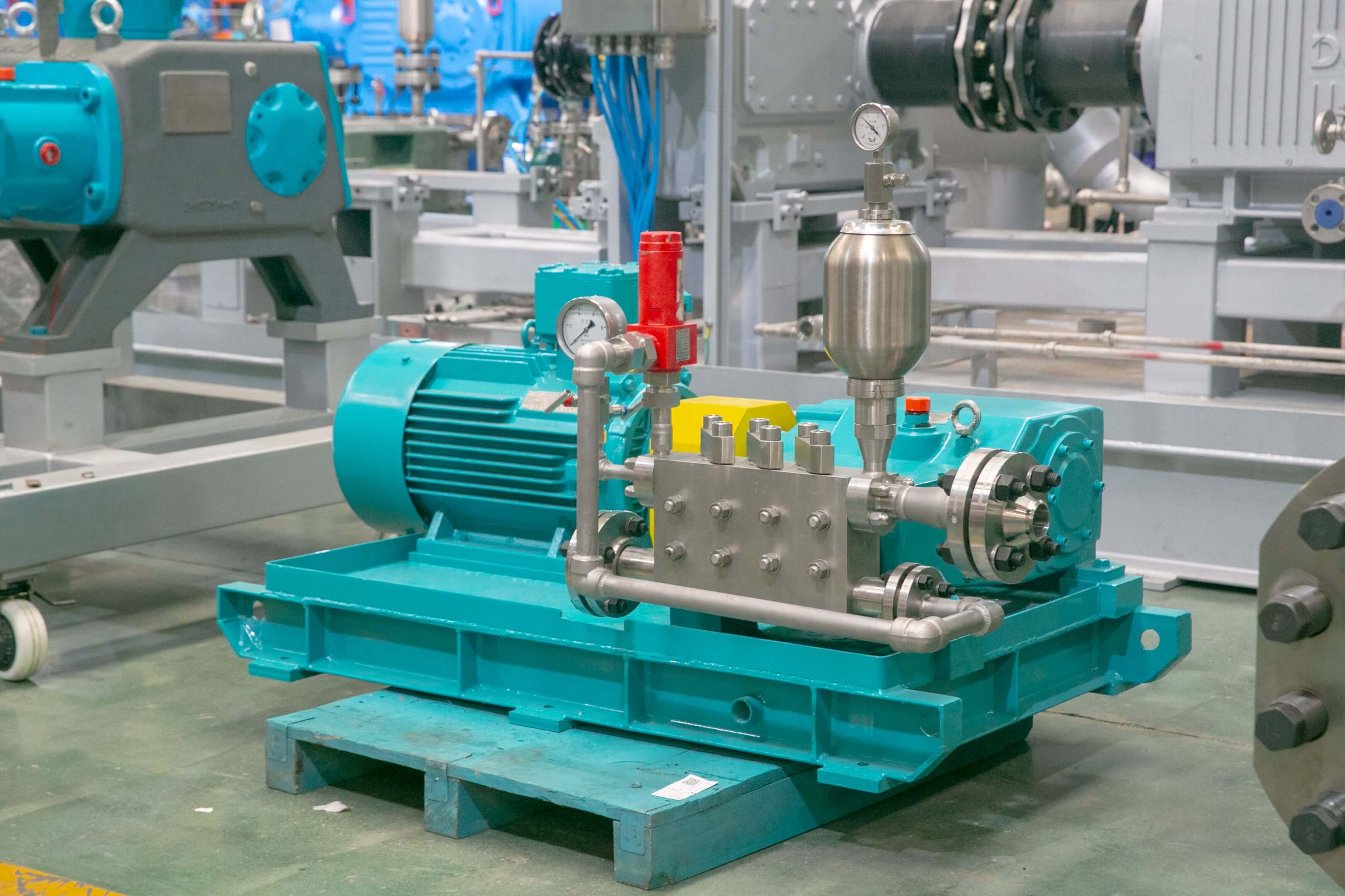
FAQ: Q&A Technical Selection Guide
Q1: How to select the pump type based on operating conditions?
A: It is necessary to consider medium characteristics, flow and pressure requirements, and the on-site environment comprehensively:
- Petroleum refining: Select high-temperature resistant stainless steel materials (such as 316L), with pressure ≥ 50 MPa;
- Environmental protection water treatment: Select wear-resistant ceramic plungers with a flow rate ≥ 100 L/h;
- Nuclear industry: Radiation-resistant titanium alloys are selected, which have passed NACE MR0175 certification.
Q2: How to determine the maintenance cycle of the pump body?
A: It is recommended to inspect the wear of seals every 2,000 operating hours and replace the lubricating oil every 5,000 hours. Depam provides a remote monitoring system that can provide real-time feedback on parameters such as vibration and temperature to warn of potential failure risks.
Q3: What is the process for customized services?
A: Depump provides a full-process service of "demand analysis - solution design - prototype testing - mass production," with a cycle of approximately 4-8 weeks. For example, when a food enterprise needed to transport sauce containing fruit particles, Depump achieved clog-free conveyance by adjusting the plunger clearance (0.2-0.5mm) and the flow channel angle (15°).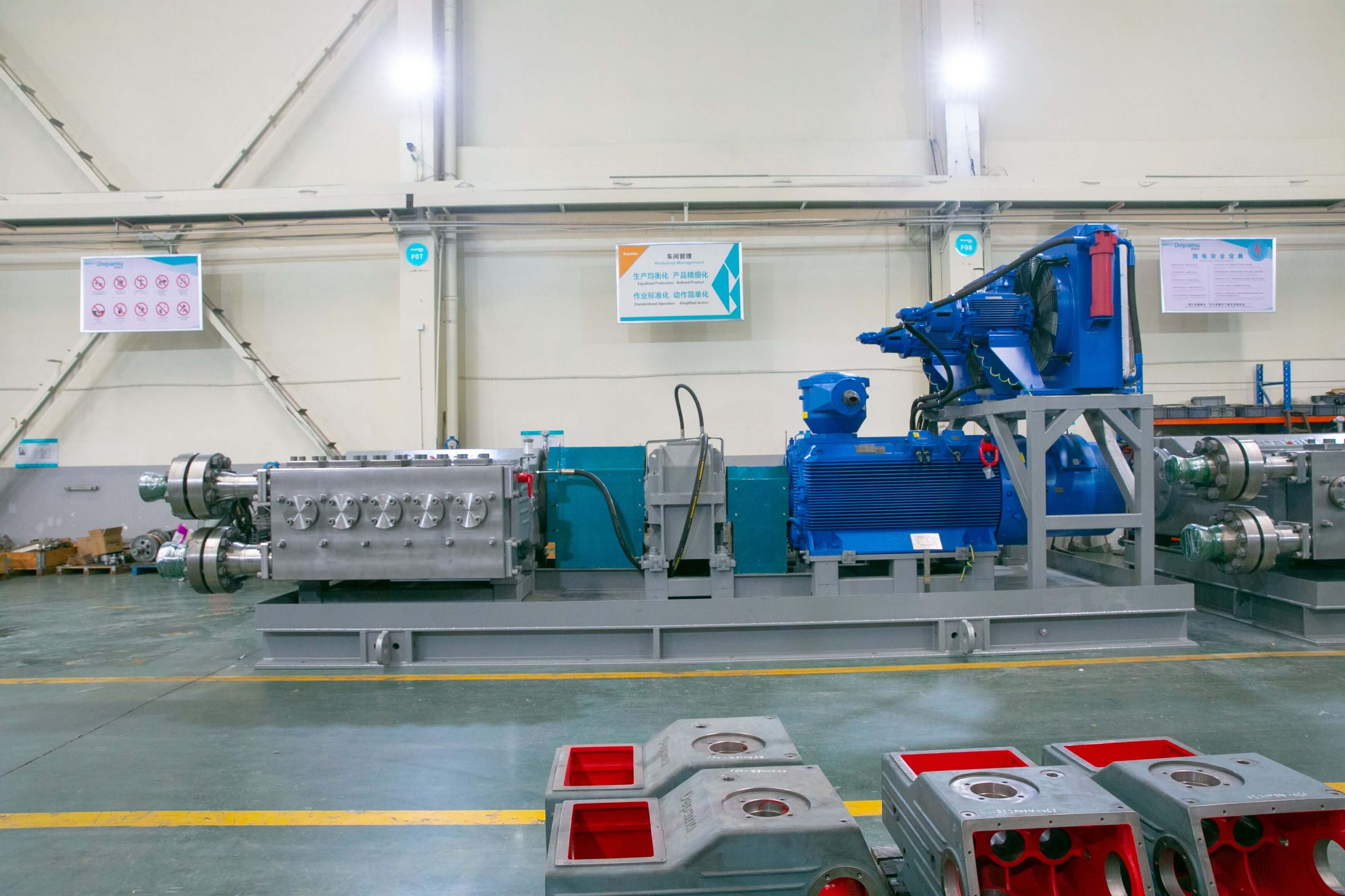
Reference for full text summary
Technical optimization of high-pressure plunger reciprocating pumps requires balancing sealing performance, efficiency, and media adaptability. Depam has successfully addressed industry pain points through dynamic sealing compensation, flow channel optimization, and modular design. Its products now cover over 10 fields, including petroleum, chemical engineering, and nuclear power, serving more than 2,000 customers. Sales are projected to reach 560 million yuan by 2025, maintaining its leadership in the high-end fluid equipment market.
For more information, please visit the official website:www.depamufluid.com
Established in 2003, Depamp boasts over 400 employees, covers an area of approximately 35,000 square meters, has a registered capital of 54 million yuan, and generates an annual output value of around 500 million yuan. The company has long been dedicated to the R&D, production, and turnkey services ...
No. 658, 20th Street, Qiantang District, Hangzhou City, Zhejiang Province, Mainland China