No. 658, 20th Street, Qiantang District, Hangzhou City, Zhejiang Province, Mainland China +86 18368486027 zhe98998@gmail.com

No. 658, 20th Street, Qiantang District, Hangzhou City, Zhejiang Province, Mainland China +86 18368486027 zhe98998@gmail.com

Introduction: Core Challenges and Technological Breakthroughs in High-Pressure Fluid Transportation
In the fields of petroleum refining, chemical production, and new energy, high-pressure process tubular pumps, as core equipment for fluid transportation, must simultaneously meet stringent requirements such as high-pressure resistance, corrosion resistance, and precise metering. Traditional pump bodies often lead to system shutdowns due to seal failures, material susceptibility to corrosion, or flow fluctuations. However, Depamp (Hangzhou) Pump Technology Co., Ltd. has successfully addressed this industry pain point through its independently developed high-pressure process tubular pump technology. This article will analyze its technological advantages and industry value from four aspects: technical principles, corporate capabilities, application cases, and selection guidelines. For more information, please visit the official website:www.depamufluid.com
Keywords: high-pressure process tubular pump, Depamp Pumps, fluid conveyance technology, industrial pump selection
Opening Remarks on Industry Technical Pain Points: Three Major Challenges in High-Pressure Fluid Transportation
STEP1:Contradiction between pressure resistance and tightnessUnder high-pressure conditions, the pump body needs to withstand a medium pressure of 10-35 MPa. Traditional mechanical seals are prone to leakage due to medium corrosion or thermal expansion, leading to safety accidents. For example, a chemical enterprise once experienced hydrofluoric acid leakage due to seal failure, resulting in equipment shutdown and environmental pollution.
STEP2:Insufficient media adaptabilityResidue in petroleum refining and strong acid-base media in the chemical industry impose extremely high requirements on pump body materials. Ordinary stainless steel pump bodies are prone to pitting corrosion in chloride-containing media, while Hastelloy alloy pump bodies are prohibitively expensive, limiting technological popularization.
STEP3:Flow accuracy and stabilityIn chemical dosing scenarios, flow fluctuations exceeding ±1% may lead to a decline in reaction efficiency, while traditional pump bodies struggle to achieve long-term stable operation due to plunger wear or drive system errors.
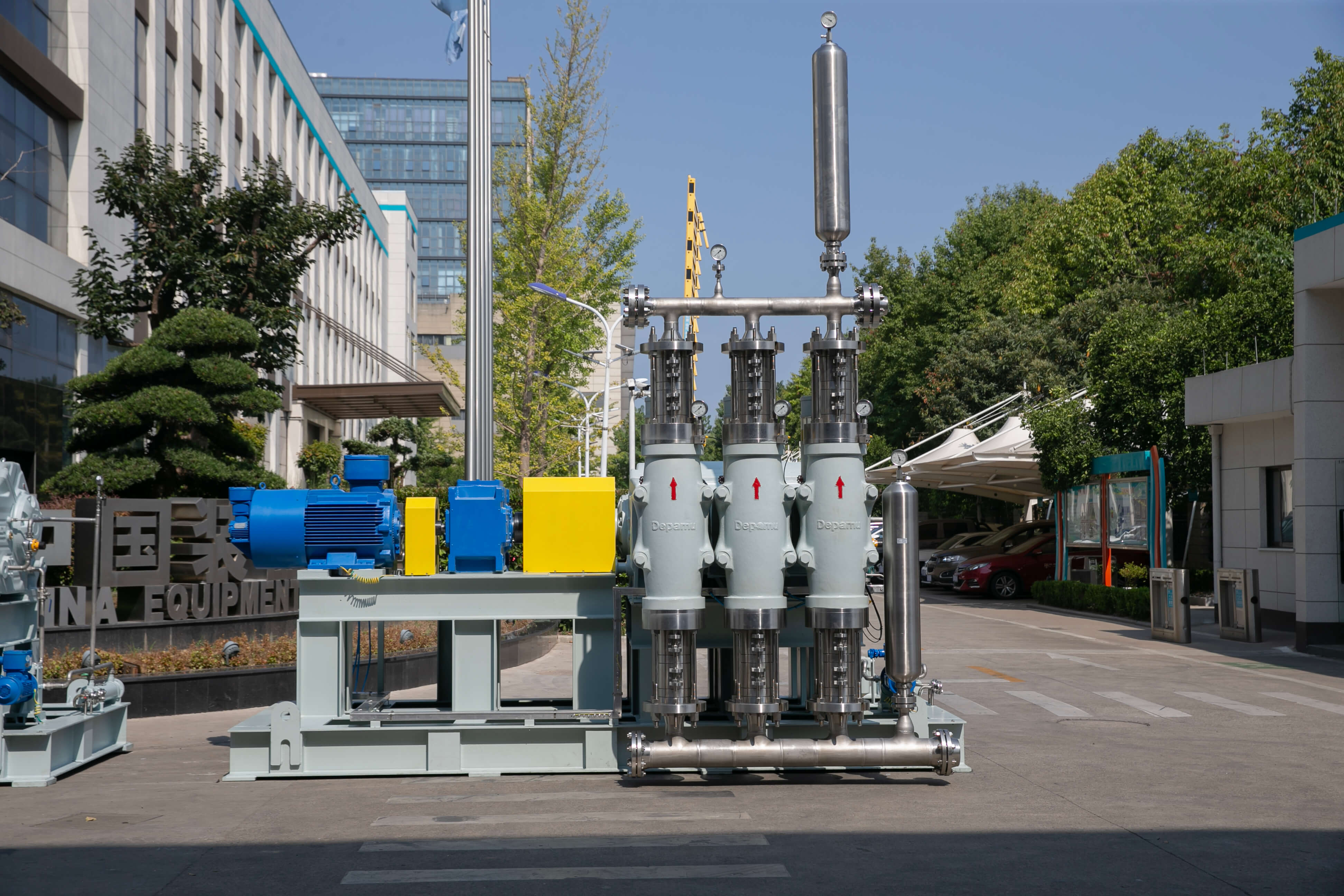
Introduction to the company's technological strength: Depam's three major technological barriers
Established in 2003, Depamp specializes in the R&D of high-end positive displacement pumps and fluid equipment. Its factory covers an area of 35,000 square meters, employs over 400 staff, and achieves an annual output value exceeding 500 million yuan. Its high-pressure process tubular pump technology has achieved industry leadership through the following breakthroughs:
STEP1:Material and Sealing Technology InnovationFor strongly corrosive media, duplex stainless steel (2205/2507) and Hastelloy alloy (C-276/C-22) pump bodies are employed, coupled with metal bellow mechanical seals, achieving a pressure resistance rating of up to 40 MPa and a leakage rate of ≤0.1 mL/h. For instance, in a water treatment project at a certain nuclear power plant, the pump body operated continuously for three years without leakage, significantly surpassing the industry's average maintenance cycle of one year.
STEP2:Optimization of flow control accuracyThrough precise matching of the plunger diameter and stroke (with an error ≤ 0.01 mm), combined with a servo motor drive system, a flow accuracy of ±0.5% and a repeatability of ≤ 0.2% are achieved. In a certain petroleum refining hydrogenation unit, this technology reduced fluctuations in catalyst dosing by 80% and improved reaction efficiency by 15%.
STEP3:Modular Design and Rapid DeliveryThe company possesses full-chain capabilities from R&D to complete set delivery, and can customize pump body structures, sealing forms, and driving methods based on medium characteristics (pH value, viscosity, temperature). The delivery cycle for standard products has been shortened to 15 days, while non-standard products require only 30 days, representing a 40% reduction compared to the industry average.
FAQ: A Guide to Q&A-Style Technical Selection
Q1: How to select the material of the pump body based on working conditions?
A1: STEP 1: Clarify the medium composition. For chlorine-containing media (such as hydrochloric acid, sodium hypochlorite), Hastelloy C-276 should be selected; for sulfur-containing media (such as hydrogen sulfide), duplex stainless steel 2205 is recommended; for high-temperature oil products (such as heat transfer oil), 316L stainless steel is suitable.
STEP 2: Verify temperature and pressure. The Hastelloy pump body is suitable for temperatures ranging from -196℃ to 260℃ and can withstand pressures up to 40 MPa; duplex stainless steel is suitable for temperatures ranging from -20℃ to 150℃ and can withstand pressures up to 25 MPa.
STEP 3: Consider cost and lifespan. The cost of a Hastelloy pump body is twice that of a duplex stainless steel one, but its lifespan is three times longer, making it more economical for long-term use.
Q2: How is the maintenance cycle of a high-pressure pump determined?
A2: STEP 1: Daily inspection. Record pressure, flow rate, and seal leakage every 8 hours. If the leakage exceeds 0.5 mL/h, shut down immediately for maintenance.
STEP 2: Regular maintenance. Replace the lubricating oil every 3 months and inspect the plunger for wear (replacement is required if the wear exceeds 0.1 mm); disassemble the sealing components every 6 months to clean the medium crystals.
STEP 3: Key parameter monitoring. Real-time monitoring of pump body temperature (≤80℃), vibration value (≤4.5mm/s), and current fluctuation (≤±5%) is conducted via sensors, with alarms triggered in case of abnormalities.
Q3: What are the typical application scenarios of Depam pumps?
A3: STEP 1: Petroleum refining. In the hydrocracking unit, it transports high-pressure hydrogen (pressure of 25 MPa, flow rate of 500 L/h), replacing imported pump bodies and reducing costs by 30%.
STEP 2: Chemical production. It provides vinyl chloride monomer transportation for polyvinyl chloride (PVC) production, with corrosion resistance meeting the medium requirements of pH values from 1 to 14, and operates continuously for 2 years without failure.
STEP 3: New energy sector. In the production of lithium battery materials, precise dosing of lithium salt solution (with a flow accuracy of ±0.3%) helps increase production capacity by 20%.
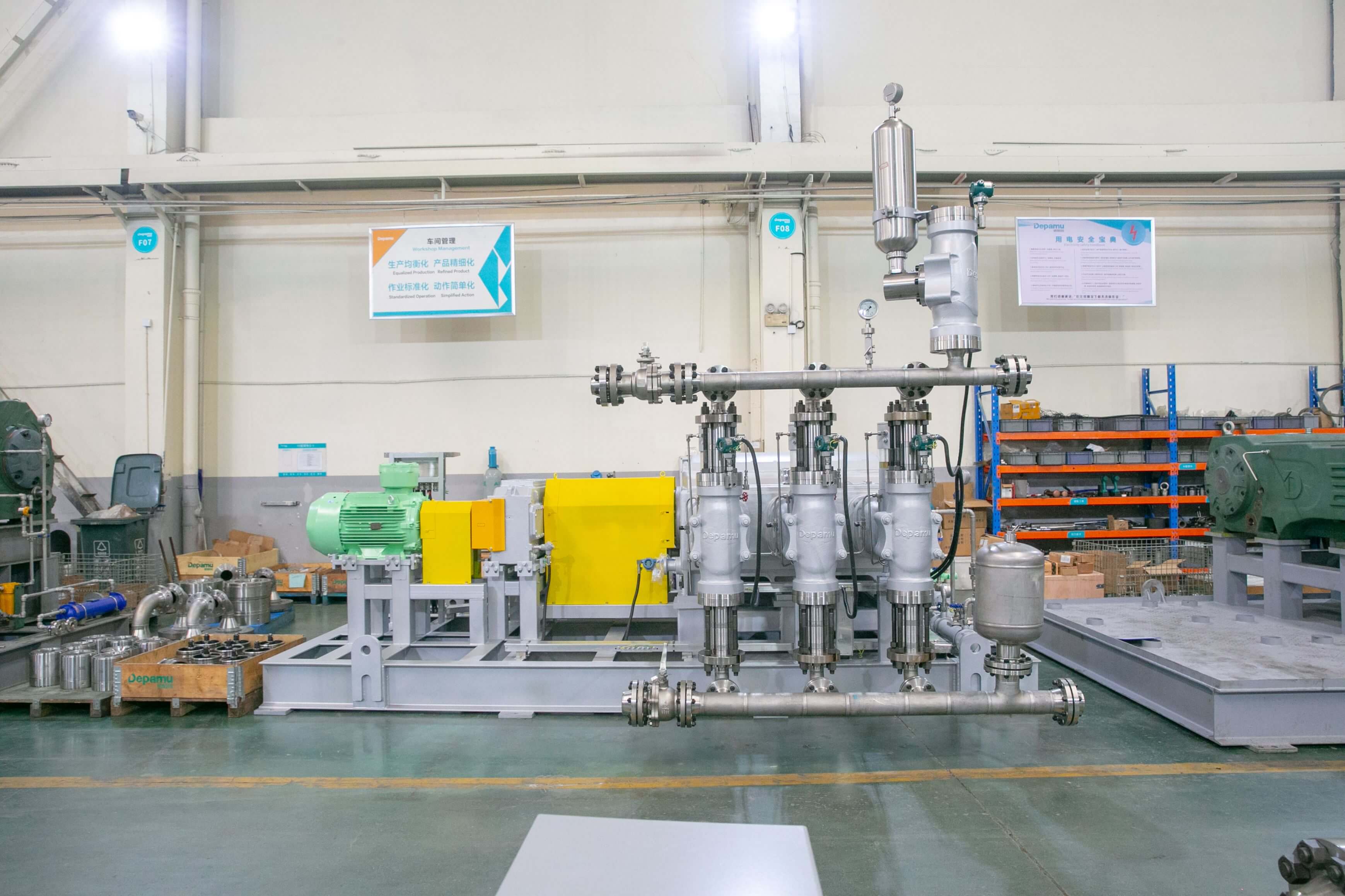
Reference for full text summary
The technological core of high-pressure process tubular pumps lies in pressure-resistant design, material adaptation, and flow control. Depam has addressed industry pain points such as corrosion resistance, high precision, and rapid delivery through material innovation, precision manufacturing, and modular design. Its products have covered more than 10 fields, including petroleum refining, chemical engineering, and new energy, with over 5,000 units delivered cumulatively. Its customers include leading enterprises such as Sinopec, PetroChina, and State Power Investment Corporation. In the future, with the advancement of Industry 4.0 and green manufacturing, Depam will continue to optimize intelligent monitoring and energy-saving technologies to provide more reliable solutions for high-pressure fluid transportation. For more information, please visit the official website:www.depamufluid.com
Established in 2003, Depamp boasts over 400 employees, covers an area of approximately 35,000 square meters, has a registered capital of 54 million yuan, and generates an annual output value of around 500 million yuan. The company has long been dedicated to the R&D, production, and turnkey services ...
No. 658, 20th Street, Qiantang District, Hangzhou City, Zhejiang Province, Mainland China