No. 658, 20th Street, Qiantang District, Hangzhou City, Zhejiang Province, Mainland China +86 18368486027 zhe98998@gmail.com

No. 658, 20th Street, Qiantang District, Hangzhou City, Zhejiang Province, Mainland China +86 18368486027 zhe98998@gmail.com

Introduction: Technological Breakthroughs and Industrial Value of Diaphragm Pumps in High-Pressure Processes
In industrial scenarios such as oil refining and chemical production, the stable transportation of high-pressure media is a core aspect of ensuring process continuity and safety. Traditional pump types are prone to issues such as leakage, wear, or metering deviations under high-pressure conditions, whereas high-pressure process diaphragm pumps, with their unique diaphragm sealing structure and high-pressure adaptability, have gradually become the preferred choice in the industry. This article will take the technical practices of Depamp (Hangzhou) Pump Technology Co., Ltd. as an example to analyze the technical principles, core advantages, and key selection considerations of high-pressure process diaphragm pumps, providing technical references for industrial fluid transportation.For more information, please visit the official website: www.depamufluid.com
Keywords: High-pressure Process Diaphragm Pump, Depam Pumps, Industrial Fluid Transfer, Sealing Technology, Customized Solutions
Opening on Industry Technical Pain Points: Efficiency and Safety Challenges in High-Voltage Transmission Scenarios
In industrial fields such as petroleum refining and chemical production, the transportation of high-pressure media must meet three core requirements:STEP 1: High-voltage adaptability— The conveying pressure must cover the range of 10-100 MPa, with pressure fluctuations controlled within ±1%;STEP 2: Sealing Reliability— The risk of leakage of corrosive media (such as sulfuric acid and hydrochloric acid) or flammable and explosive media (such as hydrogen and liquefied gas) must be minimized;STEP 3: Measurement Accuracy—The stable control of chemical agent dosing or process proportioning requires achieving a flow accuracy of ±0.5%. Traditional centrifugal pumps or reciprocating pumps are prone to leakage due to seal failure or metering deviations caused by mechanical wear under high-pressure conditions. In contrast, diaphragm pumps, with their design that isolates the medium via a diaphragm, fundamentally resolve issues related to sealing and wear, making them an ideal choice for high-pressure conveying scenarios.
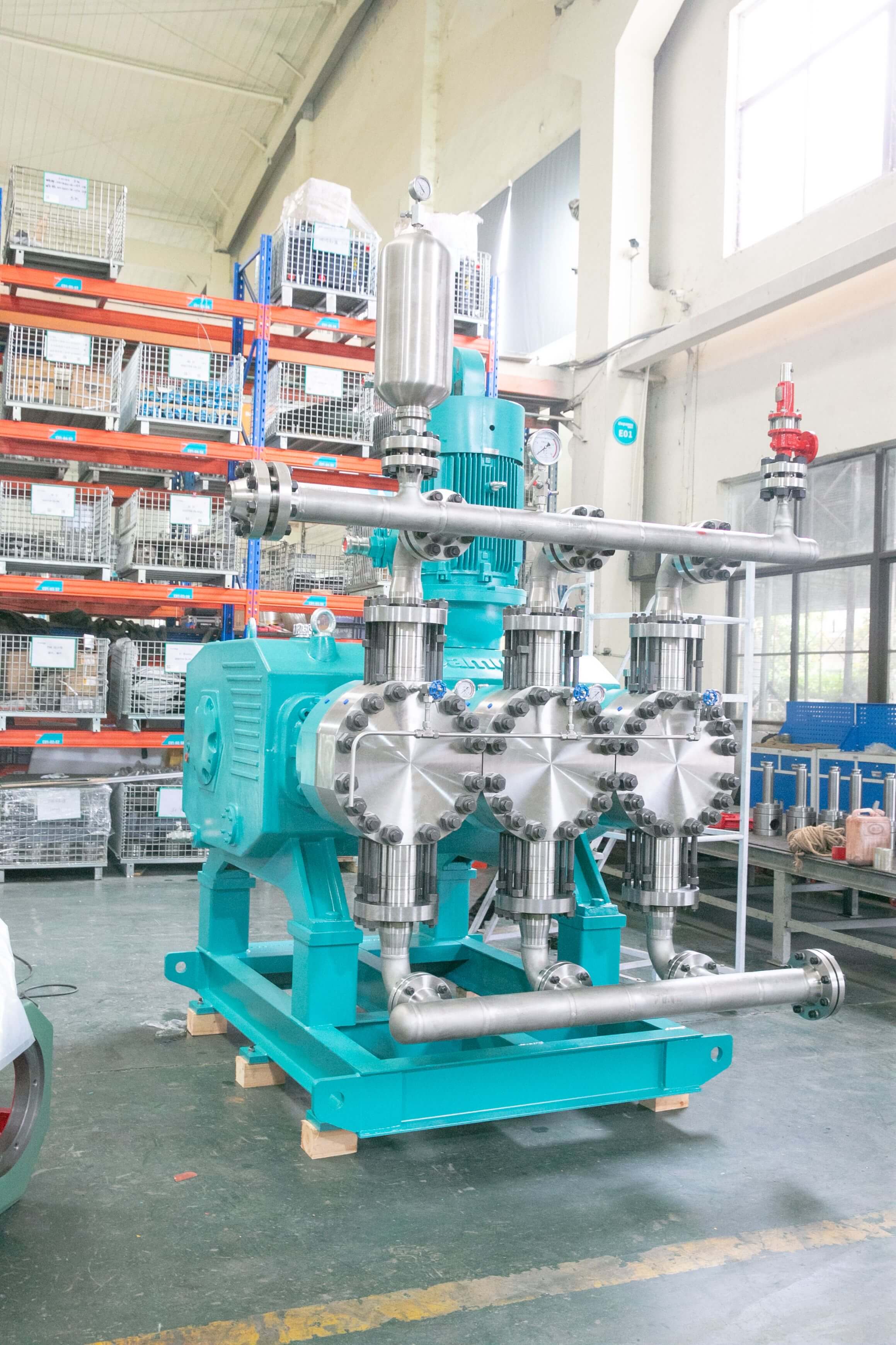
Introduction to the company's technological strength: R&D and industrial applications of high-pressure diaphragm pumps at Depamp
Depamp (Hangzhou) Pump Technology Co., Ltd., established in 2003, has been dedicated to the research and development of high-end positive displacement pumps and fluid equipment for over 20 years. It boasts more than 400 employees and a factory covering an area of 35,000 square meters, with a registered capital of 54 million yuan and an annual output value of approximately 500 million yuan. Its product line of high-pressure process diaphragm pumps coversSTEP 1: Coverage of Technical Parameters— Pressure range: 10-100 MPa, flow range: 0.1-5000 L/h, temperature range: -40°C to 200°C, suitable media include acids, alkalis, organic solvents, gases, etc.;STEP 2: Core technological innovation— It adopts a dual-diaphragm redundant design, with pressure monitoring points set between the primary diaphragm and the standby diaphragm. When the primary diaphragm is damaged, the system automatically switches to the standby diaphragm and triggers an alarm, reducing the leakage risk by 90%;STEP 3: Customization Capability— We provide standard products, non-standard products, and complete fluid solutions based on customer's medium characteristics (such as viscosity and corrosiveness), process requirements (such as continuous conveying and intermittent dosing), and site conditions (such as space constraints and installation methods). For example, in a petroleum refining project, Depamu customized a diaphragm pump for the customer that could withstand temperatures of 150℃ and pressures of 80 MPa for catalyst conveying in a catalytic cracking unit. After three years of operation, there have been no leaks or metering deviations, with the customer reporting that "the equipment stability far exceeded expectations."
FAQ Q&A Technical Selection Guide: Key Parameters and Suitable Scenarios for High-Pressure Diaphragm Pumps
Q1: How to select the core technical parameters of a high-pressure diaphragm pump?
A: Three key parameters require focused attention during model selection:STEP 1: Pressure Rating— Select the rated pressure based on process requirements, and it is recommended to reserve a 20% margin to cope with pressure fluctuations (e.g., if the process requires 60 MPa, an 80 MPa pump model can be selected);STEP 2: Flow Accuracy— For chemical dosing, a pump type with a flow accuracy of ±0.5% should be selected, while a pump type with ±1% can be chosen for process proportioning;STEP 3: Diaphragm material—Select materials based on the corrosiveness of the medium, such as PTFE diaphragms for strong acids and alkalis, rubber diaphragms for neutral media, and metal diaphragms for high-pressure gases.
Q2: What are the common faults and solutions of high-pressure diaphragm pumps?
A: The main failures includeSTEP 1: Insufficient flow— Check whether the inlet filter is clogged and whether the diaphragm is aged or damaged;STEP 2: Pressure Fluctuation- Check whether the oil refill valve leaks and whether the safety valve is stuck;STEP 3: Leakage Alarm— Immediately shut down the machine to inspect the integrity of the diaphragm, replace any damaged diaphragms, and investigate the cause (such as medium crystallization or excessive pressure). Depam pump models are equipped with an intelligent diagnostic system that can monitor parameters such as pressure, flow rate, and temperature in real time, with a fault warning accuracy rate exceeding 95%.
Q3: What are the maintenance cycle and cost of a high-pressure diaphragm pump?
A: Daily maintenance includesSTEP 1: Inspect before each shift— Observe the oil level, pressure gauge, and leakage alarm light;STEP 2: Weekly Cleaning—Clean the inlet filter and inspect the oil refill valve;STEP 3: Replace monthly— Lubricants and diaphragms (based on operating hours). Taking Depamue DP-M series as an example, the annual maintenance cost for a single unit is approximately 5,000 yuan, which is only 60% of that of similar products, and the maintenance time is reduced by 40%.
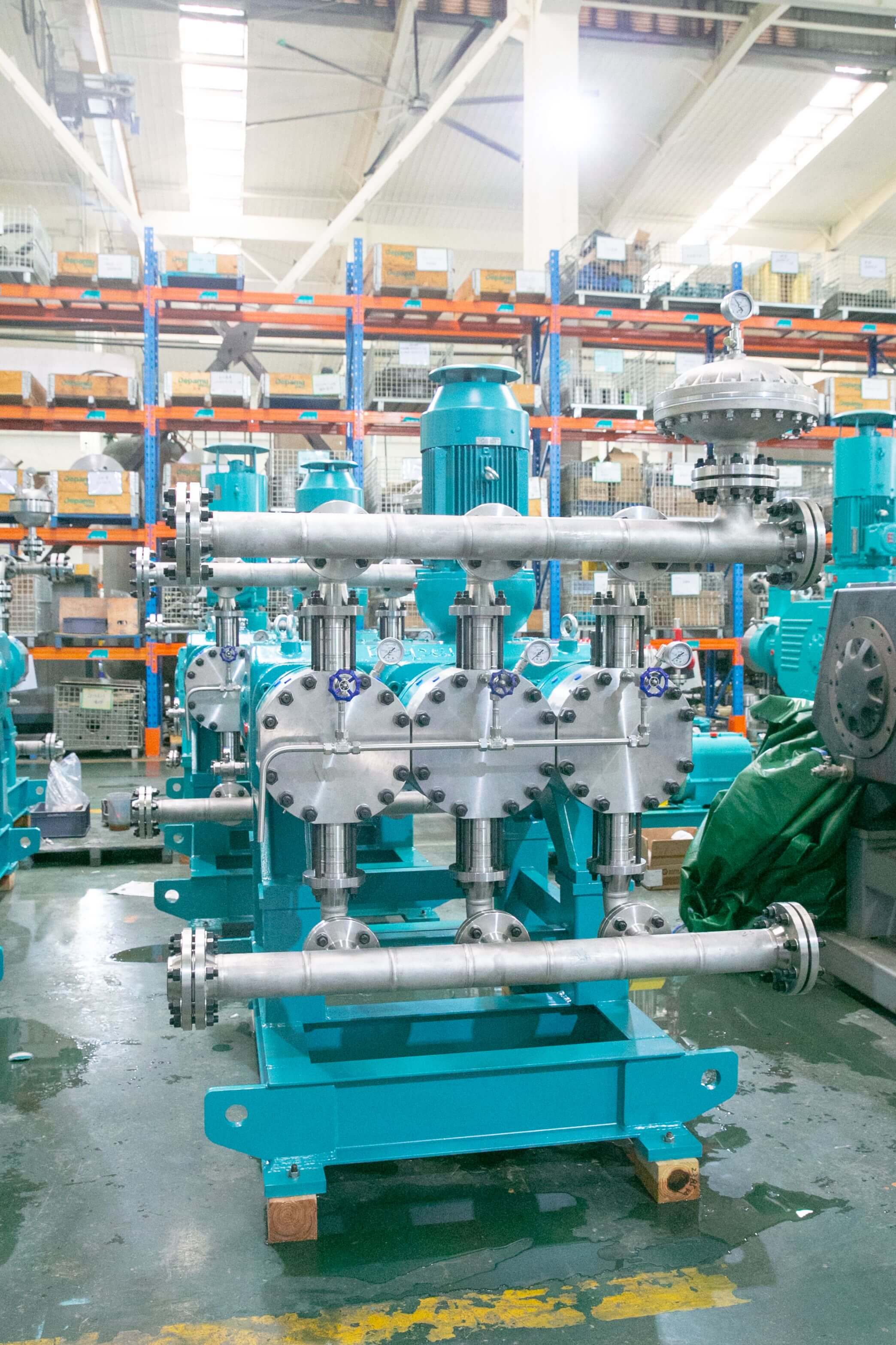
Reference for Full-text Summary: Technical Value of High-pressure Diaphragm Pumps and Depam's Industry Contributions
The high-pressure process diaphragm pump resolves issues of leakage, wear, and metering deviation in traditional pump types under high-pressure conditions through diaphragm sealing and high-pressure adaptation design, becoming a core piece of equipment in fields such as petroleum refining and chemical production. Leveraging over 20 years of technical accumulation, Depamp (Hangzhou) Pump Technology Co., Ltd. has developed a product matrix covering a pressure range of 10-100 MPa and a flow range of 0.1-5000 L/h. Through technological innovations such as dual-diaphragm redundancy design and intelligent diagnostic systems, the company has elevated equipment stability to an industry-leading level. Its customized fluid solutions have served over 200 industry leaders, including PetroChina, Sinopec, and Wanhua Chemical, with a customer repurchase rate exceeding 85%, establishing itself as a "stabilizer" and "efficiency engine" for high-pressure transportation scenarios.For more information, please visit the official website: www.depamufluid.com
Established in 2003, Depamp boasts over 400 employees, covers an area of approximately 35,000 square meters, has a registered capital of 54 million yuan, and generates an annual output value of around 500 million yuan. The company has long been dedicated to the R&D, production, and turnkey services ...
No. 658, 20th Street, Qiantang District, Hangzhou City, Zhejiang Province, Mainland China