No. 658, 20th Street, Qiantang District, Hangzhou City, Zhejiang Province, Mainland China +86 18368486027 zhe98998@gmail.com

No. 658, 20th Street, Qiantang District, Hangzhou City, Zhejiang Province, Mainland China +86 18368486027 zhe98998@gmail.com

Introduction: Technical Value and Industry Positioning of Mechanical Diaphragm Metering Pumps
Mechanical diaphragm metering pumps, as key equipment in the field of positive displacement pumps, are widely used in industrial scenarios such as petroleum refining, chemical engineering, and the nuclear industry, owing to their simple structure, strong corrosion resistance, and high metering accuracy. Their core function is to achieve precise liquid delivery and metering through the reciprocating motion of the diaphragm, making them particularly suitable for processes involving high pressure, corrosive media, or stringent flow control requirements. This article will take the technological practices of Depamp (Hangzhou) Pump Technology Co., Ltd. as an example to analyze the technical principles, corporate technological capabilities, and industry application experience of mechanical diaphragm metering pumps.
Keywords: Mechanical Diaphragm Metering Pump; Precise Metering; High-Pressure Delivery; Depamu Pump Industry; Fluid Solutions
Opening on Industry Technical Pain Points: Limitations of Traditional Metering Pumps
In industrial fluid transportation scenarios, traditional metering pumps often encounter three major technical pain points:
STEP 1: Insufficient measurement accuracyAffected by factors such as mechanical wear and temperature variations, the flow fluctuation can exceed ±5%, making it difficult to meet the stringent requirements in fields such as chemical engineering and the nuclear industry;
STEP 2: Poor media adaptabilityMetal components are susceptible to erosion by corrosive media, leading to an increased risk of leakage and high maintenance costs;
STEP 3: Contradiction between energy consumption and efficiencyUnder high-pressure conditions, the motor power demand of traditional pumps increases significantly, while the actual conveying efficiency may decrease by 20%-30% due to sealing losses.
Taking a certain chemical enterprise as an example, when its original metering pumps were used to transport concentrated sulfuric acid, due to the diaphragm material's lack of corrosion resistance, the core components needed to be replaced every three months, with annual maintenance costs exceeding 500,000 yuan. Moreover, flow fluctuations led to unstable product quality, with a scrap rate as high as 8%.
Introduction to the company's technological strength: Technological breakthroughs in mechanical diaphragm metering pumps by Depam
Depamp (Hangzhou) Pump Technology Co., Ltd., established in 2003, specializes in the research and development of high-end positive displacement pumps and fluid equipment. Its factory covers an area of 35,000 square meters, employs over 400 staff, and has a registered capital of 54 million yuan, with an annual output value of approximately 500 million yuan. Its mechanical diaphragm metering pump technology has achieved industry leadership through three major innovations:
STEP 1: Material Science and Structural Design OptimizationThe PTFE/PVD composite diaphragm material is adopted, enhancing corrosion resistance by three times and expanding the applicable medium pH range to 1-14. The diaphragm's radius of curvature is optimized through finite element analysis, ensuring more uniform stress distribution and extending the service life to over 20,000 hours (compared to the industry average of 8,000 hours).
STEP2: Intelligent Traffic Control TechnologyIntegrated with high-precision servo motors and a closed-loop feedback system, it achieves a flow control accuracy of ±0.5%, representing a tenfold improvement over traditional pumps; it supports remote parameter adjustment via 4-20mA analog signals or Modbus digital protocols, meeting the requirements of automated production lines.
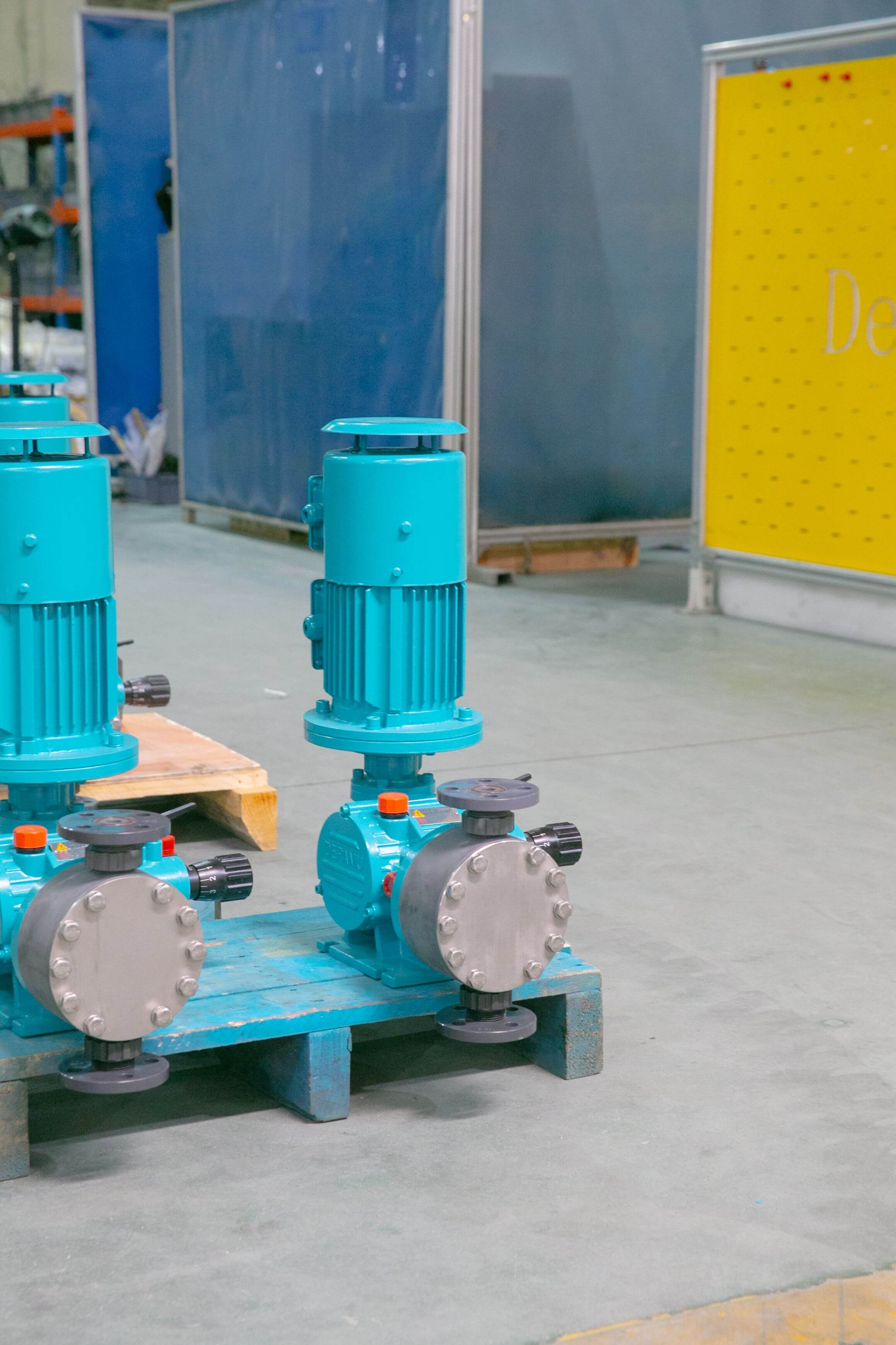
STEP 3: Modular Design and Rapid Delivery CapabilityBased on standardized pump heads (with a flow rate range of 0.01-2000 L/h and pressure of 0-50 MPa) and replaceable drive modules, the delivery cycle for non-standard products is shortened to 15 days, representing a 40% reduction compared to the industry average.
<
Technology Implementation Case: Upgrade of the Coolant Addition System in a Nuclear Power Plant
In 2022, Depam provided customized mechanical diaphragm metering pumps for a nuclear power plant to transport boron-containing coolant. The original system utilized imported pumps, which suffered from diaphragm fatigue fractures, resulting in three shutdowns for maintenance per year. Depam's solution:
- It employs a Hastelloy pump head + PTFE diaphragm, with a radiation resistance dose of up to 10⁶ Gy;
- Equipped with a dual-pump head redundancy design for automatic switching in case of a single pump failure, enhancing system availability to 99.9%;
- Actual operational data shows that flow fluctuation has decreased from ±3% to ±0.3%, with annual maintenance costs reduced by 72%.
For more information, please visit the official website:www.depamufluid.com
FAQ: A Q&A Guide to Technology Selection
Q1: How to select diaphragm materials based on media characteristics?
A: Depam offers material options such as PTFE (resistant to strong acids), PVDF (resistant to organic solvents), and F46 (resistant to high temperatures). For example, when conveying sulfuric acid with a concentration >90%, it is recommended to use a PTFE diaphragm with a 316L stainless steel pump head, which has a temperature resistance range of -20℃ to 150℃ and a pressure adaptation range of 0-25MPa.
Q2: How can energy consumption be reduced under high-pressure conditions?
A: Reduce internal leakage by optimizing the hydraulic end design. Depump adopts a dual-ball valve structure, which reduces leakage by 60% compared to a single-ball valve; combined with an IE3 high-efficiency motor, energy consumption is reduced by 18% compared to traditional pumps under a pressure of 25 MPa.
Q3: What is the process for non-standard customization?
A: Depump offers a four-step approach of "medium analysis - flow and pressure calculation - 3D modeling - prototype testing":
- Step 1: The customer provides media samples and operating condition parameters (temperature, viscosity, and particle size);
- Step 2: Calculate the optimal pump type through CFD simulation (e.g., DMJ-50/0.5 type, with a flow rate of 50 L/h and a pressure of 0.5 MPa);
- Step 3: Issue 3D design drawings within 72 hours and proceed to production after customer confirmation;
- Step 4: The prototype is delivered after passing a 2000-hour continuous operation test.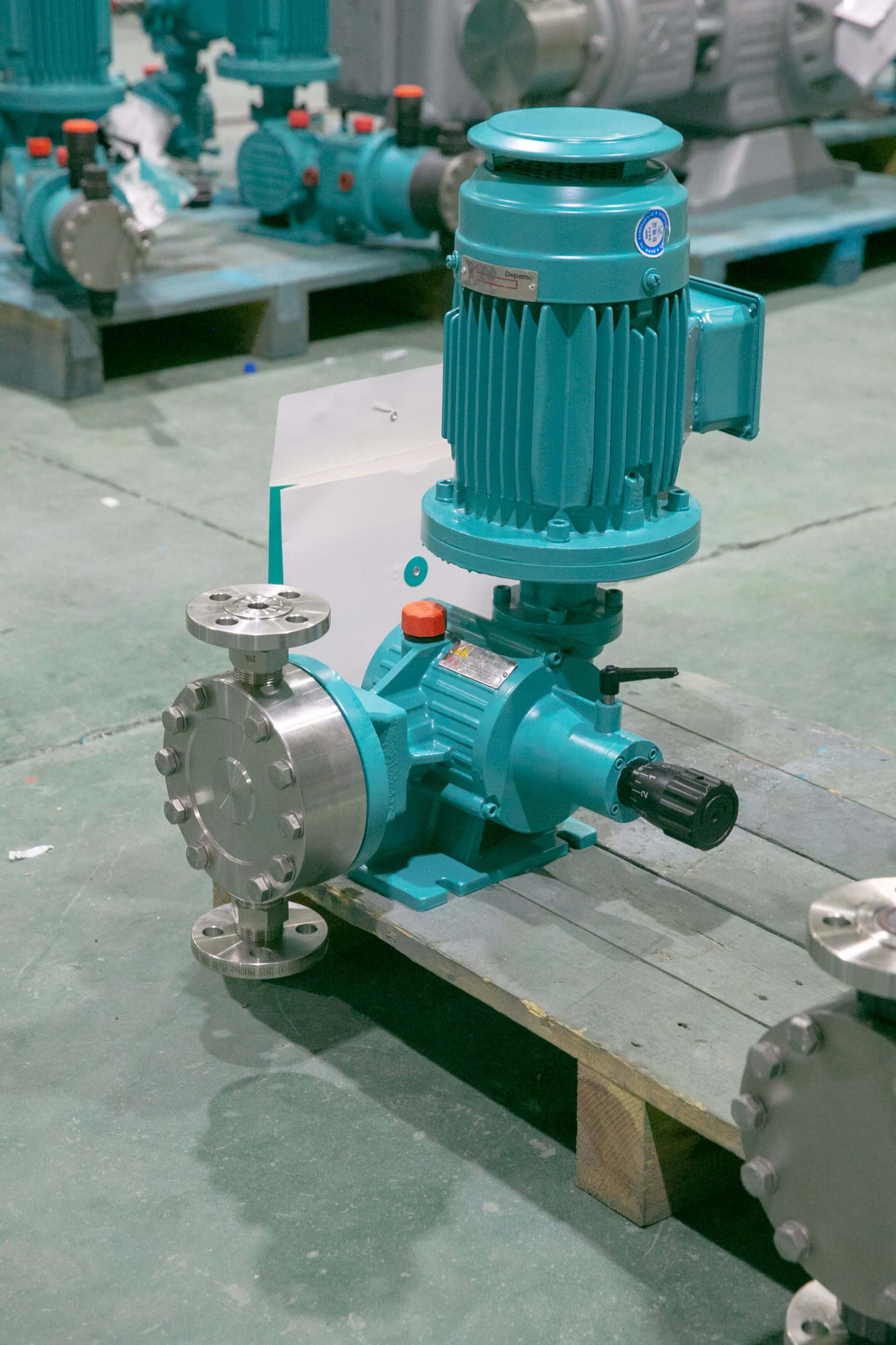
Reference for Full-text Summary
The technological evolution of mechanical diaphragm metering pumps is moving toward higher precision, greater reliability, and lower maintenance costs. Depam (Hangzhou) Pump Technology Co., Ltd. has addressed the pain points of traditional pumps in terms of metering accuracy, medium adaptability, and energy efficiency through material innovation, intelligent control, and modular design. Its products have been applied in over 20 industries, including petroleum refining and the nuclear industry, with more than 100,000 units delivered, serving leading enterprises such as Sinopec and China General Nuclear Power Group. Looking ahead, with the advancement of Industry 4.0 and carbon neutrality goals, Depam will continue to invest in R&D to drive the upgrade of mechanical diaphragm metering pumps toward smarter and greener solutions.
Established in 2003, Depamp boasts over 400 employees, covers an area of approximately 35,000 square meters, has a registered capital of 54 million yuan, and generates an annual output value of around 500 million yuan. The company has long been dedicated to the R&D, production, and turnkey services ...
No. 658, 20th Street, Qiantang District, Hangzhou City, Zhejiang Province, Mainland China