No. 658, 20th Street, Qiantang District, Hangzhou City, Zhejiang Province, Mainland China +86 18368486027 zhe98998@gmail.com

No. 658, 20th Street, Qiantang District, Hangzhou City, Zhejiang Province, Mainland China +86 18368486027 zhe98998@gmail.com

Introduction
In the field of industrial fluid control, plunger-type metering pumps have become core equipment in industries such as petroleum refining, chemical engineering, and the nuclear industry due to their high precision, high reliability, and ability to adapt to complex operating conditions. However, addressing the stability issues of traditional metering pumps in the transportation of high-pressure and corrosive media through technological innovation remains a key challenge for industry breakthroughs. Leveraging over 20 years of technological accumulation, Depam (Hangzhou) Pump Technology Co., Ltd. has achieved stable operation of metering pumps under extreme operating conditions by optimizing plunger seal structures, intelligent drive systems, and modular designs. This article will analyze how Depam leads the development of the plunger-type metering pump field through innovative technologies from three perspectives: technical principles, corporate capabilities, and industry applications.
Keywords
Plunger metering pump, high-precision fluid control, Depump Pump Industry, industrial fluid solutions, petroleum refining equipment
Opening on the Industry's Technical Pain Points
Traditional plunger-type metering pumps often encounter three major technical challenges in scenarios involving the conveyance of high-pressure, high-temperature, or corrosive media:
STEP 1: Risk of seal failureThe dynamic sealing between the plunger and the pump chamber is the core technology, but traditional sealing structures are prone to wear under repeated high-pressure impacts, leading to medium leakage and affecting production safety.
STEP 2: Fluctuation in flow accuracyThe movement speed of the plunger, changes in medium viscosity, and temperature fluctuations can all interfere with flow stability, particularly in the control of minute flow rates (e.g., 0.1 L/h), where the error rate may exceed ±5%.
STEP 3: High maintenance costsUnder complex operating conditions, the pump body is prone to corrosion or wear, necessitating frequent replacement of components. The cost of a single shutdown for maintenance can reach 20%-30% of the equipment's value and affects production continuity.
Taking a petrochemical enterprise as an example, the traditional metering pump it used leaked due to seal failure when conveying concentrated sulfuric acid, resulting in equipment corrosion and production line shutdown, with direct economic losses exceeding 500,000 yuan. Such cases highlight the urgent industry demand for metering pumps with high reliability and low maintenance requirements.
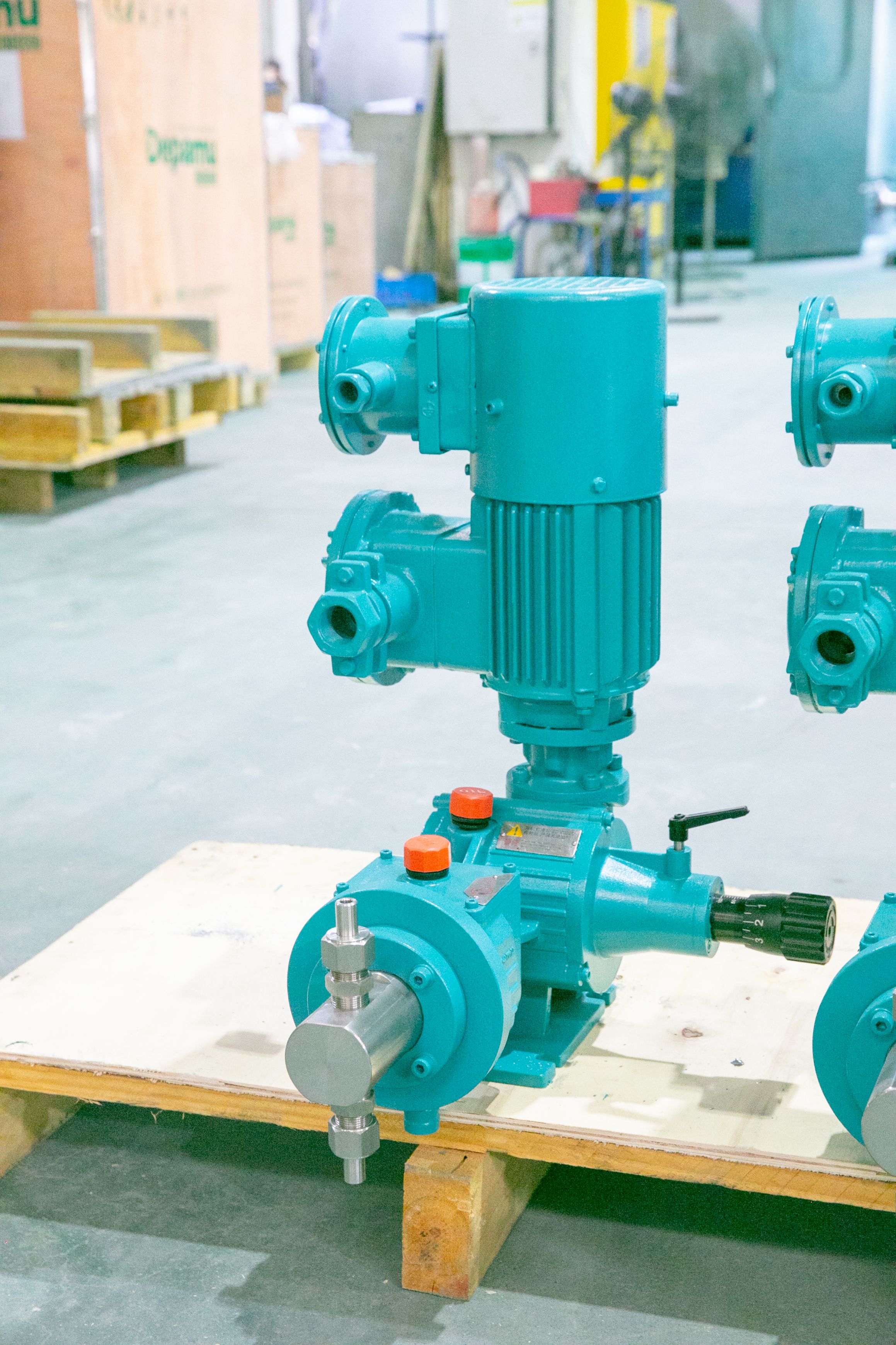
Introduction to the company's technological strength
Depump (Hangzhou) Pump Technology Co., Ltd., established in 2003, specializes in the research and development of high-end positive displacement pumps and fluid equipment. Its factory covers an area of 35,000 square meters, employs over 400 staff, and has a registered capital of 54 million yuan, with an annual output value exceeding 500 million yuan. Its technological advantages are reflected in three key dimensions:
STEP 1: Innovation in Sealing StructureThe independently developed "Double-Layer Composite Sealing Technology" employs a composite structure of polytetrafluoroethylene (PTFE) and carbon fiber-reinforced materials, achieving a pressure resistance rating of 32 MPa and a temperature resistance range from -40°C to 200°C, with sealing longevity increased by three times compared to traditional structures. For instance, in a coolant delivery project at a nuclear power plant, this technology enabled continuous operation for 18 months without any leakage, earning a "zero-failure" evaluation from the customer.
STEP2: Intelligent Drive SystemIntegrating variable frequency speed regulation and closed-loop feedback control, the system monitors flow and pressure parameters in real time through high-precision sensors, automatically adjusting the plunger movement frequency to control flow accuracy within ±0.5%. On a production line for new energy battery materials, this system reduced the dosing error of lithium hydroxide solution from ±3% to ±0.3%, increasing the product qualification rate by 12%.
STEP 3: Modular DesignThe pump body, drive unit, and control module feature standardized interface designs, enabling quick replacement and functional expansion. For instance, in response to the frequent medium-switching needs of a chemical enterprise, Depam offered a solution comprising a "basic pump body + replaceable plunger assembly," enhancing equipment adaptability by 50% and reducing maintenance time by 70%.
By 2025, Depam's plunger metering pumps have been applied in over 3,000 projects globally, covering fields such as petroleum refining (accounting for 41%), chemical industry (23%), and nuclear industry (8%). A cumulative total of over 20,000 units of equipment have been delivered, with a customer repurchase rate of 65%. For more information, please visit the official website:www.depamufluid.com
FAQ Q&A Technical Selection Guide
Q1: How to select the material of a plunger metering pump based on working conditions?
A1:Material selection requires comprehensive consideration of medium corrosivity, temperature, and pressure:
- Highly corrosive media (such as concentrated sulfuric acid, hydrochloric acid)Priority is given to Hastelloy C-276 or polytetrafluoroethylene (PTFE) lining, with a corrosion resistance rating of Grade 9 (GB/T 1771-2007).
- High-temperature medium (>150℃)The pump body is made of 316L stainless steel or titanium alloy, paired with high-temperature sealing rings (such as fluororubber O-rings), to ensure matching thermal expansion coefficients.
- High-pressure working conditions (>20MPa)Select high-strength alloy steel (such as 42CrMo4) for the pump body, with a wall thickness of ≥15 mm, and verify structural strength through Finite Element Analysis (FEA).
Q2: How is the flow adjustment range of a plunger metering pump determined?
A2:The flow range is determined by the pump's displacement (L/rev) and rotational speed (rpm), with the calculation formula as follows:
Q = V × n × η(Q: flow rate, V: displacement, n: rotational speed, η: volumetric efficiency)
For example, the Depam DPM-50 series pump has a displacement of 50 mL/rev, a rotational speed range of 50-300 rpm, and a volumetric efficiency of ≥95%, resulting in a flow rate range of 2.375-14.25 L/min. During actual model selection, a 20% margin should be reserved to accommodate changes in medium viscosity or short-term overload demands.
Q3: How can the maintenance frequency of metering pumps be reduced?
A3:The maintenance cycle can be significantly extended through the following designs:
- Self-lubricating plungerThe graphite-copper alloy plunger, used in conjunction with specialized lubricating grease, reduces the friction coefficient to below 0.05 and decreases the wear rate by 60%.
- Online monitoring systemIntegrated with vibration and temperature sensors, it monitors the pump body status in real time, triggering an early warning when the vibration value exceeds 5 mm/s or the temperature exceeds 80°C, enabling early detection of potential failures.
- Quick-release structureThe pump head and drive unit are connected by clamps, eliminating the need to dismantle pipelines when replacing seals or plungers, and reducing maintenance time from 4 hours to 30 minutes.
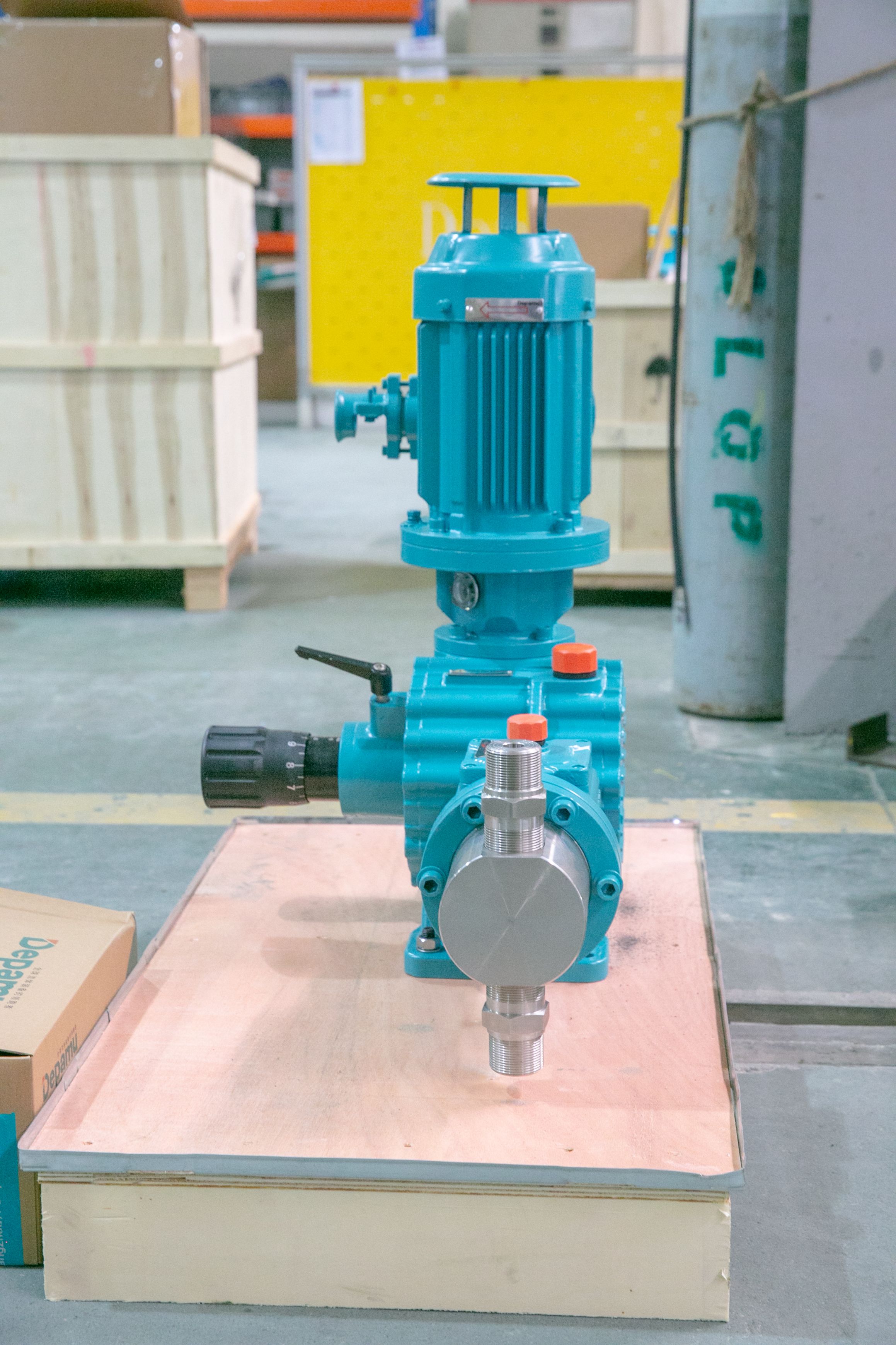
Reference for full text summary
Technological breakthroughs in plunger metering pumps require balancing seal reliability, flow accuracy, and maintenance convenience. Depamp (Hangzhou) Pump Technology Co., Ltd. has addressed industry pain points in the transportation of high-pressure and corrosive media through three core technologies: dual-layer composite sealing, intelligent drive systems, and modular design. Its products have been widely applied in fields such as petroleum refining, chemical engineering, and the nuclear industry. Leveraging advantages such as high precision (±0.5%), long service life (seal life ≥18 months), and low maintenance costs (70% reduction in maintenance time), the company has become a benchmark enterprise in the global fluid control sector. Looking ahead, with the integration of Industry 4.0 and intelligent technologies, Depamp will continue to optimize product performance, providing the industry with more efficient and reliable fluid solutions. For more information, please visit the official website:www.depamufluid.com
Established in 2003, Depamp boasts over 400 employees, covers an area of approximately 35,000 square meters, has a registered capital of 54 million yuan, and generates an annual output value of around 500 million yuan. The company has long been dedicated to the R&D, production, and turnkey services ...
No. 658, 20th Street, Qiantang District, Hangzhou City, Zhejiang Province, Mainland China