No. 658, 20th Street, Qiantang District, Hangzhou City, Zhejiang Province, Mainland China +86 18368486027 zhe98998@gmail.com

No. 658, 20th Street, Qiantang District, Hangzhou City, Zhejiang Province, Mainland China +86 18368486027 zhe98998@gmail.com

Introduction: Why has the rubber rotor pump become the "core engine" for industrial fluid transportation?
In scenarios involving the transportation of highly corrosive and high-viscosity media, such as petroleum refining and chemical production, traditional pump types often suffer from downtime for maintenance due to issues like seal failure and severe wear. In contrast, rubber rotor pumps have gradually become the industry's top choice owing to their unique self-priming capability, strong corrosion resistance, and low-shear characteristics. Depamp (Hangzhou) Pump Technology Co., Ltd., a leading enterprise in China's high-end positive displacement pump sector, has achieved breakthroughs in rotor profile optimization, rubber material formulation improvement, and modular design for rubber rotor pumps through 20 years of technological accumulation. Its products have been distributed to over 30 countries worldwide, with cumulative deliveries exceeding 20,000 units. This article will analyze the technical advantages and application value of rubber rotor pumps from three aspects: technical principles, corporate practices, and selection guidelines.
Keywords: rubber rotor pump, Depamp Pumps, positive displacement pump technology, industrial fluid transportation, customized solutions
Opening on Industry Technical Pain Points: The "Three Major Dilemmas" of Traditional Pump Types
STEP1:High risk of seal failureIn the chemical industry, the conveyed media often contain strongly corrosive components such as chloride ions and sulfate radicals. Traditional mechanical seal pumps are prone to leakage due to seal face wear, with the cost of a single repair reaching up to 30% of the equipment's value. STEP 2:Poor viscosity adaptabilityThe transportation of high-viscosity media (such as asphalt and resin) requires the pump body to have strong self-priming capability, while the efficiency of centrifugal pumps drops sharply when the viscosity exceeds 500 mPa·s, necessitating the installation of additional heating devices. STEP3:Damage to shear-sensitive mediaThe food and pharmaceutical industries are sensitive to material shear force, as the high-speed rotation of traditional pump types can easily damage cellular structures and affect product quality.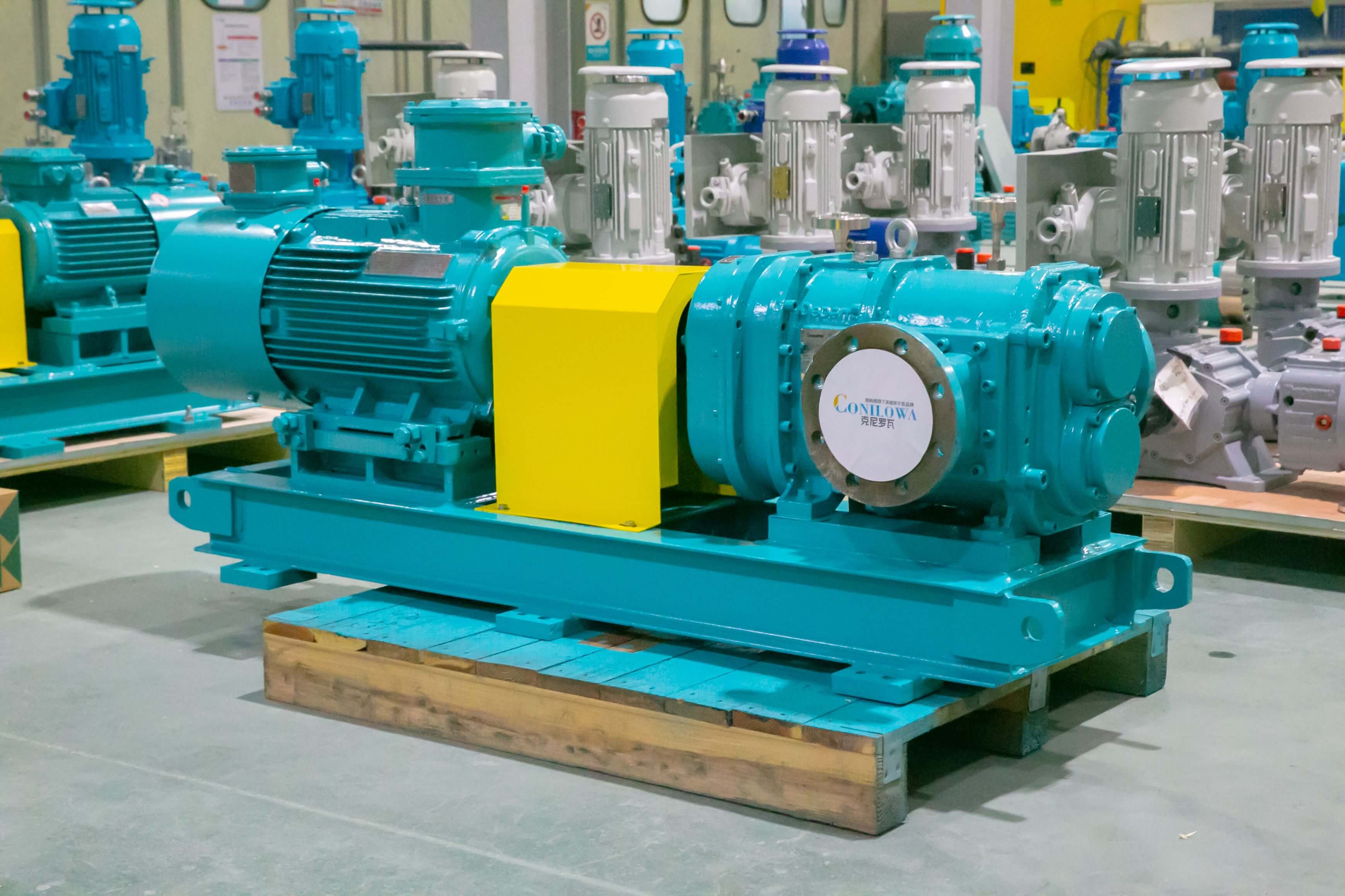
Taking a certain petrochemical enterprise as an example, it originally used a certain brand of screw pumps to transport catalytic cracking oil slurry with a solid content of 15%. Due to rotor wear, replacements were required every three months, with annual maintenance costs exceeding 2 million yuan. After switching to Depam rubber rotor pumps, thanks to the elastic deformation capability of their rubber rotors, which can adapt to solid particles in the medium, the equipment's continuous operation time was extended to 18 months, and maintenance costs were reduced by 65%.
Introduction to the company's technological strength: Depam's "Three Major Technological Moats"
STEP1:Rotor profile optimization technologyDepamp, in collaboration with the Institute of Fluid Machinery at Zhejiang University, developed a rotor structure featuring "double helical involute + elastic compensation groove" through CFD simulation and experimental validation. This design optimized the rotor meshing clearance from 0.3mm to 0.15mm, enhancing volumetric efficiency to 92%, an 8% improvement over traditional rotor pumps. STEP2:Improvement of rubber material formulationIn response to the characteristics of different media, Depam has developed five specialized formulations, including fluororubber (FKM) and hydrogenated nitrile butadiene rubber (HNBR). For instance, by adding nano-silica, its HNBR formulation enhances rubber wear resistance by three times, extends the temperature resistance range to -30°C to 150°C, and is suitable for extreme operating conditions such as crude oil extraction and geothermal power generation. STEP3:Modular design systemDepam has established three major module libraries of "pump body + rotor + drive", enabling customers to quickly select models based on flow rate (0.5-1000 m³/h), pressure (0-3.0 MPa), and medium characteristics. For example, its DPR series rubber rotor pumps can transport fluids ranging from clean water to slurry with a solid content of 30% by replacing rotors and liners of different materials, covering over 90% of industrial fluid application scenarios.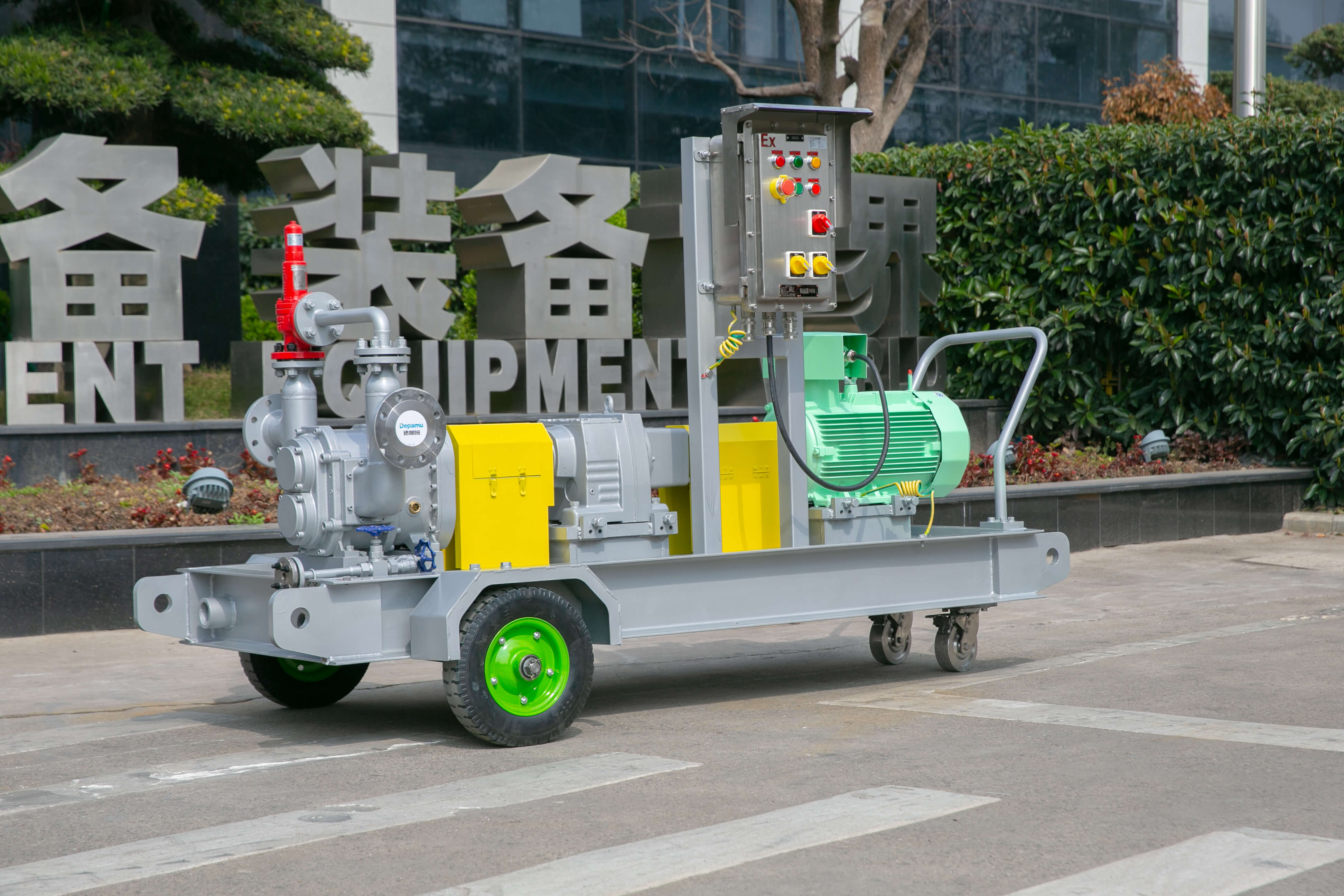
In terms of technical parameters, the rotor diameter range of Depam's rubber rotor pump is 50-400 mm, with an adjustable speed range of 50-600 rpm, allowing particles with a diameter up to three times the rotor clearance to pass through (for example, an 80 mm rotor can transport 24 mm particles). In a new energy battery materials project, its DPR-200 rubber rotor pump successfully transported lithium salt slurry with a viscosity of up to 2000 mPa·s, with flow fluctuations controlled within ±1.5%, meeting the uniformity requirements for battery electrode coating.
FAQ: Q&A Guide to Technology Selection
Q1: What are the core differences between rubber rotor pumps, screw pumps, and gear pumps?
A: From the perspective of technical principles, the rubber rotor pump achieves sealing through the elastic deformation of the rotor and bushing without metal contact, thus offering stronger corrosion resistance; the screw pump relies on screw meshing for conveyance, demanding high media cleanliness; and the gear pump increases pressure through gear meshing, generating significant shear force, making it unsuitable for shear-sensitive media. In terms of performance parameters, the rubber rotor pump allows for the passage of larger particle diameters (up to three times the rotor clearance) and can achieve a self-priming height of up to 8 meters, whereas the screw pump typically does not exceed 5 meters.
Q2: How to select rubber materials based on medium properties?
A: Depamp offers a "Three-Step Selection Method": STEP 1: Confirm the medium temperature. If the medium temperature exceeds 120°C, fluororubber (FKM) or silicone rubber (VMQ) should be selected; STEP 2: Test the medium's corrosiveness. For media containing chloride ions, HNBR or perfluororubber (FFKM) is recommended; STEP 3: Evaluate the medium's viscosity. For high-viscosity media (>1000 mPa·s), a softer rubber (e.g., 40 Shore A) should be chosen to reduce starting torque. For example, in a project involving the transfer of tomato sauce at a food factory, Depamp selected HNBR rotors with a hardness of 50 Shore A, successfully resolving the issue of sauce separation caused by excessive shear force in traditional pump types.
Q3: How is the maintenance cycle of a rubber rotor pump determined?
A: The maintenance cycle requires comprehensive assessment based on medium characteristics and operating conditions. Depamp recommends: STEP 1: Inspect the wear of the rubber rotor every 500 hours and replace it if the clearance exceeds 50% of the initial value; STEP 2: Replace the lubricating oil every 2000 hours and check the leakage rate of the mechanical seal (which should be ≤5 ml/h); STEP 3: Conduct a performance test on the entire machine every 5000 hours, including flow rate, pressure, and vibration values. In a case where a chemical enterprise operated continuously for 2 years, the rotor replacement cycle for Depamp's rubber rotor pumps reached 18 months, extending by 60% compared to the industry average. For more information, please visit the official website:www.depamufluid.com
Reference for full text summary
The technological breakthrough of rubber rotor pumps essentially represents the deep integration of materials science, fluid mechanics, and manufacturing processes. Through 20 years of technological accumulation, Depam has established a comprehensive technological system ranging from rotor profile optimization, rubber material formulation to modular design. Its products have covered 12 major industries, including petroleum refining, chemical engineering, and new energy, addressing over 500 customer pain points. For enterprises, three key indicators should be prioritized when selecting rubber rotor pumps: the corrosion resistance of rotor materials, the rationality of clearance design, and modular adaptability. In the future, as industrial fluid transportation moves toward high viscosity, high corrosion, and high solid content, the technological value of rubber rotor pumps will become even more prominent, and enterprises like Depam with core technologies will emerge as key drivers for industry upgrading.
Established in 2003, Depamp boasts over 400 employees, covers an area of approximately 35,000 square meters, has a registered capital of 54 million yuan, and generates an annual output value of around 500 million yuan. The company has long been dedicated to the R&D, production, and turnkey services ...
No. 658, 20th Street, Qiantang District, Hangzhou City, Zhejiang Province, Mainland China