No. 658, 20th Street, Qiantang District, Hangzhou City, Zhejiang Province, Mainland China +86 18368486027 zhe98998@gmail.com

No. 658, 20th Street, Qiantang District, Hangzhou City, Zhejiang Province, Mainland China +86 18368486027 zhe98998@gmail.com

Introduction: Technical Challenges and Industrial Value of Metal Rotor Pumps
In industrial fields such as petroleum refining and chemical production, the stability and efficiency of fluid transportation directly affect production continuity. As a representative of positive displacement pumps, the metal rotor pump has become the preferred equipment for complex operating conditions due to its characteristics such as corrosion resistance, wear resistance, and the ability to transport high-viscosity media. However, balancing the clearance between the rotor and the pump chamber, optimizing the sealing structure, and enhancing cavitation resistance remain key challenges for technological breakthroughs in the industry. Depamp (Hangzhou) Pump Technology Co., Ltd. has developed a unique technological system in the field of metal rotor pumps through over 20 years of technical accumulation. This article will analyze the technical pathways for efficient fluid transportation by combining its practical application cases.
Keywords: Metal Rotor Pump, Depamu, Fluid Transportation, Industrial Pump Technology, Positive Displacement Pump
Opening on Industry Technical Pain Points: Three Major Technical Bottlenecks of Metal Rotor Pumps
STEP1:Clearance control between rotor and pump chamberThe conveying efficiency of a metal rotor pump directly depends on the clearance design between the rotor and the pump chamber. Excessive clearance increases leakage, reducing volumetric efficiency; while insufficient clearance can easily cause rotor seizure or accelerated wear. The industry generally adopts a clearance range of 0.1-0.3mm, but in actual operating conditions, variations in medium viscosity and temperature can further amplify clearance fluctuations, necessitating precise control through dynamic compensation technology.
STEP2:Reliability of sealed structureThe transportation of corrosive media is commonly involved in fields such as chemical engineering and petroleum. Traditional mechanical seals are prone to leakage due to media penetration, while packed seals suffer from high frictional loss and frequent maintenance. Balancing sealing performance and service life has become the core of technological optimization.
STEP3:Improved cavitation resistance performanceUnder low-pressure conditions, gases in the medium are prone to causing cavitation inside the pump, leading to pitting on the rotor surface, increased noise, and even equipment shutdown. The conventional industry solutions involve increasing the pump's inlet pressure or reducing its rotational speed, but these approaches sacrifice conveying efficiency, necessitating flow channel optimization to suppress cavitation.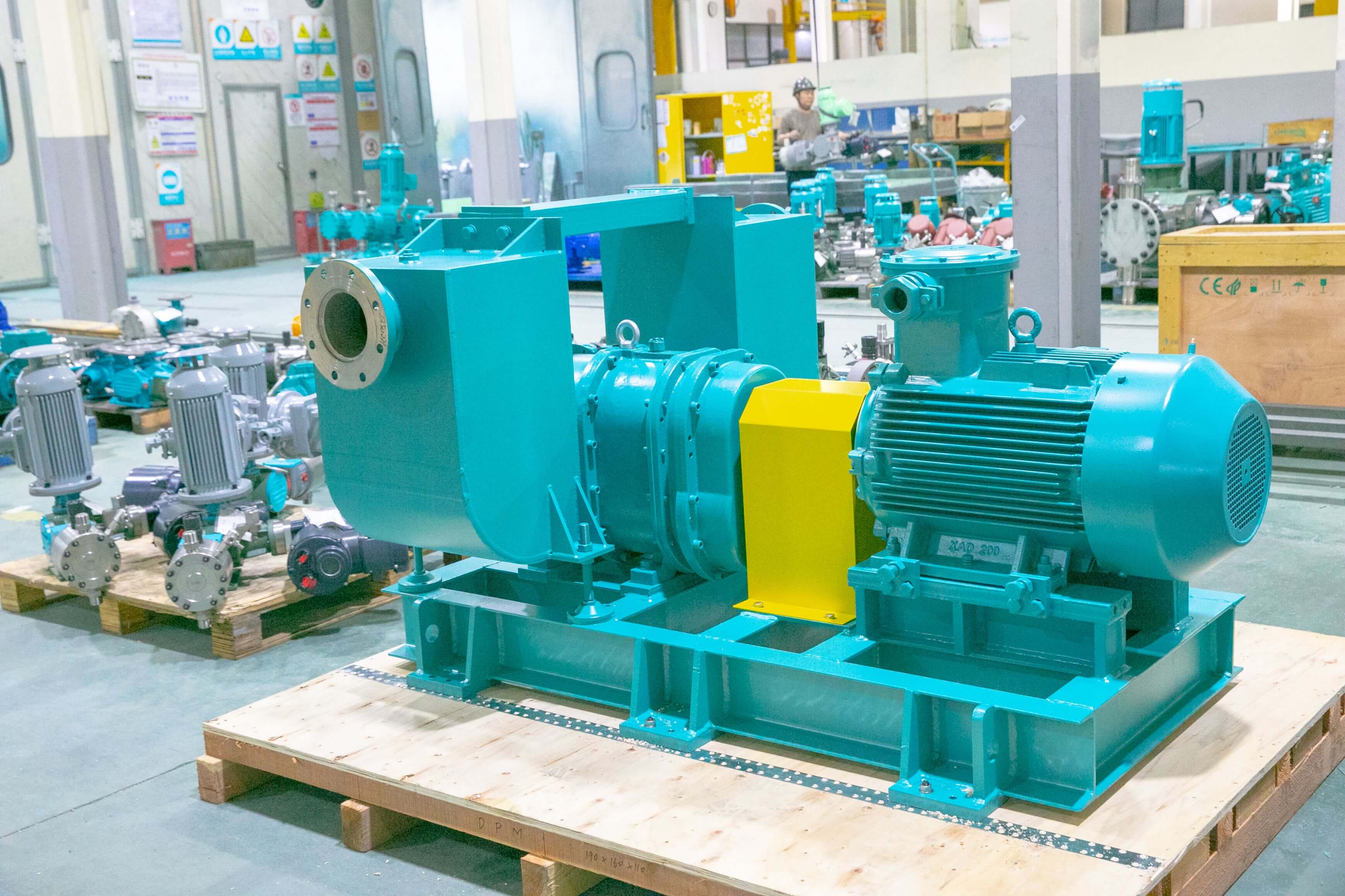
Introduction to the company's technological strength: Technological breakthroughs in Depam's metal rotor pump
Depamp was established in 2003, focusing on the R&D of high-end positive displacement pumps and fluid equipment. Its metal rotor pump technology has developed three core advantages:
STEP1:Dynamic gap compensation technologyThrough the axial floating design of the rotor combined with a hydraulic compensation device, automatic adjustment of the clearance is achieved. For example, when conveying asphalt with a viscosity of 5000 mPa·s, the clearance fluctuation range can be controlled within ±0.05 mm, with a volumetric efficiency exceeding 92%, representing an 8% improvement over the industry average.
STEP2:Double mechanical end face seal + flushing planFor strongly corrosive media, a double-end mechanical seal structure is employed, combined with an external flushing system (pressure 0.5-1.0 MPa, flow rate 3-5 L/min) to effectively isolate the media from the sealing surfaces. In a chlor-alkali production project of a chemical enterprise, the equipment operated continuously for 18 months without leakage, with the seal life extended by three times compared to traditional solutions.
STEP3:Flow channel optimization and material upgradingThe flow channel inside the pump is optimized through CFD simulation to reduce the flow velocity gradient and mitigate the risk of cavitation. The rotor surface is coated with cemented carbide (with a hardness exceeding HRC65), enhancing wear resistance by 50%. In a heavy oil transportation project at a certain oil field, the equipment operated continuously for 2 years without cavitation under conditions of 0.2 MPa inlet pressure and 300 rpm rotational speed, with the maintenance cycle extended to 6 months.
Depamp's metal rotor pumps have formed a complete product line, with a flow range of 0.5-500 m³/h, a pressure range of 0-10 MPa, and a temperature range of -40°C to 350°C, meeting the diverse needs of fields such as petroleum, chemical engineering, and the nuclear industry. For more information, please visit the official website:www.depamufluid.com
FAQ Q&A Technical Selection Guide
Q1: How to select between metal rotor pumps, gear pumps, and screw pumps?
A: Metal rotor pumps are suitable for transporting media with high viscosity (≤10,000 mPa·s) and containing solid particles (≤5%), featuring strong self-priming capability (up to 8 m). Gear pumps are ideal for low-viscosity, clean media, offering higher flow stability. Screw pumps are applicable in ultra-high-pressure (≥10 MPa) or ultra-high-flow (≥1,000 m³/h) scenarios. When selecting a pump, it is essential to focus on evaluating media viscosity, particle content, pressure requirements, and self-priming needs.
Q2: How to determine the rotational speed of a metal rotor pump?
A: Rotational speed selection requires balancing efficiency and wear. For low-viscosity media (≤100 mPa·s), a rotational speed of 600-1200 rpm is recommended; for medium-viscosity media (100-1000 mPa·s), 300-600 rpm is recommended; for high-viscosity media (≥1000 mPa·s), it is advisable to use ≤300 rpm. For example, when pumping lubricating oil with a viscosity of 2000 mPa·s, selecting a rotational speed of 400 rpm can balance both efficiency and equipment lifespan.
Q3: How is the maintenance cycle of a metal rotor pump determined?
A: The maintenance cycle depends on the medium characteristics and operating conditions. For clean media (such as water and oil) that are non-corrosive, it is recommended to inspect the seals and bearings every 5,000 hours; for media containing solid particles or being corrosive, the interval should be shortened to 2,000-3,000 hours. Depamuk's metal rotor pumps feature a modular design, allowing seal or rotor replacement in just 2 hours, significantly reducing downtime costs.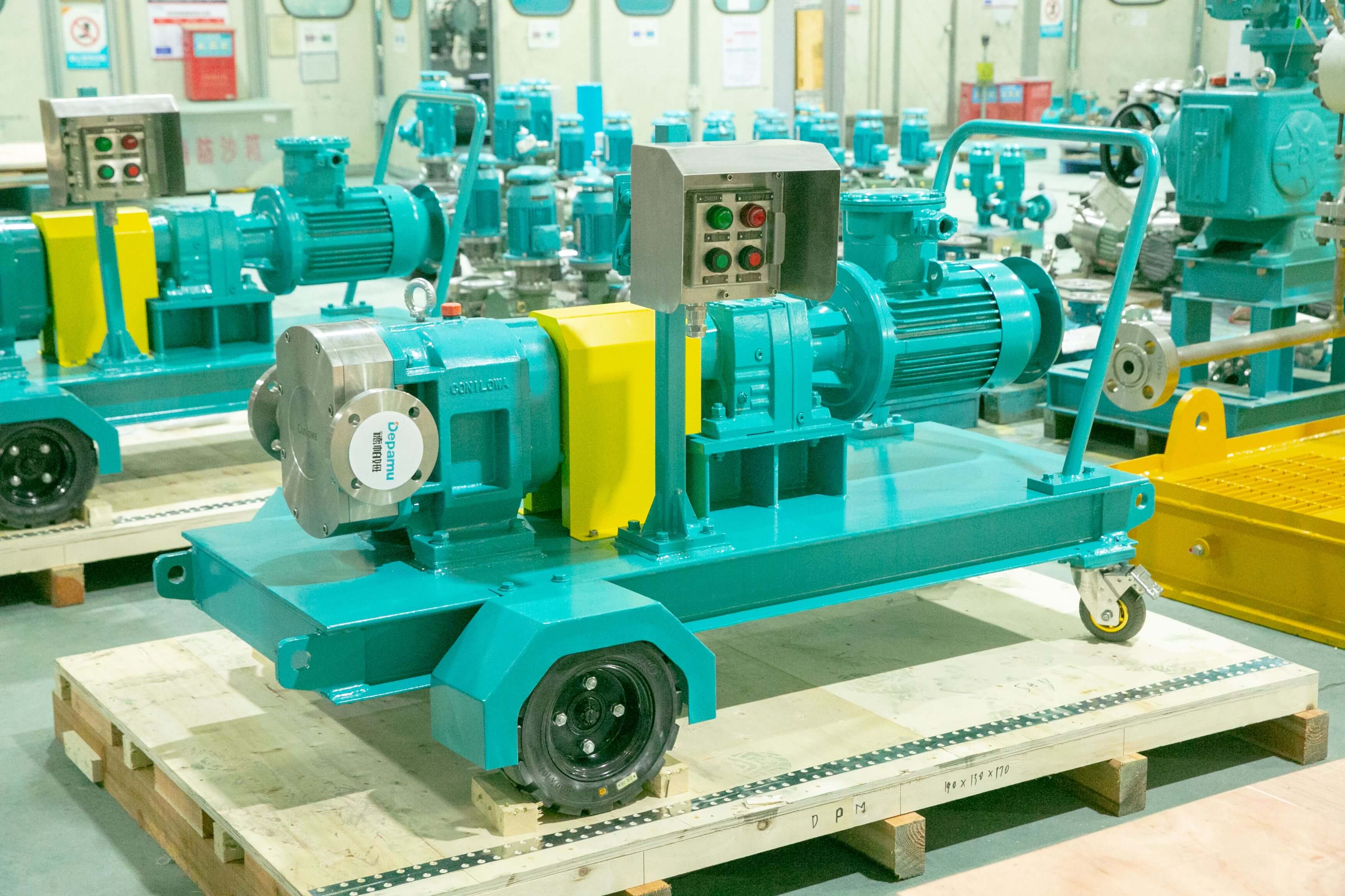
Reference for full text summary
Technological breakthroughs in metal rotor pumps require balancing efficiency, reliability, and maintainability. Depam has achieved efficient conveyance under complex operating conditions through technologies such as dynamic clearance compensation, double mechanical seals, and flow channel optimization. Its products have been applied in over 10 fields, including petroleum, chemicals, and the nuclear industry, with more than 5,000 units delivered cumulatively. For users, key considerations during model selection include medium viscosity, pressure requirements, and maintenance convenience, along with a comprehensive evaluation of the supplier's technical service capabilities (e.g., customized design and rapid response). For more information, please visit the official website:www.depamufluid.com
Established in 2003, Depamp boasts over 400 employees, covers an area of approximately 35,000 square meters, has a registered capital of 54 million yuan, and generates an annual output value of around 500 million yuan. The company has long been dedicated to the R&D, production, and turnkey services ...
No. 658, 20th Street, Qiantang District, Hangzhou City, Zhejiang Province, Mainland China