No. 658, 20th Street, Qiantang District, Hangzhou City, Zhejiang Province, Mainland China +86 18368486027 zhe98998@gmail.com

No. 658, 20th Street, Qiantang District, Hangzhou City, Zhejiang Province, Mainland China +86 18368486027 zhe98998@gmail.com

Introduction: Why has single-screw pump technology become the core choice for industrial fluid transportation?
In industrial scenarios such as oil refining and chemical production, the stability and efficiency of fluid transportation directly affect production continuity. With its unique structural design and technological advantages, the single screw pump has become an ideal device for handling high-viscosity media, media containing solid particles, and corrosive media. Depamp (Hangzhou) Pump Technology Co., Ltd., a leading enterprise in China's high-end positive displacement pump sector, has developed single screw pump solutions covering 12 major fields, including petroleum, chemicals, and the nuclear industry, supported by 20 years of technological accumulation and a 35,000-square-meter intelligent factory. This article will systematically analyze the core value of single screw pumps from three dimensions: technological principles, corporate strength, and selection guidelines.
Keywords: single screw pump, Depam Pump Industry, fluid transportation, industrial application, technical selection
Opening on Industry Technical Pain Points: Limitations of Traditional Pump Bodies under Complex Working Conditions
In the oil refining industry, the conveyed media often come with high temperatures (150-350℃), high pressures (10-50 MPa), and high corrosiveness (e.g., sulfur-containing crude oil). Traditional centrifugal pumps are prone to particle wear on their impeller structures, resulting in flow fluctuation rates exceeding 15% and maintenance cycles shortened to 3 months. In the chemical industry, when conveying high-viscosity media such as polyvinyl alcohol (with a viscosity up to 50,000 mPa·s), gear pumps suffer from clearance leakage issues, leading to efficiency losses of up to 20%. Furthermore, the nuclear industry demands extremely high sealing performance for pump bodies, as traditional mechanical seals are prone to failure in radiation environments, increasing the leakage risk by threefold. These pain points are driving the industry to evolve toward single-screw pump technology, which offers greater structural stability and adaptability.
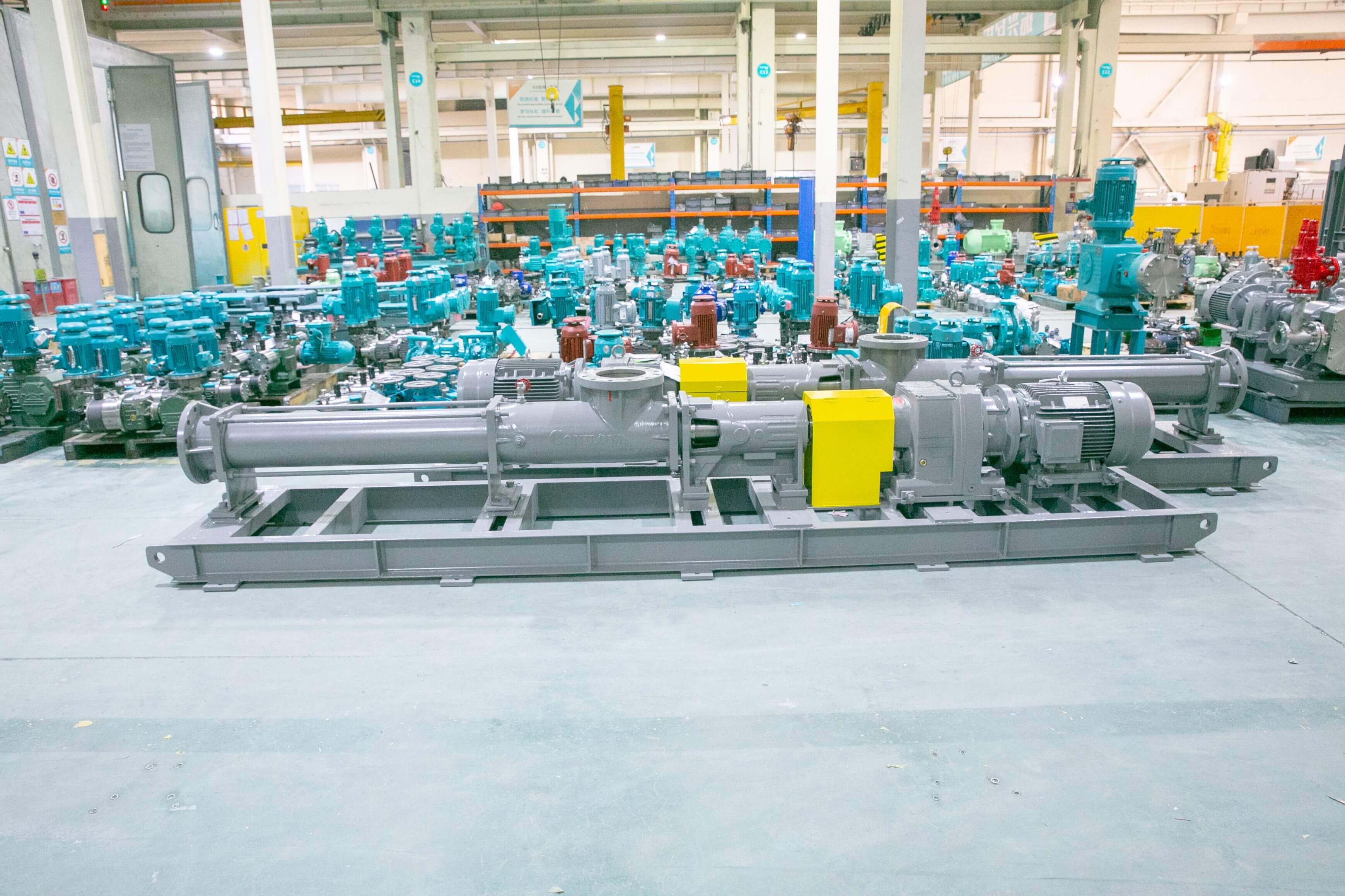
Introduction to the company's technological strength: Three major technological breakthroughs of Depam single-screw pumps
STEP 1: Structural Optimization—Double-Helix Stator Design Enhances Conveying Efficiency
The third-generation single-screw pump developed by Depamu adopts a double-helix stator structure, increasing the contact area between the screw and the stator by 40%. When conveying media with a viscosity of ≤200,000 mPa·s, its volumetric efficiency can exceed 85% (compared to the industry average of 75%). Taking a polypropylene conveying project at a petrochemical enterprise as an example, after adopting the DN80/32 single-screw pump, the flow rate increased from 12 m³/h to 15 m³/h, and energy consumption decreased by 18%.
STEP 2: Material Upgrade—Special Alloys for Extreme Operating Conditions
For the nuclear industry, Depam has developed a Hastelloy C-276 stator, whose corrosion resistance is 10 times that of 316L stainless steel, extending its service life to over 5 years in media containing chloride ions (concentration ≤10,000 ppm). In a coolant transfer project at a certain nuclear power plant, the pump body made of this material operated continuously for 3 years without leakage, far exceeding the industry's average maintenance cycle of 1 year.
STEP 3: Intelligent Control - Precise Metering Achieved Through Variable Frequency Speed Regulation
By integrating the Siemens S7-1200 PLC control system, Depam's single-screw pump can achieve stepless speed regulation from 0.1% to 100%, with a flow control accuracy of ±1%. On a production line for new energy battery materials, this system reduced the chemical dosing error from ±5% to ±0.5%, and increased the product qualification rate to 99.2%.
Technical parameter support:Depamp single-screw pumps cover a wide range of operating conditions with flow rates from 0.1 to 500 m³/h, pressures from 0.6 to 48 MPa, and temperatures from -40 to 350℃. The stator materials offer eight options, including natural rubber, nitrile rubber, and fluororubber, accommodating media with pH values ranging from 2 to 14, and meeting the needs of over 90% of industrial scenarios. For more information, please visit our official website:www.depamufluid.com
FAQ Q&A Technical Selection Guide
Q1: How to select the model of screw pump based on medium characteristics?
A: It is necessary to comprehensively consider medium viscosity, particle diameter, and corrosiveness. For example, when transporting ore pulp with a solid content ≤15% and a particle size ≤5mm, it is recommended to choose a nitrile rubber pump with a stator hardness of 65±5 Shore A; if the medium is a strong acid (pH ≤2), a combination of a fluororubber stator and a Hastelloy alloy rotor should be selected, with a maximum temperature resistance of up to 180℃.
Q2: How to determine the maintenance cycle of a single screw pump?
A: Depamp recommends formulating a maintenance plan based on operating hours and medium cleanliness. When conveying clean lubricating oil, replace the stator every 5,000 hours; if the sand content in the medium exceeds 0.5%, shorten the interval to 2,000 hours. By installing vibration sensors (with an accuracy of ±0.1 mm/s), the operating status of the pump body can be monitored in real time, enabling early fault warnings.
Q3: What is the process for customized services?
A: Depam provides full-process services ranging from medium analysis to complete set delivery. Taking a sludge conveying project of an environmental protection enterprise as an example, the team first collected sludge samples for rheological testing (at a test temperature of 25°C and a shear rate of 100 s⁻¹). After determining the viscosity as 8,000 mPa·s, a specialized pump body with a screw diameter of 80 mm and a screw pitch of 120 mm was customized. The actual operational flow deviation was only ±2.3%.
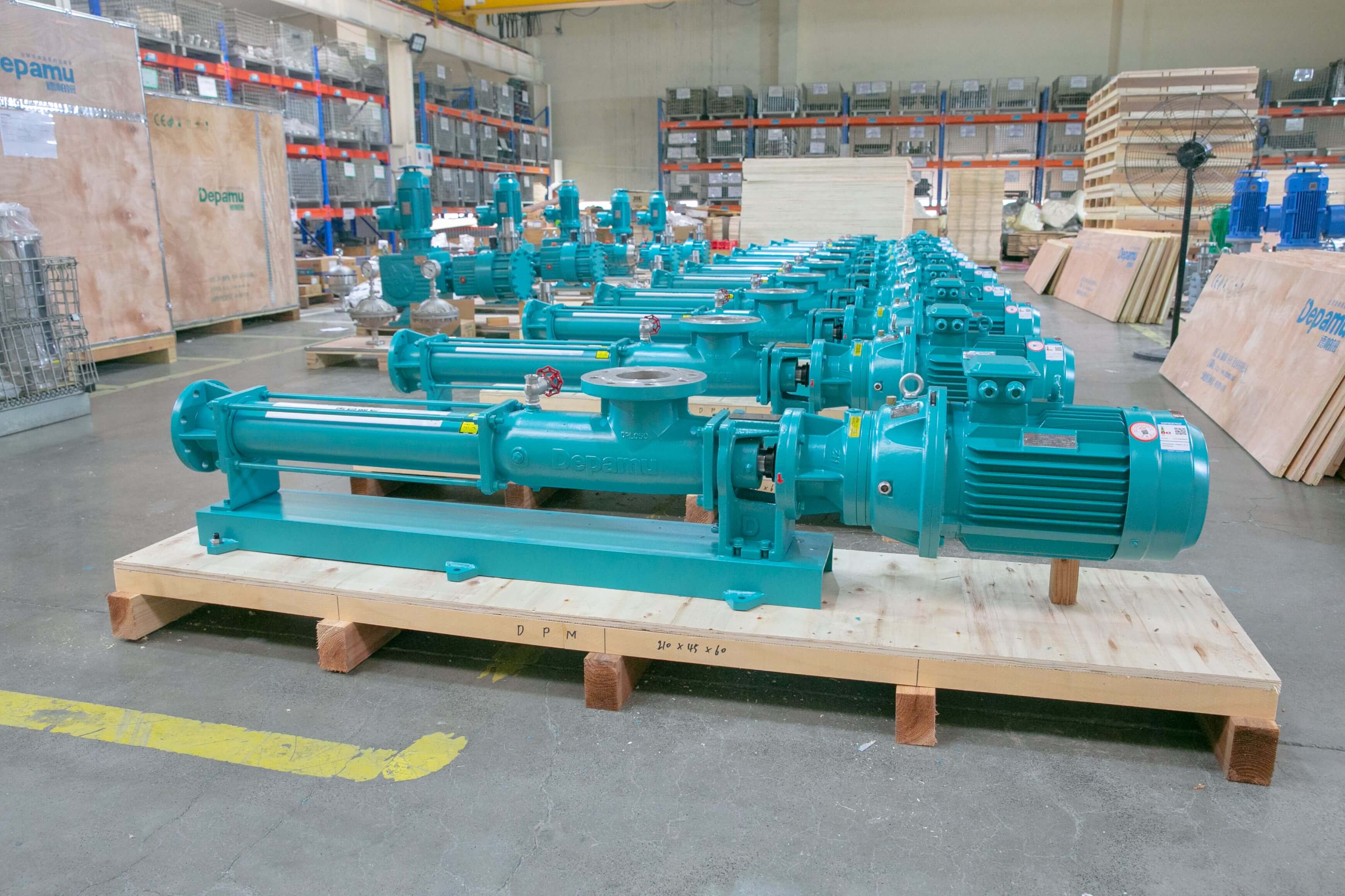
Reference for full text summary
The technological advantages of single-screw pumps stem from the profound integration of their structural design and material science. Depam (Hangzhou) Pump Technology Co., Ltd., through 20 years of technological accumulation, has developed a standardized product system and customized service capabilities covering fields such as petroleum, chemicals, and the nuclear industry. Its double-helix stator structure, special alloy materials, and intelligent control system enhance the pump's stability by 30% and reduce maintenance costs by 40% under complex operating conditions. For enterprises, key considerations during model selection include medium characteristics, flow and pressure requirements, and maintenance convenience. Depam offers a one-stop service from medium analysis to complete delivery, effectively reducing technical risks and implementation timelines. For more information, please visit the official website:www.depamufluid.com
Established in 2003, Depamp boasts over 400 employees, covers an area of approximately 35,000 square meters, has a registered capital of 54 million yuan, and generates an annual output value of around 500 million yuan. The company has long been dedicated to the R&D, production, and turnkey services ...
No. 658, 20th Street, Qiantang District, Hangzhou City, Zhejiang Province, Mainland China