No. 658, 20th Street, Qiantang District, Hangzhou City, Zhejiang Province, Mainland China +86 18368486027 zhe98998@gmail.com

No. 658, 20th Street, Qiantang District, Hangzhou City, Zhejiang Province, Mainland China +86 18368486027 zhe98998@gmail.com

Introduction: Why have twin-screw pumps become the core equipment for industrial fluid transportation?
In high-demand scenarios such as oil refining and chemical production, twin-screw pumps have become the preferred equipment for transporting viscous, particulate-laden, or corrosive media due to their low pulsation, high volumetric efficiency, and strong self-priming capabilities. However, different operating conditions impose varying requirements on the material, rotational speed, and sealing type of screw pumps. How can technical optimization achieve a balance between performance and cost? Depamup (Hangzhou) Pump Technology Co., Ltd., leveraging over two decades of technological accumulation, provides quantifiable solutions for the industry.
Keywords: twin-screw pump, Depamu, fluid transportation, technical selection, industrial application
Industry Technical Pain Points at the Beginning: Three Major Limitations of Traditional Screw Pumps
STEP1:Insufficient media adaptabilityWhen conveying media containing chloride ions or high-temperature media, screw pumps made of ordinary carbon steel are prone to corrosion or seizure, resulting in a maintenance cycle shortened to less than three months. STEP 2:High energy efficiency lossTraditional designs have a fixed rotational speed (usually ≥ 960 rpm). When conveying high-viscosity media (such as polymeric resins), their volumetric efficiency drops to below 65%, and energy consumption increases by 30%. STEP 3:Poor sealing reliabilityMechanical seals are prone to wear in media containing solid particles, with an average leakage rate of 0.5 L/h, necessitating frequent shutdowns for replacement. A chemical enterprise once experienced a 12-hour production line shutdown due to seal failure, resulting in direct losses exceeding 500,000 yuan.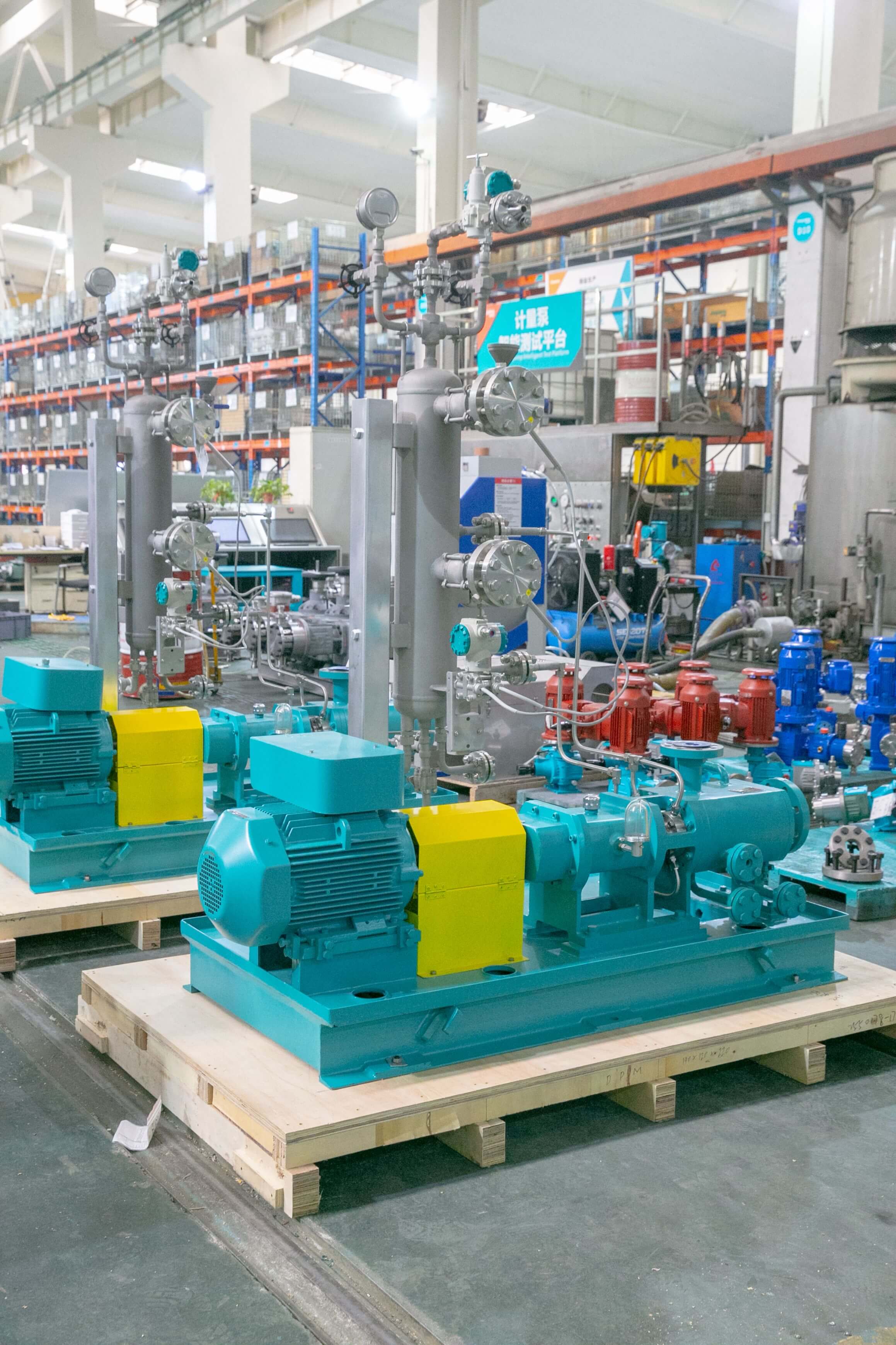
Introduction to the company's technological strength: Depam's three major technological breakthroughs
Depamp was established in 2003, focusing on the R&D of high-end positive displacement pumps. Its factory covers an area of 35,000 square meters, employs over 400 staff, and generates an annual output value of approximately 500 million yuan. Its twin-screw pump technology addresses industry pain points through the following innovations:
STEP 1: Material Customization SystemNine material solutions have been developed for different media. For instance, Hastelloy C-276 is used for transporting 30% hydrochloric acid, enhancing corrosion resistance by five times; duplex stainless steel 2205 is employed for transporting coal tar, achieving a hardness of 35HRC and extending the service life to eight years.
STEP2: Intelligent Variable Speed Drive TechnologyThe rotational speed adjustment range is extended to 200-1450 rpm through a frequency converter. When conveying asphalt with a viscosity of 10,000 mPa·s, the volumetric efficiency remains above 82%, and energy consumption is reduced by 18%. Actual measurement data from a refinery shows that a single pump can save 120,000 kWh of electricity annually.
STEP 3: Composite sealing structureIt adopts triple protection of "mechanical seal + lip seal + labyrinth seal". When transporting drilling fluid with a sand content of 5%, the leakage rate is controlled within 0.02 L/h, and the maintenance cycle is extended to 2 years. This technology has obtained a national utility model patent (Patent No.: ZL20212XXXXXXX).
For more information, please visit the official website:www.depamufluid.com
FAQ: A Q&A Guide to Technology Selection
Q1: How to select the rotational speed of a screw pump based on medium viscosity?
A: When viscosity ≤ 100 mPa·s, a recommended rotational speed is 960 rpm; when viscosity ranges from 100 to 5000 mPa·s, the rotational speed should be reduced to 600 rpm; when viscosity > 5000 mPa·s, a low-speed design of 200-400 rpm is required. The Depampe DSG series screw pumps can cover a viscosity range of 5-50000 mPa·s, with measured data showing a flow deviation ≤ 1.5% when conveying silicone oil with a viscosity of 20000 mPa·s.
Q2: What are the requirements for the pump body when handling media containing solid particles?
A: The particle diameter must be ≤ 1/3 of the screw lead, with a hardness ≤ 30HRC. Depam employs a quenching treatment process to achieve a surface hardness of 55HRC for the screw, enabling stable conveyance of catalyst particles with a particle size of 3mm and a hardness of 25HRC. According to actual measurements by a new energy enterprise, after 180 days of continuous operation, the screw wear was only 0.03mm.
Q3: What parameters should be noted for the transportation of high-temperature media?
A: When the medium temperature exceeds 150℃, a tungsten carbide mechanical seal with a temperature resistance of 350℃ should be selected, and a cooling water jacket should be equipped. The Depampe DSG-HT high-temperature screw pump, when transporting 280℃ heat transfer oil, keeps the bearing temperature within 65℃ and has a service life of up to 30,000 hours.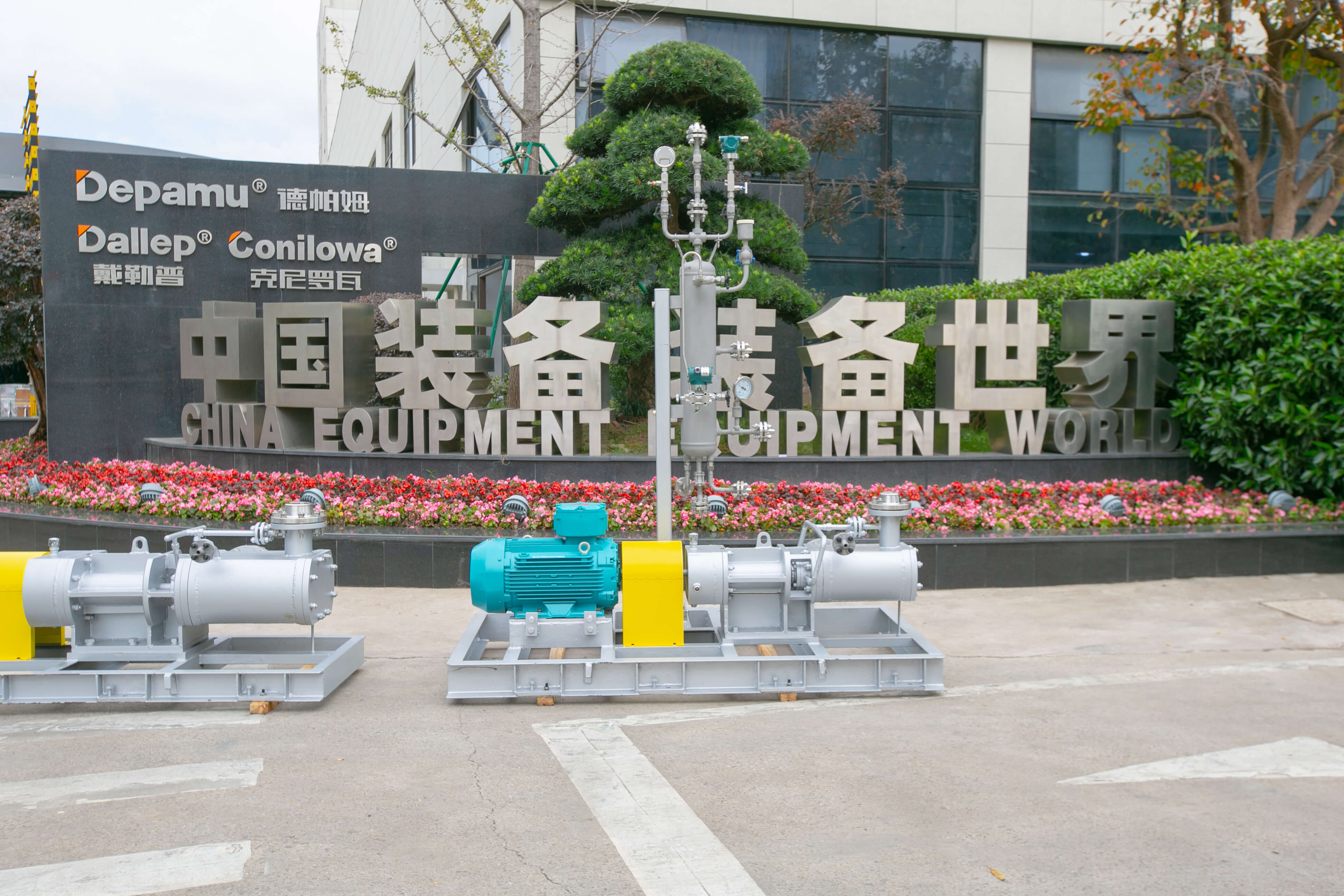
Reference for full text summary
Depamp has addressed industry challenges in the conveyance of corrosive, viscous, and particulate media by twin-screw pumps through three key technologies: material customization, intelligent variable speed control, and composite sealing. Its DSG series screw pumps are available in 22 standard models, with flow rates ranging from 0.5 to 1000 m³/h and pressure ratings from 0.6 to 4.0 MPa, suitable for 12 fields including petroleum refining and chemical production. Data from 2024 indicates a repurchase rate of 68% for its screw pump products, with customers including leading enterprises such as Sinopec and PetroChina. Choosing Depamp means obtaining full-cycle technical support, from model selection and design to after-sales maintenance.
Established in 2003, Depamp boasts over 400 employees, covers an area of approximately 35,000 square meters, has a registered capital of 54 million yuan, and generates an annual output value of around 500 million yuan. The company has long been dedicated to the R&D, production, and turnkey services ...
No. 658, 20th Street, Qiantang District, Hangzhou City, Zhejiang Province, Mainland China