No. 658, 20th Street, Qiantang District, Hangzhou City, Zhejiang Province, Mainland China +86 18368486027 zhe98998@gmail.com

No. 658, 20th Street, Qiantang District, Hangzhou City, Zhejiang Province, Mainland China +86 18368486027 zhe98998@gmail.com

Introduction: Technological Breakthroughs and Industrial Value of Diaphragm Pumps in High-Pressure Processes
In heavy industries such as petroleum refining and chemical engineering, high-pressure process diaphragm pumps, as core fluid equipment, must simultaneously meet stringent requirements such as corrosion resistance, high-pressure tolerance, and precise metering. However, traditional pump models often suffer from issues such as poor medium adaptability, seal failure, and high maintenance costs, leading to reduced production efficiency and even safety incidents. Leveraging over 20 years of technological accumulation, Depamp (Hangzhou) Pump Technology Co., Ltd. provides the industry with more competitive solutions through material innovation, structural optimization, and intelligent control technologies. This article will analyze the technological breakthroughs and industry value of high-pressure process diaphragm pumps from three aspects: technical principles, application cases, and selection guidelines.For more information, please visit the official website: www.depamufluid.com
Keywords: High-pressure process diaphragm pump, Depamp Pumps, fluid transportation, customized solutions, industrial applications
Opening on Industry Technical Pain Points: Limitations of Traditional Pump Types
In high-pressure fluid transportation scenarios, traditional diaphragm pumps often encounter three major technical bottlenecks:
STEP 1: Poor media adaptabilityThe chemical industry often requires the transportation of highly corrosive media (such as concentrated sulfuric acid and sodium hydroxide). Traditional metal diaphragms are prone to corrosion, increasing the risk of leakage. According to statistics, equipment failures caused by pump body corrosion account for 37% in the chemical industry, with annual maintenance costs exceeding 2 million yuan.
STEP 2: Insufficient sealing reliabilityUnder high-pressure conditions, traditional mechanical seals are prone to failure due to wear or thermal expansion, leading to medium leakage. A refining and chemical enterprise once experienced a fire caused by seal failure, resulting in direct economic losses exceeding 5 million yuan.
STEP 3: High maintenance costsTraditional pump types require regular replacement of vulnerable parts such as diaphragms and seals, with a single maintenance cost of approximately 5,000 to 20,000 yuan and downtime lasting 4 to 8 hours, seriously affecting production continuity.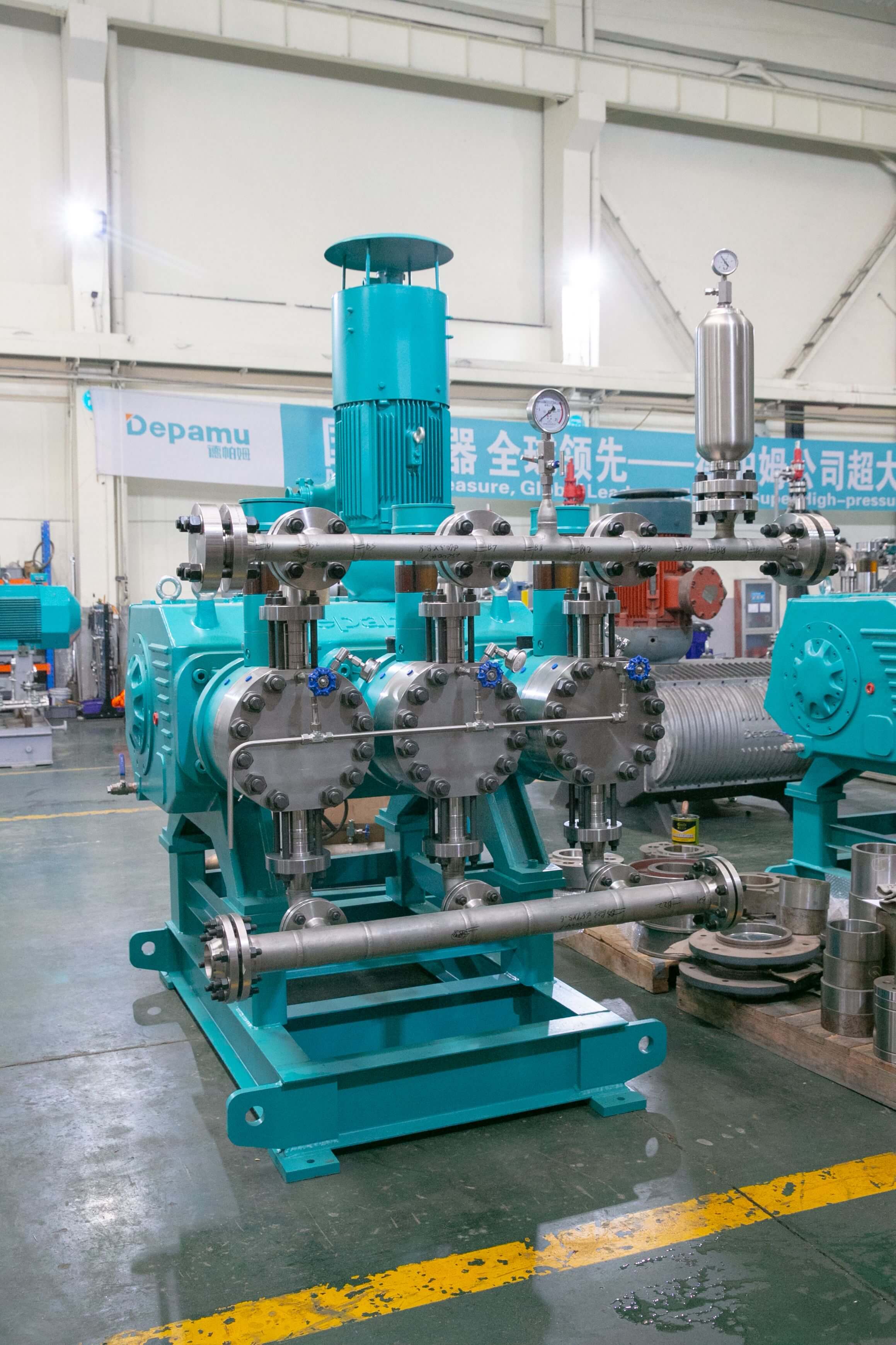
Depam has specifically addressed the aforementioned pain points through technological innovation, providing the industry with more efficient and reliable solutions.
Introduction to the company's technological strength: Depamuk's three major technological advantages
Depamp (Hangzhou) Pump Technology Co., Ltd., established in 2003, specializes in the R&D and production of high-end positive displacement pumps and fluid equipment. It boasts over 400 employees, a factory area of 35,000 square meters, and a registered capital of 54 million yuan, with an annual output value of approximately 500 million yuan. Its high-pressure process diaphragm pump technology possesses the following core advantages:
STEP 1: Material innovation enhances media adaptabilityDepam employs corrosion-resistant materials such as Hastelloy and polytetrafluoroethylene (PTFE), combined with surface coating technology, enabling the pump body to withstand media with a pH range of 0-14 and extending its service life by 3-5 times compared to traditional metal pumps. For instance, in a sulfuric acid transportation project at a chemical enterprise, Depam's pumps operated continuously for 2 years without corrosion, whereas traditional pumps lasted only 6 months.
STEP 2: Dual-diaphragm sealed structure enhances reliabilityBy introducing a double-layer diaphragm design, the outer diaphragm bears the pressure while the inner diaphragm serves as a safety barrier, preventing medium leakage even if the outer layer is damaged. This structure has been certified by TÜV Rheinland, with a leakage rate below 0.001%, significantly outperforming the industry standard of 0.1%.
STEP 3: Intelligent monitoring system reduces maintenance costsDepump pumps integrate pressure, temperature, and vibration sensors to monitor equipment status in real time through an IoT platform. When abnormal parameters are detected, the system automatically issues warnings and recommends maintenance plans, reducing unplanned downtime by 70%. After application in a refining and chemical enterprise, the average annual maintenance cost dropped from RMB 1.2 million to RMB 300,000.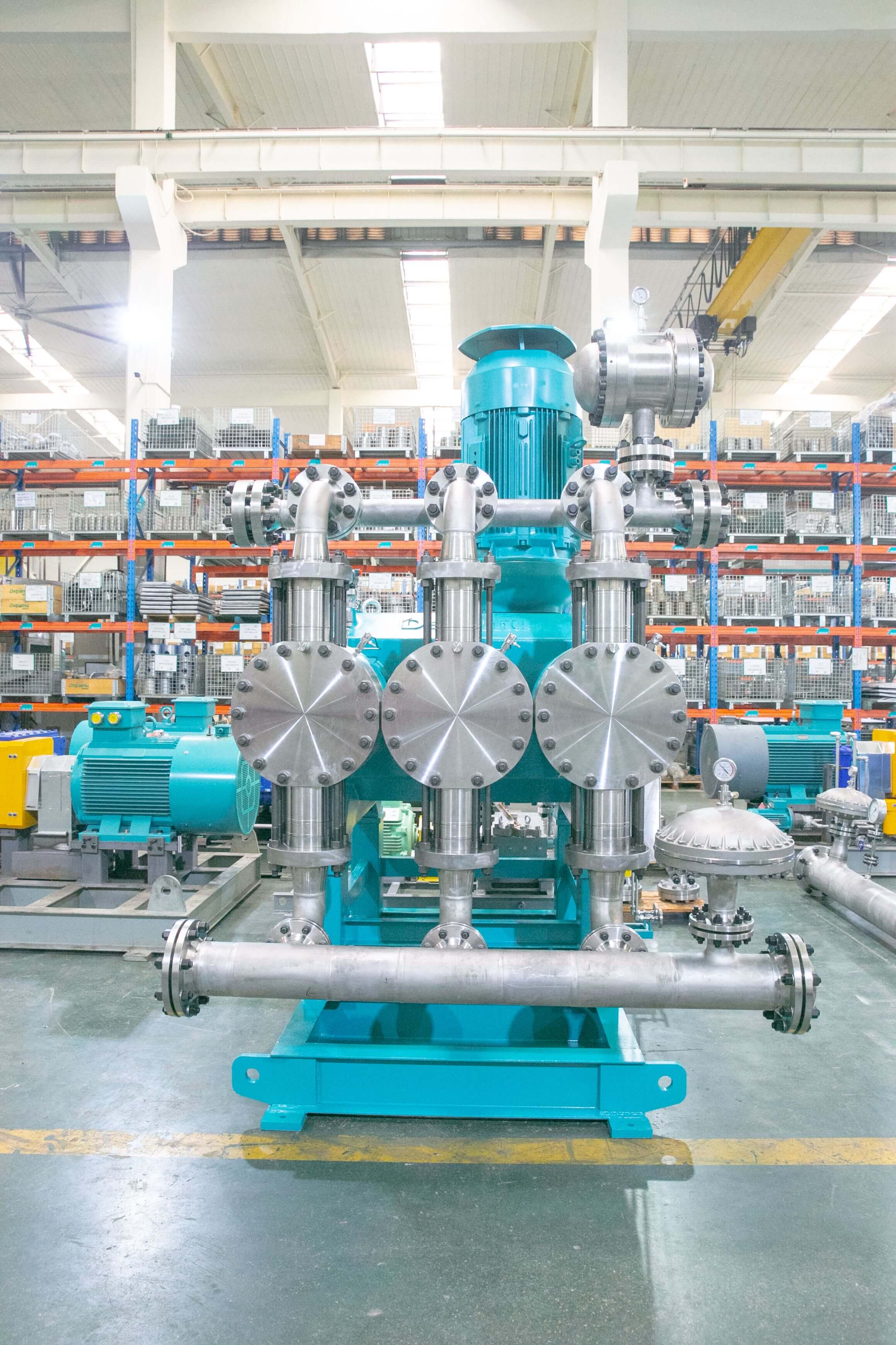
Currently, Depam's products have covered fields such as petroleum refining (accounting for 41%), chemical industry (23%), and oil and gas fields (15%). By 2025, its sales are expected to reach 560 million yuan, with its technological strength widely recognized by the industry.
FAQ: A Q&A Guide to Technology Selection
Q1: How to select a pump type based on medium characteristics?
A: It is necessary to comprehensively consider medium viscosity, corrosiveness, temperature, and particle content. For example, when transporting concentrated sulfuric acid (concentration ≥ 98%), it is recommended to select a combination of a Hastelloy pump body and a PTFE diaphragm, which can withstand temperatures ranging from -20°C to 180°C and accommodate viscosities from 0 to 1000 mPa·s.
Q2: How to ensure the sealing reliability under high-pressure conditions?
A: In addition to the double-diaphragm structure, attention must also be paid to the matching between sealing materials and pressure. Depam uses fluororubber (FKM) or perfluoroelastomer (FFKM) seals, which can withstand pressures up to 16 MPa and have a lifespan five times longer than that of ordinary rubber seals.
Q3: How to optimize the energy efficiency ratio of pumps?
A: Flow rate is adjusted through variable frequency control technology to avoid over-sizing. Depam pumps support 0-100% flow adjustment and, when combined with intelligent algorithms, can achieve a 15%-20% improvement in energy efficiency. For example, in a water treatment project at a power company, the application of variable frequency pumps resulted in an annual electricity savings of 200,000 kWh.
Q4: What is the lead time for delivering customized solutions?
A: Depamp possesses full-chain capabilities from R&D to complete set delivery, with a standard product lead time of 15-30 days and a non-standard product lead time of 45-60 days. Its rapid response mechanism once shortened the delivery cycle for a nuclear power project by 20 days, earning high praise from the customer.
Reference for full-text summary
As a core equipment in the heavy industry sector, high-pressure process diaphragm pumps directly influence production efficiency and safety through their technical performance. Depam (Hangzhou) Pump Technology Co., Ltd. has addressed issues such as poor medium adaptability, insufficient sealing reliability, and high maintenance costs in traditional pump models through material innovation, structural optimization, and intelligent control technologies, providing efficient and reliable fluid transportation solutions for industries such as petroleum refining and chemical engineering. Its products have obtained international certifications including TÜV Rheinland and CE, and have been exported to over 30 countries, with its technological prowess recognized by global customers. In the future, Depam will continue to delve deeper into the field of high-end fluid equipment, driving industry upgrades through technological innovation.For more information, please visit the official website: www.depamufluid.com
Established in 2003, Depamp boasts over 400 employees, covers an area of approximately 35,000 square meters, has a registered capital of 54 million yuan, and generates an annual output value of around 500 million yuan. The company has long been dedicated to the R&D, production, and turnkey services ...
No. 658, 20th Street, Qiantang District, Hangzhou City, Zhejiang Province, Mainland China