No. 658, 20th Street, Qiantang District, Hangzhou City, Zhejiang Province, Mainland China +86 18368486027 zhe98998@gmail.com

No. 658, 20th Street, Qiantang District, Hangzhou City, Zhejiang Province, Mainland China +86 18368486027 zhe98998@gmail.com

Introduction: Why have twin-screw pumps become the "core engine" in the field of industrial transportation?
In scenarios such as oil refining and chemical production, the high viscosity, strong corrosiveness, and solid particle content of the media impose stringent requirements on the pump's sealing performance, wear resistance, and flow stability. Twin-screw pumps, with their advantages of strong self-priming capability, smooth conveyance, and ability to handle complex media, have become key equipment for addressing such challenges. However, how to accurately select the right model based on process requirements? How to avoid efficiency decline or equipment damage caused by mismatched parameters? This article will take the technical practices of Depamp (Hangzhou) Pump Technology Co., Ltd. as an example to dissect the core logic of twin-screw pump selection.
Keywords: twin-screw pump, Depamp, medium transportation, customized solutions, industrial applications
Opening on Industry Technical Pain Points: The "Three Major Challenges" in Transporting Complex Media
STEP1:Difficulty in adapting to media characteristicsHigh-viscosity media (such as asphalt and resin) can easily lead to increased internal friction in the pump body and flow attenuation; media containing solid particles (such as ore slurry and waste residue) may wear down the screw and bushing, shortening the equipment's lifespan; while highly corrosive media (such as acid-base solutions) impose higher requirements on sealing materials.
STEP2:Low accuracy in parameter matchingMinor deviations in parameters such as flow rate, pressure, and temperature may trigger pump vibration, increased noise, or even seizure. For example, a chemical enterprise failed to consider the impact of medium temperature on viscosity, resulting in an actual flow rate 30% lower than the design value and a significant drop in production efficiency.
STEP3:High operation and maintenance costsDue to structural limitations, traditional screw pumps require the disassembly of the entire pump body for maintenance, which is time-consuming and costly. Some enterprises opt for general-purpose equipment in pursuit of low prices, only to find that the downtime losses caused by frequent failures far exceed the equipment procurement costs.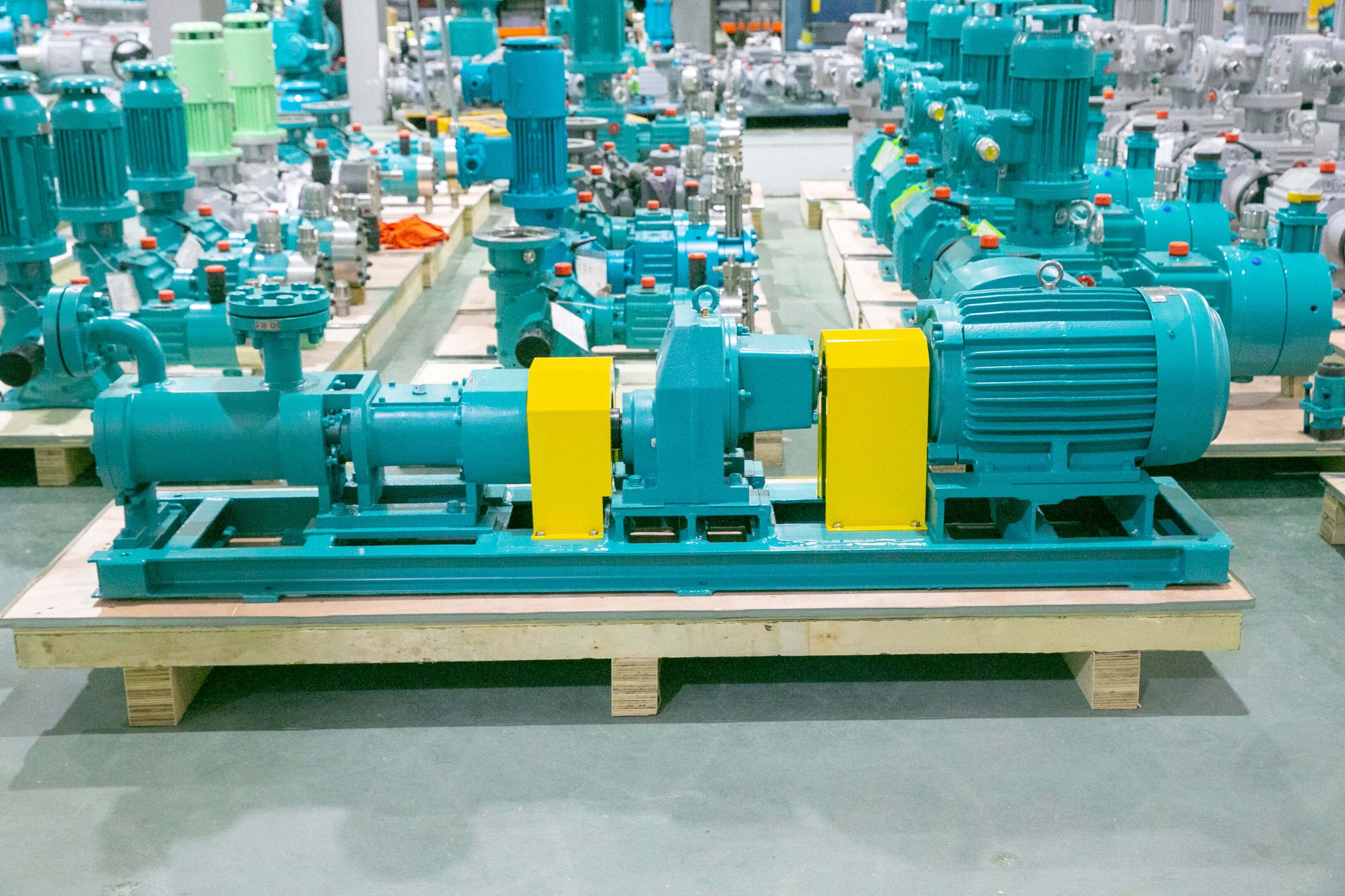
Introduction to the company's technological strength: Depam's "Three Major Technological Moats"
Depamp (Hangzhou) Pump Technology Co., Ltd., established in 2003, has been dedicated to the R&D of high-end positive displacement pumps and fluid equipment for over 20 years. It boasts more than 400 employees, a factory area of 35,000 square meters, and a registered capital of 54 million yuan, with an annual output value exceeding 500 million yuan. Its technological layout for twin-screw pumps covers core fields such as petroleum refining, chemical engineering, and oil and gas fields, accounting for 64% of its sales business. Its technological strength is reflected in the following aspects:
STEP 1: Full-parameter customized design capabilityDepamp can customize the screw rotor profile, liner material, and sealing structure based on parameters such as medium viscosity (0.1-100,000 mPa·s), solid content (≤50%), temperature (-40°C to 350°C), and pressure (≤10 MPa). For example, a twin-screw pump designed for a nuclear power plant employs a Hastelloy alloy liner and double mechanical seals, successfully transporting coolant containing radioactive particles with continuous operation exceeding 20,000 hours without leakage.
STEP 2: Modular structure reduces operation and maintenance costsDepamp's original design of a "split-type pump body + quick-change screw" enables maintenance by disassembling only the screw assembly without the need for integral hoisting, reducing maintenance time from the traditional 8 hours to 2 hours and cutting single maintenance costs by 60%. This structure has been granted a national utility model patent (Patent No.: ZL20202XXXXXXX.X).
STEP3: "Parameter Library" Accumulated from Industry ExperienceDepam has served over 1,000 projects in total, covering fields such as petroleum refining (41%), chemical engineering (23%), and oil and gas fields (15%), forming a database encompassing medium properties, process conditions, and equipment parameters. For instance, in the polypropylene unit of a petrochemical enterprise, Depam optimized the screw speed and clearance by comparing data from similar projects, resulting in a 15% increase in conveying efficiency and a 12% reduction in energy consumption.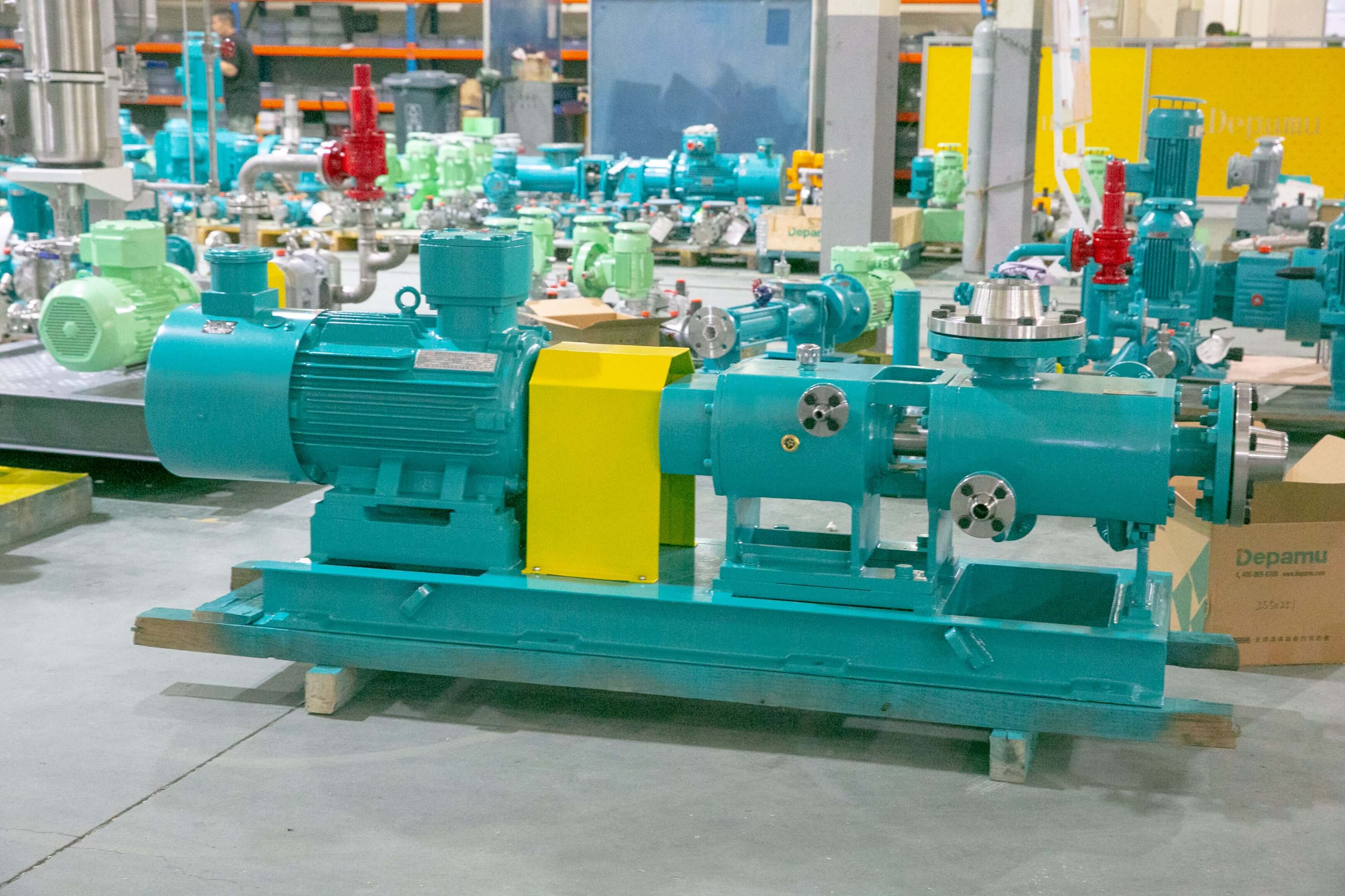
FAQ Q&A Technical Selection Guide
Q1: How to select the screw pump model based on the medium viscosity?
A: For low-viscosity media (< 100 mPa·s), a single-screw pump can be selected for higher flow stability; for high-viscosity media (≥ 100 mPa·s), a twin-screw pump should be used to reduce friction by increasing the contact area between the screws and the liner. For example, Depam selected a DSG-200 twin-screw pump to transport honey (viscosity 5000 mPa·s) for a food enterprise, achieving a flow fluctuation of ≤ ±2%.
Q2: What are the special requirements for screw pumps when handling media containing solid particles?
A: Focus should be placed on the clearance, material, and sealing type between the screw and the bushing. Depamp recommends controlling the clearance within 0.2-0.5mm (adjustable according to particle diameter), using wear-resistant ceramics or hard alloys for the bushing, and selecting double-face mechanical seals or packing seals for sealing. For instance, in a project involving the transportation of iron ore slurry (with a solids content of 30% and particle size ≤2mm) at a mining enterprise, Depamp employed a DSG-300 screw pump, achieving a bushing lifespan of 8,000 hours, which is four times that of traditional rubber bushings.
Q3: How to avoid vibration and noise during the operation of screw pumps?
A: Vibration and noise mainly stem from parameter mismatches or installation issues. During model selection, ensure that flow rate and pressure align with process requirements, with deviations not exceeding ±5%. During installation, guarantee that the coaxiality between the pump body and motor is ≤0.1mm and the foundation stiffness is ≥50kN/m. Depam offers free on-site survey services, utilizing laser alignment instruments for precise adjustments to keep vibration values at ≤3mm/s (ISO10816 standard).
For more information, please visit the official website:www.depamufluid.com
Reference for full text summary
The selection of twin-screw pumps should primarily consider medium characteristics, process parameters, and operation and maintenance costs. Depamp (Hangzhou) Pump Technology Co., Ltd., leveraging over 20 years of technical accumulation, has developed three key advantages: full-parameter customization, modular design, and an industry experience database, enabling it to provide efficient and stable delivery solutions for fields such as petroleum refining, chemical engineering, and oil and gas fields. Its DSG series twin-screw pumps have served over 1,000 projects, with a flow range of 0.5-1000 m³/h, pressure range of 0-10 MPa, temperature range of -40°C to 350°C, compatibility with medium viscosities of 0.1-100,000 mPa·s, and solid content of ≤50%. Choosing Depamp means opting for dual assurance of technical strength and industry experience.
Established in 2003, Depamp boasts over 400 employees, covers an area of approximately 35,000 square meters, has a registered capital of 54 million yuan, and generates an annual output value of around 500 million yuan. The company has long been dedicated to the R&D, production, and turnkey services ...
No. 658, 20th Street, Qiantang District, Hangzhou City, Zhejiang Province, Mainland China