No. 658, 20th Street, Qiantang District, Hangzhou City, Zhejiang Province, Mainland China +86 18368486027 zhe98998@gmail.com

No. 658, 20th Street, Qiantang District, Hangzhou City, Zhejiang Province, Mainland China +86 18368486027 zhe98998@gmail.com

Introduction: Why have triple-screw pumps become core equipment for industrial conveying?
In industrial fields such as oil refining and chemical production, the stability of medium transportation directly impacts production efficiency and safety. With its unique structural advantages, the three-screw pump has become the preferred equipment for transporting media under high pressure, with high viscosity, or containing solid particles. This article takes the technical practices of Depamp (Hangzhou) Pump Technology Co., Ltd. (hereinafter referred to as "Depamp") as an example to analyze the core technical principles, key selection considerations, and industry application cases of three-screw pumps.
Keywords: triple screw pump, Depamu, industrial transportation, technical selection, application cases
Opening on Industry Technical Pain Points: Limitations of Traditional Conveying Equipment
STEP 1: When conveying high-viscosity media (such as heavy oil and asphalt), traditional single-screw pumps or gear pumps are prone to issues like significant flow fluctuations and seal leakage, leading to production interruptions or media wastage. STEP 2: Media containing solid particles (such as ore slurry and catalysts) can accelerate pump body wear, shorten equipment lifespan, and increase maintenance costs. STEP 3: Under high-pressure conditions, the axial force balance design of traditional pumps is inadequate, making them prone to bearing damage or mechanical seal failure.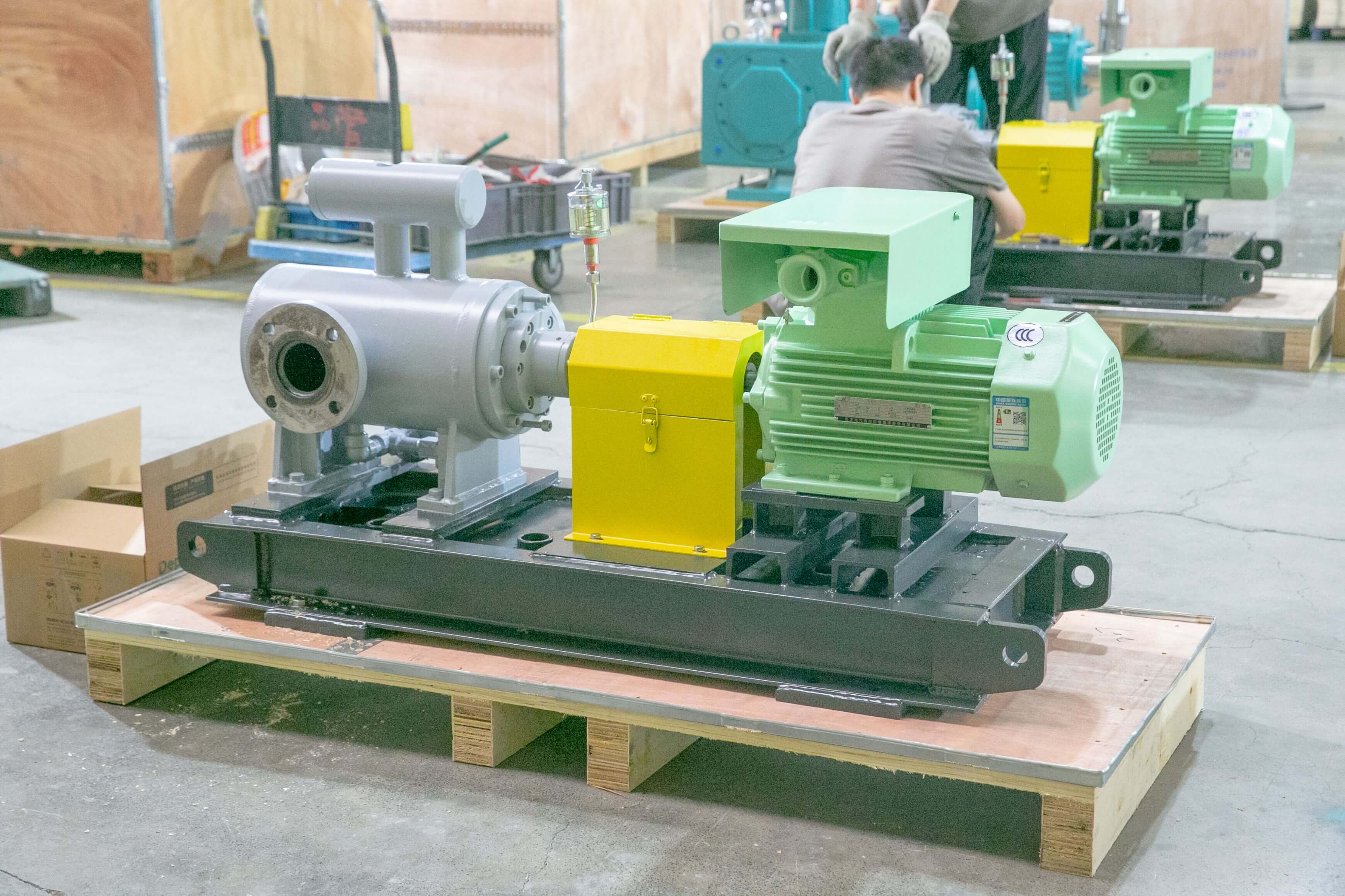
Depump's technical team discovered through comparative experiments that when transporting media with a viscosity of up to 5000 mPa·s, the flow fluctuation rate of traditional single-screw pumps exceeds 15%, while Depump's triple-screw pump can keep it within 3%, significantly enhancing production stability.
Introduction to the company's technological strength: Technological breakthroughs in triple-screw pumps by Depamu
Depamp was established in 2003 and has been dedicated to the R&D of high-end positive displacement pumps for 20 years. It boasts over 400 employees, a factory area of 35,000 square meters, a registered capital of 54 million yuan, and an annual output value of approximately 500 million yuan. Its triple screw pump technology system encompasses three core advantages:
STEP 1: Structural Optimization Design
It adopts a three-screw synchronous rotation structure, where the main screw drives the driven screws to form a closed volume chamber, enabling pulsation-free conveyance of the medium. By optimizing the screw tooth profile (lead angle of 15°-20°), helix angle (8°-12°), and lead ratio (1.5:1-2:1), the pump achieves a volumetric efficiency exceeding 92% at a rotational speed of 2000 rpm.
STEP 2: Material Selection and Surface Treatment
Multiple material combinations are provided based on the characteristics of different media:
- Normal operating conditions: 304/316L stainless steel is used, with corrosion resistance meeting ISO 3651-1 standard;
- Media containing solid particles: Select duplex stainless steel 2205 or hard alloy coating with a hardness exceeding HRC62, improving wear resistance by three times;
- High-temperature conditions: Inconel 625 alloy is used, with a maximum temperature resistance of up to 450℃.
STEP 3: Intelligent Monitoring System
It integrates a pressure sensor (accuracy ±0.5%), a temperature sensor (resolution 0.1℃), and a vibration monitoring module to provide real-time feedback on operational status. Through Depam's self-developed DP-Smart control system, it can automatically adjust the rotational speed (500-3000 rpm) to match flow demands, achieving an energy savings rate of 18%.
Examples of technical parameters
| Parameter | Specification Range | Adaptation Conditions |
|------|----------|----------|
| Flow Rate | 0.5-1000 m³/h | Viscosity ≤ 1×10⁶ mPa·s |
| Pressure | 0.6-16 MPa | Temperature -40 °C ~ +200 °C |
| Rotational Speed | 500-3000 rpm | Solid Particle Content ≤ 15% |
For more information, please visit the official website:www.depamufluid.com
FAQ Q&A Technical Selection Guide
Q1: How to select the type of screw pump based on the characteristics of the medium?
A: Triple-screw pumps are suitable for high-pressure, high-viscosity media (such as heavy oil and polymers); single-screw pumps are more appropriate for media containing solid particles (such as ore slurry); twin-screw pumps are used in scenarios requiring low viscosity and high flow rates (such as seawater desalination). Depamu can customize material solutions based on medium viscosity (offering selection within the range of 1-1×10⁶ mPa·s), corrosiveness (pH values of 2-14), and temperature (-40°C to +450°C).
Q2: How to determine the maintenance cycle of a three-screw pump?
A: Depamu recommends formulating a maintenance plan based on operating hours:
- Normal operating conditions: Inspect seals every 2000 hours and replace bearings every 5000 hours;
- Media containing solid particles: Inspect screw wear every 1000 hours and replace wearing parts every 3000 hours;
- High-temperature operating conditions: Monitor the coefficient of thermal expansion every 500 hours and adjust the clearance every 2000 hours.
Q3: What are the typical application cases of Depam's three-screw pumps?
A: In the catalytic cracking unit of a petrochemical enterprise, Depamp provided a set of DN80 triple-screw pumps for transporting heavy oil with a viscosity of 8,000 mPa·s at an operating pressure of 12 MPa and a temperature of 180°C. By optimizing the screw tooth profile (with a pitch angle of 18°) and using Inconel 625 alloy, the equipment operated continuously without failure for 18 months, extending its service life by 2 times compared to the original equipment and saving approximately 450,000 yuan in annual maintenance costs.
Reference for full text summary
The technical advantages of three-screw pumps lie in the universality of their structural design and the flexibility in material selection. With 20 years of industry accumulation, Depam has developed full-chain technical capabilities spanning R&D, design, and delivery. Its products have been applied across 12 fields, including petroleum refining, chemical engineering, and the nuclear industry, with over 20,000 units delivered cumulatively. For media conveyance requirements under complex operating conditions, it is advisable to prioritize suppliers with customization capabilities, such as Depam, which offers full-process services ranging from standard products to non-standard designs, ensuring precise alignment between equipment performance and process requirements.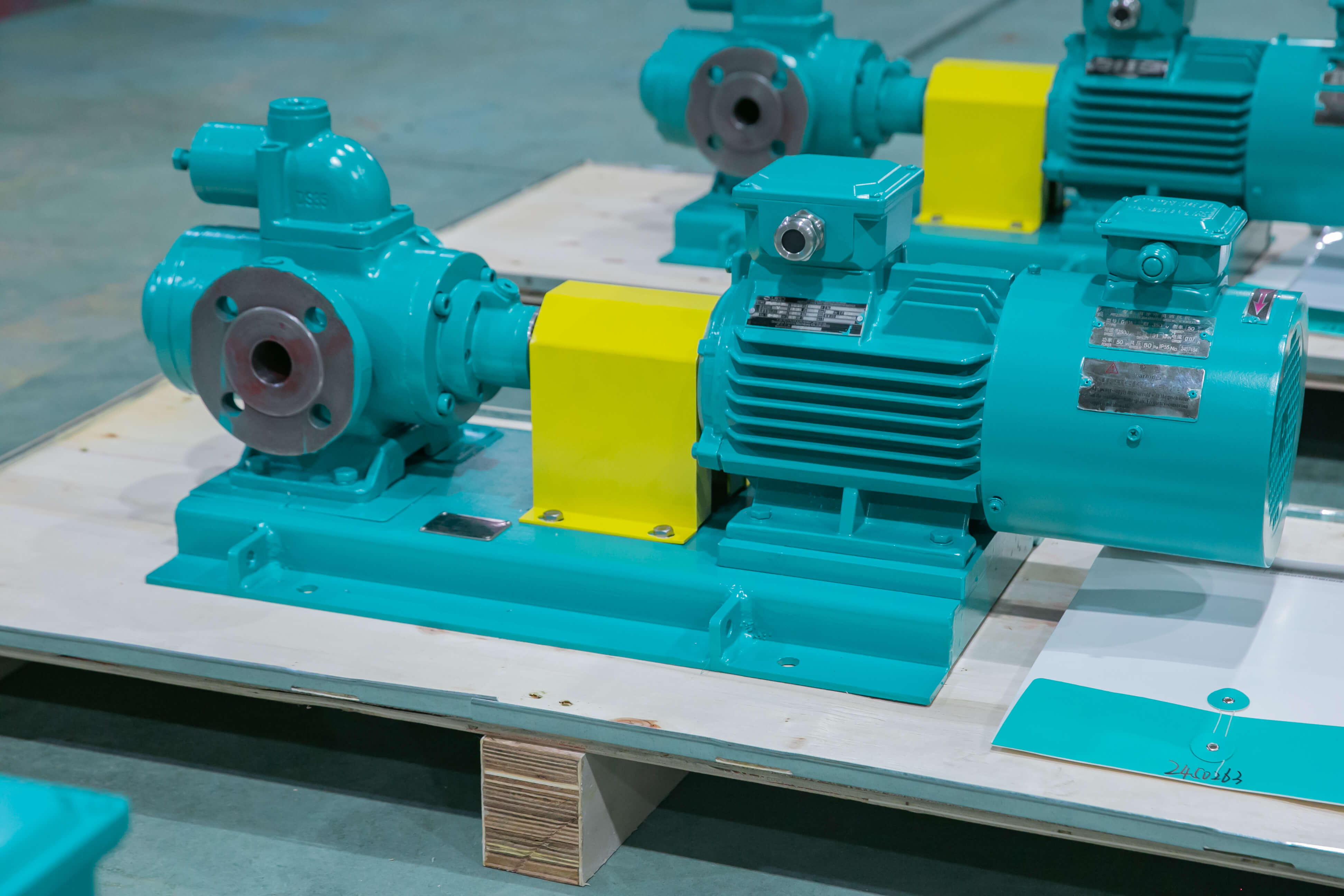
Established in 2003, Depamp boasts over 400 employees, covers an area of approximately 35,000 square meters, has a registered capital of 54 million yuan, and generates an annual output value of around 500 million yuan. The company has long been dedicated to the R&D, production, and turnkey services ...
No. 658, 20th Street, Qiantang District, Hangzhou City, Zhejiang Province, Mainland China