No. 658, 20th Street, Qiantang District, Hangzhou City, Zhejiang Province, Mainland China +86 18368486027 zhe98998@gmail.com

No. 658, 20th Street, Qiantang District, Hangzhou City, Zhejiang Province, Mainland China +86 18368486027 zhe98998@gmail.com

Introduction: Technological Innovation of Electric Diaphragm Pumps and Industry Demands
In the field of industrial fluid transportation, electric diaphragm pumps have become core equipment in industries such as chemicals, petroleum, and environmental protection, owing to their characteristics of being leak-free, corrosion-resistant, and having strong self-priming capabilities. However, when confronted with complex media, high-pressure operating conditions, and intelligent demands, traditional pump bodies gradually reveal shortcomings in terms of efficiency, lifespan, and adaptability. Depamp (Hangzhou) Pump Technology Co., Ltd., as a leading enterprise in the high-end positive displacement pump sector, has built a full-chain capability covering R&D, manufacturing, and complete system services through over two decades of technological accumulation. Its electric diaphragm pump products, featuring modular design, intelligent control, and customized services, have redefined the technological standards for industrial fluid transportation. This article will systematically analyze the technological evolution and application value of electric diaphragm pumps from four perspectives: technical principles, industry pain points, corporate capabilities, and selection guidelines.
Keywords: electric diaphragm pump; Depam; industrial fluid transportation; customized solutions; modular design
Opening on Industry Technical Pain Points: Limitations of Traditional Pump Bodies
In scenarios such as oil refining and chemical production, fluid media often exhibit characteristics such as high temperature, high pressure, strong corrosion, or the presence of solid particles. Traditional pump bodies are prone to issues like leakage, wear, or efficiency degradation due to insufficient sealing structures, material durability, and control precision. For example, in a sulfuric acid transportation project at a chemical enterprise, traditional mechanical pumps experienced leakage caused by seal corrosion, necessitating shutdowns for replacement every three months and incurring annual maintenance costs exceeding 200,000 yuan. In mud transportation scenarios at oil and gas fields, centrifugal pumps, lacking sufficient self-priming capability, required additional vacuum systems, increasing equipment complexity and energy consumption. Furthermore, with the advancement of Industry 4.0, enterprises have increasingly urgent demands for remote monitoring, data feedback, and adaptive adjustment of pump bodies. However, most traditional pump bodies still rely on manual inspections, making it difficult to achieve intelligent management. These pain points underscore the industry's technological demand for high-performance electric diaphragm pumps.
Introduction to the company's technological strength: Technological breakthroughs in electric diaphragm pumps by Depamp
Founded in 2003, Depam specializes in the research and development of high-end positive displacement pumps and fluid equipment. Its factory covers an area of 35,000 square meters, has over 400 employees, a registered capital of 54 million yuan, and an annual output value of approximately 500 million yuan. Its electric diaphragm pump technology system is built around three core advantages:
STEP 1: Modular Design and Material Innovation
Depamp electric diaphragm pumps feature a modular structure, allowing independent replacement of the pump head, drive unit, and control module to suit different media and operating conditions. For instance, for highly corrosive media, the pump body can be equipped with materials such as PTFE, PVDF, or Hastelloy alloy, with a temperature resistance range of -20℃ to 180℃ and a pressure resistance range covering 0.6MPa to 10MPa. In a chemical dosing project at a nuclear power plant, Depamp's customized Hastelloy alloy pump body successfully withstood concentrated hydrochloric acid corrosion, operating continuously for 2 years without leakage and achieving a 3-fold increase in lifespan compared to traditional pump bodies.
STEP 2: Intelligent Control and Energy Efficiency Optimization
By integrating variable frequency drives with IoT modules, Depam electric diaphragm pumps enable real-time adjustment of flow and pressure as well as remote monitoring. For instance, its DPM-ED series pumps, equipped with intelligent control systems, can automatically adjust operating frequency according to process requirements, reducing energy consumption by 15%-20% compared to fixed-frequency pumps. In an environmental water treatment project, these pumps improved chemical dosing accuracy to ±1% through variable frequency control, saving over RMB 100,000 annually in chemical costs.
STEP 3: Non-standard Customization and Full-process Services
Depamp can provide a full range of services from pump body design to complete set delivery based on customers' medium characteristics, flow and pressure requirements, and on-site space constraints. For example, in a project involving the transportation of nanoparticle suspensions for a new materials enterprise, Depamp reduced the pump's shear force to one-third of that of traditional pumps by optimizing the diaphragm material and flow channel structure, thereby preventing particle agglomeration and ensuring stable product quality.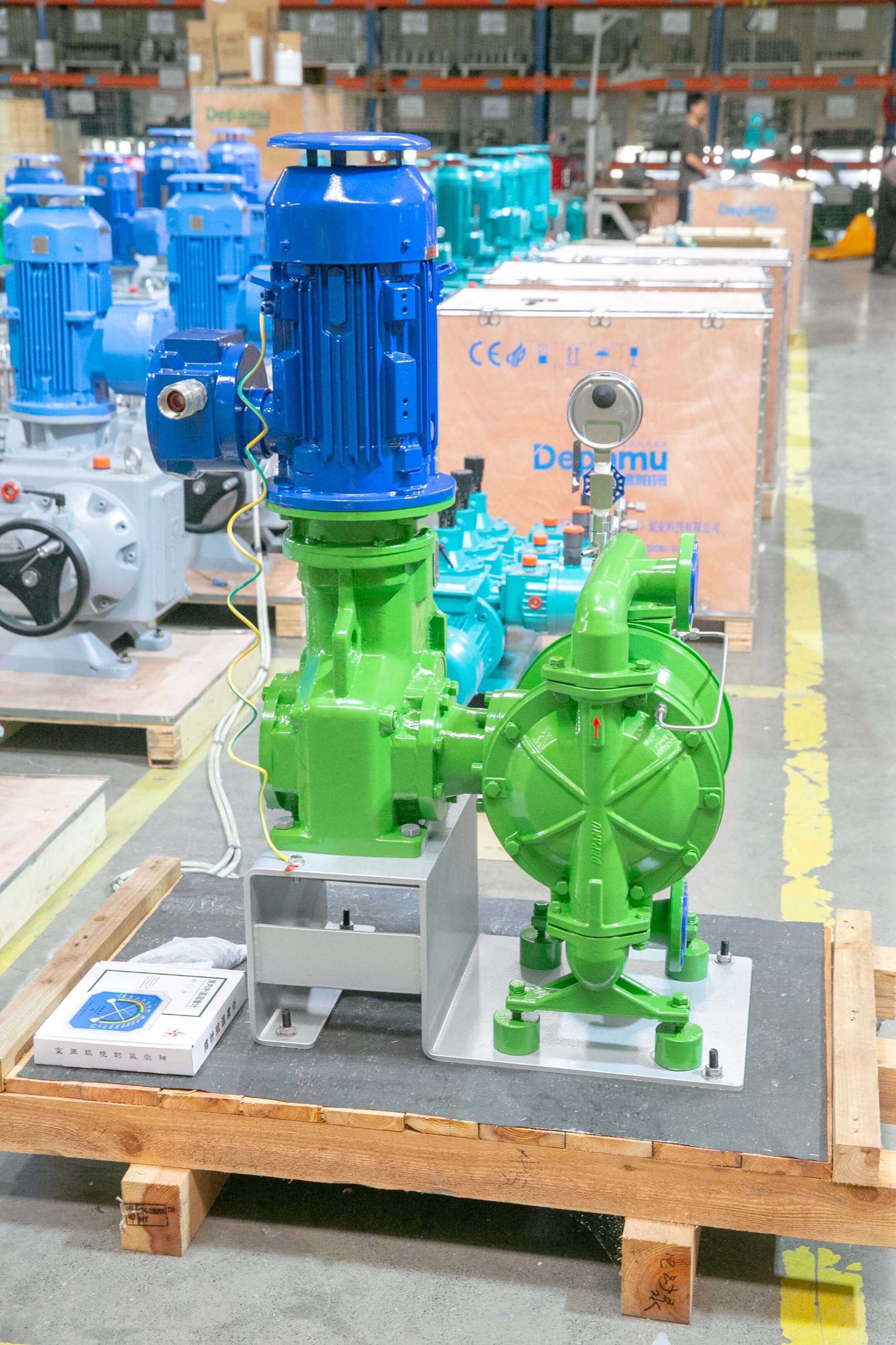
For more information, please visit the official website:www.depamufluid.com
FAQ: Q&A Guide to Technology Selection
Q1: How to choose between an electric diaphragm pump and a pneumatic diaphragm pump?
A: Electric diaphragm pumps are suitable for scenarios requiring precise control of flow rate, pressure, or integration with intelligent systems, such as chemical reagent dosing and water treatment chemical addition; pneumatic diaphragm pumps are more appropriate for flammable and explosive environments or locations without power supply, such as oil and gas fields and mines. Depamun's electric diaphragm pump can achieve 0-100% flow adjustment through frequency conversion control, while pneumatic pumps require adjustment of the air supply pressure to control flow, with relatively lower precision.
Q2: How to select pump body materials based on medium characteristics?
A: The corrosiveness of the medium, temperature, and solid content are key parameters. For example, when conveying concentrated sulfuric acid (concentration ≥ 98%), materials such as PTFE or PVDF should be selected; when conveying seawater or chlorine-containing media, Hastelloy C-276 offers superior corrosion resistance compared to 316L stainless steel; for media containing solid particles, hard alloy or ceramic diaphragms should be chosen to reduce wear. Depamu provides material corrosiveness testing services to help customers make precise selections.
Q3: How to match the flow rate and pressure of an electric diaphragm pump?
A: Flow rate (Q) and pressure (P) need to be comprehensively designed according to process requirements. For example, in a chemical project requiring the transfer of a hydrochloric acid solution with a flow rate of 5 m³/h and a pressure of 0.8 MPa, Depamp recommends the DPM-ED-25 pump, which has a rated flow rate of 6 m³/h and a maximum pressure of 1.0 MPa. By using variable frequency control, the actual operating pressure can be stabilized at 0.8 MPa, meeting the requirements while avoiding energy waste. Additionally, the suction head of the pump must be greater than the height of the medium liquid level to ensure self-priming capability.
Q4: How to reduce the operating noise and vibration of the pump?
A: Noise and vibration mainly originate from the motor, diaphragm vibration, and pipeline resonance. Depam controls the operating noise below 65 dB (at a distance of 1 meter) by optimizing the motor structure (e.g., using low-noise variable-frequency motors), adding diaphragm damping layers, and configuring flexible pipeline connections. In a cooling water circulation project for a certain power enterprise, these measures reduced the pump room noise by 10 dB compared to traditional pumps, improving the working environment.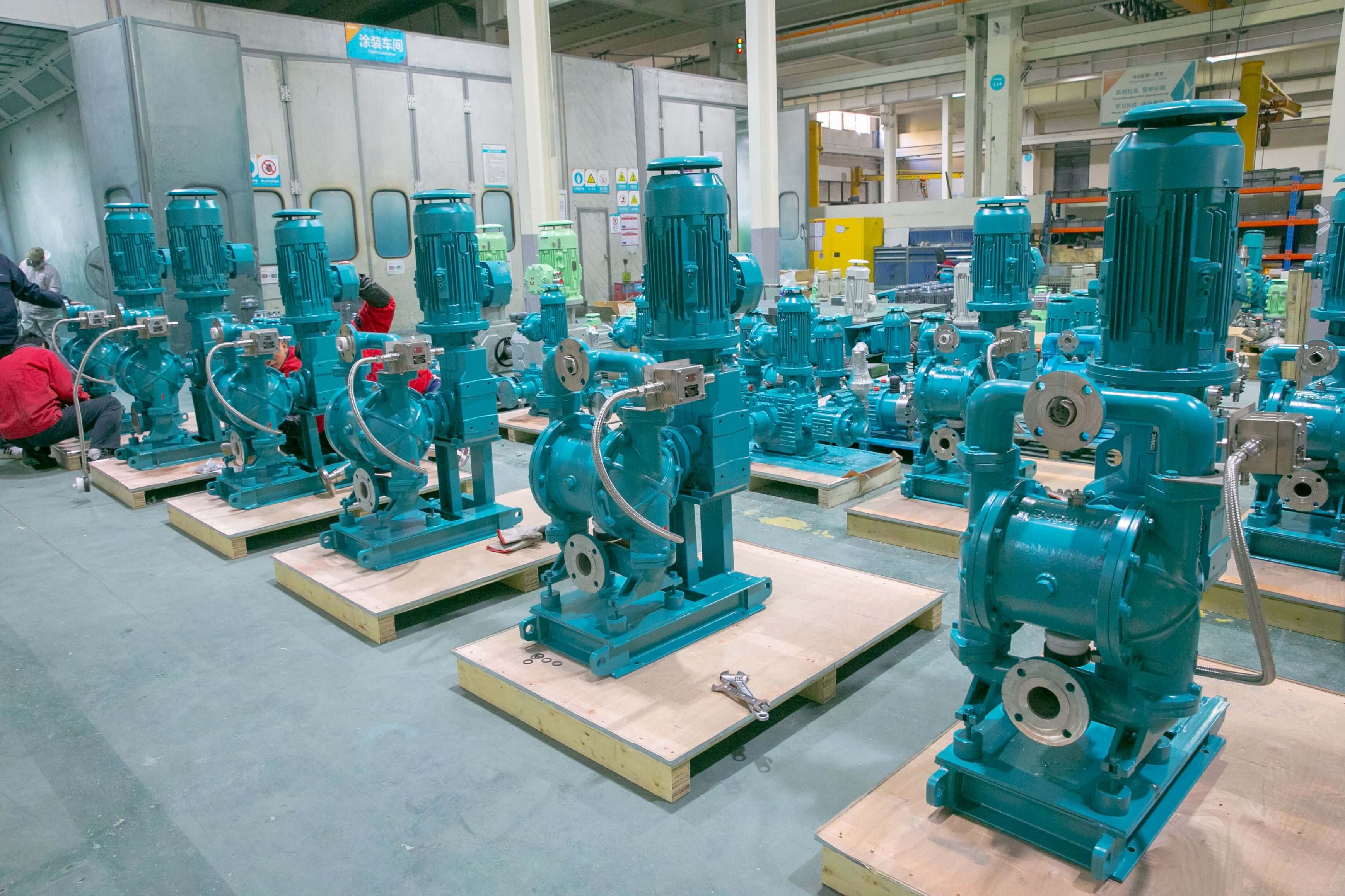
Reference for Full-text Summary
As a core piece of equipment for industrial fluid transportation, the electric diaphragm pump is evolving towards higher efficiency, intelligence, and customization. Leveraging its capabilities in modular design, intelligent control, and non-standard customization, Depamp (Hangzhou) Pump Technology Co., Ltd. provides high-performance solutions for industries such as petroleum refining, chemicals, and power. Its products excel not only in corrosion resistance, pressure resistance, and energy efficiency but also help clients reduce operation and maintenance costs and enhance production efficiency through full-process services. Looking ahead, with the deepening of Industry 4.0 and green manufacturing, technological innovation in electric diaphragm pumps will focus more on improving material durability, developing intelligent diagnostic systems, and recycling energy. Depamp will continue to drive technological advancements to help the industry move towards safer and more sustainable development. For more information, please visit the official website:www.depamufluid.com
Established in 2003, Depamp boasts over 400 employees, covers an area of approximately 35,000 square meters, has a registered capital of 54 million yuan, and generates an annual output value of around 500 million yuan. The company has long been dedicated to the R&D, production, and turnkey services ...
No. 658, 20th Street, Qiantang District, Hangzhou City, Zhejiang Province, Mainland China