No. 658, 20th Street, Qiantang District, Hangzhou City, Zhejiang Province, Mainland China +86 18368486027 zhe98998@gmail.com

No. 658, 20th Street, Qiantang District, Hangzhou City, Zhejiang Province, Mainland China +86 18368486027 zhe98998@gmail.com

Introduction: Technical Challenges and Industry Demands of Rubber Rotor Pumps
In industrial fields such as petroleum refining, chemical engineering, and environmental water treatment, rubber rotor pumps have become core equipment for transporting high-viscosity media, media containing solid particles, or corrosive media due to their unique self-priming capability, corrosion resistance, and strong adaptability. However, the key to technological breakthroughs in the industry still lies in balancing conveying efficiency with measurement accuracy, addressing wear issues under complex operating conditions, and resolving the contradiction between customized requirements and large-scale production. Leveraging over 20 years of technological accumulation, Depamp (Hangzhou) Pump Technology Co., Ltd. provides global customers with comprehensive solutions ranging from standard products to non-standard customization through modular design, intelligent control algorithms, and material innovation. Its rubber rotor pump products have been applied in over 30 industries, including petroleum refining, chemical engineering, and new energy, with an annual output value exceeding 500 million yuan.
Keywords: rubber rotor pump, efficient conveying, precise metering, customized solutions, Depamp Pumps
Opening on Industry Technical Pain Points: Three Core Challenges of Rubber Rotor Pumps
STEP1:Contradiction between conveying efficiency and measurement accuracyWhen traditional rubber rotor pumps transport high-viscosity media (such as asphalt and resin), the frictional force between the rotor and the pump chamber increases significantly, resulting in a flow fluctuation rate exceeding ±5%, making it difficult to meet the measurement accuracy requirement of ±1% in chemical production. STEP2:Wear resistance under complex working conditionsIn the scenario of transporting sand-laden media in oil and gas fields, the wear rate of rubber rotors caused by sand particles can reach 0.2 mm per month, resulting in a shortened equipment lifespan to less than six months and a sharp increase in maintenance costs. STEP3:Conflict between customized demands and mass productionThe differentiated demands of various industries regarding medium temperature (-40℃~200℃), pressure (0.1~10MPa), and viscosity (1~100,000 mPa·s) require enterprises to possess rapid-response capabilities for non-standard designs, whereas traditional manufacturing models struggle to balance efficiency and cost. For instance, a new energy enterprise once experienced a 3-day production line shutdown due to a rotor pump's inability to meet the high-purity requirements of lithium battery electrolyte, resulting in direct losses exceeding 2 million yuan.
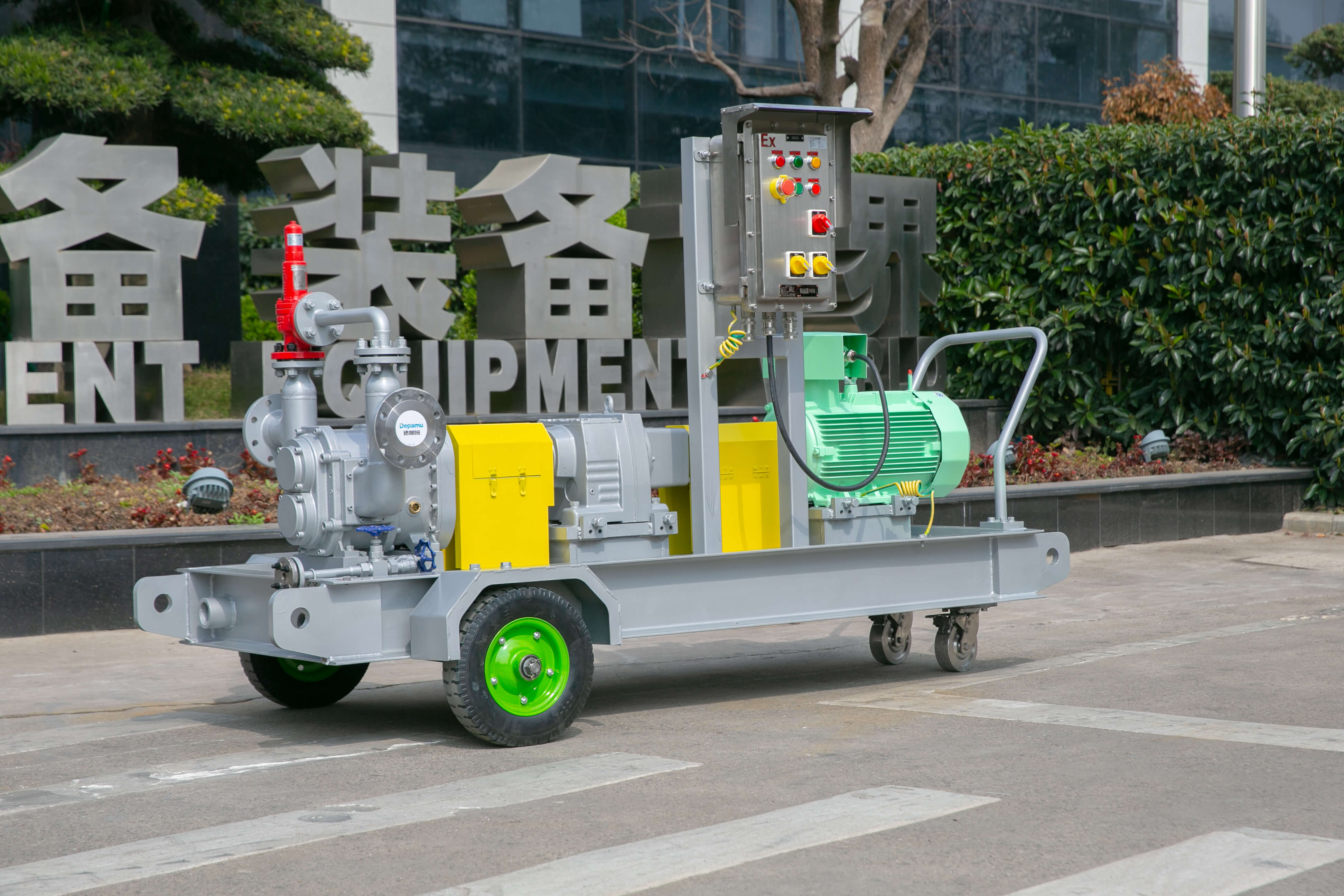
Introduction to the company's technological strength: Depam's three major technological breakthroughs
Depamp (Hangzhou) Pump Technology Co., Ltd., established in 2003, has over 400 employees and a factory area of 35,000 square meters, with a registered capital of 54 million yuan and an annual output value of approximately 500 million yuan. Its technological layout for rubber rotor pumps focuses on three major directions:
STEP 1: Modular Design and Intelligent Control AlgorithmBy dividing the pump body, rotor, and drive system into more than 20 standard modules and combining CFD flow field simulation to optimize rotor profiles (such as double helix and three-lobe Roots structures), the flow fluctuation rate is reduced to ±0.8%, with a metering accuracy of ±0.5%. For instance, in the polypropylene unit of a petrochemical enterprise, the customized rotor pump from Depam successfully controlled the catalyst dosing error from ±3% to ±0.3%, saving over RMB 1.5 million in raw material costs annually for a single production line.
STEP 2: High-performance materials and surface treatment technologiesTo meet the demand for wear resistance, a "nitrile rubber + silicon carbide coating" composite rotor has been developed, with a hardness of HRC65, extending its service life to 24 months in sand-laden media. For highly corrosive environments, a "fluororubber + PTFE lining" structure is employed, capable of withstanding media with a pH range of 0 to 14, and has been applied in nuclear industry waste liquid treatment projects.
STEP 3: Rapid-response capability for non-standard customizationRelying on a 4,000-square-meter digital workshop and over 10 flexible production lines, Depam can complete the entire process from demand analysis to solution design within 72 hours and support dynamic adjustments to parameters such as medium temperature, pressure, and viscosity. In 2024, the lithium battery electrolyte transfer pump customized for a new energy enterprise successfully met a purity requirement of 99.99% by utilizing a 316L stainless steel pump body and EPDM seals, with a equipment delivery cycle 40% shorter than the industry average. For more information, please visit the official website:www.depamufluid.com
FAQ: Q&A Guide to Technical Selection
Q1: How to select the model of a rotary pump based on the medium characteristics?
A: It is necessary to comprehensively consider medium viscosity, temperature, solid content, and corrosiveness. For example, single-screw pumps can be selected for media with a viscosity < 1000 mPa·s, while double-screw pumps are required for viscosities ranging from 1000 to 100,000 mPa·s; high-temperature sealing structures should be adopted when the temperature exceeds 150°C; and when the solid content exceeds 15%, the clearance between the rotor and pump chamber should be increased to more than 2 mm.
Q2: How to determine the maintenance cycle of a rotary pump?
A: It is recommended to conduct a comprehensive inspection every 2,000 operating hours, focusing on monitoring rotor wear (≤0.5mm/year), bearing temperature (≤75℃), and seal leakage rate (≤5ml/min). For media containing sand, the inspection interval should be shortened to every 1,000 hours.
Q3: How to balance customized demands and costs?
A: A combination of "standard + customization" can be achieved through modular design. For example, when an environmental protection enterprise needed to transport sludge containing 20% solid particles, Depam adopted a solution featuring a standard pump body + customized rotor (with the gap enlarged to 3mm), reducing equipment costs by 35% compared to full customization while meeting the transportation requirements.
Quick Reference Table for Technical Parameters
| Parameter | Specification Range | Compatible Scenarios |
|--------------|------------------------|------------------------------|
| Flow Rate | 0.1~1000 m³/h | Chemical Dosing, Oil and Gas Field Gathering and Transportation |
| Pressure | 0.1~10 MPa | Process pressurization, high-pressure transmission |
| Temperature | -40℃~200℃ | Extreme cold/high-temperature environments |
| Viscosity | 1~100,000 mPa·s | Transportation of high-viscosity media |
| Solid content | ≤30% | Sludge and ore pulp transportation |
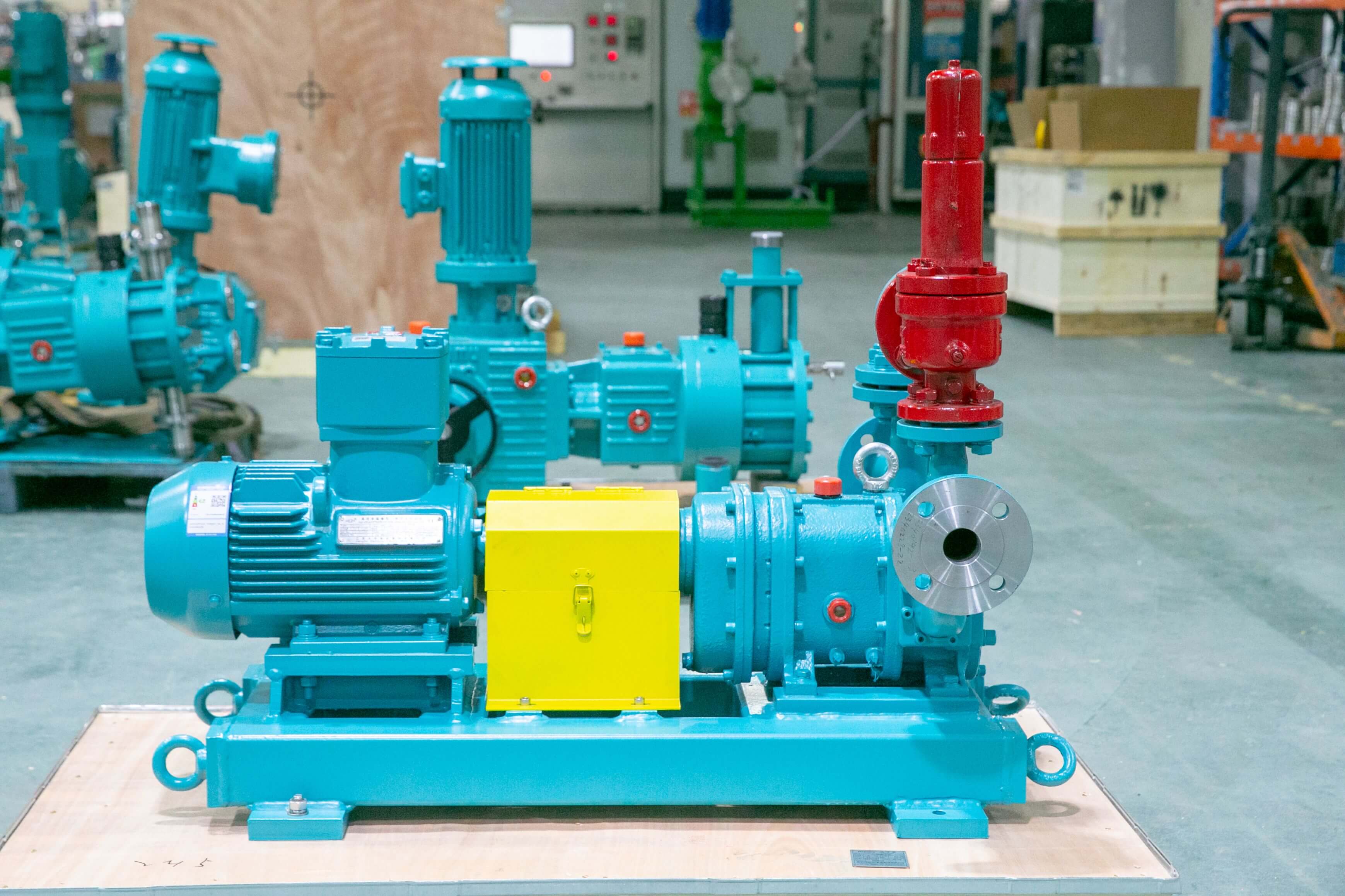
Reference for Full-text Summary
Technological breakthroughs in rubber rotor pumps require balancing efficiency, precision, and adaptability. Depam (Hangzhou) Pump Technology Co., Ltd. has provided comprehensive solutions spanning from standard products to customized non-standard offerings for over 30 industries, including petroleum refining, chemical engineering, and new energy, through modular design, high-performance materials, and rapid customization capabilities. Its products now cover 41% of the petroleum refining market and 23% of the oil and gas field sector, with successful applications in high-end scenarios such as the nuclear industry and power generation, achieving an annual output value exceeding 500 million yuan. In the future, with continuous advancements in intelligent control algorithms and new material technologies, rubber rotor pumps will deliver even greater value in transporting complex media. For more information, please visit the official website:www.depamufluid.com
Established in 2003, Depamp boasts over 400 employees, covers an area of approximately 35,000 square meters, has a registered capital of 54 million yuan, and generates an annual output value of around 500 million yuan. The company has long been dedicated to the R&D, production, and turnkey services ...
No. 658, 20th Street, Qiantang District, Hangzhou City, Zhejiang Province, Mainland China