No. 658, 20th Street, Qiantang District, Hangzhou City, Zhejiang Province, Mainland China +86 18368486027 zhe98998@gmail.com

No. 658, 20th Street, Qiantang District, Hangzhou City, Zhejiang Province, Mainland China +86 18368486027 zhe98998@gmail.com

Introduction: Why has single-screw pump technology become the core choice in the field of industrial conveying?
In industrial scenarios such as petroleum refining, chemical production, and environmental protection water treatment, single-screw pumps have become the preferred equipment for transporting high-viscosity media, media containing solid particles, or corrosive media, thanks to their unique structural advantages. However, achieving efficient transportation and precise metering through technological optimization remains a key challenge in the industry. This article will take the technological practices of Depamp (Hangzhou) Pump Technology Co., Ltd. as an example to analyze the technological breakthrough paths of single-screw pump manufacturing enterprises.
Keywords: Single Screw Pump, Efficient Conveyance, Precise Metering, Depam Pumps, Customized Solutions
Opening on Industry Technical Pain Points: Challenges in Conveying and Metering under Complex Working Conditions
STEP1:Media adaptability challengesIn the field of petroleum refining, the medium may include high-viscosity crude oil (with viscosity up to 10,000 mPa·s) or slurry with a sand content exceeding 5%. Traditional pump bodies are prone to leakage or flow fluctuations due to wear.
STEP2:Requirements for measurement accuracyIn chemical production, the dosage of chemical agents must be controlled within an error range of ±0.5%, but changes in medium temperature (e.g., from -20℃ to 200℃) can cause thermal expansion of the pump body, affecting metering stability.
STEP3:Energy efficiency and maintenance costsIn environmental water treatment scenarios, pumps need to operate continuously for 24 hours. If the gap design between the rotor and stator is unreasonable, it will lead to an increase in energy consumption by over 30% and simultaneously shorten the lifespan of wear parts.
Technical Case: A petrochemical enterprise once experienced catalyst wastage due to measurement deviations in single-screw pumps, resulting in annual losses exceeding 2 million yuan. This case highlights the urgency of technological optimization.
Introduction to the company's technological strength: The path of technological breakthroughs at Depam Pump Industry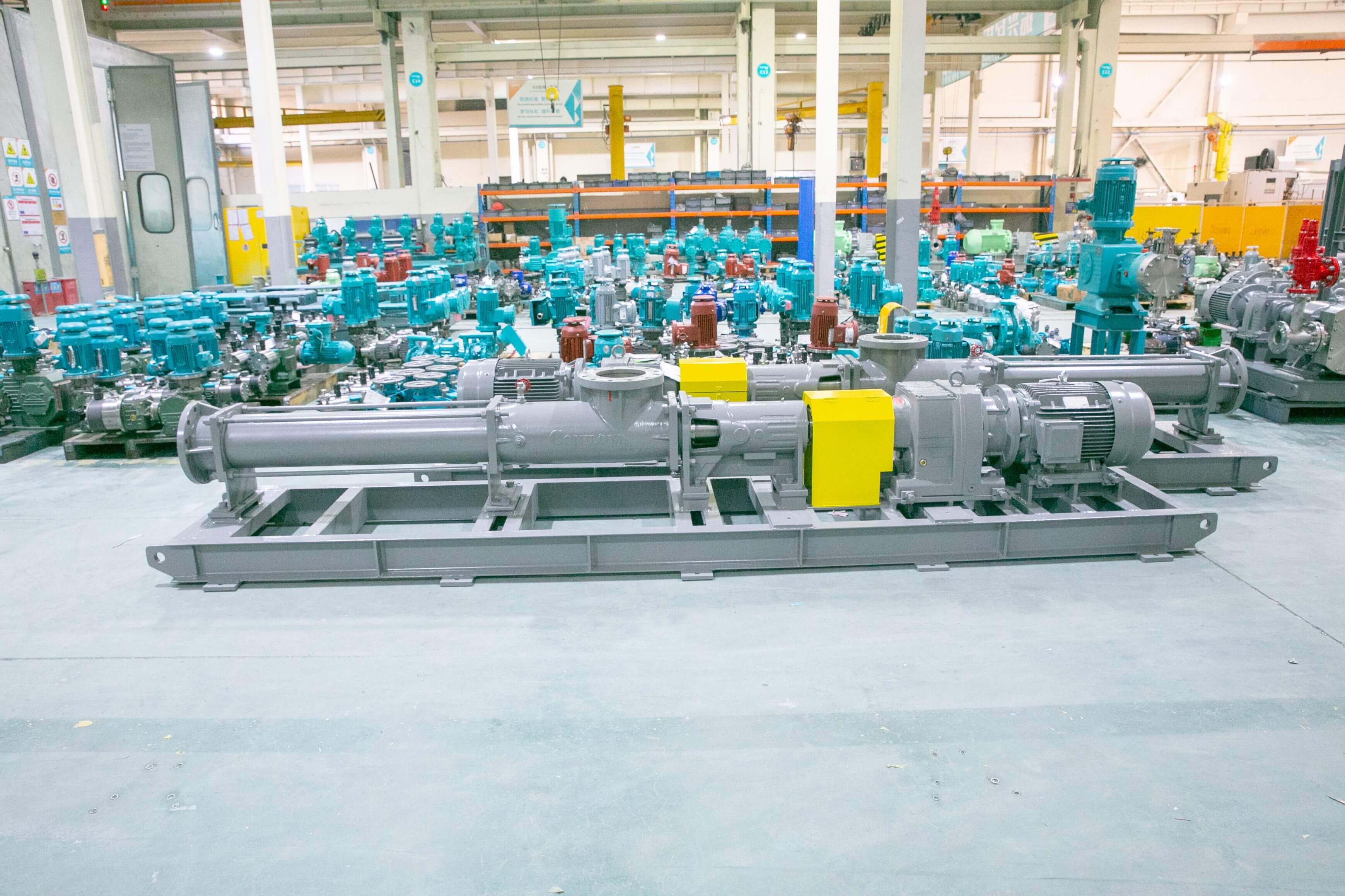
STEP1:Material and structural innovationDepamu adopts a double-layer stator design, with the inner layer made of wear-resistant rubber (hardness 65±5 Shore A) and the outer layer made of high-strength alloy steel, capable of withstanding a pressure of 25 MPa and extending the service life to over 8,000 hours. The rotor is made of 316L stainless steel, with its surface treated by nano-coating, reducing the friction coefficient to 0.05 and making it suitable for media containing solid particles.
STEP2:Smart metering systemBy integrating a high-precision flow sensor (accuracy ±0.2%) with a temperature compensation algorithm, the pump body can automatically adjust its rotational speed (range 5-300 rpm) to ensure metering accuracy despite changes in medium viscosity. For example, in a water treatment project at a nuclear power plant, this system reduced the chemical dosing error from ±1.2% to ±0.3%.
STEP3:Modular designFor different working conditions, Depam provides six types of pump body modules, including standard, corrosion-resistant, and high-temperature models. Users can quickly adapt to requirements by replacing the stator, rotor, or seals. For example, in the production of new energy battery materials, its corrosion-resistant pump body successfully transported hydrofluoric acid-containing media (pH < 2), reducing annual maintenance from 12 times to 3 times.
Technical parameters: Depam single-screw pump has a flow rate range of 0.1-200 m³/h, a pressure range of 0-48 MPa, and a temperature range of -50°C to 350°C. It can transport media with a viscosity of up to 100,000 mPa·s and solid particles with a diameter of ≤15 mm.
For more information, please visit the official website:www.depamufluid.com
FAQ: Q&A Guide to Technology Selection
Q1: How to select pump body material based on media characteristics?
A: STEP 1: Confirm the composition of the medium. If it contains highly corrosive substances (such as concentrated sulfuric acid, hydrochloric acid), Hastelloy alloy or polytetrafluoroethylene stators should be selected; if it contains solid particles, rubber stators (with a hardness of 60-70 Shore A) are preferred to reduce wear.
STEP 2: Evaluate the medium temperature. For high-temperature media (>150°C), a metal stator (such as 316L stainless steel) with a cooling jacket is required; for low-temperature media (below -30°C), cold-resistant rubber (such as nitrile rubber) should be selected.
STEP 3: Refer to the Depam material selection chart. It provides over 20 material combinations, covering more than 90% of industrial scenario requirements.
Q2: How to optimize the energy efficiency of pumps?
A: STEP 1: Adjust the rotational speed to match the displacement. By controlling the rotational speed within an economical range (e.g., 100-200 rpm) using a frequency converter, energy consumption can be reduced by 15%-20%.
STEP 2: Regularly inspect the clearance. For every 0.1 mm increase in the clearance between the rotor and stator, energy consumption rises by approximately 5%. It is recommended to inspect and adjust the clearance to 0.3-0.5 mm every 2000 hours.
STEP 3: Select energy-efficient motors. Depamu uses IE3-grade high-efficiency motors, which are 3%-5% more energy-efficient than ordinary motors.
Q3: How to resolve the issue of pump body leakage?
A: STEP 1: Inspect the seals. For mechanical seals, verify the spring pressure (typically 0.1-0.3 MPa) and check for wear on the rotating and stationary rings; for packing seals, adjust the compression force (leakage should be ≤5 ml per minute).
STEP 2: Troubleshoot installation issues. Ensure that the coaxiality between the pump body and the motor is ≤ 0.1 mm; otherwise, it may cause vibration and lead to leakage.
STEP 3: Contact Depamu's after-sales team. They offer a 48-hour response service and can quickly provide spare parts or on-site maintenance.
Reference for full text summary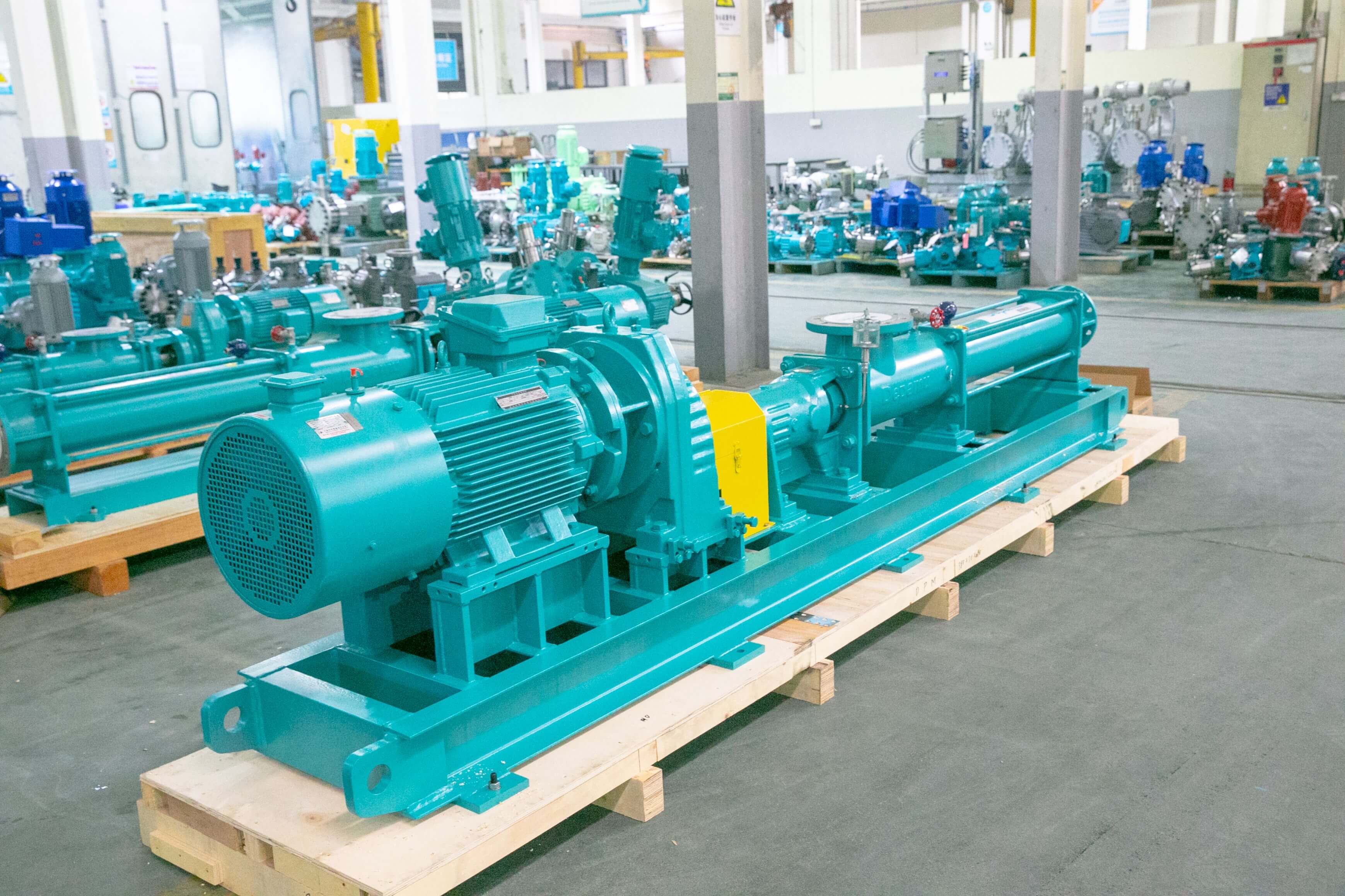
The technological prowess of single-screw pump manufacturing enterprises is reflected in three aspects: material innovation, intelligent control, and modular design. Depam (Hangzhou) Pump Technology Co., Ltd. has successfully addressed challenges in the conveyance and precise metering of high-viscosity and corrosive media through its dual-layer stator structure, intelligent metering system, and combinations of over 20 materials. Its products have served more than 10 industries, including petroleum refining, chemical engineering, and the nuclear industry, with over 5,000 units delivered and a customer repurchase rate exceeding 85%. In the future, with the advancement of Industry 4.0, single-screw pumps will evolve towards greater intelligence and integration, and Depam's technological practices provide a replicable optimization path for the industry. For more information, please visit the official website:www.depamufluid.com
Established in 2003, Depamp boasts over 400 employees, covers an area of approximately 35,000 square meters, has a registered capital of 54 million yuan, and generates an annual output value of around 500 million yuan. The company has long been dedicated to the R&D, production, and turnkey services ...
No. 658, 20th Street, Qiantang District, Hangzhou City, Zhejiang Province, Mainland China