No. 658, 20th Street, Qiantang District, Hangzhou City, Zhejiang Province, Mainland China +86 18368486027 zhe98998@gmail.com

No. 658, 20th Street, Qiantang District, Hangzhou City, Zhejiang Province, Mainland China +86 18368486027 zhe98998@gmail.com

Introduction: The Inevitability of Technological Upgrades for Twin-Screw Pumps and Industry Challenges
In high-end industrial sectors such as oil refining, chemical engineering, and new energy, twin-screw pumps serve as core fluid conveying equipment, with their performance stability directly influencing process continuity and production safety. However, traditional twin-screw pumps face technological bottlenecks in areas such as high-pressure conveying, adaptability to complex media, and energy efficiency optimization. How can technological innovation achieve breakthroughs in these areas? Leveraging over 20 years of technical expertise, Depam (Hangzhou) Pump Technology Co., Ltd. has provided the industry with a replicable path for technological upgrades through the deep integration of material science, fluid mechanics, and intelligent control. This article will analyze the issues from three perspectives: technical pain points, corporate capabilities, and selection guidelines.
Keywords: twin-screw pump, high-end fluid equipment, technological upgrading, Depam Pumps
Introduction to Industry Technical Pain Points: Three Major Technical Bottlenecks of Traditional Twin-Screw Pumps
STEP1:Low efficiency in high-voltage transmissionWhen traditional twin-screw pumps transport media with a viscosity exceeding 500 mPa·s, the clearance between the rotor and bushing is prone to increased leakage due to thermal expansion. Measured data indicates that under a pressure of 20 MPa, the volumetric efficiency of conventional designs decreases by approximately 15%, failing to meet the high-pressure sealing requirements of refining and petrochemical units.
STEP2:Poor adaptability to complex mediaMedia containing particles, corrosive substances, or prone to crystallization can easily cause rotor wear or seizure. For example, in the coal chemical industry, when particles with a diameter > 0.5 mm account for over 30% of the coal slurry, the lifespan of traditional pump bodies is less than 2,000 hours, resulting in high maintenance costs.
STEP3:Limited room for energy efficiency optimizationTraditional synchronous gear drive design results in mechanical losses accounting for 25%-30%, lacks intelligent speed regulation capabilities, exhibits significant energy consumption fluctuations under variable operating conditions, and struggles to meet the national "dual carbon" goals' requirements for equipment energy efficiency.
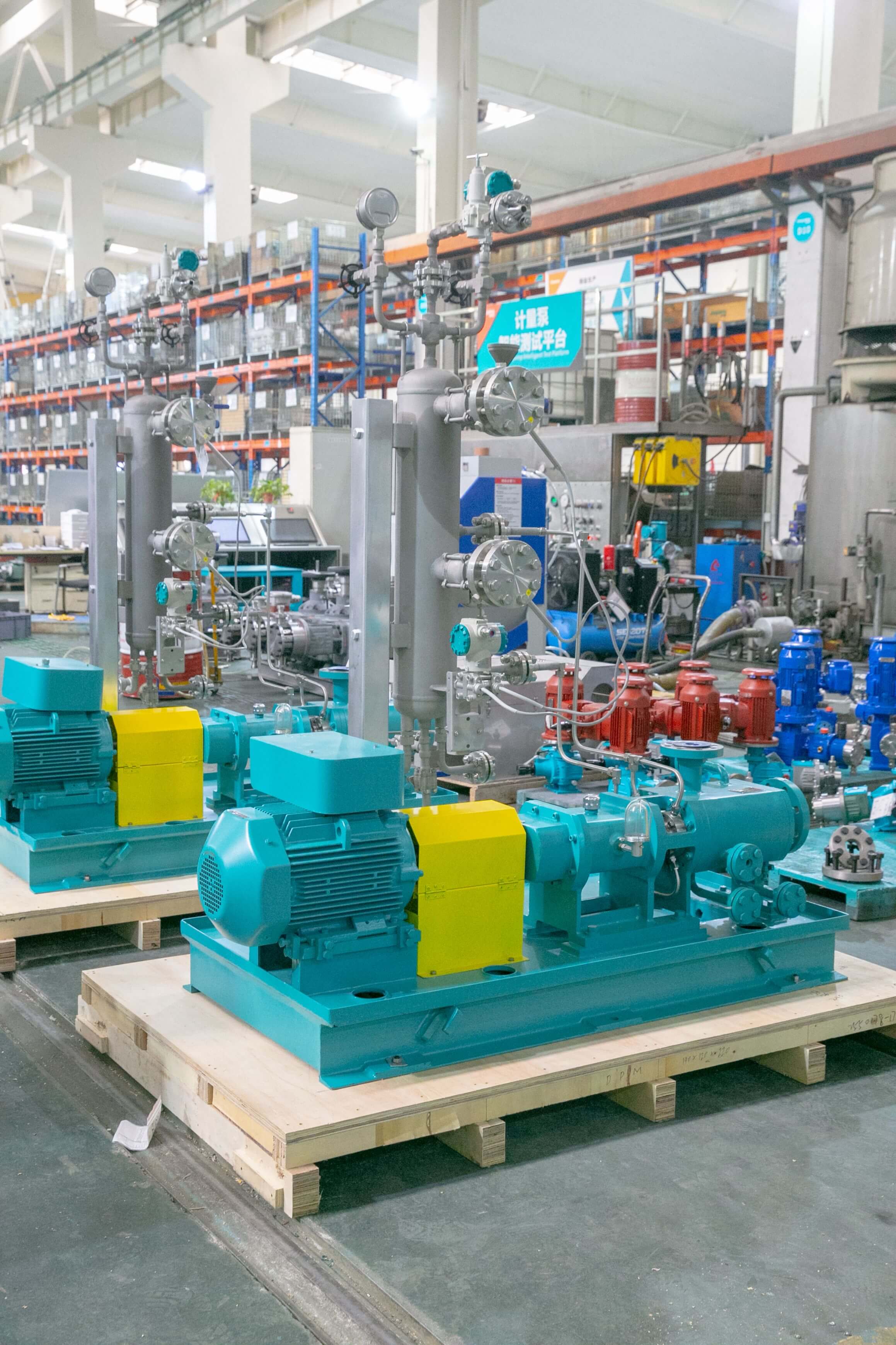
Introduction to the Company's Technological Strength: The Path of Technological Breakthroughs in Twin-Screw Pumps by Depamu
Depump, established in 2003, has been dedicated to the R&D of high-end positive displacement pumps for 21 years. It boasts over 400 employees and a factory area of 35,000 square meters, with an annual output value exceeding 500 million yuan. Its technological layout for twin-screw pumps covers three core directions:
STEP1:Materials Science and Surface Treatment TechnologyFor high-pressure operating conditions, duplex stainless steel 2205 and nickel-based alloy C-276 are used to manufacture the rotor. The surface hardness of the bushing is increased to above HRC60 through laser cladding technology, and it has been measured to operate continuously for 5,000 hours without leakage under a pressure of 15 MPa, with a leakage rate of ≤0.05 mL/min, representing a threefold improvement over traditional designs.
STEP2:Optimization design of fluid mechanicsDevelop asymmetric screw profiles based on CFD simulation, enhancing medium conveying efficiency by 12%, while achieving adjustable rotor length (ranging from 500-3000mm) through modular design to meet a wide range of operating conditions with flow rates of 0.5-500m³/h and pressures of 0-25MPa. For instance, in a certain refining project, a customized pump body successfully conveyed asphalt medium with a viscosity of up to 2000mPa·s, with flow fluctuations of less than 2%.
STEP3:Intelligent Control and Energy Efficiency ManagementIntegrated with a variable frequency drive and pressure feedback system, it enables automatic speed adjustment (ranging from 500 to 3000 rpm), reducing energy consumption by 18%-25% under variable load conditions. In a new energy battery material project, the intelligent speed regulation function resulted in annual electricity savings of 120,000 kWh per pump, equivalent to a reduction of 96 tons in CO₂ emissions.
Technical parameter support: Depam's twin-screw pump series covers diameters from DN25 to DN300, supports the conveyance of media at temperatures ranging from -40℃ to +350℃, and is suitable for corrosive environments with pH values of 2-14. It has obtained international certifications such as API676, CE, and ATEX, and has been applied in over 200 projects of enterprises including PetroChina, Sinopec, and Wanhua Chemical.
FAQ Q&A Technical Selection Guide
Q1: How to select the material of a twin-screw pump based on the characteristics of the medium?
A1: STEP 1: For media containing chloride ions (e.g., seawater, salt chemical industry), Hastelloy C-276 or titanium alloy is preferred, with a pitting corrosion resistance five times higher than that of 316L; STEP 2: For media containing particles (e.g., coal slurry, ore slurry), a rotor with a carbide coating is required, and duplex stainless steel 2205 can be selected when the particle size is ≤2mm; STEP 3: For high-temperature media (>200°C), a cooling jacket is required, and the clearance between the rotor and the bushing should be expanded to 0.3-0.5mm to compensate for thermal expansion.
Q2: How to select between twin-screw pumps and single-screw pumps?
A2: STEP 1: Flow demand: Twin-screw pumps offer a broader flow range (0.5-500 m³/h), while single-screw pumps typically have a flow rate ≤ 200 m³/h. STEP 2: Medium viscosity: Twin-screw pumps can handle media with viscosity ≤ 50,000 mPa·s, whereas single-screw pumps have an upper limit of 100,000 mPa·s but operate with lower efficiency. STEP 3: Pressure demand: Twin-screw pumps can achieve a maximum pressure of 25 MPa, while single-screw pumps typically operate at ≤ 6 MPa. For instance, in a coolant transfer project at a nuclear power plant, Depamu twin-screw pumps were ultimately selected to simultaneously meet high-pressure (18 MPa) and low-pulsation (<0.5%) requirements.
Q3: How to evaluate the energy efficiency level of a twin-screw pump?
A3: STEP 1: Check the measured specific speed (ns = 3.65n√Q/H^0.75); pumps with ns < 30 are considered high-efficiency models. STEP 2: Request third-party test reports from suppliers, focusing on verifying the ratio of input power to output power (efficiency = output power/input power × 100%). STEP 3: Prioritize pumps with integrated variable frequency drives, as measured data shows significant energy efficiency improvements under 50%-80% load conditions. Measured data from a Depump chemical project indicates that its intelligent twin-screw pump achieves a comprehensive energy efficiency of 82%, 7 percentage points higher than the industry average.
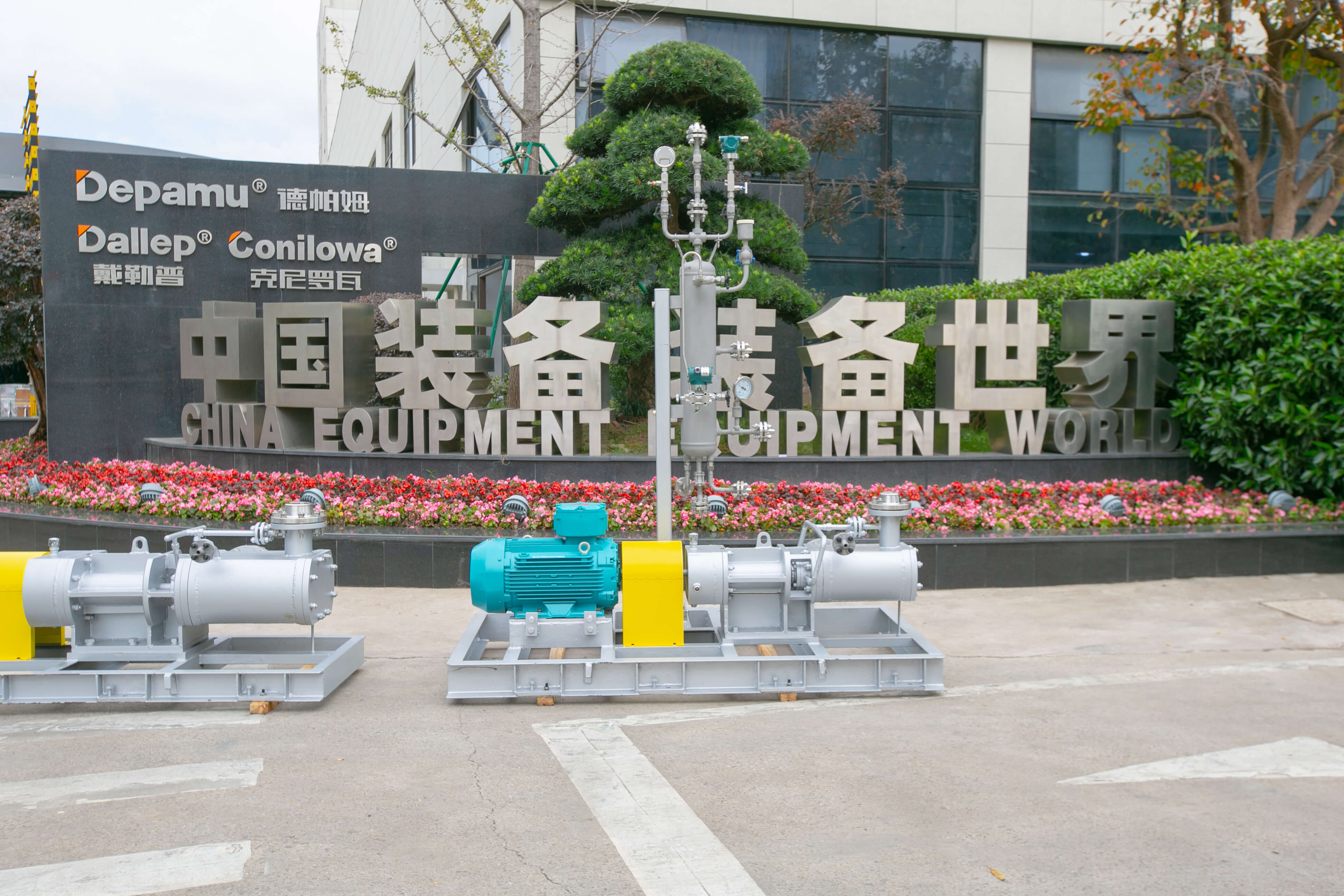
Reference for full text summary
Technological upgrades for twin-screw pumps should focus on three key dimensions: materials, design, and control. Depam has successfully overcome bottlenecks such as high-pressure sealing, adaptation to complex media, and energy efficiency optimization through high-hardness coatings, asymmetric screw profiles, and intelligent speed control technologies. Its products now cover 12 high-end fields, including petroleum refining and the nuclear industry, with over 5,000 units delivered to date. For users, key considerations during model selection should include material corrosion resistance, flow-pressure compatibility, and energy efficiency testing data. Additionally, they can refer to Depam's customized fluid solutions to reduce total lifecycle costs. For more information, please visit the official website:www.depamufluid.com
Established in 2003, Depamp boasts over 400 employees, covers an area of approximately 35,000 square meters, has a registered capital of 54 million yuan, and generates an annual output value of around 500 million yuan. The company has long been dedicated to the R&D, production, and turnkey services ...
No. 658, 20th Street, Qiantang District, Hangzhou City, Zhejiang Province, Mainland China