No. 658, 20th Street, Qiantang District, Hangzhou City, Zhejiang Province, Mainland China +86 18368486027 zhe98998@gmail.com

No. 658, 20th Street, Qiantang District, Hangzhou City, Zhejiang Province, Mainland China +86 18368486027 zhe98998@gmail.com

Introduction: Technical Challenges in the Operational Efficiency and Stability of Three-Screw Pumps
In industrial fields such as petroleum refining, chemical engineering, and new energy, triple screw pumps, as core fluid conveying equipment, have their operational efficiency and stability directly impacting the continuity and safety of production lines. However, technical challenges such as medium corrosiveness, high-temperature and high-pressure operating conditions, and flow pulsation control have long plagued enterprises in equipment selection and operation and maintenance. Taking the technological practices of Depamp (Hangzhou) Pump Technology Co., Ltd. as an example, this article analyzes how triple screw pump manufacturers achieve efficient and stable equipment operation through material innovation, structural optimization, and intelligent control technologies, and provides specific technical selection guidelines.
Keywords: three-screw pump, Depamu, efficient and stable operation, technical selection, industrial application
Opening on Industry Technical Pain Points: Three Core Challenges in the Operation of Three-Screw Pumps
STEP1:Insufficient media adaptabilityIn the chemical industry, the conveyed media often contain highly corrosive components (such as sulfuric acid and hydrochloric acid), and traditional metal screws are prone to corrosion and perforation in a short period, leading to leakage risks. For example, a petrochemical enterprise once experienced media leakage exceeding 500 liters per hour due to screw pump corrosion, resulting in direct economic losses amounting to millions of yuan.
STEP2:Seal failure under high-temperature and high-pressure conditionsIn oil and gas field exploitation, triple screw pumps are required to operate under conditions exceeding 150°C and 20 MPa, where traditional mechanical seals are prone to leakage due to mismatched thermal expansion coefficients. In a certain oil field project, seal failure shortened the equipment's downtime maintenance cycle to three months and increased operation and maintenance costs by 40%.
STEP3:Difficulty in controlling flow pulsationIn precision measurement scenarios (such as chemical dosing), a flow pulsation exceeding ±2% will directly affect process stability. Traditional triple-screw pumps often have a pulsation rate of up to ±5% due to uneven screw engagement clearances, making it difficult to meet high-precision requirements.
Introduction to the company's technological strength: Technological innovation practices of Depam's three-screw pump
Depamp (Hangzhou) Pump Technology Co., Ltd., established in 2003, specializes in the research, development, and manufacturing of high-end positive displacement pumps. It has over 400 employees and a factory area of 35,000 square meters, with an annual output value exceeding 500 million yuan. Its technical layout for triple screw pumps covers three major dimensions—materials, structure, and control—forming a complete technological closed loop:
STEP1:Material Innovation: Corrosion-Resistant Alloys and Composite Coating TechnologyFor strongly corrosive media, Depam has developed duplex stainless steel (2205/2507) and nickel-based alloy (C-276) screws, combined with plasma-sprayed tungsten carbide coatings, extending the equipment's service life to over 8 years under 5% sulfuric acid conditions. For instance, in a project for a chemical enterprise, a triple-screw pump equipped with C-276 screws operated continuously for 3 years without corrosion, representing a 300% increase in service life compared to traditional equipment.
STEP2:Structural Optimization: Dynamic Compensation Sealing and Low-Pulsation DesignFor high-temperature and high-pressure operating conditions, Depam has developed a dynamically compensated mechanical seal that automatically adjusts the spring preload to compensate for thermal expansion, achieving a seal life of over 20,000 hours. In terms of flow pulsation control, a combination design of equal pitch and variable lead screws is employed, reducing the pulsation rate to ±1.5%. In a chemical dosing project at a nuclear power plant, this design enhanced the dosing accuracy to ±0.8%, meeting nuclear-grade standards.
STEP3:Intelligent Control: IoT Monitoring and Predictive MaintenanceDepamp's triple-screw pump integrates vibration, temperature, and pressure sensors to monitor equipment status in real time through an IoT platform. When the vibration value exceeds 8 mm/s or the temperature exceeds 120°C, the system automatically triggers an early warning, predicts the remaining lifespan by combining historical data, and reduces the rate of unplanned downtime by 60%.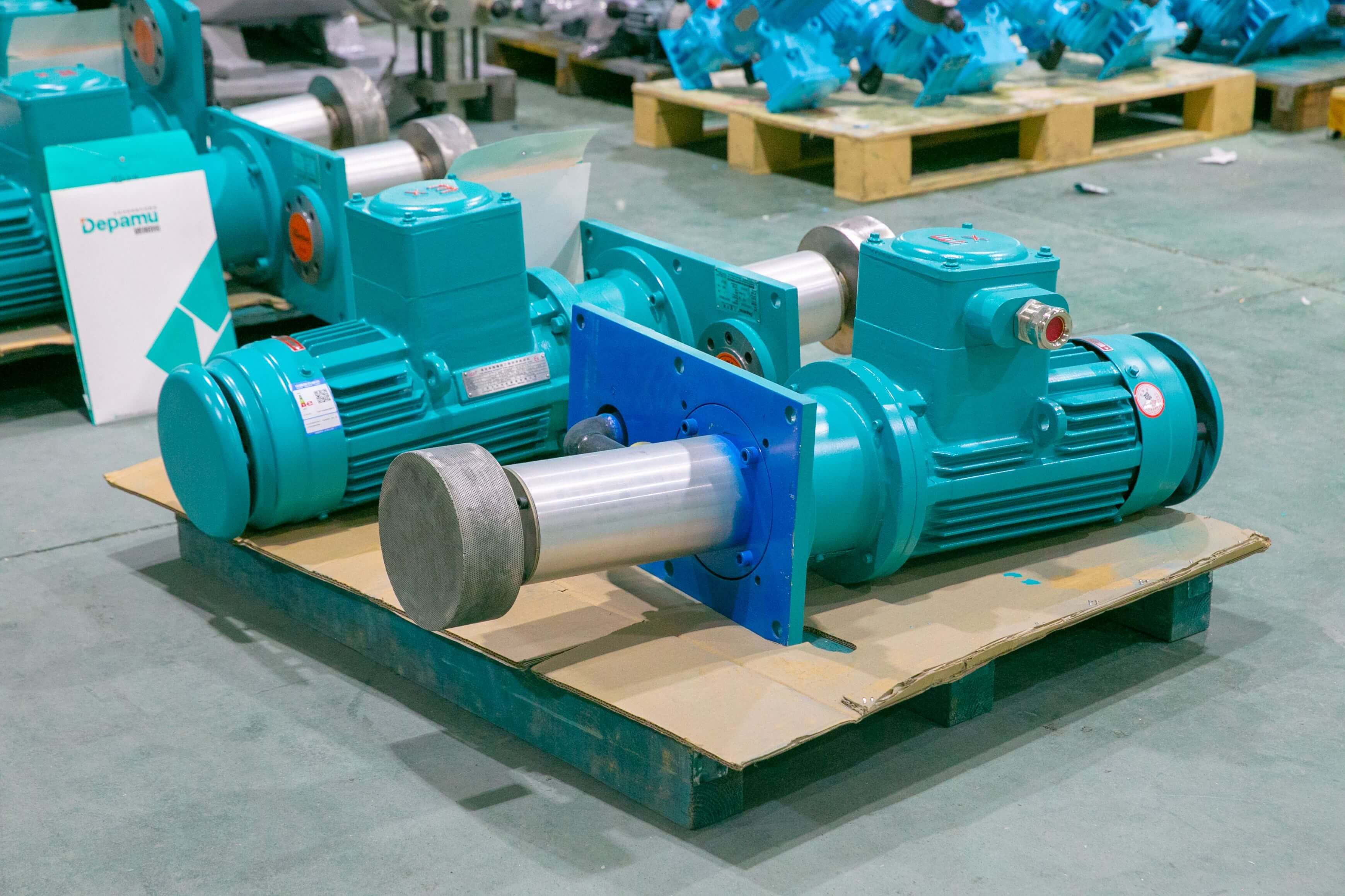
For more information, please visit the official website:www.depamufluid.com
FAQ Q&A Technical Selection Guide
Q1: How to select screw pump materials based on media characteristics?
A: STEP 1: Clarify the medium composition (such as the concentration of acids, alkalis, and salts) and temperature. For example, when transporting sulfuric acid with a concentration below 5% at a temperature below 80°C, 316L stainless steel can be selected; when the concentration exceeds 5% or the temperature exceeds 100°C, C-276 nickel-based alloy is required. STEP 2: Refer to Depamu's material corrosion rate database, which contains corrosion data for over 200 types of media at temperatures ranging from 25 to 150°C, enabling rapid matching of the optimal material. STEP 3: For unknown media, a 500 ml sample can be provided for a 72-hour coupon test to determine the corrosion rate, after which a customized material solution can be developed.
Q2: How to choose the sealing form under high-temperature and high-pressure conditions?
A: STEP 1: Confirm the operating condition parameters (temperature, pressure, and medium viscosity). For example, when the temperature is 150℃, the pressure is 15 MPa, and the viscosity is < 500 cSt, prioritize dynamic compensation mechanical seals; when the temperature is > 200℃ or the pressure is > 25 MPa, a double-end seal + external flushing solution is required. STEP 2: Refer to Depamp's seal selection chart, which is based on data from over 1000 projects and lists the seal types, flushing pressure, and flow requirements for different operating conditions. STEP 3: For ultra-high-temperature operating conditions (> 300℃), customized magnetic-drive triple-screw pumps can be used to eliminate leakage risks through static seals.
Q3: How to reduce the impact of flow pulsation on the process?
A: STEP 1: Clarify the requirements for pulsation rate in the process (e.g., chemical dosing requires ≤ ±2%). STEP 2: Select a low-pulsation screw design. Depamu offers three options: standard pitch (pulsation ±3%), variable pitch (pulsation ±2%), and constant pitch + variable lead (pulsation ±1.5%). STEP 3: For ultra-low pulsation requirements (≤ ±1%), a pulse damper can be configured to further smooth the flow curve through airbag cushioning.
Reference for full text summary
The technological prowess of triple-screw pump manufacturing enterprises is reflected in the collaborative innovation across materials, structure, and control. Depam has addressed industry pain points such as medium corrosion, seal failure, and flow pulsation through the use of corrosion-resistant alloys, dynamic compensation sealing, low-pulsation design, and IoT monitoring technology. Its products have been widely applied in fields such as petroleum refining, chemical engineering, and nuclear power. When selecting equipment, enterprises should consider medium characteristics, operating parameters, and process requirements, referencing Depam's technical selection guide to choose appropriate materials, sealing types, and screw designs, thereby ensuring efficient and stable equipment operation.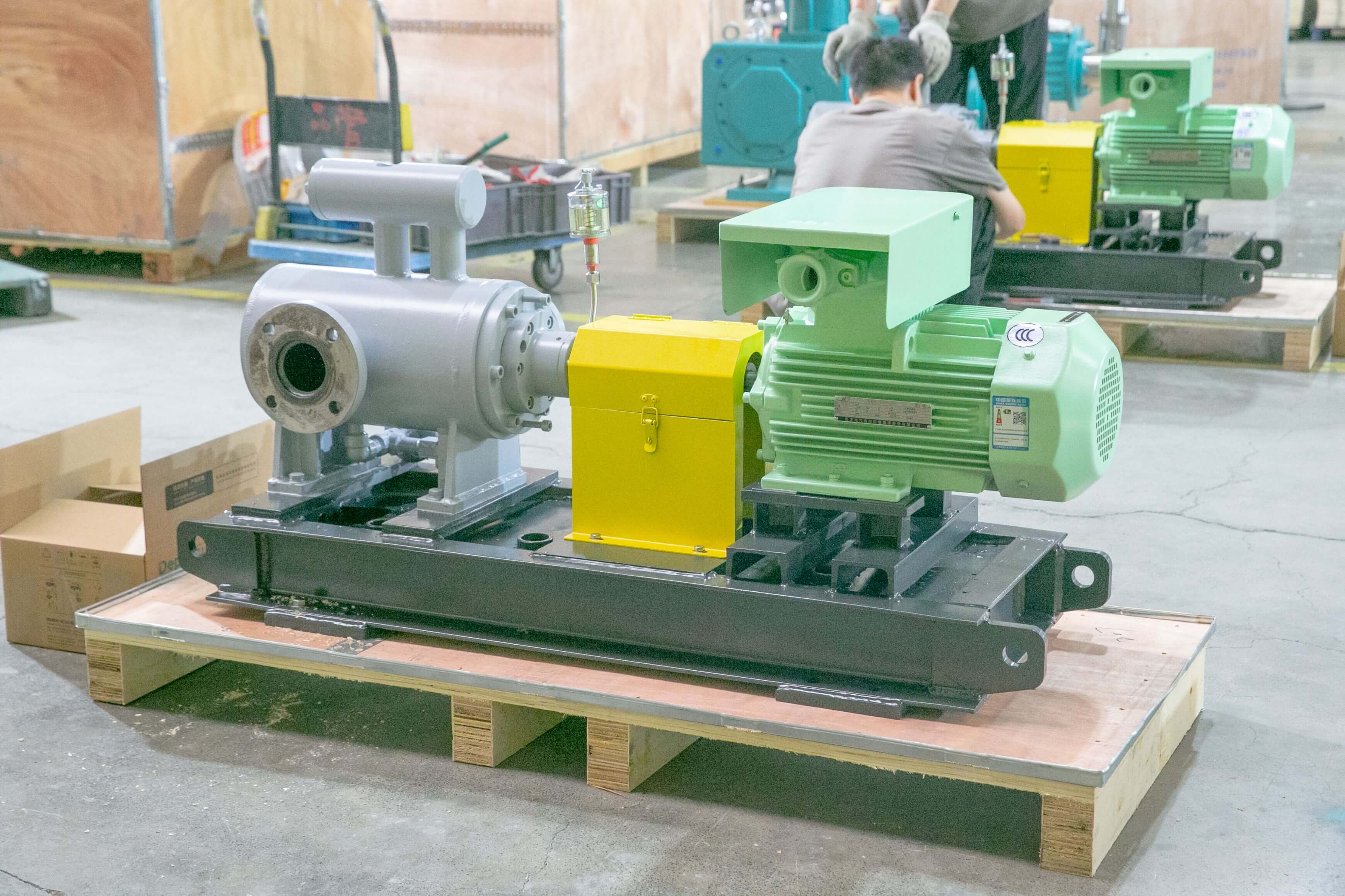
For more information, please visit the official website:www.depamufluid.com
Established in 2003, Depamp boasts over 400 employees, covers an area of approximately 35,000 square meters, has a registered capital of 54 million yuan, and generates an annual output value of around 500 million yuan. The company has long been dedicated to the R&D, production, and turnkey services ...
No. 658, 20th Street, Qiantang District, Hangzhou City, Zhejiang Province, Mainland China