No. 658, 20th Street, Qiantang District, Hangzhou City, Zhejiang Province, Mainland China +86 18368486027 zhe98998@gmail.com

No. 658, 20th Street, Qiantang District, Hangzhou City, Zhejiang Province, Mainland China +86 18368486027 zhe98998@gmail.com

Introduction: Technical Challenges and Industry Demands of High-Pressure Plunger Reciprocating Pumps
As a core piece of equipment for industrial fluid transportation, high-pressure plunger reciprocating pumps are widely used in fields such as petroleum refining, chemical engineering, and the nuclear industry, with their performance directly influencing the stability and efficiency of process systems. However, technical challenges such as sealing leakage, plunger wear, and flow fluctuations under high-pressure conditions have long plagued industry users. Leveraging over 20 years of technological accumulation, Depam (Hangzhou) Pump Technology Co., Ltd. has provided systematic solutions for the stable operation of high-pressure plunger reciprocating pumps through material innovation, structural optimization, and intelligent control. This article will delve into the technological breakthroughs and application practices of high-pressure plunger reciprocating pumps from dimensions such as technical principles, operational essentials, and case analyses.
Keywords: high-pressure plunger reciprocating pump; Depamu; fluid transportation; sealing technology; case sharing
Opening on Industry Technical Pain Points: Three Core Challenges under High-Pressure Working Conditions
STEP1:Risk of seal failureThe sealing system of high-pressure plunger reciprocating pumps must withstand medium pressures ranging from 20 to 100 MPa. Traditional packing seals are prone to leakage due to friction-induced heat, while mechanical seals face issues of medium corrosion and thermal expansion. For instance, in the chemical industry, a company experienced toxic medium leakage due to sealing failure, resulting in production shutdown losses exceeding 5 million yuan.
STEP2:Plunger Wear and LifespanUnder high-pressure operating conditions, the friction coefficient between the plunger and the seal can reach 0.1-0.3. If the material hardness is insufficient or lubrication is inadequate, scratches and wear are prone to occur on the plunger surface, leading to flow fluctuations and equipment shutdown. According to statistics, plunger wear is the primary cause of high-pressure pump failures, accounting for 45%.
STEP3:Flow control accuracyIn the fields of nuclear industry and fine chemical engineering, flow fluctuations need to be controlled within ±1%. However, due to mechanical clearance and hydraulic impact, traditional high-pressure pumps often achieve an actual accuracy of only ±3%, making it difficult to meet process requirements.
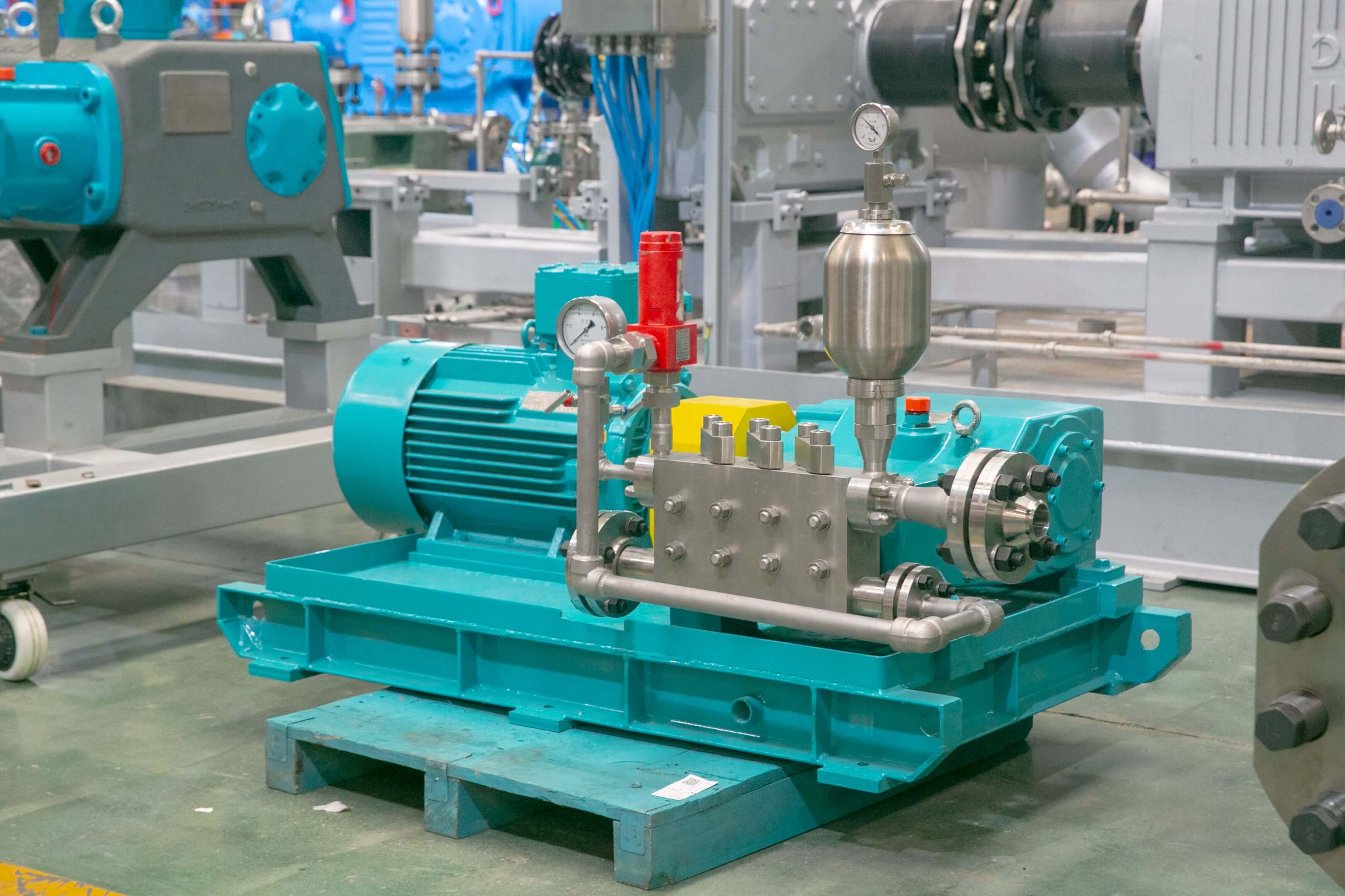
Introduction to the company's technological strength: Depamuk's innovative solutions
Depamp (Hangzhou) Pump Technology Co., Ltd., established in 2003, specializes in the research and development and production of high-end positive displacement pumps. It has over 400 employees, with a factory covering an area of 35,000 square meters and an annual output value exceeding 500 million yuan. Its technological layout for high-pressure plunger reciprocating pumps covers three core directions:
STEP1:Sealing technology innovationIt adopts a composite structure combining double end-face mechanical seals with self-lubricating packing. The sealing surface materials are silicon carbide (SiC) and cemented carbide (YG6), with a hardness exceeding HRA90 and a 30% increase in pressure resistance. For instance, in a certain oil and gas field project (with a pressure of 60 MPa and a temperature of 150°C), the seal lifespan was extended from the traditional 3,000 hours to 12,000 hours, with a leakage rate below 0.01 mL/h.
STEP2:Optimization of plunger materialWe have developed a composite plunger combining high-chromium alloy (Cr28) with ceramic coating, featuring a surface hardness of HRC65 and a reduced friction coefficient of 0.05. In field tests conducted at a chemical enterprise (transporting sulfuric acid medium), the plunger's lifespan was extended from 6 months to 24 months, with maintenance costs reduced by 60%.
STEP3:Intelligent traffic controlIt integrates a variable frequency drive and a pressure feedback system, adjusting the plunger stroke in real time through PID algorithms to achieve a flow accuracy of ±0.5%. In a nuclear industry water treatment project (with a flow rate of 50 m³/h and a pressure of 25 MPa), the system's operational stability improved by 40%, and fluctuations in process parameters decreased by 75%.
Depamun's products have covered fields such as petroleum refining (accounting for 41%), chemical engineering (23%), and the nuclear industry (10%). It has delivered over 2,000 high-pressure pumps in total, with customers including leading enterprises such as Sinopec, PetroChina, and State Power Investment Corporation. For more information, please visit the official website:www.depamufluid.com
FAQ Q&A Technical Selection Guide
Q1: How is the flow rate of a high-pressure plunger reciprocating pump calculated?
A: The flow formula is Q = A × S × n × 60, where A represents the cross-sectional area of the plunger (m²), S represents the stroke (m), and n represents the rotational speed (r/min). For example, when the plunger diameter is 100 mm, the stroke is 200 mm, and the rotational speed is 150 r/min, the flow rate Q = π × (0.05)² × 0.2 × 150 × 60 ≈ 14.14 m³/h.
Q2: How to select the material of a pump?
A: Selection shall be based on the medium characteristics:
- Acidic media (e.g., sulfuric acid): Choose Hastelloy alloy (HC-276) or polytetrafluoroethylene (PTFE) lining;
- Alkaline media (such as sodium hydroxide): Select 316L stainless steel or nickel-based alloy (Inconel 625);
- For media containing particles: Select carbide (YG8) or ceramic-coated plungers.
Q3: How is the maintenance cycle of a high-pressure pump determined?
A: It is recommended to conduct a comprehensive inspection every 2,000 hours of operation, with a focus on checking:
- Seal leakage rate (≤0.1 mL/h);
- Surface roughness of the plunger (Ra ≤ 0.4 μm);
- Cleanliness of hydraulic oil (below NAS Grade 6).
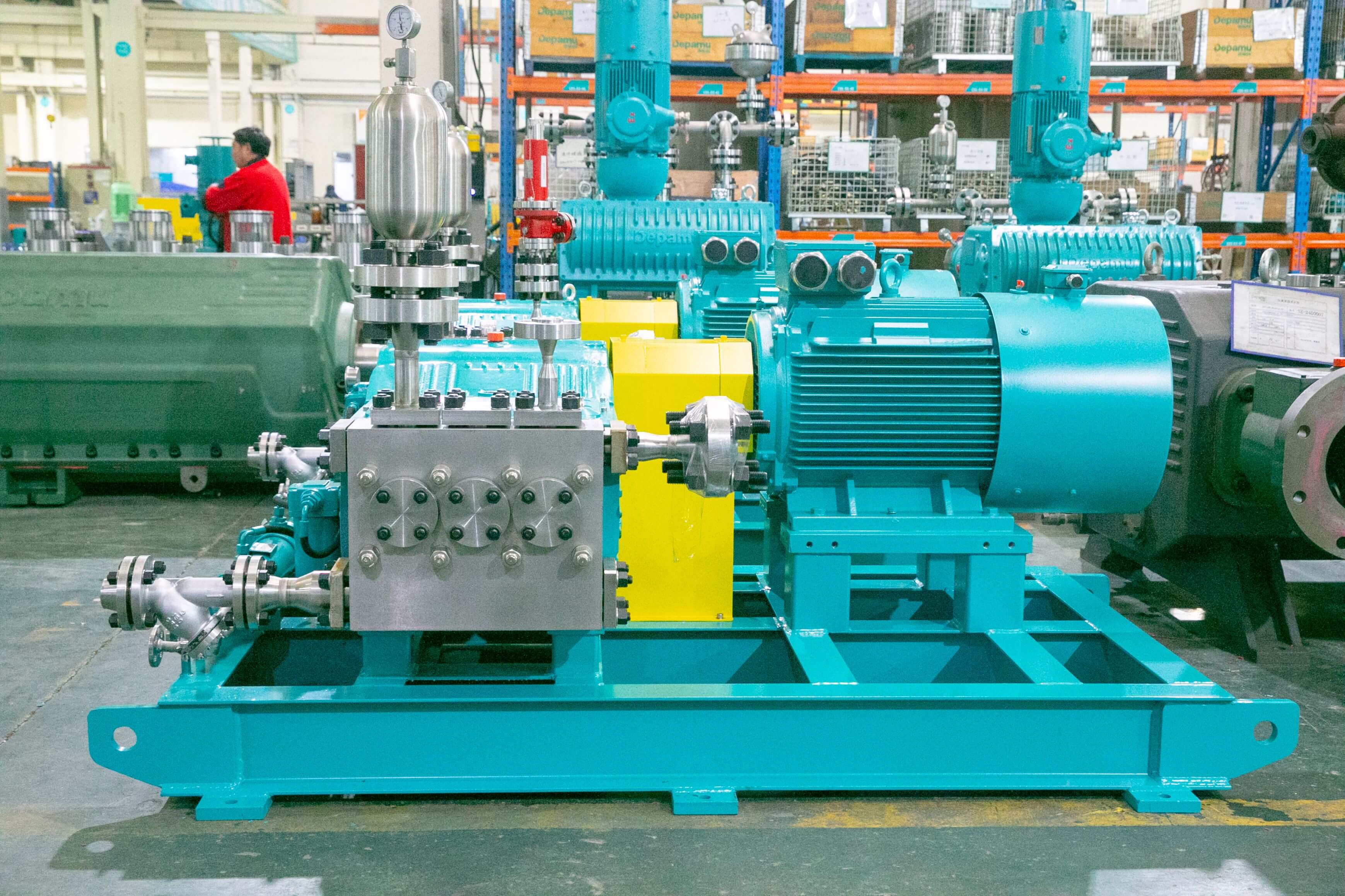
Case Dissection: Application Practice of Depam in a Certain Nuclear Power Plant
STEP1:Project BackgroundA nuclear power plant needed to transport a boric acid-containing medium (with a pressure of 30 MPa and a temperature of 80°C). Traditional pumps caused process instability due to seal leakage and flow fluctuations, resulting in annual downtime losses exceeding RMB 2 million.
STEP2:Technical SolutionDepamp provides customized high-pressure pumps featuring double mechanical seals (SiC/YG6) and a variable frequency drive system, with a flow accuracy of ±0.3% and a seal service life of 15,000 hours.
STEP3:Implementation effectAfter project implementation, the system's operational stability improved by 50%, and annual maintenance costs decreased by 65%, earning the client's evaluation of "technologically advanced and providing high-quality service." This project validated Depam's technical adaptability under extreme operating conditions.
Reference for full text summary
Technological breakthroughs in high-pressure plunger reciprocating pumps necessitate a focus on three key dimensions: sealing, materials, and control. With 20 years of technological accumulation, Depam has developed a comprehensive capability ranging from standard products to customized solutions, with its products performing excellently in scenarios involving high pressure, corrosion, and precision delivery. For industry users, it is advisable to prioritize enterprises equipped with capabilities in material R&D, sealing testing, and intelligent control to reduce total lifecycle costs. For more information, please visit the official website:www.depamufluid.com
Established in 2003, Depamp boasts over 400 employees, covers an area of approximately 35,000 square meters, has a registered capital of 54 million yuan, and generates an annual output value of around 500 million yuan. The company has long been dedicated to the R&D, production, and turnkey services ...
No. 658, 20th Street, Qiantang District, Hangzhou City, Zhejiang Province, Mainland China