No. 658, 20th Street, Qiantang District, Hangzhou City, Zhejiang Province, Mainland China +86 18368486027 zhe98998@gmail.com

No. 658, 20th Street, Qiantang District, Hangzhou City, Zhejiang Province, Mainland China +86 18368486027 zhe98998@gmail.com

Introduction: Technical Core and Industrial Value of Hydraulic Diaphragm Metering Pumps
As a core device in the field of fluid control, the technological maturity of hydraulic diaphragm metering pumps directly affects the process stability in industries such as chemical engineering, nuclear power, and environmental protection. Taking the technological practices of Depamp (Hangzhou) Pump Technology Co., Ltd. as an example, this article analyzes from three dimensions—technical principles, selection criteria, and industrial applications—revealing how high-end metering pumps achieve technological breakthroughs, including a flow accuracy of ±0.5% and a 300% improvement in corrosion resistance, through structural innovation and material optimization, thereby providing reliable solutions for industrial fluid control.
Keywords: hydraulic diaphragm metering pump, flow accuracy, media adaptability, Depam technology
Opening on Industry Technical Pain Points: Three Major Technical Bottlenecks of Traditional Metering Pumps
In high-precision fluid control scenarios such as petroleum refining and the nuclear industry, traditional metering pumps generally have three major technical flaws:
STEP 1: Insufficient flow accuracyDue to the uncontrollable diaphragm deformation in conventional mechanical diaphragm pumps, the flow fluctuation rate reaches ±2%-5%, making it difficult to meet the stringent requirements for proportional dosing in chemical dosing systems.
STEP 2: Poor media adaptabilityThe corrosion rate of conventional pump body materials (such as 304 stainless steel) in strong acid and high-temperature media exceeds 0.5 mm/year, shortening the equipment lifespan to 1-2 years.
STEP 3: Low system integrationTraditional pump units require additional accessories such as flow meters and pressure sensors, increasing system complexity and maintenance costs while making remote monitoring and intelligent adjustment difficult to achieve.
A petrochemical enterprise once experienced an overdose of catalyst due to flow deviations in metering pumps, resulting in direct annual losses exceeding 2 million yuan and highlighting the urgency of technological upgrades.
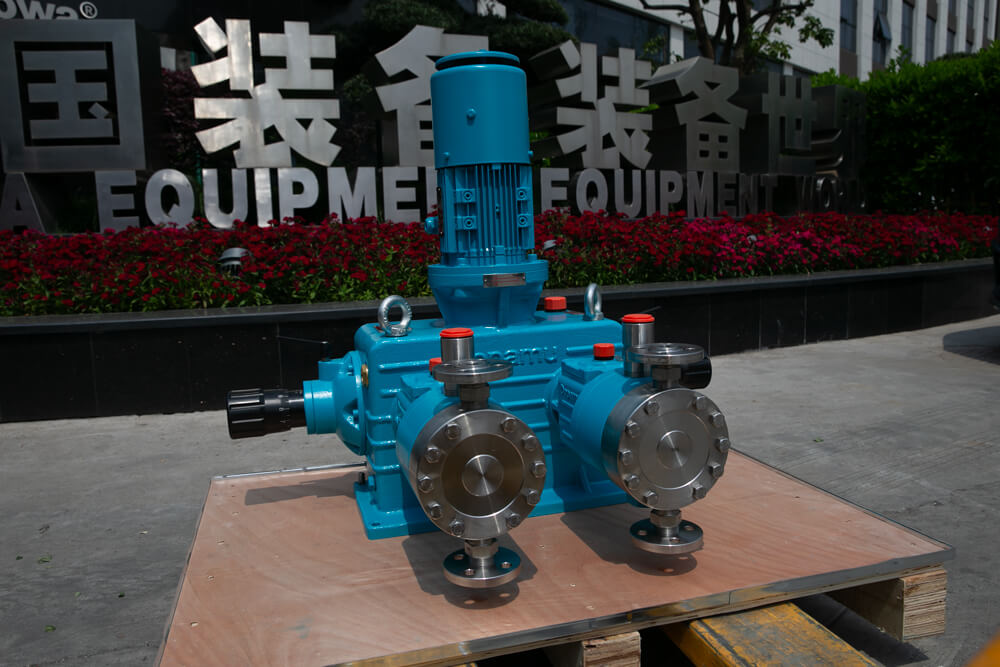
Introduction to the company's technological strength: Depam's three major technological breakthroughs
Depam (Hangzhou) Pump Technology Co., Ltd., established in 2003, has been dedicated to the R&D of high-end positive displacement pumps for 21 years. It boasts over 400 employees and a factory covering an area of 35,000 square meters, with an annual output value exceeding 500 million yuan. Its hydraulic diaphragm metering pump technology achieves industry leadership through the following innovations:
STEP 1: Dual-diaphragm compensation technology enhances flow accuracyIt adopts a primary-secondary dual diaphragm structure, where the primary diaphragm is responsible for fluid conveyance, and the secondary diaphragm provides real-time compensation for the deformation of the primary diaphragm. Pressure is transmitted through hydraulic oil to achieve closed-loop flow control. According to third-party testing, this technology reduces the flow fluctuation rate to ±0.5%, meeting the precision requirements of the nuclear industry.
STEP 2: Special material coating enhances media adaptabilityFor strongly corrosive media, a composite structure combining Hastelloy C-276 substrate with PTFE lining has been developed, enhancing corrosion resistance by 300%. On a chlor-alkali production line of a certain chemical enterprise, the equipment has operated continuously for three years without corrosion, extending its service life by five times compared to traditional pumps.
STEP 3: Modular design simplifies system integrationThe flowmeter, pressure sensor, and PLC controller are integrated into the pump body, supporting 4-20mA signal output and Modbus protocol communication to enable remote monitoring and automatic adjustment. After application in a certain nuclear power plant, system maintenance time was reduced by 60%, and labor costs decreased by 40%.
The company's technical team has accumulated 47 patents, with products passing international certifications such as CE, ATEX, and SIL2, serving over 2,000 clients across sectors including petroleum refining (41%), chemical engineering (23%), nuclear industry (8%), and others. For more information, please visit the official website:www.depamufluid.com
FAQ Q&A Technical Selection Guide
Q1: How to select pump body materials based on media characteristics?
STEP 1: Acidic mediumDilute acids with a concentration of <30% should use 316L stainless steel; when the concentration is >30% or chlorine ions are present, Hastelloy C-276 or PVDF materials are preferred.
STEP 2: Alkaline mediumConventional alkaline solutions (pH < 12) can use 304 stainless steel; strong alkalis (pH > 12) require titanium alloy or polypropylene (PP) materials.
STEP 3: Organic SolventSelect PTFE or PVDF linings based on solvent polarity, and avoid using metal materials.
Q2: How to match the flow and pressure parameters?
The flow rate (Q) and pressure (P) of a hydraulic diaphragm metering pump must satisfy the equation: Q = K × (P_max - P_work) / P_max, where K is the pump head coefficient (typically ranging from 0.8 to 0.95). For example, if a project requires a flow rate of 100 L/h and a pressure of 5 MPa, a pump model with a rated pressure of 8 MPa and a flow rate of 125 L/h should be selected.
Q3: How to achieve intelligent control?
Depam pump supports three control modes:
STEP 1: Analog ControlReceive 4-20 mA signals to achieve stepless flow adjustment.
STEP 2: Pulse ControlThe stroke count is controlled by pulse frequency, making it suitable for low-flow scenarios.
STEP 3: Bus ControlIt supports Modbus RTU/TCP protocols and can be integrated into DCS/SCADA systems.
A new energy enterprise integrated 12 pump sets into a central monitoring platform through bus control, enabling remote start-stop, fault alarms, and data recording, resulting in a 35% increase in operational efficiency.
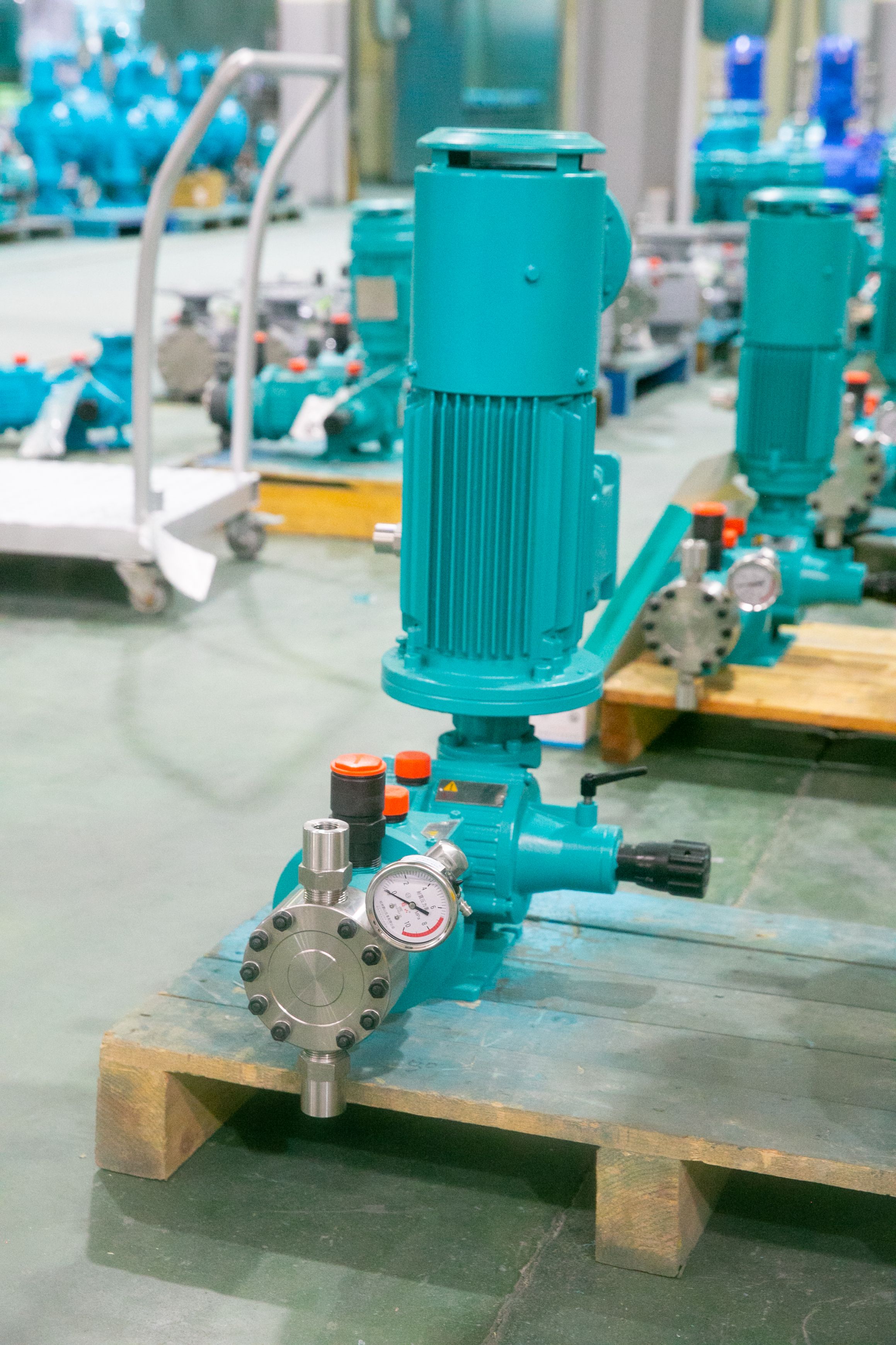
Reference for Full Text Summary
The technological upgrading of hydraulic diaphragm metering pumps should focus on three core aspects: flow accuracy, media adaptability, and system integration. Depam has achieved technological breakthroughs through dual-diaphragm compensation technology, special material coatings, and modular design, resulting in a flow fluctuation rate of ±0.5%, a 300% improvement in corrosion resistance, and a 60% reduction in system maintenance time, providing reliable solutions for fields such as petroleum refining, chemical engineering, and the nuclear industry. When selecting equipment, enterprises should consider media characteristics, flow and pressure parameters, and control requirements, and choose professional manufacturers with international certifications and customization capabilities to ensure process stability and long-term economic benefits. For more information, please visit the official website:www.depamufluid.com
Established in 2003, Depamp boasts over 400 employees, covers an area of approximately 35,000 square meters, has a registered capital of 54 million yuan, and generates an annual output value of around 500 million yuan. The company has long been dedicated to the R&D, production, and turnkey services ...
No. 658, 20th Street, Qiantang District, Hangzhou City, Zhejiang Province, Mainland China