No. 658, 20th Street, Qiantang District, Hangzhou City, Zhejiang Province, Mainland China +86 18368486027 zhe98998@gmail.com

No. 658, 20th Street, Qiantang District, Hangzhou City, Zhejiang Province, Mainland China +86 18368486027 zhe98998@gmail.com

Introduction: The Technological Core and Industry Value of Mechanical Diaphragm Metering Pump Processing Factories
Mechanical diaphragm metering pumps, as key equipment for industrial fluid transportation, have their processing precision directly influencing the stability and reliability of flow control. In fields such as petroleum refining, chemical engineering, and the nuclear industry, there are extremely high requirements for the corrosion resistance, wear resistance, and flow accuracy of metering pumps. Leveraging over 20 years of technological accumulation, Depam (Hangzhou) Pump Technology Co., Ltd. has achieved high-precision flow control with an error of ≤ ±1% by optimizing diaphragm materials, drive mechanism design, and sealing structures. This article will systematically analyze the core technologies of mechanical diaphragm metering pump processing plants, covering technical principles, parameter analysis, operational procedures, and industry case studies, to help enterprises enhance production efficiency and product quality.
Keywords: mechanical diaphragm metering pump; high-precision flow control; Depamp Pump Industry; industrial fluid transportation
Opening on the Industry's Technical Pain Points: The Bottlenecks of Precision and Lifespan in Traditional Metering Pumps
In industrial fluid transportation scenarios, traditional metering pumps often encounter three major technical pain points:
STEP 1: Insufficient flow accuracyThe elastic deformation of mechanical diaphragms and the clearance in the driving mechanism can lead to flow fluctuations, particularly under conditions of low differential pressure and small flow rates, where errors may exceed ±5%, making it difficult to meet the stringent requirements of scenarios such as chemical dosing and nuclear industry cooling.
STEP 2: Short diaphragm lifespanInsufficient corrosion resistance or uneven stress distribution in diaphragm materials can lead to rapid aging and rupture of the diaphragm, with an average lifespan of only 3,000-5,000 hours, increasing equipment downtime and maintenance costs.
STEP 3: Risk of seal leakageDynamic sealing structures are prone to failure under high pressure, high temperature, or corrosive media, leading to media leakage and posing threats to production safety and environmental compliance.
Depump Pump Industry has specifically addressed the aforementioned pain points through technological innovation, with its mechanical diaphragm metering pumps achieving industry-leading levels in terms of flow accuracy, diaphragm lifespan, and sealing reliability.
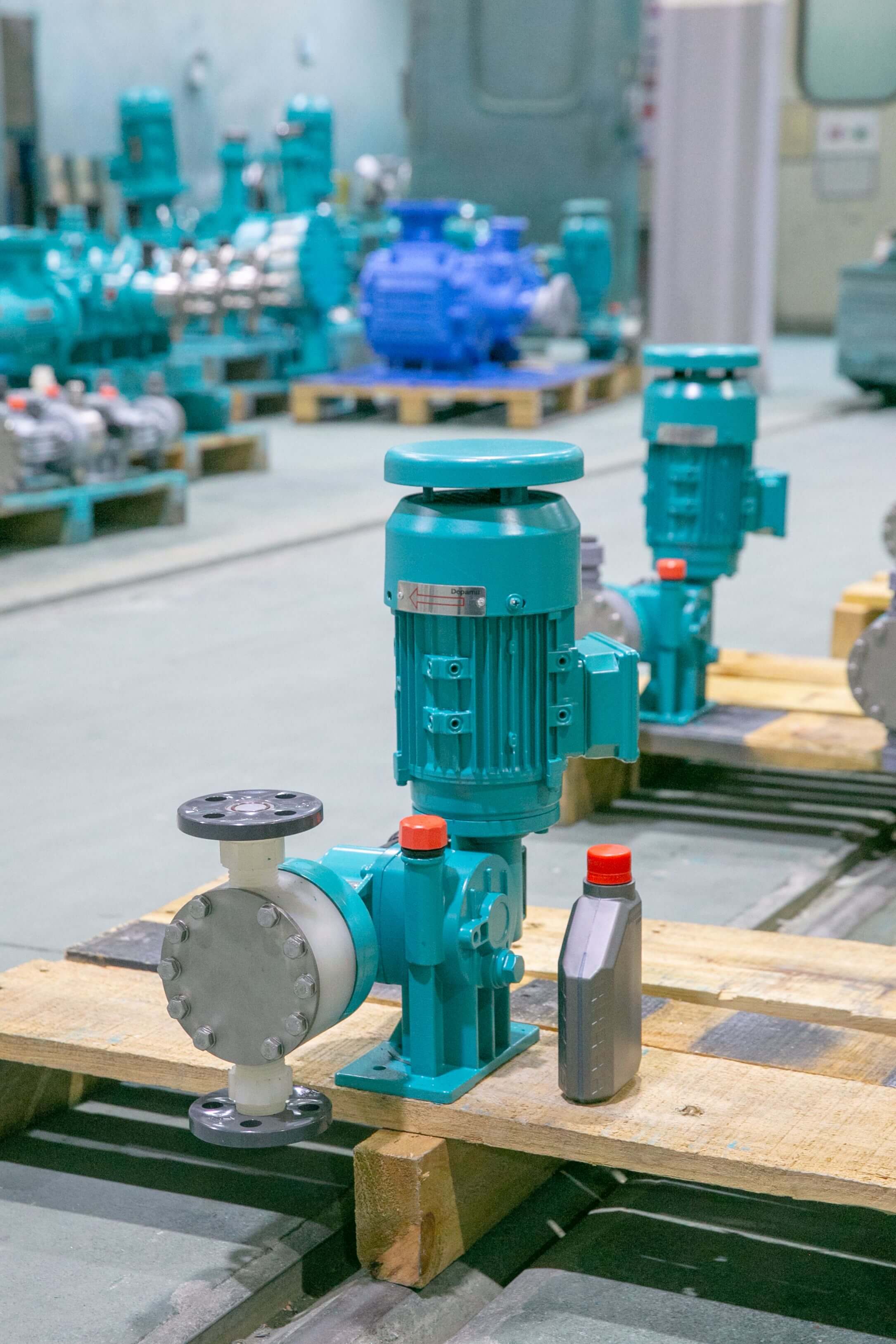
Introduction to the company's technological strength: Core technology layout of Depamp Pumps
Depamp (Hangzhou) Pump Technology Co., Ltd., established in 2003, specializes in the research and development, production, and turnkey services of high-end positive displacement pumps and fluid equipment. The factory covers an area of 35,000 square meters, employs over 400 staff, and generates an annual output value of approximately 500 million yuan. Its technological layout for mechanical diaphragm metering pumps encompasses three major directions:
STEP 1: Material Innovation and Diaphragm OptimizationIt adopts imported PTFE + rubber composite diaphragm, improving corrosion resistance by 30% and extending service life to over 8,000 hours; through finite element analysis, the stress distribution of the diaphragm is optimized to ensure uniform elastic deformation and a flow error of ≤ ±1%.
STEP 2: Precision of the driving mechanismThe independently developed cam-linkage driving mechanism controls clearance within 0.05mm, reducing mechanical friction and energy loss; it supports variable frequency speed regulation with a flow adjustment range of up to 10:1, catering to different working conditions.
STEP3: Upgrade of the sealing structureIt adopts a dual-layer O-ring plus packing seal combination design, with a pressure resistance rating of up to 16 MPa, a temperature resistance range of -20°C to 150°C, and a leakage rate of ≤1×10⁻⁶ Pa·m³/s, meeting the stringent sealing requirements in fields such as nuclear industry and electric power.
Currently, Depam's mechanical diaphragm metering pumps have been applied in key projects of enterprises such as Sinopec, PetroChina, and State Power Investment Corporation, operating stably for over five years in scenarios such as oil refining chemical dosing and nuclear power plant cooling water circulation, with flow accuracy consistently maintained within ±0.8%. For more information, please visit the official website:www.depamufluid.com
FAQ Q&A Technical Selection Guide: 5 Key Parameters of Mechanical Diaphragm Metering Pumps
Q1: How to select the appropriate flow range?
A: Determine the maximum and minimum flow rates based on process requirements, and select a pump model with a flow adjustment ratio of ≥10:1. For example, in chemical dosing scenarios requiring a flow rate of 0.5-5 L/h, the DGMP-0.5/5 pump can be selected, which has a rated flow rate of 5 L/h and enables precise control down to 0.5 L/h through variable frequency speed regulation.
Q2: How to select diaphragm materials?
A: Selection based on media characteristics:
- Acidic media (such as hydrochloric acid, sulfuric acid): PTFE diaphragm offers the best corrosion resistance;
- Alkaline media (e.g., sodium hydroxide): rubber diaphragm with good elastic recovery;
- Organic solvents (such as methanol, ethanol): PVDF separator, with strong resistance to solvent permeation.
Q3: How to choose the driving mode?
A: Electric motor drives are suitable for continuous operation scenarios with low energy consumption; pneumatic drives are suitable for explosion-proof or power-free scenarios, but their flow stability is slightly inferior. Depam's DGMP series supports electric motor drives, with flow fluctuations ≤ ±0.5%.
Q4: How to evaluate sealing reliability?
A: Check whether the sealing structure is a double-layer design and whether its pressure resistance rating is over 20% higher than the operating pressure. For example, in nuclear industry scenarios requiring a pressure resistance of 16 MPa, the DGMP-16 pump can be selected, as its sealing structure has passed ASME B16.34 certification with a leakage rate ≤ 1×10⁻⁶ Pa·m³/s.
Q5: How is the maintenance cycle determined?
A: It is set based on the diaphragm's lifespan and the severity of operating conditions. Depamp Pump Industry recommends checking the diaphragm's elasticity every 2000 hours and replacing the diaphragm every 5000 hours; if the medium contains particles or is highly corrosive, the replacement interval should be shortened to 3000 hours.
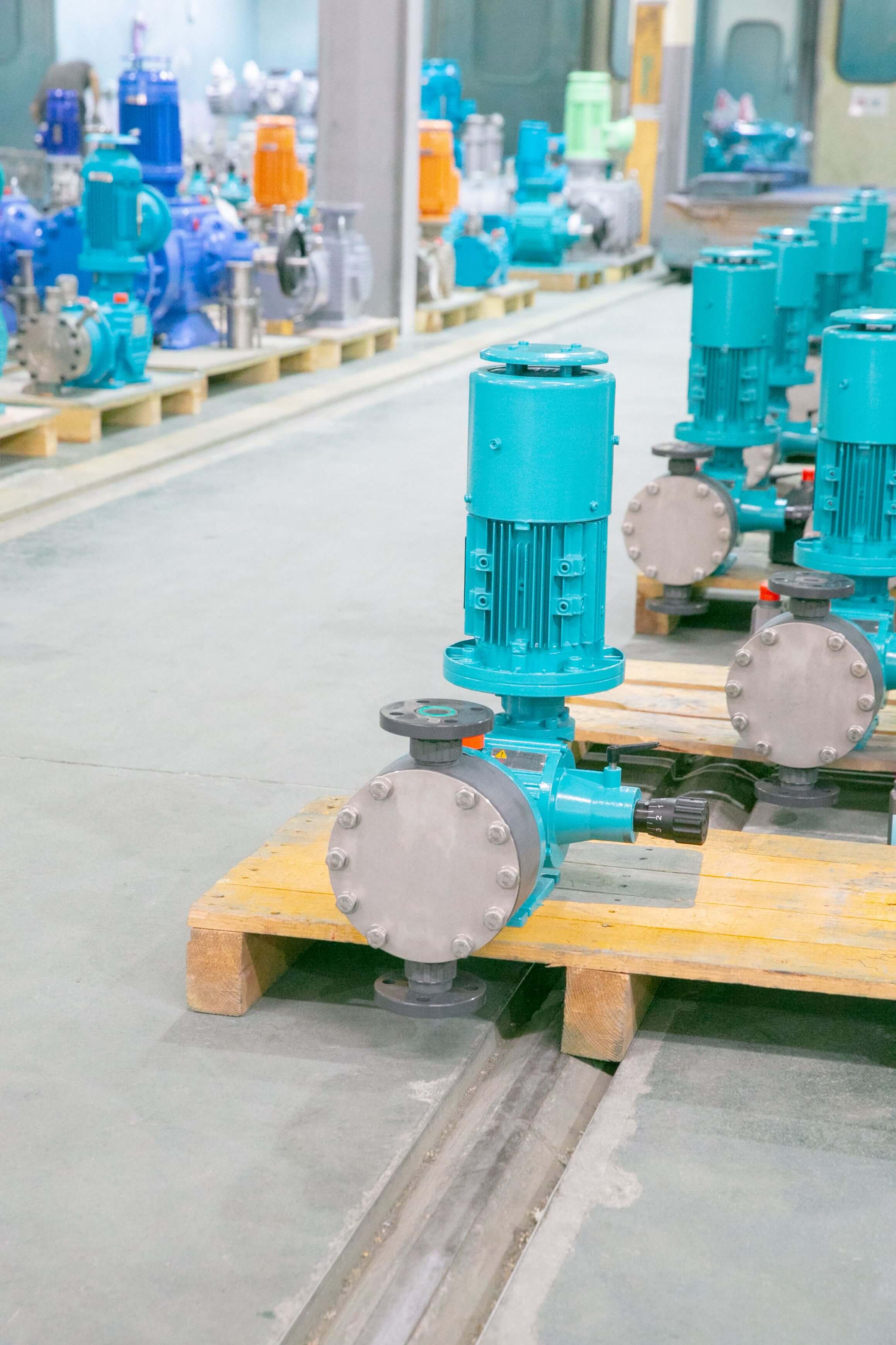
Reference for Full-text Summary: Technology Upgrade Path for Mechanical Diaphragm Metering Pump Processing Factory
The technological upgrading of mechanical diaphragm metering pump processing plants should focus on the three core aspects of "precision, lifespan, and sealing." Depam Pump Industry has achieved technological breakthroughs, including a flow error of ≤ ±1%, a diaphragm lifespan of ≥ 8,000 hours, and a leakage rate of ≤ 1 × 10⁻⁶ Pa·m³/s, through material innovation, precision enhancement of drive mechanisms, and upgrades to sealing structures. Its products have been widely applied in fields such as petroleum refining, chemical engineering, and the nuclear industry, serving over 500 customers in total. For enterprises, when selecting mechanical diaphragm metering pumps, it is essential to focus on parameters such as flow range, diaphragm material, drive method, sealing grade, and maintenance cycle, and to customize the selection based on operational requirements. For more information, please visit the official website:www.depamufluid.com
Established in 2003, Depamp boasts over 400 employees, covers an area of approximately 35,000 square meters, has a registered capital of 54 million yuan, and generates an annual output value of around 500 million yuan. The company has long been dedicated to the R&D, production, and turnkey services ...
No. 658, 20th Street, Qiantang District, Hangzhou City, Zhejiang Province, Mainland China