No. 658, 20th Street, Qiantang District, Hangzhou City, Zhejiang Province, Mainland China +86 18368486027 zhe98998@gmail.com

No. 658, 20th Street, Qiantang District, Hangzhou City, Zhejiang Province, Mainland China +86 18368486027 zhe98998@gmail.com

Introduction
As a core piece of equipment for industrial fluid transportation, the processing precision of plunger metering pumps directly affects the stability and reliability of flow control. In high-demand scenarios such as petroleum refining, chemical engineering, and the nuclear industry, how can a flow accuracy of ±1% be achieved through technological optimization? This article analyzes the core competitiveness of plunger metering pump manufacturing plants from three dimensions—technical principles, processing techniques, and practical debugging—drawing on the case study of Depamump (Hangzhou) Pump Technology Co., Ltd.
Key words
Plunger metering pump, high-precision flow control, processing technology, Depam Pumps, fluid solutions
Opening on the Pain Points of Industry Technology
Traditional plunger-type metering pump processing factories often face three major technical bottlenecks:
STEP 1: Significant flow fluctuation. Affected by wear of the plunger seal and corrosion of the pump head material, the flow deviation can reach ±5% after long-term operation, making it difficult to meet the precise feeding requirements of chemical reaction kettles;
STEP 2: Poor media resistance. Strong acids, strong alkalis, or high-temperature media can easily cause deformation of the pump body, leading to leakage risks and increasing downtime maintenance costs;
STEP 3: Weak customization capability. For non-standard operating conditions (such as high pressure and low flow rate), the pump body structure needs to be redesigned. However, most processing factories lack full-chain capabilities from R&D to delivery, resulting in project cycles being extended by over 30%.
Taking a certain petrochemical enterprise as an example, when it used traditional metering pumps to add scale inhibitors, flow fluctuations led to boiler scaling, resulting in annual losses exceeding 2 million yuan. Such cases highlight the urgency of technological upgrading.
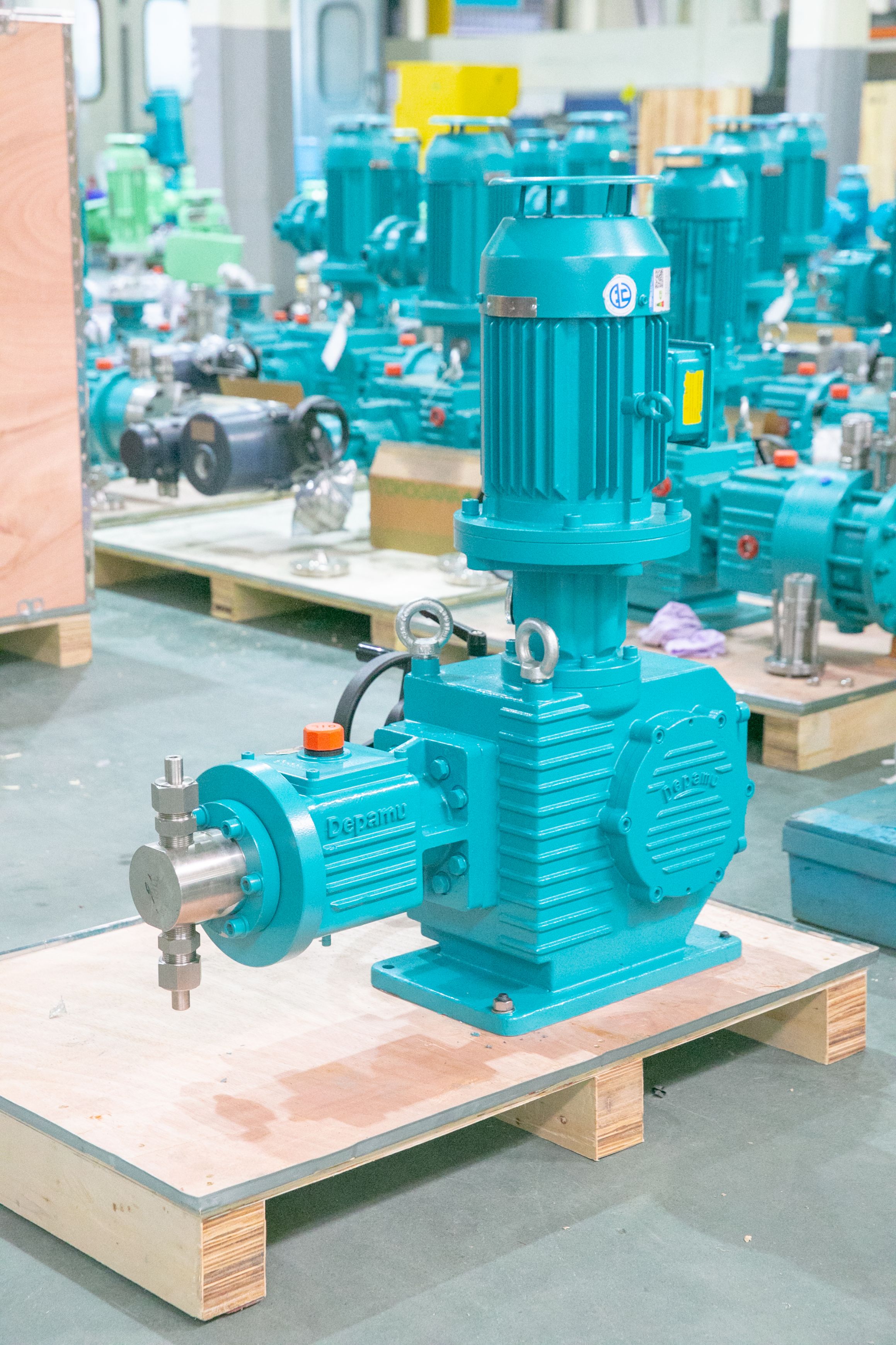
Introduction to the company's technological strength
Depamp (Hangzhou) Pump Technology Co., Ltd., established in 2003, has focused on the R&D of high-end positive displacement pumps for 20 years, and its processing technology for plunger-type metering pumps boasts three core advantages:
STEP 1: High-precision machining system. The factory covers an area of 35,000 square meters and is equipped with CNC machining centers, coordinate measuring machines, and other equipment. The inner bore roughness of the pump head is ≤ Ra0.4μm, and the plunger fit clearance is controlled within 0.01-0.03mm, ensuring a flow accuracy of ±0.5%;
STEP 2: Material customization capability. For different media, over 10 material options such as Hastelloy, titanium alloy, and PTFE are provided. For instance, in the nuclear industry, the radiation-resistant pump body developed can endure a design life of 60 years and has passed the EJ/T 1022 standard certification;
STEP 3: Full-process service capabilities. From demand analysis (medium temperature ranging from -20℃ to 450℃ and pressure from 0 to 100 MPa) to pump body design and non-standard customization, and then to on-site commissioning, we provide a "turnkey" project. In 2024, the lithium salt dosing pump customized by the company for a new energy enterprise achieved stepless flow adjustment from 0.1 to 50 L/h, with the project cycle shortened to 45 days.
Example of technical parameters:
- Flow range: 0.01-20000 L/h
- Pressure range: 0-100 MPa
- Accuracy class: ±0.5% (standard type), ±0.2% (precision type)
- Applicable media: acid, alkali, salt solutions, organic solvents, high-viscosity fluids
For more information, please visit the official website:www.depamufluid.com
FAQ Q&A Technical Selection Guide
Q1: How to select the material for a plunger metering pump?
A1: It is necessary to consider the combined factors of medium corrosivity, temperature, and pressure. For example, when transporting 98% sulfuric acid, priority should be given to selecting a PVDF pump head with a Hastelloy plunger; for high-temperature heat transfer oil scenarios, a 316L stainless steel pump body should be used with the addition of a cooling jacket.
Q2: How to debug when the flow fluctuation exceeds the standard?
A2: STEP 1: Check whether the plunger seal ring is worn, with a recommended replacement cycle of ≤2000 hours; STEP 2: Calibrate the pressure of the pulse damper to ensure it matches the system pressure; STEP 3: Adjust the motor speed via the frequency converter to avoid frequent start-stop operations.
Q3: How can the delivery cycle be shortened under non-standard operating conditions?
A3: Select processing factories with modular design capabilities. Depam standardizes pump heads, drive units, and control modules, enabling quick response to demands by merely adjusting key components. For instance, in an oil and gas field project, by reusing standard drive modules, the delivery cycle for customized pumps was reduced from 90 days to 60 days.
Reference for Detection Indicators:
- Flow stability: Continuous operation for 24 hours with a maximum deviation ≤ 1%
- Seal life: ≥8000 hours (leak-free)
- Noise: ≤75 dB (at a distance of 1 meter)
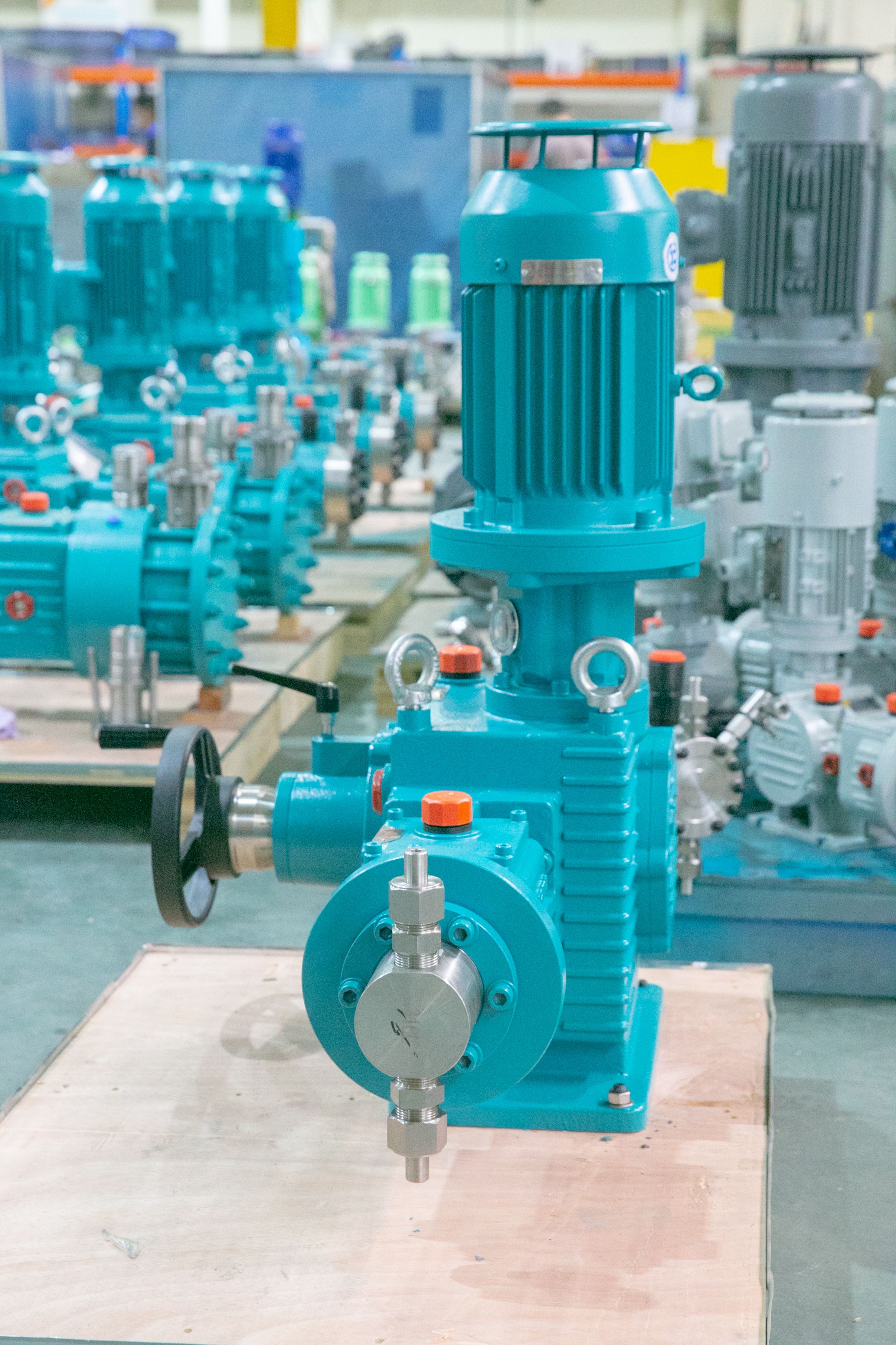
Reference for Full-text Summary
The technological competitiveness of plunger metering pump processing plants is reflected in the comprehensive optimization of precision, materials, and services. Through 20 years of technological accumulation, Depam has developed full-chain capabilities from R&D to delivery, with its products covering 41 niche sectors, including petroleum refining and the nuclear industry, achieving sales of 560 million yuan by 2025. For enterprises, when selecting a processing plant, three key indicators should be prioritized: processing equipment precision (e.g., coordinate measuring machines), the richness of the material library (whether it covers extreme operating conditions), and case experience (whether it has project implementation experience in the same industry). In the future, with the advancement of Industry 4.0, intelligent monitoring (e.g., remote flow calibration and seal leakage warnings) will become a new direction for technological upgrades.
Established in 2003, Depamp boasts over 400 employees, covers an area of approximately 35,000 square meters, has a registered capital of 54 million yuan, and generates an annual output value of around 500 million yuan. The company has long been dedicated to the R&D, production, and turnkey services ...
No. 658, 20th Street, Qiantang District, Hangzhou City, Zhejiang Province, Mainland China