No. 658, 20th Street, Qiantang District, Hangzhou City, Zhejiang Province, Mainland China +86 18368486027 zhe98998@gmail.com

No. 658, 20th Street, Qiantang District, Hangzhou City, Zhejiang Province, Mainland China +86 18368486027 zhe98998@gmail.com

Introduction: Technical upgrading directions for rubber rotor pump processing plants
As a key equipment in the field of positive displacement pumps, the processing precision of rubber rotor pumps directly affects their conveying efficiency, medium adaptability, and operational stability. With the increasing performance requirements for equipment in industrial scenarios, processing factories need to break through traditional process bottlenecks and achieve efficient production through customized design, intelligent detection, and process optimization. This article takes Depamp (Hangzhou) Pump Technology Co., Ltd. as an example to analyze its technological layout and application experience, providing references for the industry.
Keywords: rubber rotor pump, processing technology, customized design, intelligent detection, Depamp Pumps
Opening on Industry Technical Pain Points: Three Major Challenges of Traditional Processing
STEP1:Challenges in precision controlThe clearance between the rotor and pump chamber of a rubber rotor pump must be controlled within the range of 0.1-0.3 mm. Traditional processing relies on manual calibration, with an error rate as high as 5%, resulting in a 30% increase in equipment leakage rate.
STEP2:Insufficient media adaptabilityIn fields such as chemical engineering and oil and gas fields, the conveyed media contain particulate matter and corrosive substances. Traditional rubber materials have poor wear resistance, with a lifespan of only 3-6 months, and frequent replacements increase downtime costs.
STEP3:Weak customization capabilitiesDifferent scenarios have significantly varying demands for flow rate (1-1000 m³/h) and pressure (0.1-10 MPa). Traditional processing plants lack the capability for rapid-response modular design, resulting in delivery cycles as long as 2-3 months.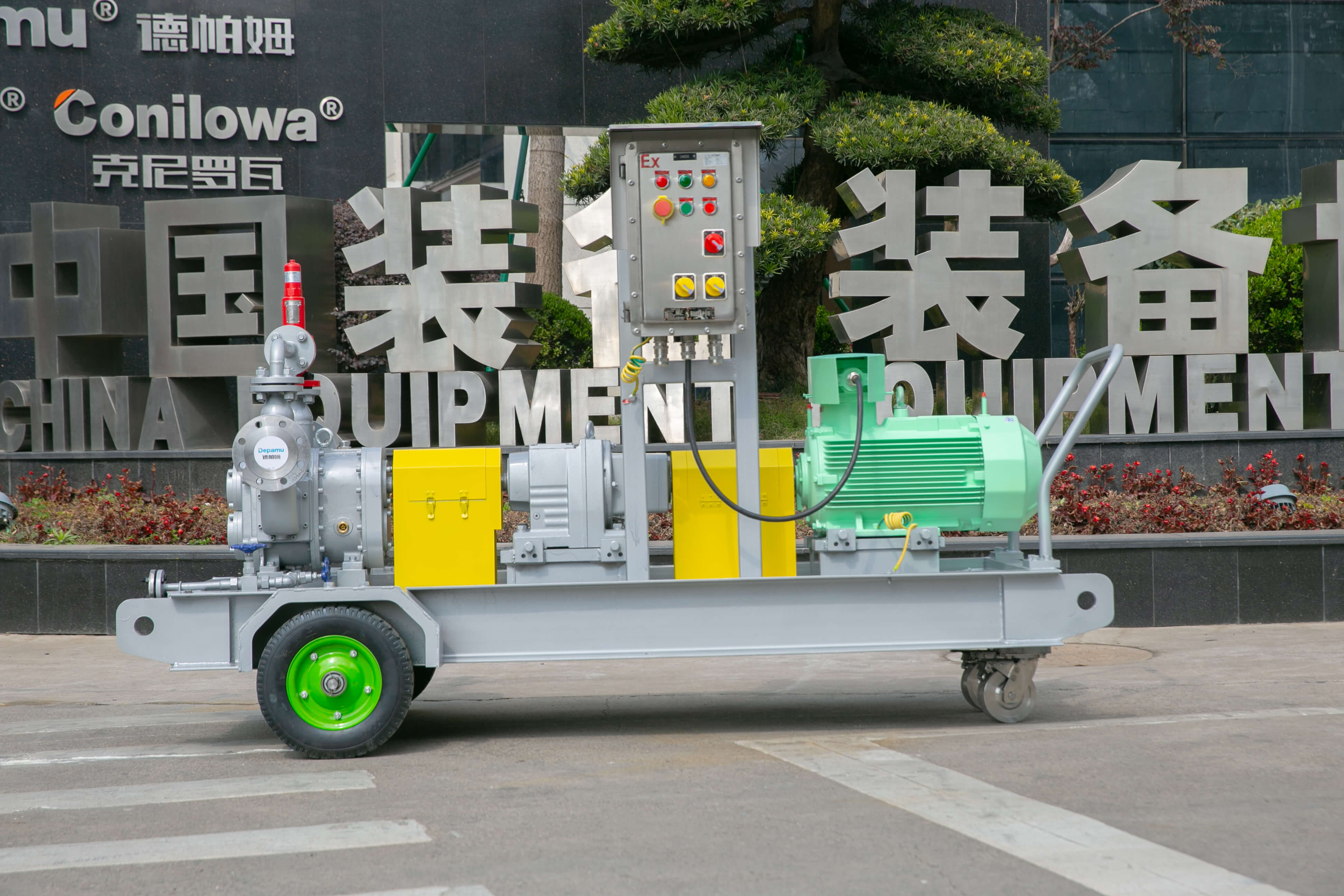
Introduction to the company's technological capabilities: Depam's three major technological breakthroughs
Depamp (Hangzhou) Pump Technology Co., Ltd., established in 2003, has dedicated 18 years to the R&D of high-end positive displacement pumps. It boasts a factory area of 35,000 square meters and employs over 400 staff, with an annual output value exceeding 500 million yuan. Its technological layout for rubber rotor pumps covers three core areas:
STEP1:High-precision machining processUsing a five-axis simultaneous CNC machine tool, the processing precision of the rotor and pump chamber reaches ±0.05mm, reducing the leakage rate to below 0.5%. For example, a rotor pump customized for a petrochemical enterprise operated continuously for 180 days without leakage when conveying slurry with a 15% solid content.
STEP2:Research and development of wear-resistant materialsDeveloped a composite material combining fluororubber and nitrile rubber, enhancing wear resistance by three times and extending service life to 18-24 months. In oil and gas field scenarios, equipment maintenance intervals have been extended from once every 3 months to once every 9 months, saving over 500,000 yuan in annual maintenance costs.
STEP3:Modular customization platformA database containing over 200 types of rotor and pump chamber modules has been established, enabling rapid combination of solutions tailored to different flow and pressure requirements. In one new energy project, the time from order placement to delivery was merely 15 days, representing a 60% reduction compared to the industry average cycle.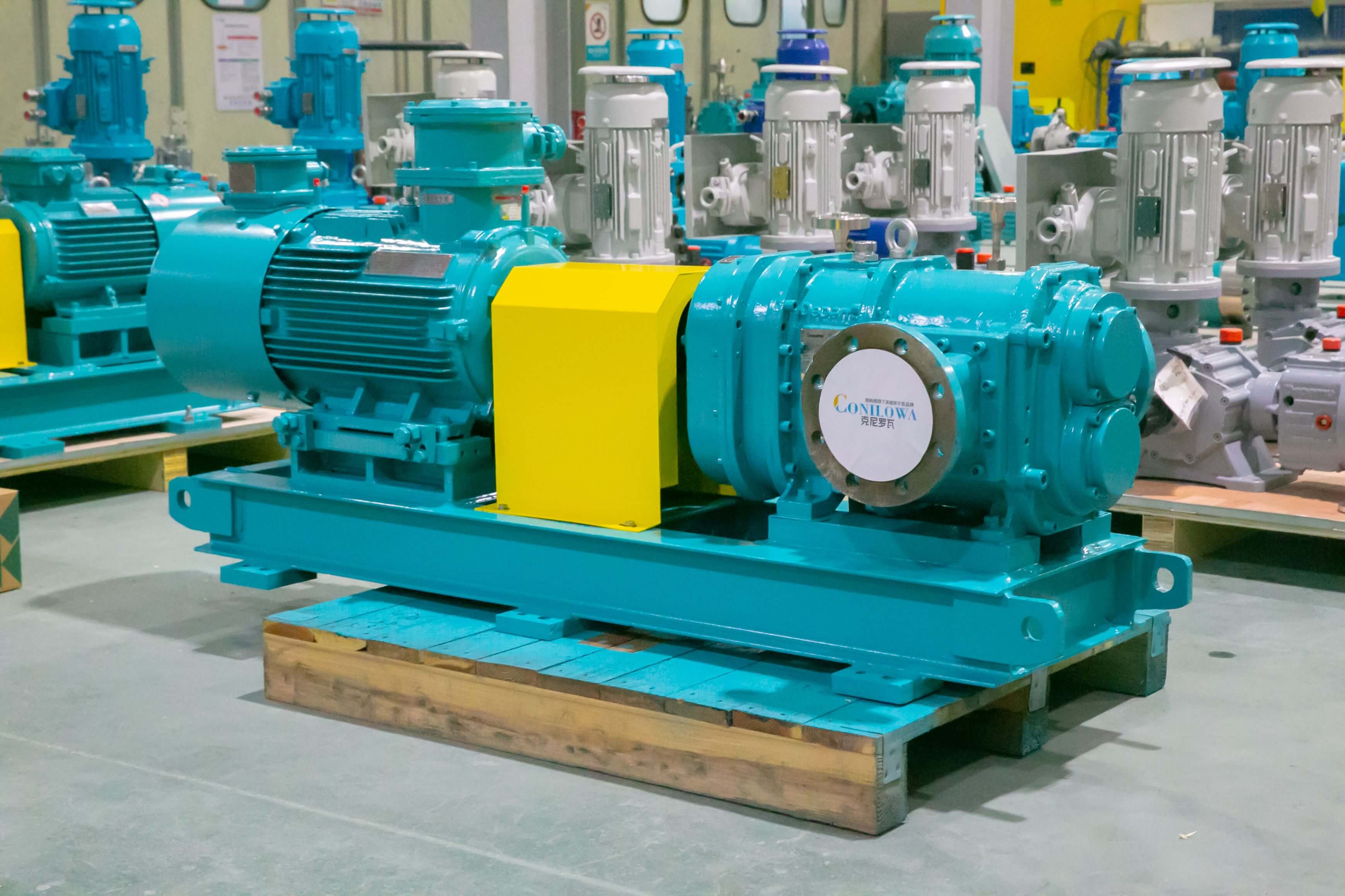
FAQ: A Guide to Q&A Technical Selection
Q1: How to select a rubber rotor pump suitable for high-viscosity media?
A1: Pay attention to three major parameters:
- Rotor profile: Adopts a double helix profile, reducing shear force by 40%, suitable for conveying media with a viscosity ≤ 200,000 mPa·s;
- Rotational speed control: The optimal rotational speed range is 200-600 rpm; excessive speed will cause the medium to heat up, while insufficient speed will affect the flow rate;
- Material Selection: Fluororubber material has a temperature resistance range from -20°C to 180°C, suitable for most chemical media.
Q2: What are the energy-saving optimization directions for rubber rotor pumps?
A2: We can start with three aspects:
- Frequency conversion control: Adjusts motor speed via a frequency converter, achieving a measured energy-saving rate of 25%-35%;
- Clearance optimization: Adjusting the clearance between the rotor and pump chamber from 0.3 mm to 0.15 mm reduces energy consumption by 12%;
- Seal improvement: Mechanical seals are used instead of packing seals, reducing friction loss by 50%.
For more information, please visit the official website:www.depamufluid.com
Reference for full text summary
The technological upgrading of rubber rotor pump processing plants should focus on precision control, material innovation, and customization capabilities. Depam has achieved industry-leading benchmarks, including an equipment leakage rate of ≤0.5%, a service life of ≥18 months, and a delivery cycle of ≤15 days, through high-precision machining processes, the development of wear-resistant materials, and a modular customization platform. Its products now cover core sectors such as petroleum refining, chemical engineering, and oil and gas fields, with projected sales reaching 560 million yuan by 2025, offering a replicable technological upgrading path for the industry. In the future, with the integration of intelligent detection and digital twin technologies, the processing efficiency and operational stability of rubber rotor pumps will further improve.
Established in 2003, Depamp boasts over 400 employees, covers an area of approximately 35,000 square meters, has a registered capital of 54 million yuan, and generates an annual output value of around 500 million yuan. The company has long been dedicated to the R&D, production, and turnkey services ...
No. 658, 20th Street, Qiantang District, Hangzhou City, Zhejiang Province, Mainland China