No. 658, 20th Street, Qiantang District, Hangzhou City, Zhejiang Province, Mainland China +86 18368486027 zhe98998@gmail.com

No. 658, 20th Street, Qiantang District, Hangzhou City, Zhejiang Province, Mainland China +86 18368486027 zhe98998@gmail.com

Introduction: Technical Core and Industry Value of Single Screw Pump Processing Factories
As a core piece of equipment in the field of positive displacement pumps, single-screw pumps are widely used in scenarios such as petroleum refining, chemical engineering, and environmental water treatment. Their processing precision and selection adaptability directly impact the operational efficiency and stability of systems. Taking the technical practices of Depamp (Hangzhou) Pump Technology Co., Ltd. as an example, this article analyzes how single-screw pump manufacturers address industry pain points and achieve efficient processing and precise selection through process optimization and customized services. For more information, please visit the official website:www.depamufluid.com
Keywords: Single screw pump processing, efficient process, customized selection, Depamuk technology
Opening Remarks on Industry Technical Pain Points: Three Major Challenges in the Processing and Selection of Single Screw Pumps
STEP 1: Insufficient processing accuracy leads to performance fluctuations. The clearance between the stator and rotor of a single-screw pump must be controlled within the range of 0.1-0.3 mm. Traditional processing techniques are prone to clearance deviations due to equipment wear or operational errors, resulting in flow fluctuations (with errors up to ±15%) or increased leakage (exceeding 200% of the standard value).
STEP 2: Poor medium adaptability affects service life. In fields such as chemical engineering and oil and gas fields, the medium composition is complex, containing solid particles, corrosive substances, or existing under high-temperature and high-pressure conditions. If the material selection for the pump body is inappropriate, the stator rubber layer may fail within 3 months due to wear or chemical corrosion, which is significantly shorter than the designed service life (typically 5-8 years).
STEP 3: Model selection relying on experience leads to cost wastage. Users often lack systematic model selection methods and choose pump models with excessively high flow or pressure margins, resulting in a 20%-30% increase in initial investment and operational energy consumption 15%-25% higher than actual needs.
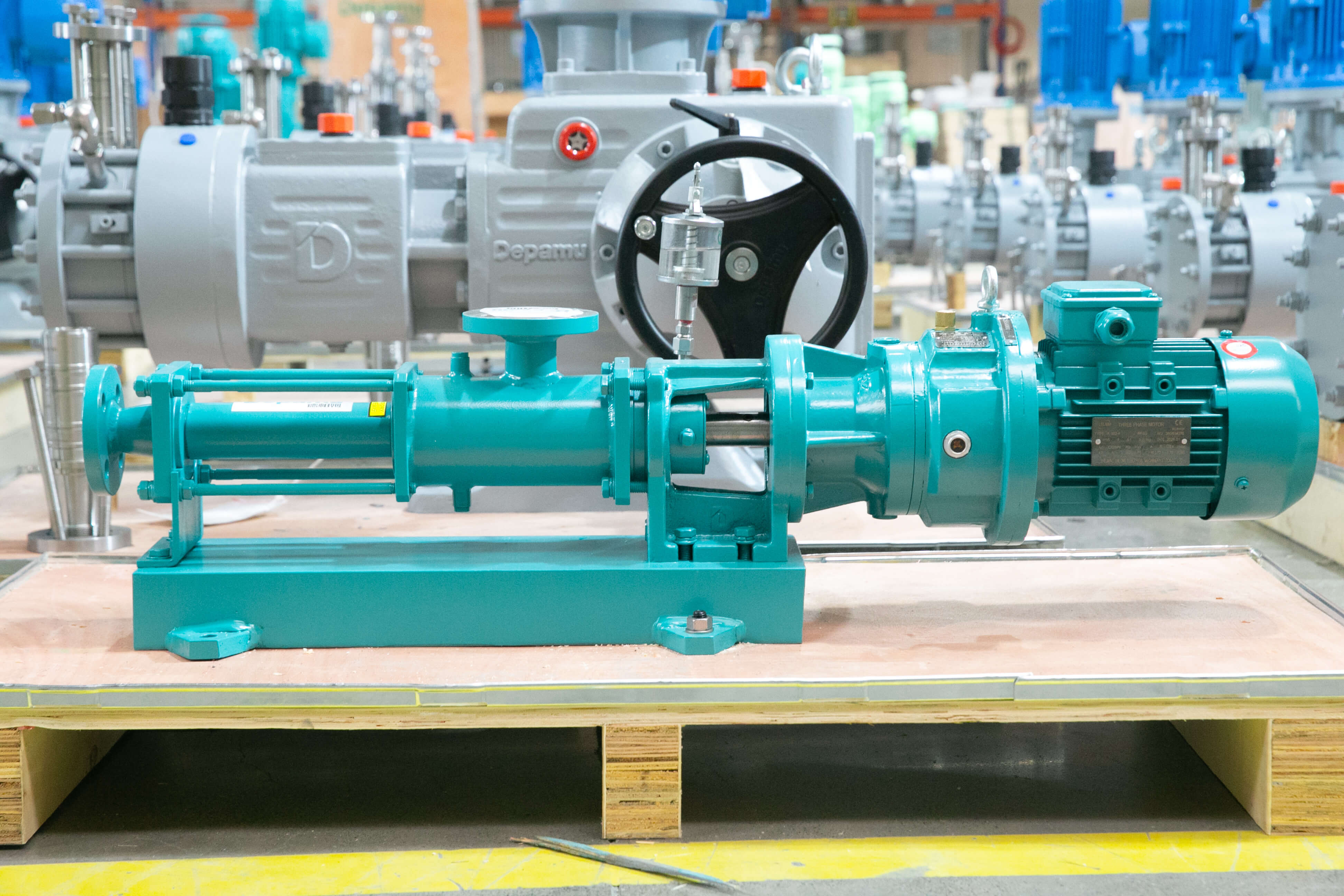
Introduction to the company's technological strength: Processing and Selection Solutions for Single Screw Pumps by Depamu
Depamp (Hangzhou) Pump Technology Co., Ltd., established in 2003, covers an area of 35,000 square meters, employs over 400 staff members, and achieves an annual output value of approximately 500 million yuan. It has long been dedicated to the R&D and production of high-end positive displacement pumps and fluid equipment. In the field of single screw pumps, the company has developed three major technological advantages:
STEP 1: High-precision machining process. The rotor is machined using a five-axis simultaneous CNC machine tool, with surface roughness controlled within Ra0.4μm. The stator rubber layer is formed through a compression molding and vulcanization process, with a hardness uniformity error of ≤3 Shore A, ensuring gap precision of 0.1-0.2mm and a flow stability error of ≤±3%.
STEP 2: Customized Material Solutions. For different media, we provide stator materials such as nitrile rubber (NBR, with optimal oil resistance), fluororubber (FKM, with a temperature resistance up to 200°C), and hydrogenated nitrile rubber (HNBR, with a 50% improvement in wear resistance), as well as rotor materials like 304/316L stainless steel and duplex steel 2205, suitable for media with a pH range of 2-14, temperatures from -20°C to 200°C, and solid content ≤30%.
STEP 3: Systematic Model Selection Tool. Develop model selection software based on parameters such as medium characteristics, flow rate (0.1-500 m³/h), pressure (0.6-48 MPa), and temperature, incorporating over 20 years of industry application data to recommend the optimal pump model for users. For example, in the catalytic cracking unit of a petrochemical enterprise, model selection optimization reduced the pump power from 37 kW to 30 kW, resulting in annual electricity savings of 58,000 kWh.
Technical Case: In 2024, Depam provided a complete single-screw pump solution for a new energy enterprise to transport lithium salt-containing electrolyte (at a temperature of 80℃ and with a viscosity of 1500 mPa·s). By customizing a fluororubber stator and a 316L stainless steel rotor, the pump operated continuously for 18 months without leakage, achieving a threefold increase in lifespan compared to traditional pump models and reducing maintenance costs by 60%.
FAQ: A Q&A Guide to Technology Selection
Q1: How to select stator materials based on the characteristics of the medium?
A: STEP 1: For oil-containing media, nitrile rubber (NBR) is preferred due to its superior oil resistance compared to other rubbers; STEP 2: For high-temperature media (>150℃), fluororubber (FKM) or hydrogenated nitrile rubber (HNBR) should be selected; STEP 3: For highly corrosive media (such as concentrated sulfuric acid, hydrochloric acid), a metal pump body lined with PTFE is required.
Q2: How to match the flow rate and pressure of a single screw pump?
A: STEP 1: Determine the rated flow rate (Q) and pressure (P) based on process requirements. For example, when conveying a medium with a viscosity of 500 mPa·s, the actual flow rate should be multiplied by a correction factor of 0.8 based on the rated flow rate; STEP 2: When selecting a pump type, the rated pressure should be 20% higher than the maximum system pressure to provide a safety margin; STEP 3: When multiple pumps are connected in parallel, the flow rate of each individual pump should be calculated by dividing the total flow rate by the number of pumps and then multiplying by 1.1 (accounting for flow attenuation).
Q3: How to judge the processing quality of a single-screw pump?
A: STEP 1: Check the clearance between the rotor and stator using a feeler gauge; the clearance error should be ≤ ±0.05 mm. STEP 2: Test the hardness of the stator rubber layer using a Shore hardness tester; the hardness value must comply with the material standard (e.g., 65 ± 5 Shore A for NBR). STEP 3: During operational testing, monitor flow stability (error ≤ ±5%), noise level (≤ 85 dB), and vibration value (≤ 4.5 mm/s).
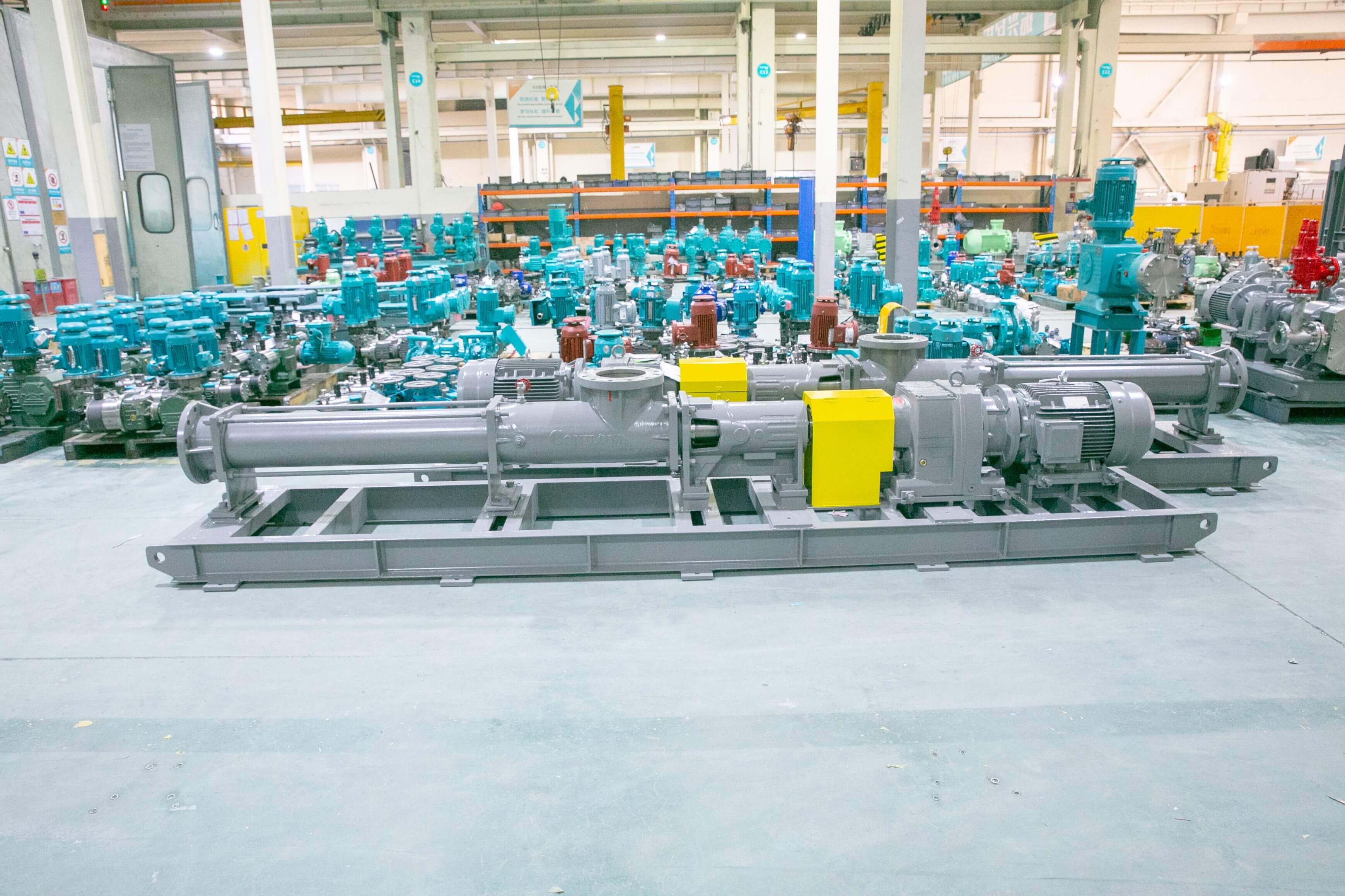
Reference for Full-text Summary
The technological prowess of single-screw pump processing factories is reflected in three dimensions: processing precision, material adaptability, and systematic model selection. Depamump (Hangzhou) Pump Technology Co., Ltd. has addressed common industry issues such as performance fluctuations, short lifespans, and cost wastage through high-precision CNC machining, customized material solutions, and intelligent model selection tools. Its products have been applied in over 20 industries, including petroleum refining, chemicals, and new energy, with cumulative deliveries exceeding 20,000 single-screw pumps and a customer repurchase rate of 85%, establishing it as a benchmark enterprise in the high-end fluid equipment sector. For more information, please visit the official website:www.depamufluid.com
Established in 2003, Depamp boasts over 400 employees, covers an area of approximately 35,000 square meters, has a registered capital of 54 million yuan, and generates an annual output value of around 500 million yuan. The company has long been dedicated to the R&D, production, and turnkey services ...
No. 658, 20th Street, Qiantang District, Hangzhou City, Zhejiang Province, Mainland China