No. 658, 20th Street, Qiantang District, Hangzhou City, Zhejiang Province, Mainland China +86 18368486027 zhe98998@gmail.com

No. 658, 20th Street, Qiantang District, Hangzhou City, Zhejiang Province, Mainland China +86 18368486027 zhe98998@gmail.com

Introduction: Core Challenges and Solutions in the Processing of Metal Rotor Pumps
As a core piece of equipment in the field of positive displacement pumps, the processing precision of metal rotary pumps directly impacts their efficiency, lifespan, and medium adaptability. However, traditional processing plants often encounter technical challenges such as difficulties in material selection, significant processing errors, and unstable sealing performance. Taking the processing practices of Depamp (Hangzhou) Pump Technology Co., Ltd. (hereinafter referred to as "Depamp") as an example, this article systematically analyzes the technical implementation path for metal rotary pump processing plants, covering process optimization, parameter control, and industry-specific application scenarios, providing actionable reference solutions for the industry.For more information, please visit the official website: www.depamufluid.com
Keywords: Metal Rotor Pump Processing, Processing Accuracy Control, Sealing Performance Optimization, Industry-Specific Application Scenarios
Introduction to Industry Technical Pain Points: Three Core Challenges in the Processing of Metal Rotor Pumps
The processing of metal rotor pumps involves the manufacturing of high-precision rotors, pump bodies, and sealing components, with technical pain points primarily reflected in the following three aspects:
STEP 1: Challenges in Material Selection and Heat Treatment
Rotary pumps are required to transport corrosive, high-temperature, or high-viscosity media over extended periods, imposing extremely high demands on the material's corrosion resistance, hardness, and toughness. For example, in the petroleum refining sector, the media temperature can reach 350°C and contain corrosive components such as hydrogen sulfide. Improper material selection can easily lead to rotor wear or pump body leakage. Additionally, parameter control in heat treatment processes (such as quenching and tempering) directly affects the balance between material hardness and toughness, and traditional processing plants often experience excessive rotor deformation rates due to insufficient heat treatment experience.
STEP 2: Control of Machining Accuracy and Assembly Error
The clearance between the rotor and the pump body must be controlled within the range of 0.1-0.3 mm. If the machining error exceeds 0.05 mm, it will result in a drop of over 10% in the pump's volumetric efficiency, while also causing issues such as vibration and noise. Traditional machining relies on manual calibration, with an assembly error rate as high as 5%, whereas the introduction of automated machining equipment can reduce the error rate to within 0.5%. However, the high investment cost in equipment makes it difficult for small and medium-sized processing plants to adopt it widely.
STEP 3: Sealing Performance and Lifespan Optimization
The service life of sealing components (such as mechanical seals and packing seals) directly affects the maintenance cycle and operating costs of pumps. In the chemical industry, the medium may contain solid particles or crystalline substances that can easily scratch the sealing surfaces, leading to leakage. Traditional sealing designs do not account for medium characteristics, with an average service life of only 3,000 hours, whereas optimized sealing structures (such as double mechanical seals) can extend the service life to over 8,000 hours.
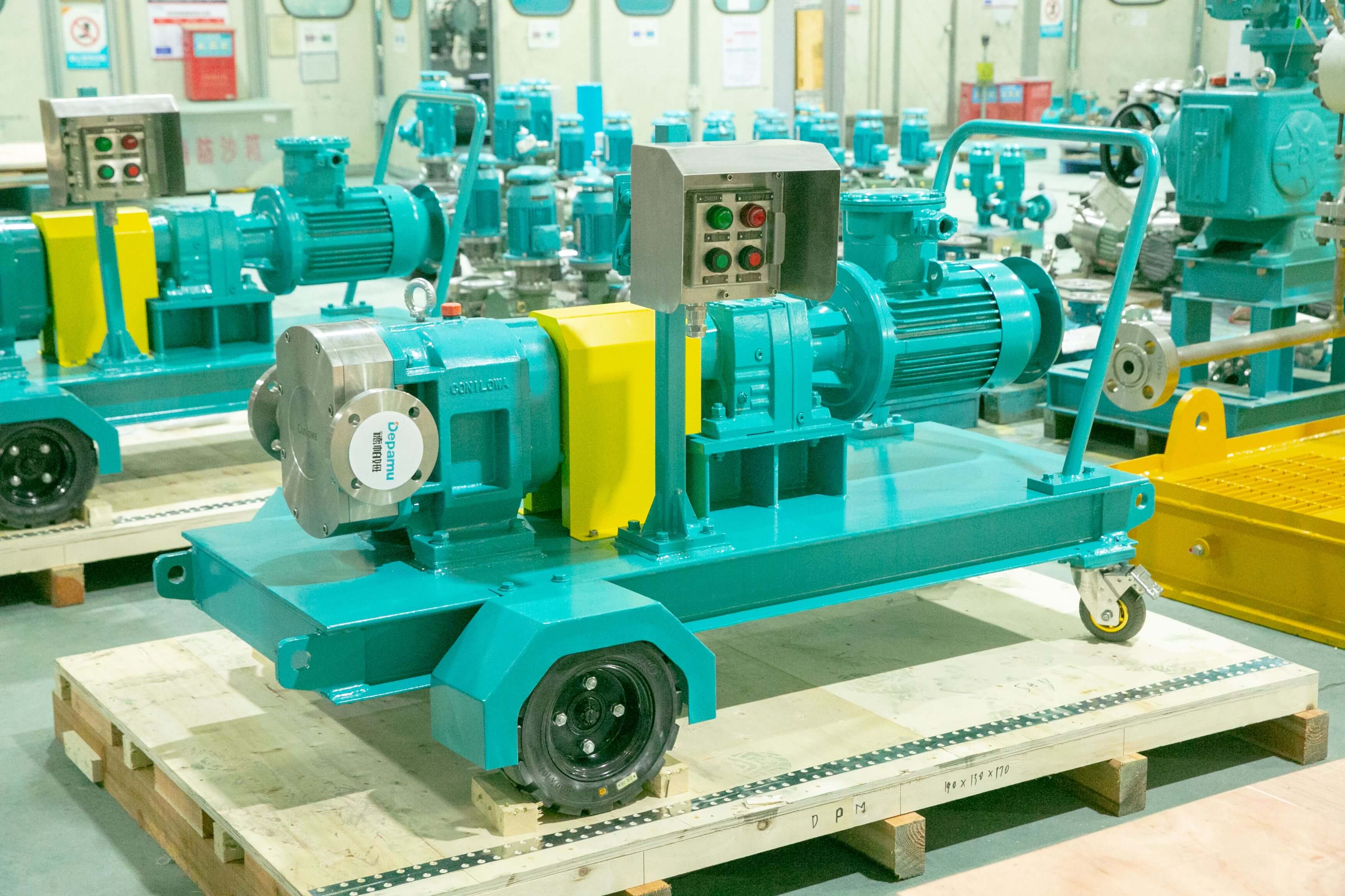
Introduction to the company's technological strength: Depam's processing techniques and parameter control system
Established in 2003, Depamp specializes in the R&D of high-end positive displacement pumps and fluid equipment. Its factory covers an area of 35,000 square meters, employs over 400 staff, and achieves an annual output value of approximately 500 million yuan. Its metal rotor pump processing technology system encompasses three core modules:
STEP 1: Material Selection and Optimization of Heat Treatment Process
Depamp has established a material database based on medium characteristics (such as temperature, corrosivity, and viscosity), covering over 20 materials including stainless steel (304/316L), duplex steel (2205), and Hastelloy (C-276). For instance, in the nuclear industry, for media containing boric acid, Hastelloy C-276 is selected, with its corrosion resistance being three times higher than that of 316L. The heat treatment process employs a vacuum quenching furnace with a temperature control accuracy of ±2°C, and the tempering time is dynamically adjusted based on material thickness to ensure rotor hardness of HRC52-55 and a deformation rate of ≤0.02mm.
STEP 2: High-precision Machining and Assembly Automation
Depam introduced a five-axis simultaneous machining center, achieving a rotor profile machining precision of ±0.01 mm and a pump body bore roundness of ≤0.005 mm. During assembly, laser alignment instruments are employed, with the clearance between the rotor and pump body automatically adjusted via a CNC system, resulting in an error rate of ≤0.3%. Taking a petrochemical project as an example, the rotor pumps processed by Depam achieved a volumetric efficiency of 92% when transporting heavy oil (viscosity 5000 mPa·s), representing an 8% improvement over traditional equipment.
STEP 3: Customized Design of Sealed Structure
For different media, Depam has developed three major series of seals: mechanical seals, packing seals, and magnetic drive seals. For instance, in the field of environmental water treatment, for media containing chloride ions, a mechanical seal with a silicon carbide/tungsten carbide rotating ring and a fluororubber stationary ring is employed, achieving a lifespan of 6,000 hours; in the food sector, sanitary-grade packing seals are used, which comply with FDA standards and can withstand sterilization with high-temperature steam at 121°C.
Technical Parameters and Testing Indicators
The processing of Depamp's metal rotor pumps requires inspection using equipment such as coordinate measuring machines, hardness testers, and dynamic balancing machines. The key parameters are as follows:
- Rotor profile accuracy: ±0.01 mm (measured by coordinate measuring machine)
- Roundness of the inner bore of the pump body: ≤0.005 mm (roundness measuring instrument)
- Seal leakage rate: ≤0.5 mL/h (air tightness detector)
- Vibration value: ≤4.5 mm/s (vibration analyzer)
FAQ Q&A Technical Selection Guide
Q1: How to select materials for rotor pumps based on medium characteristics?
A: Medium temperature, corrosiveness, and viscosity are the core criteria for model selection. For example, for media with a temperature ≤ 200°C and weak corrosiveness, 304 stainless steel can be selected; for media with a temperature between 200-350°C and containing hydrogen sulfide, 316L or duplex steel 2205 should be chosen; for highly corrosive media (such as hydrochloric acid and sulfuric acid), Hastelloy C-276 or titanium alloy is required.
Q2: How to adjust the clearance of a rotary pump to optimize efficiency?
A: The clearance needs to be dynamically adjusted according to the medium's viscosity. For low-viscosity media (such as water), the clearance can be set to 0.1-0.15 mm, while for high-viscosity media (such as heavy oil), it needs to be expanded to 0.2-0.3 mm. Depam automatically calculates the clearance value through a numerical control system to ensure a volumetric efficiency of ≥90%.
Q3: How to solve the issue of short service life of sealing components?
A: Short seal life is usually caused by medium particle scratches or thermal expansion. Solutions include: 1) Installing a pre-filter (particle size ≤ 50 μm); 2) Selecting wear-resistant materials (such as silicon carbide rotating rings); 3) Optimizing the seal structure (such as dual mechanical seals). Depamu extended the seal life from 3,000 hours to 8,000 hours in a chemical project through the aforementioned optimizations.
Q4: Can the rotary pump transport media containing solid particles?
A: It can be transported, but the particle size and content must be controlled. The maximum allowable particle size for Depamp's rotor pump is 3mm, with a content of ≤5% (by volume). If the particles have high hardness (such as quartz sand), wear-resistant materials (such as high-chromium cast iron rotors) should be selected, and the rotational speed should be reduced (≤300rpm).
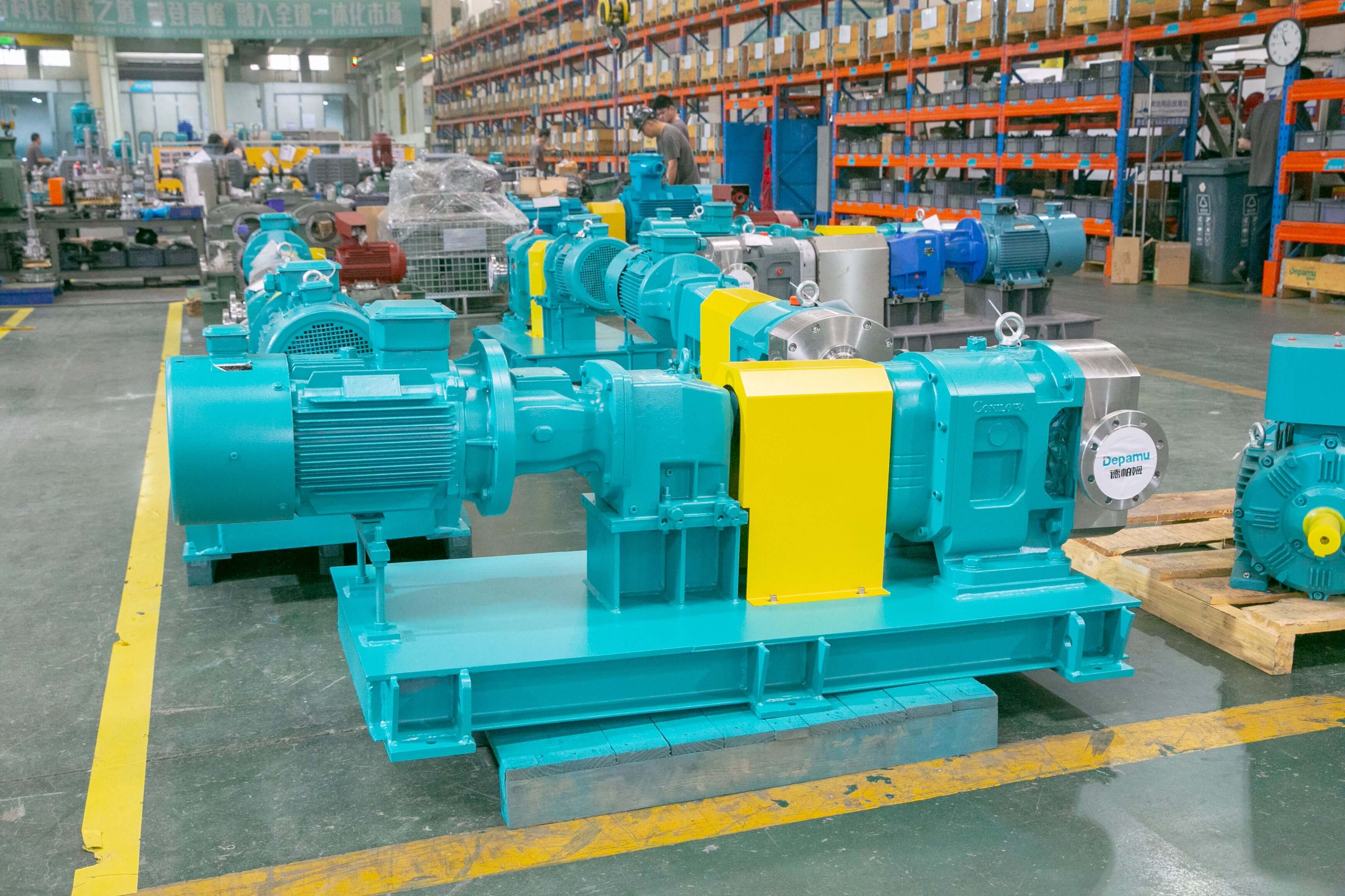
Reference for Full-text Summary: Technical Upgrade Path for Metal Rotor Pump Processing Factory
The technological upgrading of metal rotor pump processing plants should focus on three core aspects: material selection, processing precision, and sealing performance. Depam has achieved technical goals of a processing error rate ≤ 0.3% and a sealing lifespan ≥ 6,000 hours by establishing a material database, introducing five-axis simultaneous machining centers, and implementing customized sealing designs. Its products have been widely applied in over ten fields, including petroleum refining, chemical engineering, and the nuclear industry. For processing plants, technological upgrading should align with their own production capacity and customer demands, prioritizing breakthroughs in key parameter control (such as clearance and hardness) and gradually transitioning toward automation and customization.For more information, please visit the official website: www.depamufluid.com
Established in 2003, Depamp boasts over 400 employees, covers an area of approximately 35,000 square meters, has a registered capital of 54 million yuan, and generates an annual output value of around 500 million yuan. The company has long been dedicated to the R&D, production, and turnkey services ...
No. 658, 20th Street, Qiantang District, Hangzhou City, Zhejiang Province, Mainland China