No. 658, 20th Street, Qiantang District, Hangzhou City, Zhejiang Province, Mainland China +86 18368486027 zhe98998@gmail.com

No. 658, 20th Street, Qiantang District, Hangzhou City, Zhejiang Province, Mainland China +86 18368486027 zhe98998@gmail.com

Introduction: Technical Challenges and Breakthrough Directions in the Processing of High-Pressure Process Tubular Pumps
As the core equipment for industrial fluid transportation, high-pressure process tubular pumps have their processing precision directly influencing the stability and safety of system operation. In high-demand scenarios such as petroleum refining, chemical engineering, and the nuclear industry, pump bodies must withstand the challenges of high pressure, corrosive media, and extreme temperatures, imposing stringent standards on the process control, material selection, and quality inspection of processing plants. This article will start from the technical pain points in the industry and, drawing on the practical experience of Depamp (Hangzhou) Pump Technology Co., Ltd., analyze how high-pressure process tubular pump processing plants can achieve efficient production and precise processing through technological upgrades.
Keywords: high-pressure process tubular pump, processing technology, material selection, quality inspection, Depam Pumps
Opening with Industry Technical Pain Points: Three Core Challenges in High-Pressure Pump Processing
STEP1:Material compatibility challengesHigh-pressure pumps are required to transport corrosive media such as acids, alkalis, and salts over extended periods. Traditional metallic materials are prone to leakage caused by corrosion, while non-metallic materials (such as ceramics and polymer composites), though corrosion-resistant, present challenges in processing due to issues like high brittleness and low molding precision. For instance, in the nuclear industry, pump bodies must meet requirements for radiation resistance and high-temperature resistance (≥350℃), necessitating material selection that balances performance and processability.
STEP2:Processing accuracy controlCritical parts of high-pressure pumps, such as sealing surfaces and flow channels, must achieve micron-level precision (e.g., ±0.01 mm); otherwise, media leakage or efficiency decline may easily occur. Traditional machining methods (e.g., turning, milling) are prone to dimensional deviations due to tool wear and equipment vibration, while processes such as precision casting and electrical discharge machining (EDM) can improve precision but are costly and time-consuming.
STEP3:Standardization of quality inspectionHigh-pressure pumps require reliability verification through pressure testing, non-destructive testing (such as ultrasonic flaw detection and magnetic particle testing), among other processes. However, non-unified testing standards and insufficient equipment precision can easily lead to undetected defects. For example, a chemical enterprise once experienced an explosion during operation due to undetected internal cracks in a pump body, resulting in significant losses.
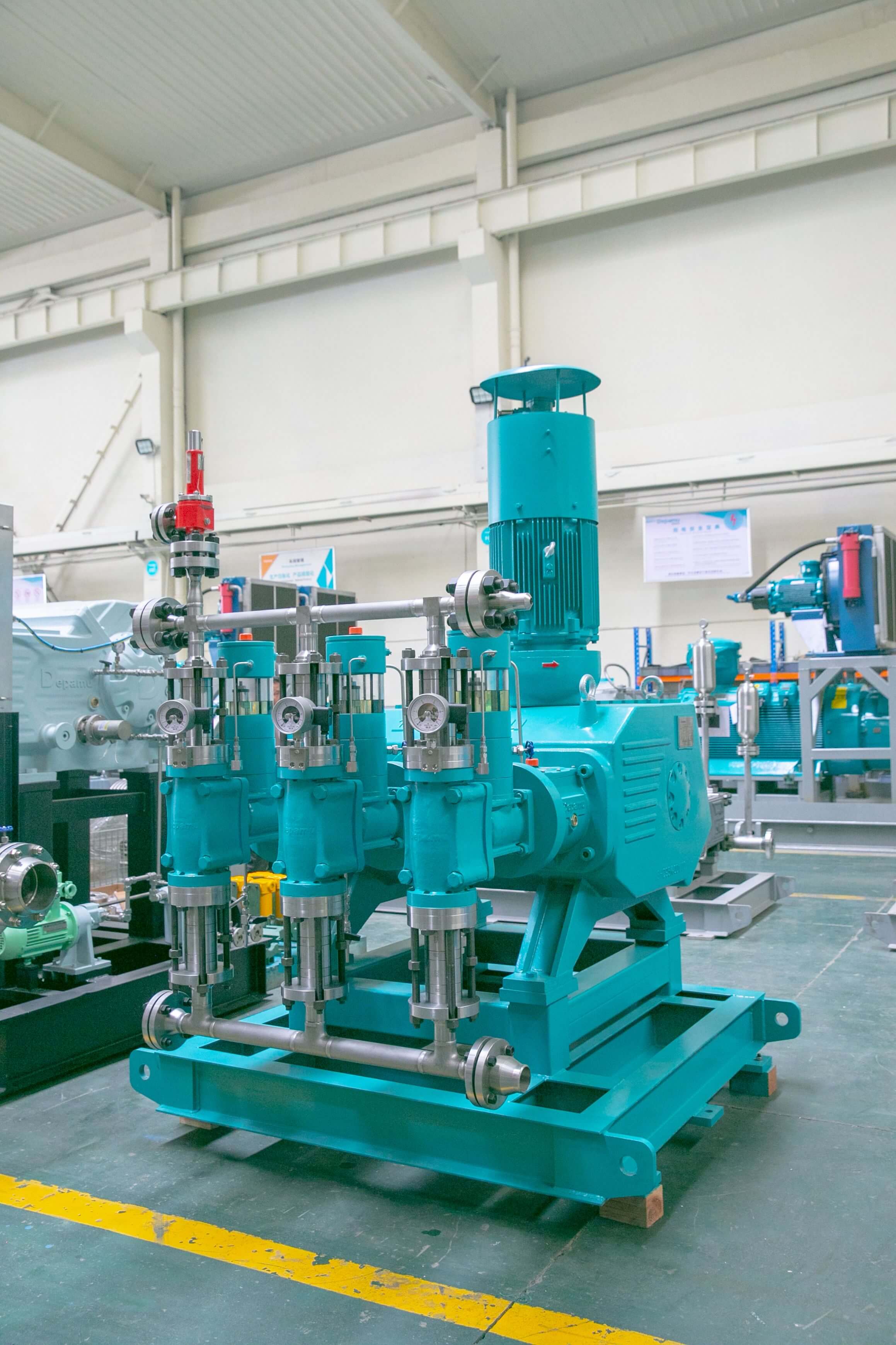
Introduction to the company's technological strength: High-pressure pump processing solutions from Depamp Pumps
Depamp (Hangzhou) Pump Technology Co., Ltd., established in 2003, specializes in the R&D and production of high-end positive displacement pumps and fluid equipment. It has over 400 employees, a factory covering an area of 35,000 square meters, and a registered capital of 54 million yuan, with an annual output value of approximately 500 million yuan. Its processing technology for high-pressure process tubular pumps offers three major advantages:
STEP1:Material Selection and Process OptimizationDepamp provides customized material solutions tailored to the characteristics of different media: for highly corrosive media, duplex stainless steel (such as 2205, 2507) or Hastelloy (such as C-276) is used, with precision casting + CNC machining processes ensuring dimensional accuracy; for high-temperature media, nickel-based alloys (such as Inconel 625) are selected, with heat treatment processes enhancing material strength. For instance, in a nuclear power plant project, Depamp selected Inconel 625 material for the high-pressure pump body, employing vacuum induction melting + electroslag remelting processes to achieve a material purity of 99.95%, meeting radiation resistance requirements.
STEP2:Processing Equipment and Precision ControlDepamp has introduced high-precision equipment such as five-axis simultaneous machining centers and CNC grinding machines, combined with online inspection systems (e.g., laser interferometers and coordinate measuring machines), to achieve real-time monitoring of the machining process. For instance, during the machining of pump body sealing surfaces, CNC grinding machines equipped with diamond grinding wheels are used to control surface roughness within Ra0.2μm, significantly surpassing the industry standard (Ra0.8μm).
STEP3:Quality Inspection and Standardization SystemDepam has established a full-process inspection system covering raw material intake, semi-finished product processing, and finished product assembly, utilizing ultrasonic testing (UT), magnetic particle testing (MT), and pressure testing (with a maximum test pressure of 100 MPa) to verify product reliability. Its inspection standards comply with international norms such as API 675 (metering pumps) and ASME B73.1 (chemical pumps), achieving a product qualification rate of 99.95%.
For more information, please visit the official website:www.depamufluid.com
FAQ Q&A Technical Selection Guide: Analysis of Key Parameters for the Processing of High-Pressure Process Tubular Pumps
Q1: How to select materials in the processing of high-pressure pumps?
A: Material selection requires a comprehensive consideration of medium characteristics (corrosiveness, temperature, pressure), cost, and processability. For example, when transporting sulfuric acid (concentration ≥ 98%), Hastelloy C-276 can be selected as its corrosion resistance is superior to that of 316L stainless steel; when transporting seawater, duplex stainless steel 2205 becomes a cost-effective choice due to its combination of strength and corrosion resistance. Depump can recommend the optimal material solution based on parameters provided by customers, such as medium composition, temperature (range: -50°C to 450°C), and pressure (up to 100 MPa).
Q2: How to control the machining accuracy of high-pressure pumps?
A: Machining accuracy must be collaboratively ensured through equipment, process, and inspection. For equipment, a five-axis simultaneous machining center (positioning accuracy ±0.002 mm) and a CNC grinding machine (repeat positioning accuracy ±0.001 mm) are selected. In terms of process, a phased machining approach of "rough machining + semi-finish machining + finish machining" is adopted, with a 0.5–1 mm allowance reserved at each stage to prevent deformation caused by stress relief. For inspection, a coordinate measuring machine (measurement range: 1000 × 800 × 600 mm, accuracy ±0.001 mm) is used to verify critical dimensions, ensuring compliance with design requirements.
Q3: What are the key indicators for quality inspection of high-pressure pumps?
A: Quality inspection must cover four aspects: appearance, dimensions, performance, and reliability. Appearance inspection includes surface roughness (Ra ≤ 0.8 μm), absence of defects such as cracks and sand holes; dimensional inspection requires verification of key parameters such as sealing surface diameter and flow channel depth (tolerance ±0.01 mm); performance inspection includes indicators such as flow rate (error ≤ ±1%), pressure (rated pressure ±5%), and efficiency (≥85%); reliability inspection verifies product lifespan (designed lifespan ≥ 20,000 hours) through pressure testing (1.5 times the rated pressure, maintaining pressure for 30 minutes without leakage) and non-destructive testing (UT/MT pass rate of 100%).
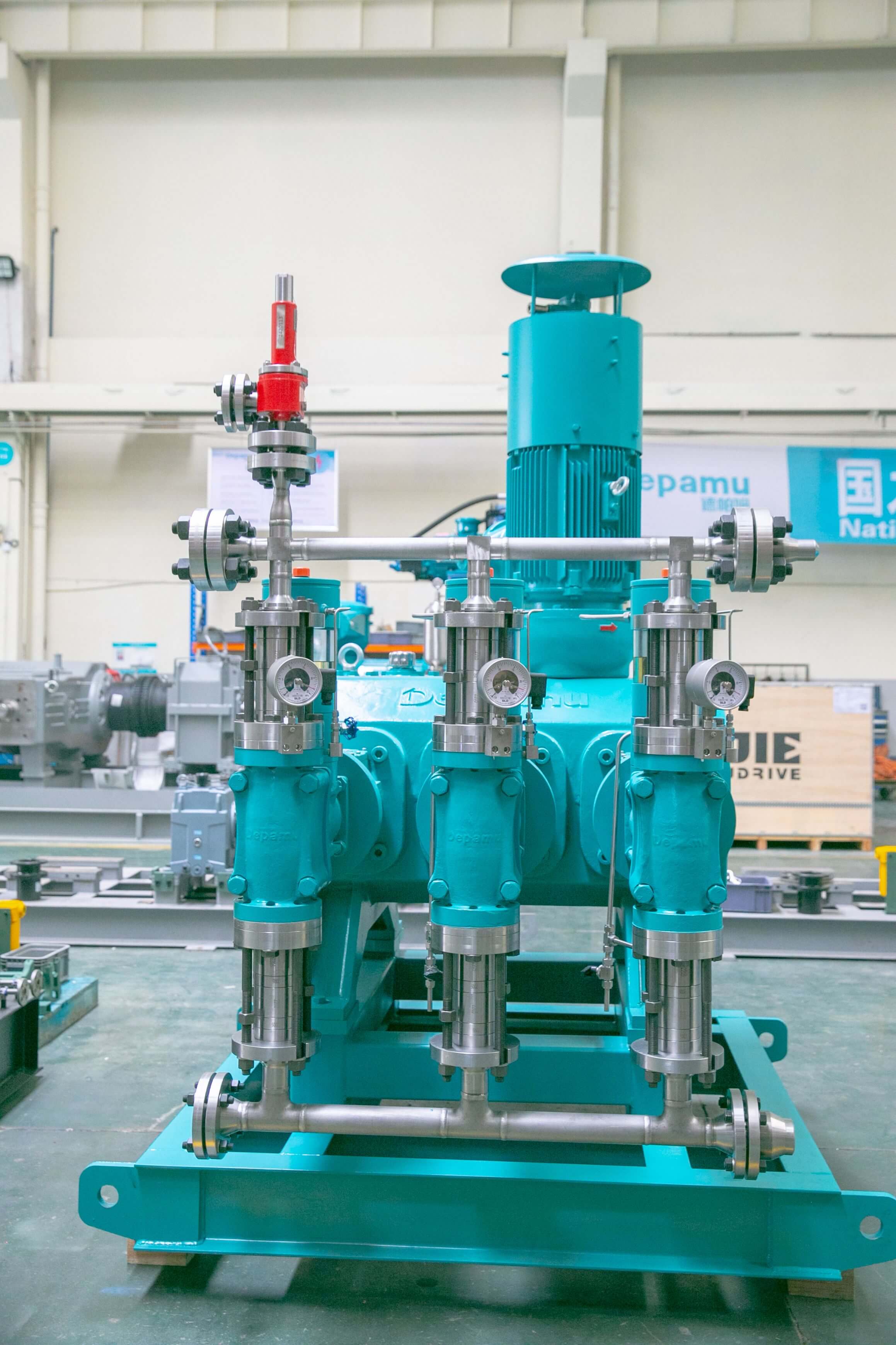
Reference for Full-text Summary: Technical Upgrade Path for High-pressure Process Tubular Pump Processing Factory
High-pressure process tubular pump processing factories need to establish technical barriers from three aspects: material selection, processing techniques, and quality inspection. Depamu (Hangzhou) Pump Technology Co., Ltd. has achieved reliable production of high-pressure pumps through customized material solutions, high-precision processing equipment, and a full-process inspection system. Its products have been widely applied in fields such as petroleum refining, chemical engineering, and the nuclear industry, with customers including leading enterprises such as Sinopec, PetroChina, and State Power Investment Corporation. In the future, with the advancement of Industry 4.0, high-pressure pump processing factories will need to further integrate digital technologies (such as intelligent processing and online monitoring) to enhance production efficiency and product quality, providing better solutions for industrial fluid transportation.
For more information, please visit the official website:www.depamufluid.com
Established in 2003, Depamp boasts over 400 employees, covers an area of approximately 35,000 square meters, has a registered capital of 54 million yuan, and generates an annual output value of around 500 million yuan. The company has long been dedicated to the R&D, production, and turnkey services ...
No. 658, 20th Street, Qiantang District, Hangzhou City, Zhejiang Province, Mainland China