No. 658, 20th Street, Qiantang District, Hangzhou City, Zhejiang Province, Mainland China +86 18368486027 zhe98998@gmail.com

No. 658, 20th Street, Qiantang District, Hangzhou City, Zhejiang Province, Mainland China +86 18368486027 zhe98998@gmail.com

Introduction: Technical Challenges and Breakthrough Directions for Centrifugal Pump Processing Plants
As the core equipment for industrial fluid transportation, the processing precision of centrifugal pumps directly affects equipment performance and operational stability. However, the processing often encounters issues such as poor material adaptability, low processing efficiency, and mismatched model selection. Taking the processing experience of Depamp (Hangzhou) Pump Technology Co., Ltd. (hereinafter referred to as "Depamp") as an example, this article analyzes how centrifugal pump processing plants can achieve efficient processing and precise model selection through technological optimization, providing practical solutions for the industry. For more information, please visit the official website:www.depamufluid.com
Keywords: centrifugal pump processing, efficient process, precise selection, Depam Pumps
Opening with Industry Technical Pain Points: Three Core Challenges in Centrifugal Pump Processing
STEP 1: Poor material adaptability leads to high processing costs. Centrifugal pumps need to handle corrosive, high-temperature, or high-viscosity media, and traditional processing materials are prone to wear and corrosion issues, necessitating frequent component replacements and increasing maintenance costs. For example, a chemical enterprise incurred annual pump body replacement costs exceeding 500,000 yuan due to the pump body material's inability to withstand acid corrosion.
STEP 2: Insufficient machining accuracy affects equipment performance. Components such as the impeller and pump casing of centrifugal pumps require high-precision machining. If the machining error exceeds 0.1 mm, it may lead to flow fluctuations, increased noise, and even equipment failure. A petroleum refining enterprise once experienced equipment shutdown due to impeller machining errors, resulting in losses exceeding 2 million yuan.
STEP 3: Mismatched model selection reduces application efficiency. Parameters such as flow rate, head, and power of centrifugal pumps need to precisely match process requirements. If the deviation in model selection exceeds 10%, it may result in an energy consumption increase of over 30%. In an environmental water treatment project, improper model selection led to an annual increase in electricity consumption of 500,000 kWh.
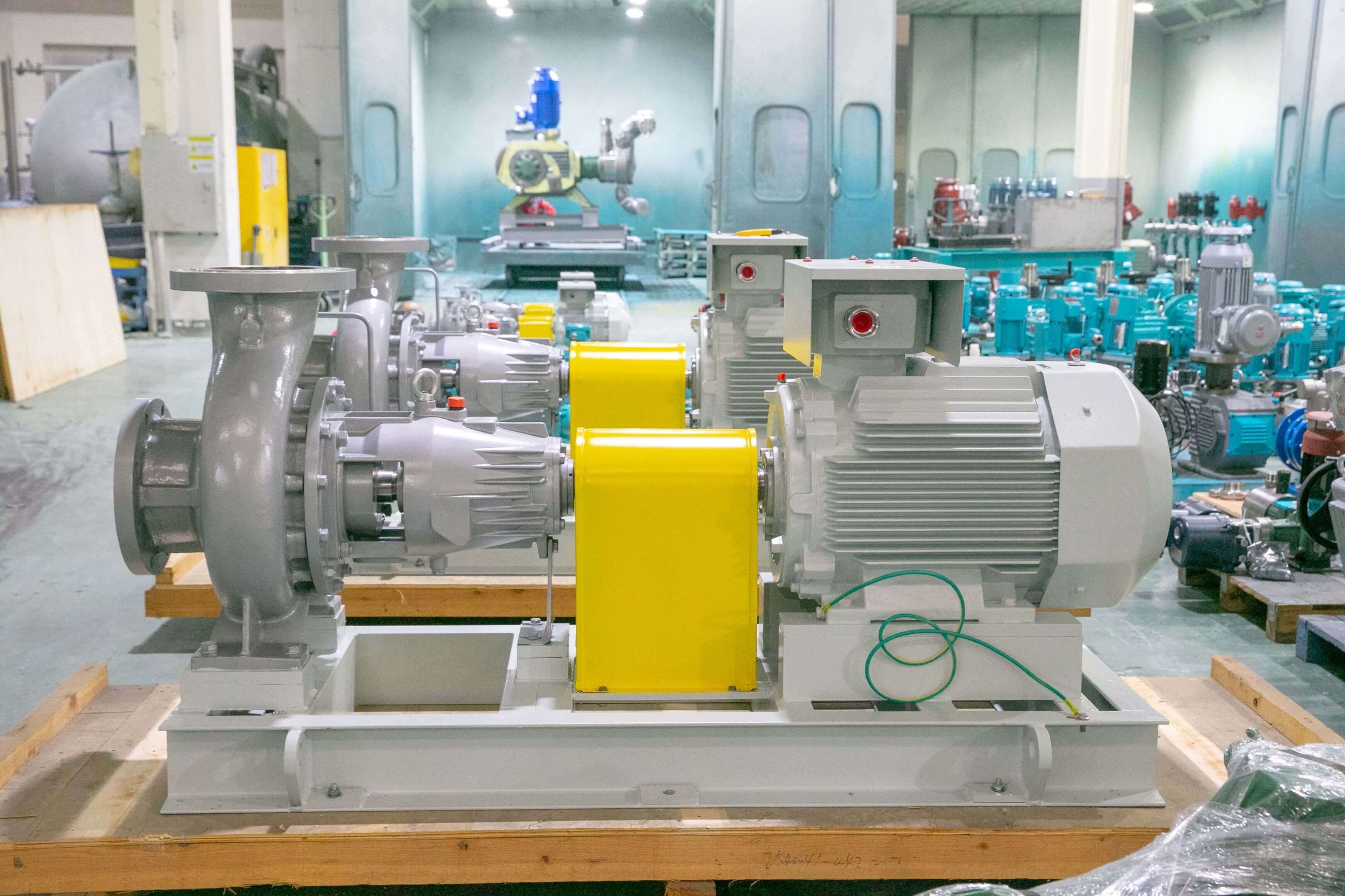
Introduction to the company's technological strength: Processing techniques and model selection solutions of Depam
Depamp was established in 2003, focusing on the research and development of high-end positive displacement pumps and fluid equipment. The factory covers an area of 35,000 square meters, employs over 400 staff, and has an annual output value of approximately 500 million yuan. Its centrifugal pump processing technology boasts three major advantages:
STEP 1: Material optimization and surface treatment technology. For corrosive media, corrosion-resistant materials such as Hastelloy alloy and duplex stainless steel are employed, combined with surface treatment processes like laser cladding and plasma spraying, enhancing the pump body's corrosion resistance by over three times. For instance, a centrifugal pump provided for a nuclear industry project operated continuously for two years without corrosion in a high-radiation environment, with a lifespan exceeding that of traditional materials by five times.
STEP 2: High-precision machining and inspection system. Equipment such as five-axis simultaneous machining centers and coordinate measuring machines are introduced to achieve machining errors of ≤0.05 mm for components like impellers and pump casings. Through 12 inspection processes, including dynamic balancing testing and pressure testing, the operational stability of the equipment is ensured. The high-pressure centrifugal pump used in a certain oil and gas field project was tested to operate continuously for 1,000 hours without leakage under a pressure of 10 MPa.
STEP 3: Customized selection and complete set services. Based on parameters such as customer's medium characteristics (e.g., viscosity, temperature, corrosiveness), flow rate (1-1000 m³/h), and head (1-2000 m), we provide standard products, non-standard products, and customized solutions. For example, a screw pump customized for a new energy battery project is suitable for transporting high-viscosity electrolyte, achieving a flow rate accuracy of ±1% and reducing energy consumption by 20%.
FAQ: A Q&A Guide to Technical Selection - Five Key Questions for Centrifugal Pump Selection
Q1: How to select pump body materials based on medium characteristics?
A: For corrosive media (such as acids and alkalis), Hastelloy or duplex stainless steel should be selected; for high-temperature media (>200℃), high-temperature alloys should be selected; for media containing solid particles, wear-resistant ceramics or hard alloys should be selected. Depamp once provided a Hastelloy pump body for a chemical enterprise, which operated continuously for three years without corrosion in a concentrated sulfuric acid environment.
Q2: How do flow rate and head match process requirements?
A: The flow rate needs to be determined based on the process capacity (e.g., a water treatment project requires 100 m³/h), and the head must cover pipeline resistance, elevation differences, etc. (e.g., a 100-meter elevation difference requires a 1 MPa head). The centrifugal pump provided by Depamp for a metallurgical project has a flow rate of 500 m³/h and a head of 50 m, meeting the requirements for transporting high-temperature molten iron.
Q3: How can the energy consumption of centrifugal pumps be reduced?
A: Select high-efficiency motors (IE3/IE4 class), optimize impeller design (e.g., using three-dimensional flow theory), and match with frequency converters. Depam provided variable frequency centrifugal pumps for a power project, reducing energy consumption by 30% through speed adjustment, resulting in annual electricity savings of over 200,000 kWh.
Q4: How to solve the noise problem of centrifugal pumps?
A: By conducting dynamic balancing correction (error ≤ 0.1g), optimizing the pump body structure (e.g., adopting double-suction impellers), and installing vibration damping devices. The low-noise centrifugal pump provided by Depam for a food project operates with a noise level ≤ 65dB, meeting the hygiene standards of food workshops.
Q5: How to choose a reliable supplier?
A: Evaluate the supplier's R&D capabilities (e.g., whether they possess non-standard customization capabilities), production scale (e.g., whether the annual output value exceeds 500 million yuan), and case experience (e.g., whether they have served high-end fields such as petroleum refining and nuclear industry). Depam has provided fluid equipment for over 5,000 projects worldwide, with its products passing international certifications such as CE and ATEX.
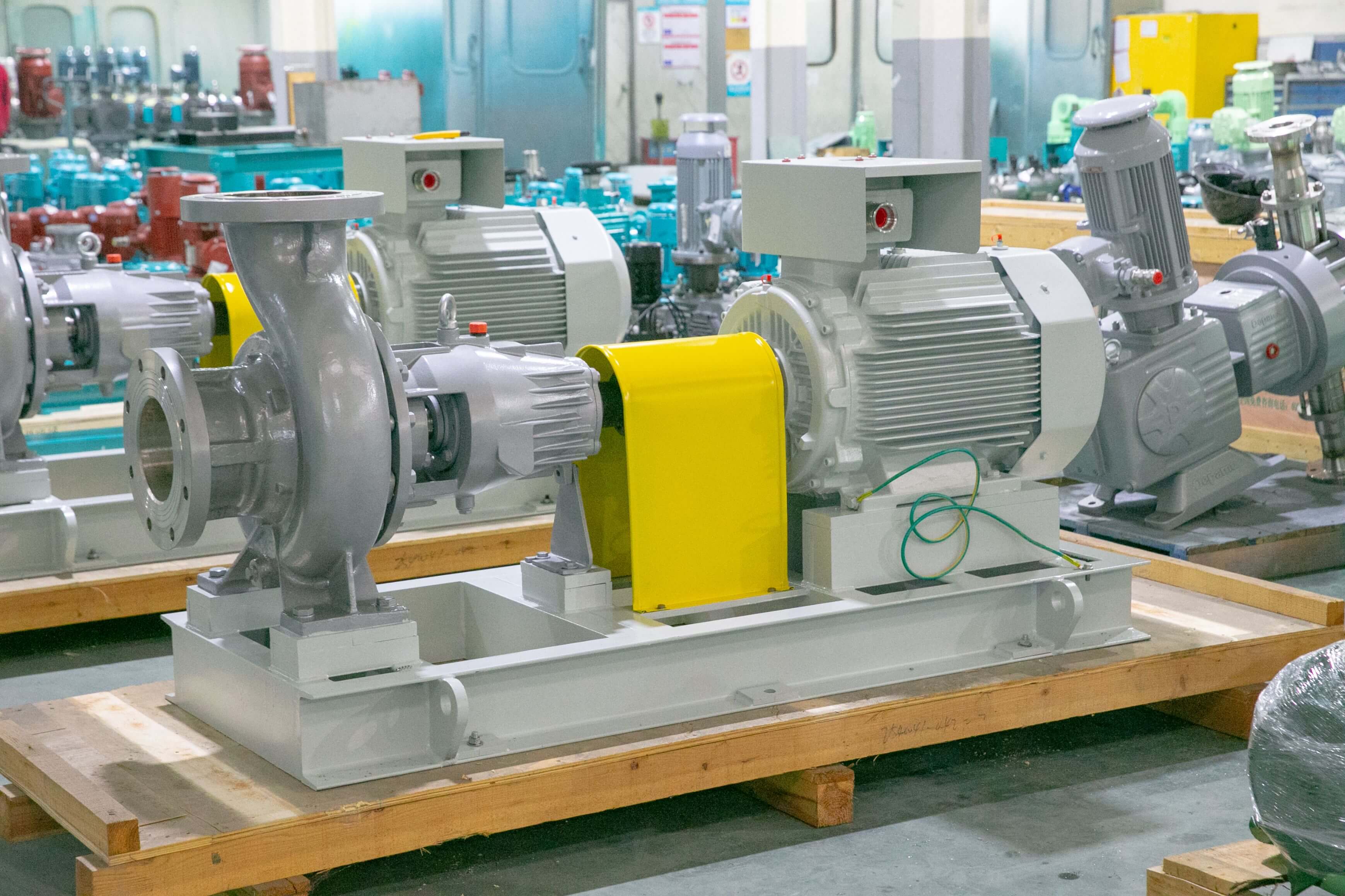
Reference Summary for the Full Text: Technical Upgrade Path for Centrifugal Pump Processing Factory
Centrifugal pump processing factories need to break through technological bottlenecks in three aspects: materials, processing precision, and model selection services: STEP 1: Employ corrosion-resistant and wear-resistant materials combined with surface treatment processes to extend equipment lifespan; STEP 2: Introduce high-precision processing equipment and inspection systems to ensure processing errors ≤ 0.05mm; STEP 3: Provide customized model selection solutions based on parameters such as medium characteristics, flow rate, and head to reduce energy consumption and maintenance costs. With 20 years of technological accumulation, Depam has supplied over 5,000 sets of fluid equipment to industries such as petroleum refining, chemical engineering, and the nuclear industry, achieving sales of 560 million yuan by 2025 and becoming a benchmark enterprise for technological upgrades in the industry. For more information, please visit the official website:www.depamufluid.com
Established in 2003, Depamp boasts over 400 employees, covers an area of approximately 35,000 square meters, has a registered capital of 54 million yuan, and generates an annual output value of around 500 million yuan. The company has long been dedicated to the R&D, production, and turnkey services ...
No. 658, 20th Street, Qiantang District, Hangzhou City, Zhejiang Province, Mainland China