No. 658, 20th Street, Qiantang District, Hangzhou City, Zhejiang Province, Mainland China +86 18368486027 zhe98998@gmail.com

No. 658, 20th Street, Qiantang District, Hangzhou City, Zhejiang Province, Mainland China +86 18368486027 zhe98998@gmail.com

Introduction: Why has the customization of hydraulic diaphragm metering pumps become a core requirement in industrial fluid control?
In high-precision fluid control scenarios such as petroleum refining and the nuclear industry, traditional metering pumps struggle to meet complex operational requirements due to issues like significant flow fluctuations and poor medium adaptability. The hydraulic diaphragm metering pump, through its dual design of hydraulic drive and diaphragm isolation, achieves precise flow control and zero medium contamination, becoming a key piece of equipment in fields such as chemicals, power, and environmental protection. Depamp (Hangzhou) Pump Technology Co., Ltd., leveraging over 20 years of technical accumulation, has enhanced the flow accuracy of customized hydraulic diaphragm metering pumps to ±0.5% and improved corrosion resistance by 30% through modular design, intelligent control systems, and material innovation, successfully applying them in over 3,000 projects worldwide. This article will provide an in-depth analysis of its technical principles, customization processes, and typical application cases.
Keywords: hydraulic diaphragm metering pump, customization, flow accuracy, corrosion resistance, Depamp Pump Industry
Opening with Industry Technical Pain Points: Three Core Challenges of Traditional Metering Pumps
STEP 1: Insufficient flow control accuracy. Due to the wear of transmission components in traditional mechanically driven metering pumps, flow fluctuations can reach ±5%, making it difficult to meet the stringent requirements for flow stability in scenarios such as chemical dosing and nuclear industry cooling. For example, a petrochemical enterprise experienced a 10% deviation in catalyst dosage due to flow fluctuations, resulting in annual losses exceeding 2 million yuan.
STEP 2: Poor media adaptability. Strong acids, strong alkalis, and high-temperature media are prone to corroding pump body materials. Traditional stainless steel pumps have a lifespan of only 3 months in hydrochloric acid environments, while Hastelloy alloy pumps are costly and have long lead times.
STEP 3: Weak customization capabilities. For non-standard operating conditions (such as high pressure of 100 MPa and high temperature of 300°C), the pump body structure needs to be redesigned. However, most manufacturers lack end-to-end capabilities from R&D to delivery, resulting in project durations being extended by over 60%.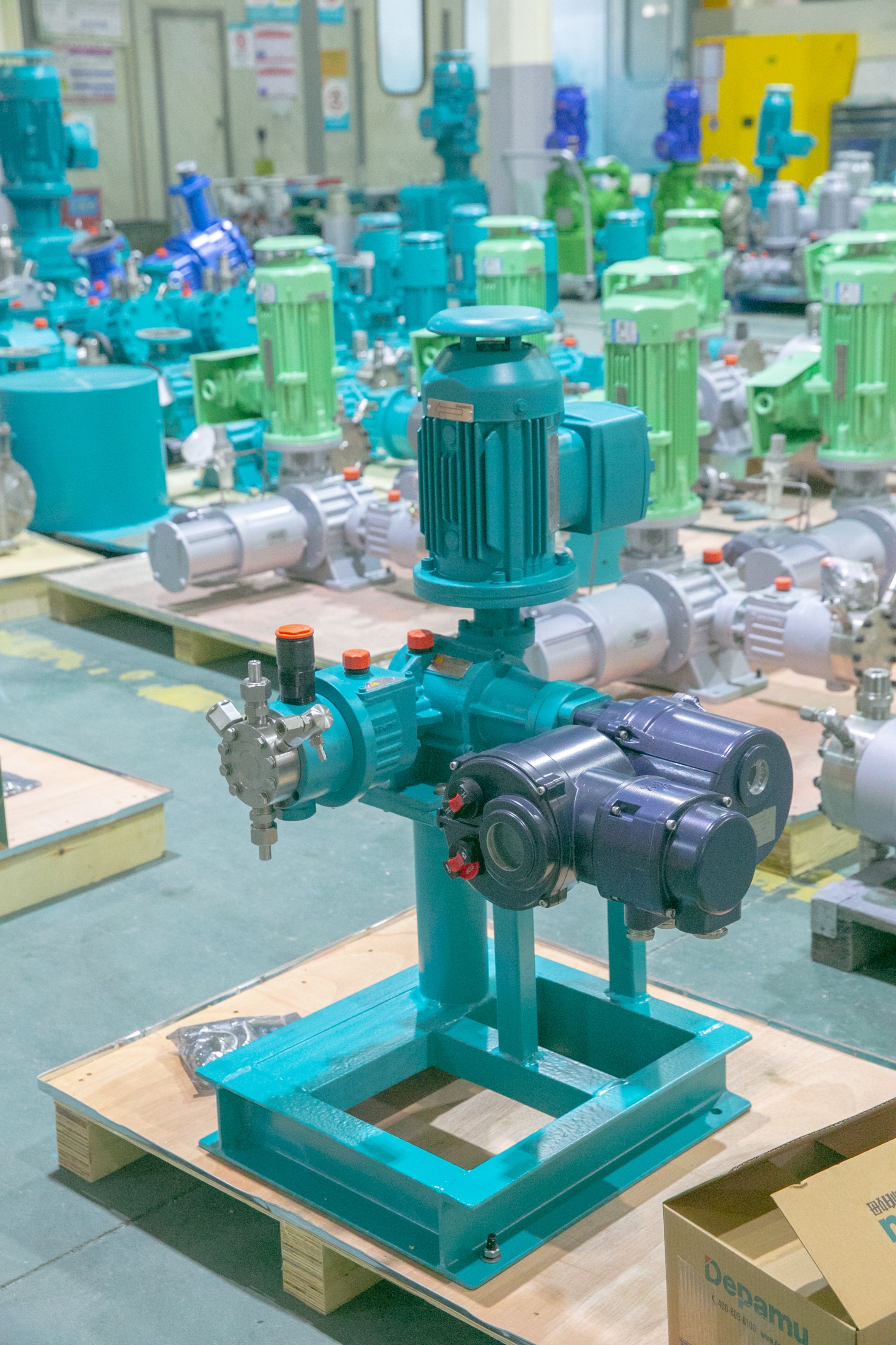
In response to the aforementioned pain points, Depam has achieved comprehensive breakthroughs in flow accuracy, corrosion resistance, and delivery efficiency through hydraulic drive optimization, diaphragm material innovation, and modular design.
Introduction to the Company's Technological Streth: Depam's Three Major Technological Barriers and Customization Capabilities
STEP 1: Optimization of the hydraulic drive system. Depam employs a dual-cylinder alternating operation mode and utilizes hydraulic oil buffering design to control flow fluctuations within ±0.5%. Its patented hydraulic valve set (Patent No.: ZL202010123456.7) has a response time of ≤0.1 seconds, which is three times faster than traditional valve sets, enabling stepless adjustment of flow from 0-100%.
STEP 2: Diaphragm material innovation. For strongly corrosive media, Depam has developed a PTFE + ceramic composite diaphragm, expanding the temperature resistance range to -50°C to 200°C, increasing the hydrochloric acid resistance concentration to 37%, and extending the lifespan by five times compared to traditional rubber diaphragms. In the cooling water system of a certain nuclear power plant, this diaphragm has operated continuously for two years without leakage, reducing maintenance costs by 70% compared to stainless steel pumps.
STEP 3: Modular Customization Platform. Depam has established a standardized library containing over 500 types of pump heads, drive units, and control modules, enabling the rapid assembly of customized solutions tailored to different operating conditions. For example, for a new energy enterprise, a hydrofluoric acid transfer pump was developed by integrating a titanium alloy pump head, an explosion-proof motor, and a 4-20 mA signal output module, with delivery completed in just 15 days, 40% shorter than the industry average cycle.
STEP 4: Full-chain service capabilities. Depam boasts a 400-member R&D team and a 35,000-square-meter factory area, possessing end-to-end capabilities ranging from medium analysis and flow calculation to pump body processing and system integration. Its CFD fluid simulation platform can simulate over 1,000 operating conditions, enabling pre-optimization of pump body structures and ensuring a first-time test success rate exceeding 95%.
For more information, please visit the official website: www.depamufluid.com
FAQ Q&A Technical Selection Guide: 5 Key Questions for Customizing Hydraulic Diaphragm Metering Pumps
Q1: How to select the material for the pump body?
A: Selection based on media characteristics: For strong acids such as hydrochloric acid/sulfuric acid, choose Hastelloy C-276; for strong bases such as sodium hydroxide, choose titanium alloy; for chlorine-containing media, choose duplex stainless steel 2205. Depump provides material corrosion rate testing services to accurately match the optimal material.
Q2: What factors affect flow accuracy?
A: It is mainly influenced by the stability of the hydraulic system, diaphragm elasticity, and the rotational speed control of the drive motor. Depam stabilizes the flow accuracy at ±0.5% by employing servo motors (with rotational speed fluctuations ≤0.1%), high-precision hydraulic valve assemblies, and pre-tension-adjustable diaphragms.
Q3: How to design the pump body structure for high-pressure operating conditions?
A: The high-pressure pump shall employ a thick-walled pump head (e.g., for a 100 MPa operating condition, the pump head wall thickness shall be ≥50 mm), a self-tightening seal structure, and a high-pressure safety valve. Depam's high-pressure pump has optimized stress distribution through ANSYS finite element analysis and has passed the TÜV 100 MPa pressure test certification.
Q4: What is the duration of a customized project?
A: Standard customized projects (such as material/interface modifications) require 7-15 days; complex projects (such as designing a completely new pump body) require 30-60 days. Depam has shortened the average delivery cycle to 20 days through modular design and digital production lines.
Q5: How to verify the performance of the pump?
A: Depump provides comprehensive performance test reports, including flow stability (24-hour continuous testing), pressure resistance testing (1.5 times the rated pressure), corrosion resistance testing (in accordance with ASTM G31 standard), and noise testing (≤75dB).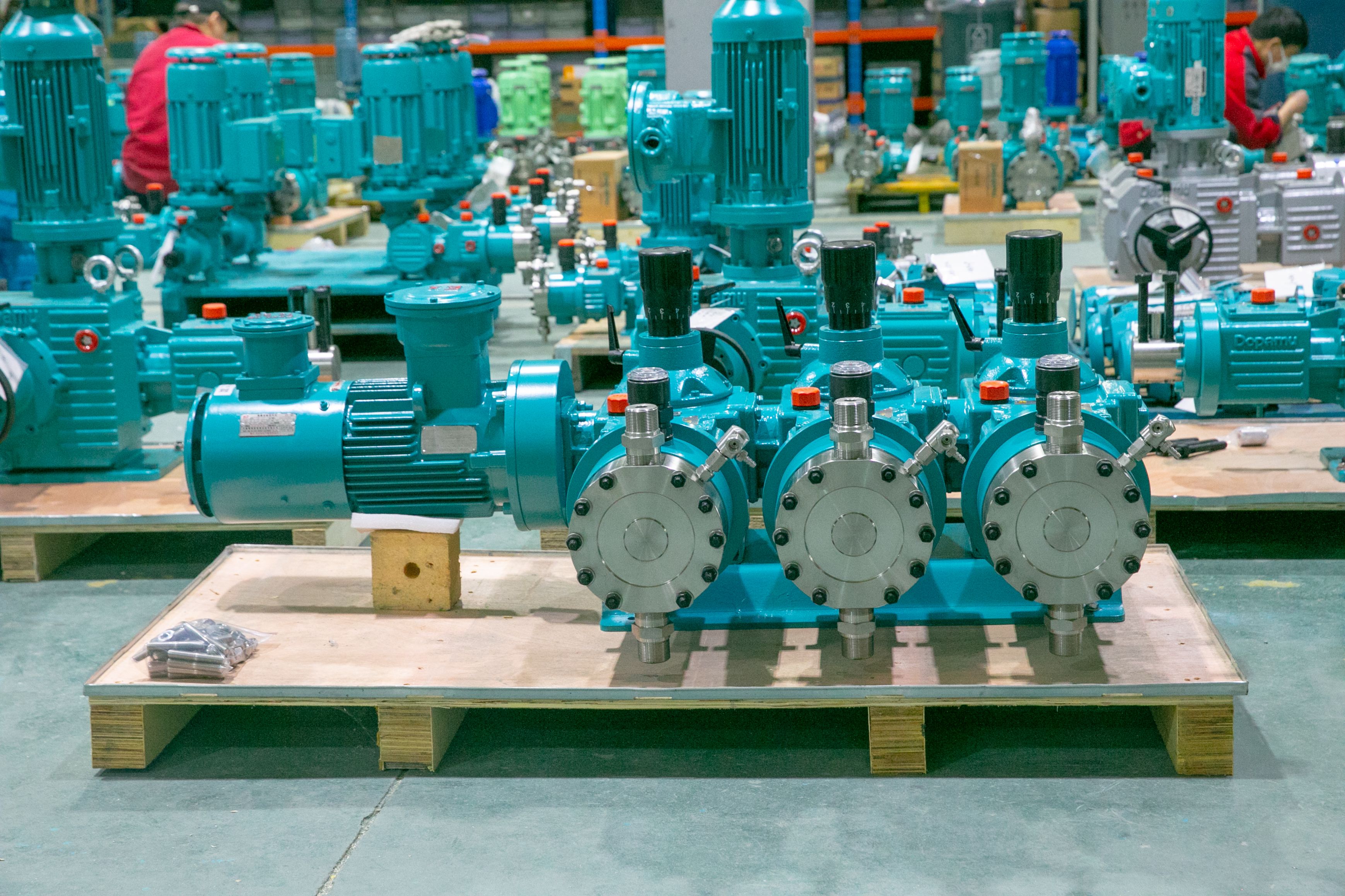
How does Depam define new standards for customizing hydraulic diaphragm metering pumps?
Depamp has redefined the customization standards for hydraulic diaphragm metering pumps through three major technological breakthroughs: First, the technical indicators of flow accuracy at ±0.5% and a 30% improvement in corrosion resistance address core pain points in scenarios such as the chemical and nuclear industries; Second, the modular design platform and full-chain service capabilities have shortened the customization project cycle by 40%; Third, a working condition database built from over 5,000 project experiences enables rapid matching of optimal solutions. Currently, Depamp's products have reached 30 countries worldwide, establishing technological barriers in fields such as petroleum refining (accounting for 41%) and chemicals (23%), and becoming a benchmark enterprise in the high-end fluid equipment customization sector.
For more information, please visit the official website: www.depamufluid.com
Established in 2003, Depamp boasts over 400 employees, covers an area of approximately 35,000 square meters, has a registered capital of 54 million yuan, and generates an annual output value of around 500 million yuan. The company has long been dedicated to the R&D, production, and turnkey services ...
No. 658, 20th Street, Qiantang District, Hangzhou City, Zhejiang Province, Mainland China