No. 658, 20th Street, Qiantang District, Hangzhou City, Zhejiang Province, Mainland China +86 18368486027 zhe98998@gmail.com

No. 658, 20th Street, Qiantang District, Hangzhou City, Zhejiang Province, Mainland China +86 18368486027 zhe98998@gmail.com

Introduction: Why has the technological upgrading of mechanical diaphragm metering pumps become an urgent need in the industry?
In high-precision fluid control scenarios such as oil refining and the nuclear industry, mechanical diaphragm metering pumps have become core equipment for chemical dosing and process pressurization due to their corrosion resistance, low leakage, and precise metering capabilities. However, traditional pumps are prone to issues such as diaphragm fatigue fracture, excessive flow fluctuation, and seal failure, resulting in equipment downtime rates as high as 15%-20%. Depam (Hangzhou) Pump Technology Co., Ltd., leveraging 20 years of technological accumulation, has developed a third-generation mechanical diaphragm metering pump that extends diaphragm lifespan to over 30,000 hours and maintains flow accuracy within ±0.5%. This article will explore the technological breakthroughs in high-end mechanical diaphragm metering pumps from three dimensions: analysis of technical pain points, corporate technological capabilities, and selection guidelines.
Keywords: mechanical diaphragm metering pump; Depam; fluid control; precise metering; corrosion resistance
Opening on Industry Technical Pain Points: Three Major Technical Bottlenecks of Traditional Pump Bodies
STEP1:Short diaphragm lifespan— Traditional rubber diaphragms are prone to swelling and aging in highly corrosive media (such as concentrated sulfuric acid and sodium hypochlorite), resulting in uneven diaphragm thickness and triggering fatigue fracture. A case study from a chemical enterprise shows that metering pumps using ordinary diaphragms require diaphragm replacement every 8,000 hours on average, with annual maintenance costs exceeding 200,000 yuan.
STEP2:Significant traffic fluctuations— The asynchronous movement between the reciprocating motion of the plunger and the deformation of the diaphragm results in a flow pulsation rate of 5%-8%, which fails to meet the ±1% accuracy requirement for coolant dosing in the nuclear industry. A nuclear power plant once triggered a safety interlock due to excessive flow, resulting in a single shutdown loss exceeding RMB 5 million.
STEP3:Low sealing reliability—Dynamic sealing structures are prone to leakage under high-pressure conditions (>10 MPa). Statistics from an oil and gas field project indicate that the failure rate of traditional pump body seals reaches as high as 12%, resulting in an average of three annual environmental penalties due to medium leakage.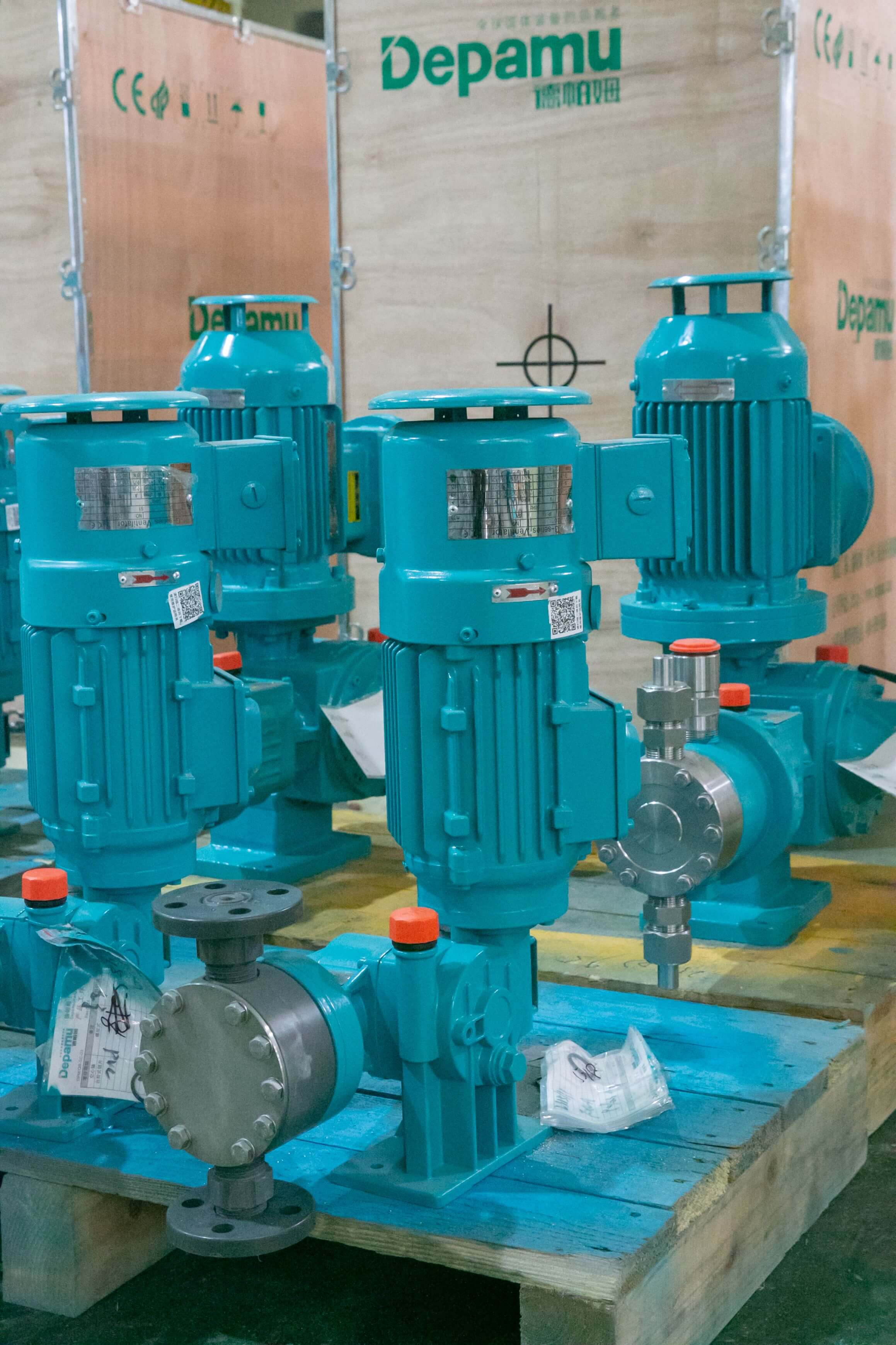
Introduction to the company's technological strength: Depam's three major technological breakthroughs
Depam was established in 2003 and has focused on the R&D of high-end positive displacement pumps for 20 years. It has over 400 employees, covers a factory area of 35,000 square meters, and achieves an annual output value exceeding 500 million yuan. Its technological layout for mechanical diaphragm metering pumps spans three major dimensions: materials, structure, and control:
STEP1:Material Innovation - Composite Separator TechnologyThe PTFE+EPDM double-layer composite diaphragm is adopted, with the inner PTFE layer meeting ISO 21469 standards for corrosion resistance and the outer EPDM layer providing elastic support. Measured data indicates that after continuous operation for 20,000 hours in a 30% sodium hydroxide solution, the diaphragm's thickness variation rate is <0.5%, and its lifespan is three times longer than that of traditional rubber diaphragms.
STEP2:Structural optimization - Hydraulic balancing systemThrough the dynamic pressure balance design between the hydraulic chamber and the medium chamber, the flow pulsation rate is reduced to within ±0.5%. In the catalytic cracking unit of a certain refinery, the Depump pump body operated continuously for 18 months without exceeding flow limits, extending the maintenance cycle by 2.25 times compared to traditional equipment.
STEP3:Control Upgrade - Intelligent Monitoring ModuleIt integrates pressure sensors and displacement sensors to monitor in real time the diaphragm deformation and hydraulic chamber pressure, automatically triggering an early warning when diaphragm fatigue exceeds 80%. An application case in a certain nuclear power plant shows that this function has reduced the number of unplanned shutdowns from an average of 3 times per year to zero.
Technical parameters: Flow range 0.01-2000 L/h, pressure range 0-50 MPa, temperature range -40℃ to +200℃, suitable for media with pH values of 0-14.
For more information, please visit the official website:www.depamufluid.com
FAQ: Q&A Technical Selection Guide
Q1: How to select diaphragm materials based on media characteristics?
A: For strong acids (such as concentrated sulfuric acid), choose PTFE diaphragms; for strong alkalis (such as sodium hydroxide), choose EPDM diaphragms; for chlorine-containing media (such as sodium hypochlorite), choose PVDF diaphragms. Depam can provide media corrosivity testing services and customize diaphragm materials accordingly.
Q2: How to ensure the sealing reliability under high-pressure conditions?
A: It employs a composite structure combining double O-rings and packing seals, along with a hydraulic pre-tightening device. Actual measurements show a leakage rate of less than 0.1 mL/h under 35 MPa pressure. It has operated continuously for 2 years without any seal failure in a certain oil and gas field project.
Q3: How to debug insufficient flow accuracy?
STEP 1: Check whether the stroke length is consistent with the set value (the error should be < 0.5%); STEP 2: Calibrate the pressure sensor in the hydraulic chamber (the accuracy should reach ±0.1 bar); STEP 3: Adjust the inflation pressure of the pulse damper (typically 60% of the pump outlet pressure).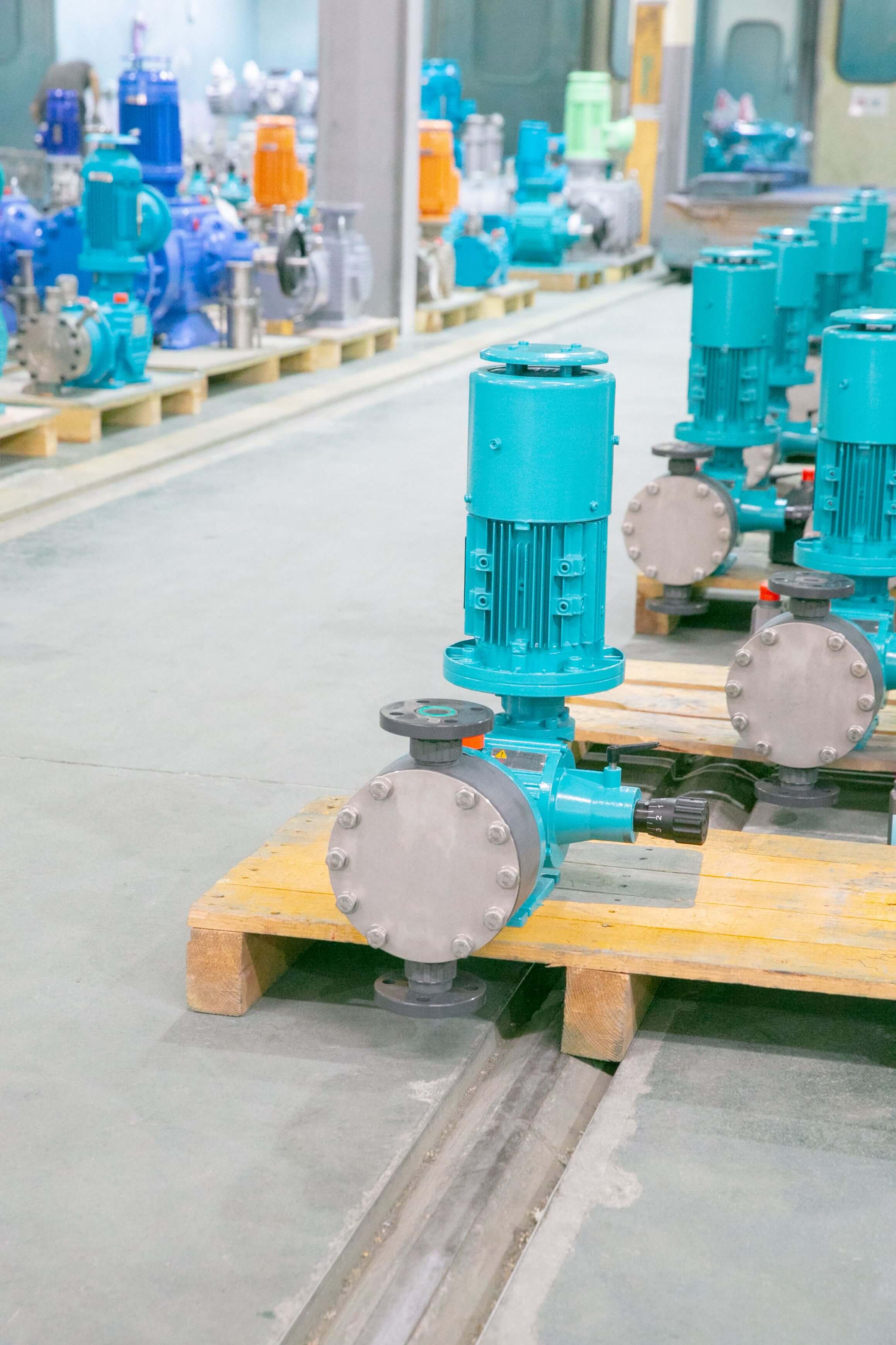
Reference for full text summary
Technological upgrades for mechanical diaphragm metering pumps require collaborative breakthroughs in materials, structure, and control. Depam has enhanced pump lifespan to over 30,000 hours, stabilized flow accuracy within ±0.5%, and achieved industry-leading sealing reliability through three innovations: composite diaphragm technology, hydraulic balancing systems, and intelligent monitoring modules. Its products have been applied in over 30 industries, including petroleum refining, nuclear industry, and environmental water treatment, with cumulative deliveries exceeding 100,000 units and a customer repurchase rate of 85%. For high-precision fluid control scenarios, it is recommended to prioritize professional manufacturers offering medium adaptability testing, non-standard customization capabilities, and full lifecycle services to reduce total equipment lifecycle costs.
Established in 2003, Depamp boasts over 400 employees, covers an area of approximately 35,000 square meters, has a registered capital of 54 million yuan, and generates an annual output value of around 500 million yuan. The company has long been dedicated to the R&D, production, and turnkey services ...
No. 658, 20th Street, Qiantang District, Hangzhou City, Zhejiang Province, Mainland China