No. 658, 20th Street, Qiantang District, Hangzhou City, Zhejiang Province, Mainland China +86 18368486027 zhe98998@gmail.com

No. 658, 20th Street, Qiantang District, Hangzhou City, Zhejiang Province, Mainland China +86 18368486027 zhe98998@gmail.com

Introduction: Why has the flow control of plunger metering pumps become a focal point in the industry?
In industrial scenarios such as oil refining and chemical production, the flow control accuracy of plunger metering pumps directly affects process stability and product quality. However, traditional pump bodies often experience flow fluctuations due to issues like mechanical wear and medium corrosion, even leading to equipment shutdowns. How can high-precision, long-life flow control be achieved through technological optimization? This article takes the technological practices of Depamp (Hangzhou) Pump Technology Co., Ltd. as an example to analyze the core technological breakthroughs and industry application value of plunger metering pumps.For more information, please visit the official website: www.depamufluid.com
Keywords: plunger metering pump, flow control, Depamp Pumps, industrial applications, technological optimization
Opening on Industry Technical Pain Points: The Challenge of Flow Control in Traditional Pump Bodies
STEP1:Flow attenuation caused by mechanical wearThe seals (such as packing and mechanical seals) of traditional plunger-type metering pumps are prone to wear during long-term operation due to media friction and pressure fluctuations, leading to increased leakage and an actual flow rate lower than the set value. For example, in the chemical industry, when a company used an ordinary plunger pump to transport corrosive media, the flow rate declined by 15% within three months, necessitating frequent shutdowns for seal replacement.
STEP2:Interference of medium characteristics on flow rateMedia with high viscosity, containing particles, or prone to crystallization can alter the flow state of the fluid within the pump chamber, resulting in uneven resistance to plunger movement and a flow fluctuation rate exceeding ±5%. A petroleum refining enterprise once experienced a production line shutdown due to pump body blockage caused by media crystallization, resulting in direct economic losses exceeding one million yuan.
STEP3:Dual challenges to accuracy posed by temperature and pressureUnder high-temperature (>150℃) or high-pressure (>10MPa) conditions, differences in the thermal expansion coefficients of pump body materials can lead to variations in the clearance between the plunger and the pump chamber, further affecting flow stability. For instance, the nuclear industry demands a precision of ±0.5% for metering pumps, a standard that traditional pump bodies struggle to meet.
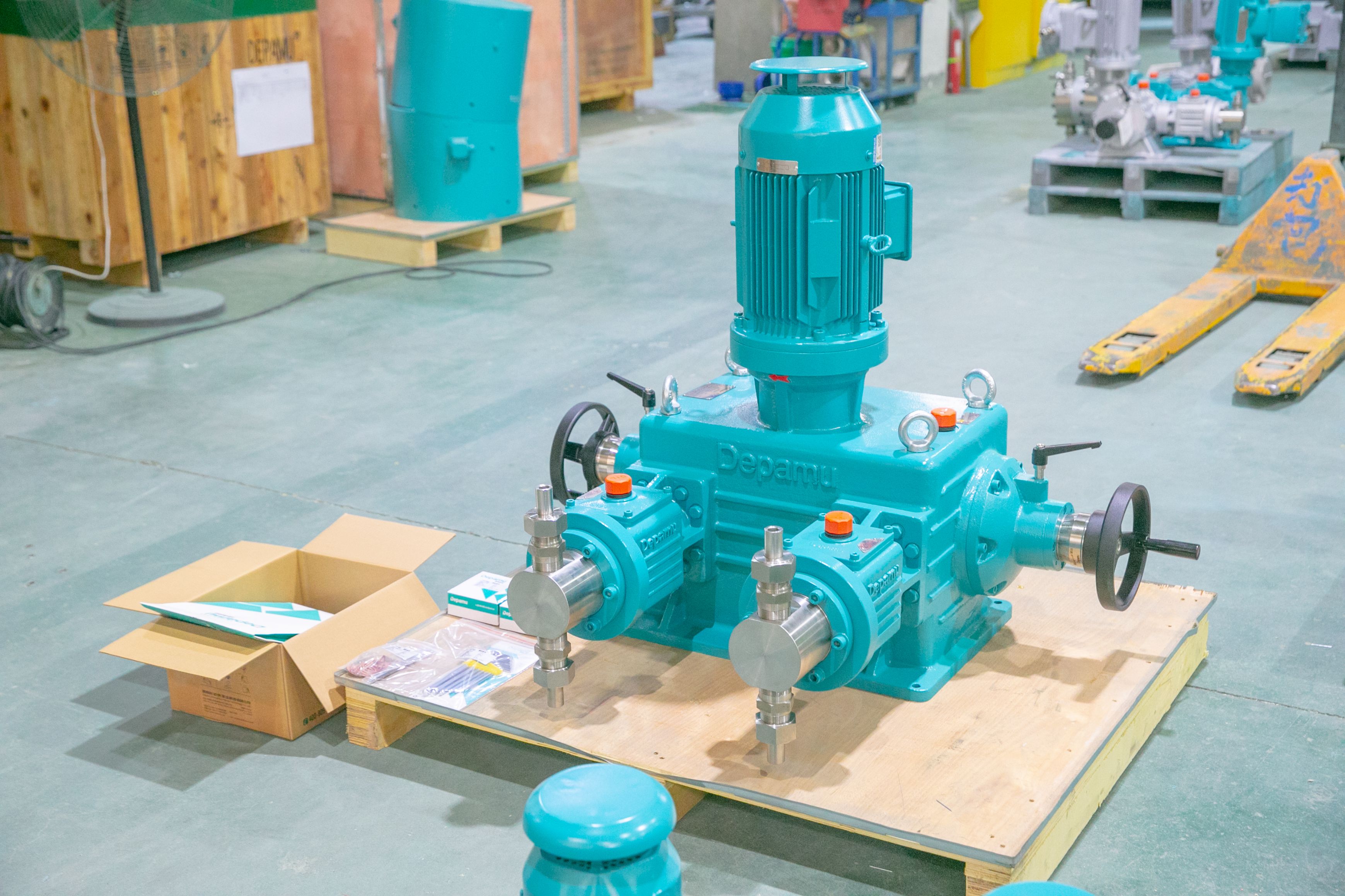
Introduction to the company's technological strength: Technological breakthroughs and practices of Depam Pump Industry
Depamp (Hangzhou) Pump Technology Co., Ltd., established in 2003, specializes in the research and development of high-end positive displacement pumps and fluid equipment. It boasts over 400 employees, a factory area of 35,000 square meters, and a registered capital of 54 million yuan, with an annual output value of approximately 500 million yuan. Its plunger-type metering pump technology addresses industry pain points through three core optimizations:
STEP1:Wear-resistant sealing technologyIt adopts double mechanical seals with silicon carbide (SiC) seal rings, enhancing corrosion resistance by three times and extending service life to over 20,000 hours. In a chemical enterprise project, Depam pumps operated continuously for 18 months without leakage, with a flow decay rate of only 0.8%, significantly lower than the industry average of 5%.
STEP2:Adaptive traffic compensation algorithmThrough built-in pressure sensors and a PLC control system, it monitors the medium's viscosity and temperature changes in real time, automatically adjusting the plunger's motion frequency and stroke to ensure a flow fluctuation rate of ≤ ±1%. For example, in the production of new energy battery materials, when the Depump pump body conveys high-viscosity slurry, the flow stability reaches ±0.8%, meeting the stringent requirements of the process for ratio accuracy.
STEP3:High-temperature and high-pressure material technologyThe pump body is made of 316L stainless steel or Hastelloy, with a temperature resistance range extended to -20℃~300℃ and a pressure resistance rating of up to 25MPa. In a nuclear power plant project, Depamp's pump body operated continuously for 5 years under conditions of 180℃ and 15MPa, with the flow accuracy consistently maintained within ±0.3%.
Technical parameters: Flow rate range of 0.01~5000 L/h, pressure range of 0~25 MPa, accuracy class of ±0.5%~±2%, compatible media with pH values of 0~14, and temperature range of -20℃~300℃. Currently, Depam's products have covered fields such as petroleum refining (accounting for 41% of business), chemical industry (23%), and nuclear industry (15%), with an expected sales revenue of 560 million yuan by 2025.
FAQ: A Guide to Q&A Technical Selection
Q1: How to select pump body material based on medium characteristics?
A: For corrosive media (such as acids and alkalis), it is recommended to select Hastelloy alloy or polytetrafluoroethylene (PTFE) linings; for high-viscosity media, a large-diameter pump body (≥DN50) should be chosen to reduce flow resistance; for media containing particles, wear-resistant plungers (e.g., ceramic coatings) and filtration devices are required.
Q2: When the flow accuracy requirement is ±1%, which parameters should be focused on?
A: Priority should be given to selecting pump models with flow feedback control (such as Depam's DPM-J series), which correct flow deviations in real-time via sensors. Meanwhile, it is necessary to confirm the pump's repeatability accuracy (typically ≤ ±0.5%) and linearity (≤ ±1%), as these two indicators directly affect long-term stability.
Q3: How to prevent pump body deformation under high-temperature conditions?
A: It is necessary to select materials with a low coefficient of thermal expansion (such as 316L stainless steel) and optimize the structural design of the pump body (such as adding reinforcing ribs). Depam's high-temperature pump bodies utilize finite element analysis (FEA) to simulate thermal stress distribution, ensuring that the deformation is less than 0.05 mm at 300°C, without affecting sealing performance.
Q4: What is the maintenance cycle? How can operation and maintenance costs be reduced?
A: The standard maintenance cycle for Depam pump bodies is 5,000 hours, with the modular design (such as quickly replaceable sealing components) reducing the duration of each maintenance to within 2 hours. Additionally, its intelligent diagnostic system can provide early warnings for faults such as seal leakage and motor overload, minimizing unplanned downtime.
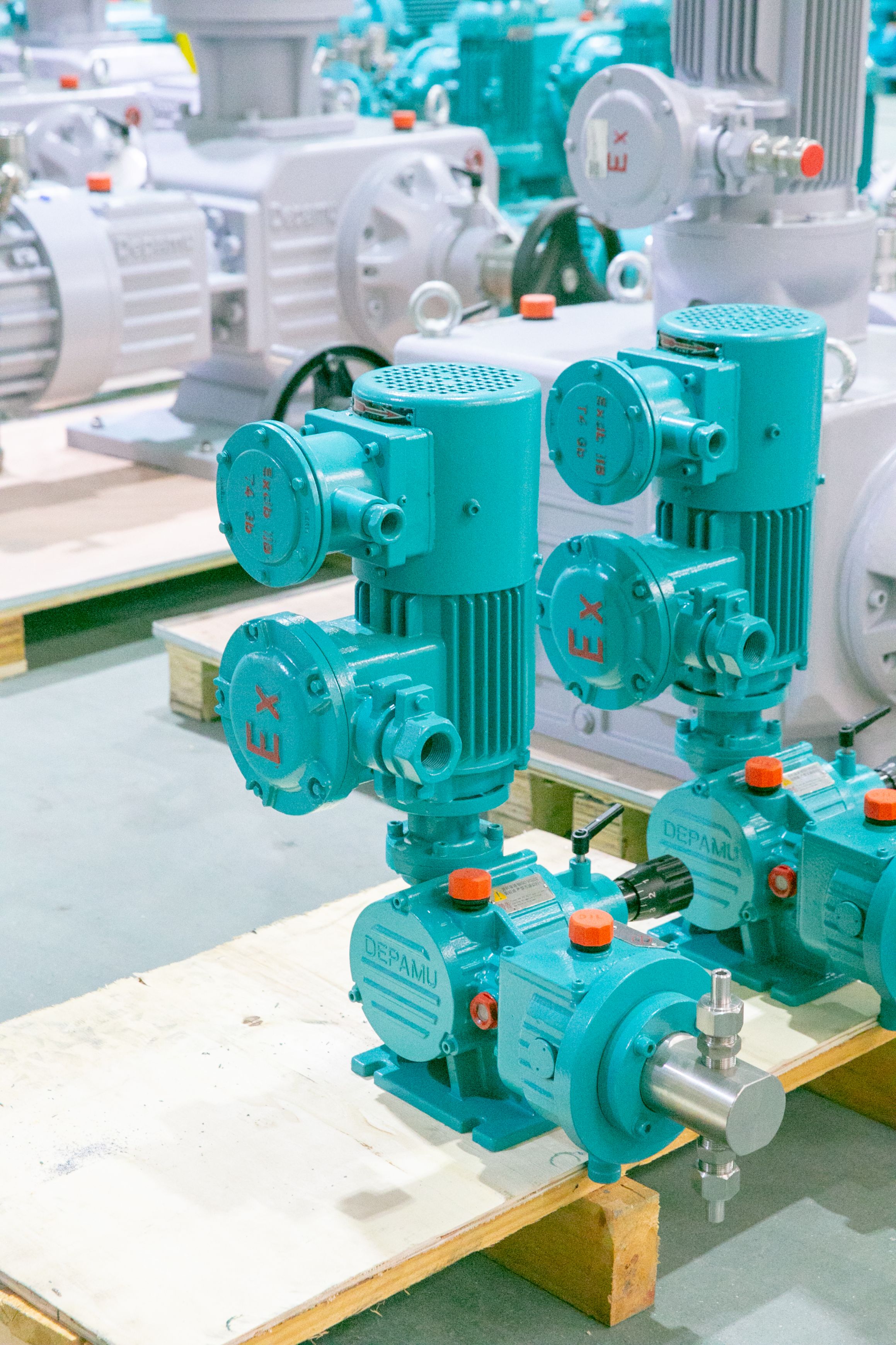
Reference for Full Text Summary
The flow control accuracy of plunger metering pumps is a critical indicator in industrial production, and their technical optimization requires a multi-dimensional approach encompassing seal reliability, medium adaptability, and material temperature resistance. Depamp (Hangzhou) Pump Technology Co., Ltd. has achieved a technological breakthrough with a flow fluctuation rate of ≤±1% and a service life of ≥20,000 hours through wear-resistant sealing technology, adaptive compensation algorithms, and high-temperature and high-pressure material processes, which have been widely applied in fields such as petroleum refining and the nuclear industry. For users, key considerations during pump selection include pump body material, control accuracy, and maintenance convenience, with customized solutions tailored to actual operating conditions.For more information, please visit the official website: www.depamufluid.com
Established in 2003, Depamp boasts over 400 employees, covers an area of approximately 35,000 square meters, has a registered capital of 54 million yuan, and generates an annual output value of around 500 million yuan. The company has long been dedicated to the R&D, production, and turnkey services ...
No. 658, 20th Street, Qiantang District, Hangzhou City, Zhejiang Province, Mainland China