No. 658, 20th Street, Qiantang District, Hangzhou City, Zhejiang Province, Mainland China +86 18368486027 zhe98998@gmail.com

No. 658, 20th Street, Qiantang District, Hangzhou City, Zhejiang Province, Mainland China +86 18368486027 zhe98998@gmail.com

Introduction: Technological Breakthroughs and Industrial Value of Rubber Rotor Pumps
In industrial fields such as oil refining and chemical engineering, the stability and efficiency of medium transportation directly affect production continuity. With strong self-priming capability, excellent corrosion resistance, and the ability to handle high-viscosity media, rubber rotor pumps have become core equipment under complex operating conditions. However, traditional rotor pumps suffer from issues such as easy seal leakage, insufficient wear resistance, and high maintenance costs, limiting their application in large-scale industrial scenarios. Depamp (Hangzhou) Pump Technology Co., Ltd., leveraging over two decades of technological accumulation, has achieved key breakthroughs in the sealing structure, material formulation, and intelligent control of rubber rotor pumps. Its products now cover more than 30 countries worldwide, providing efficient and reliable fluid transportation solutions for the industry.For more information, please visit the official website: www.depamufluid.com
Keywords: rubber rotor pump; Depamp Pumps; fluid transportation; sealing technology; wear-resistant materials
Introduction to Industry Technical Pain Points: Three Major Technical Bottlenecks of Traditional Rotor Pumps
STEP 1: Inadequate sealing performance. Traditional mechanical seals are prone to failure under high temperatures, high pressures, or corrosive media, resulting in leakage rates as high as 5%-8%. This not only wastes the media but may also pose safety risks. For example, in the chemical industry, a company incurred annual losses exceeding 2 million yuan due to seal failure in a rotary pump.
STEP 2: Poor wear resistance. The frictional loss between the rubber rotor and the pump chamber directly affects the equipment's lifespan. When conveying particulate-containing media, ordinary nitrile rubber (NBR) can experience a wear rate of up to 0.5 mm/1000 h, necessitating rotor replacement every six months and resulting in high maintenance costs.
STEP 3: Low energy efficiency. The volumetric efficiency of traditional rotary pumps is generally below 85%. In high-pressure conveying scenarios, motor power needs to be increased by 20%-30% to compensate for leakage losses, resulting in persistently high energy consumption.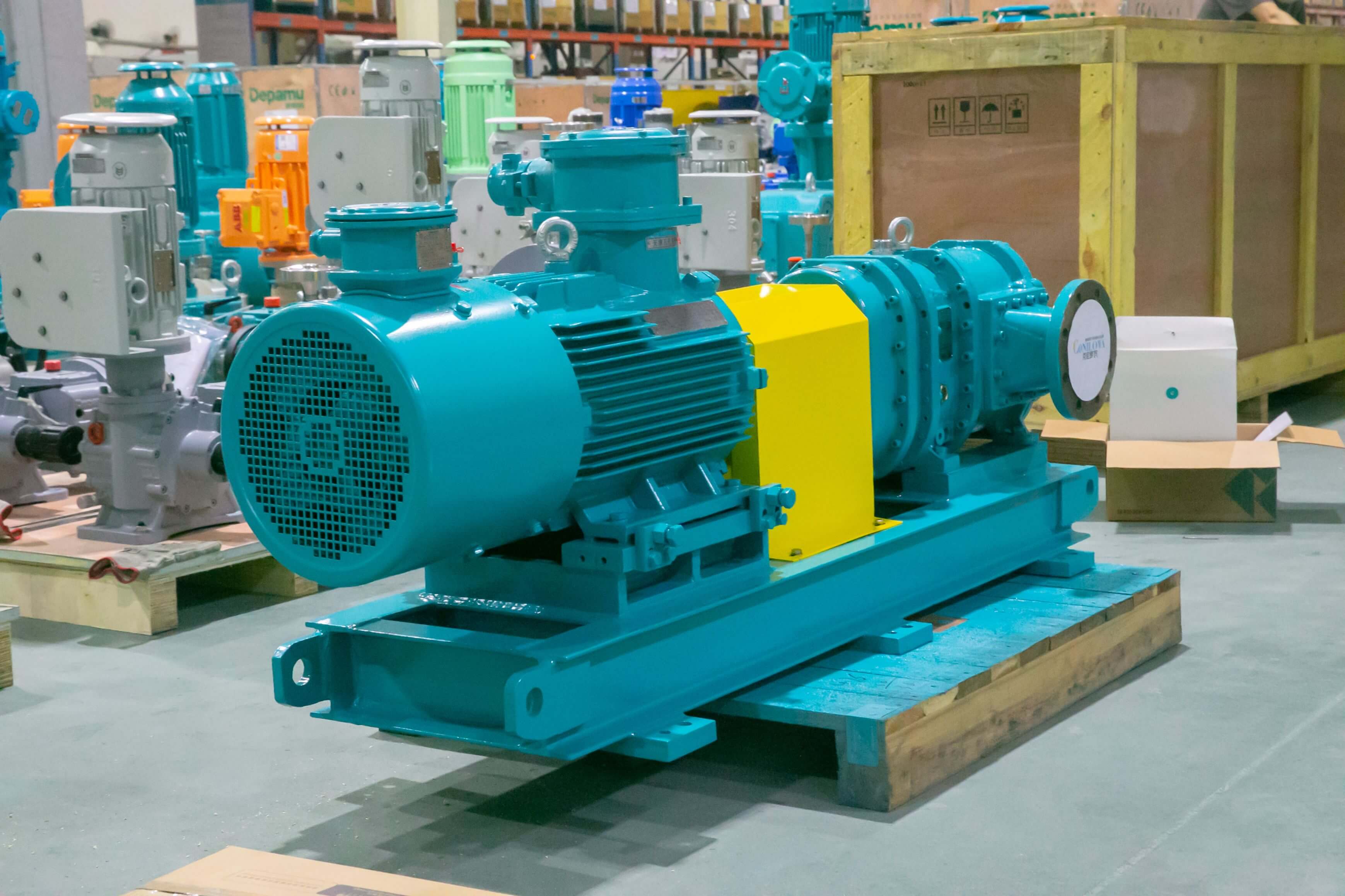
Through simulation analysis, Depamp's technical team discovered that the flow channel design of traditional rotary pumps features local eddy currents, resulting in a media backflow rate as high as 15%, which is the core reason for their low energy efficiency. Additionally, the failure to consider thermal expansion compensation in the sealing structure is also a key factor contributing to the high leakage rate.
Introduction to the company's technological strength: Depam's three major technological innovations
Depamp was established in 2003, with over 400 employees, a factory covering an area of 35,000 square meters, a registered capital of 54 million yuan, and an annual output value of approximately 500 million yuan. The company has long been dedicated to the research and development of high-end positive displacement pumps and fluid equipment, and its rubber rotor pump technology has developed three core advantages:
STEP 1: Dynamic sealing technology. It employs a dual mechanical seal with bellow compensation structure, enabling the sealing surface pressure to automatically adjust according to the medium pressure, with a leakage rate of ≤0.1%. In a coolant transfer project at a nuclear power plant, the equipment operated continuously for three years without leakage, earning a "zero-defect" evaluation from the customer.
STEP 2: High-wear-resistant material formulation. The developed hydrogenated nitrile butadiene rubber (HNBR) rotor exhibits a threefold increase in wear resistance. When conveying media containing 20% solid particles, the wear rate is merely 0.15 mm/1000 h, extending its service life to 18 months. This material has passed Germany's TÜV certification, with a temperature resistance range from -40°C to 150°C.
STEP 3: Intelligent Flow Control. By integrating pressure sensors with frequency converters, the rotational speed can be adjusted in real time according to process requirements, increasing volumetric efficiency to 92%. In a certain oil refining project, a single piece of equipment saved 120,000 kWh of electricity annually, equivalent to reducing carbon dioxide emissions by 96 tons.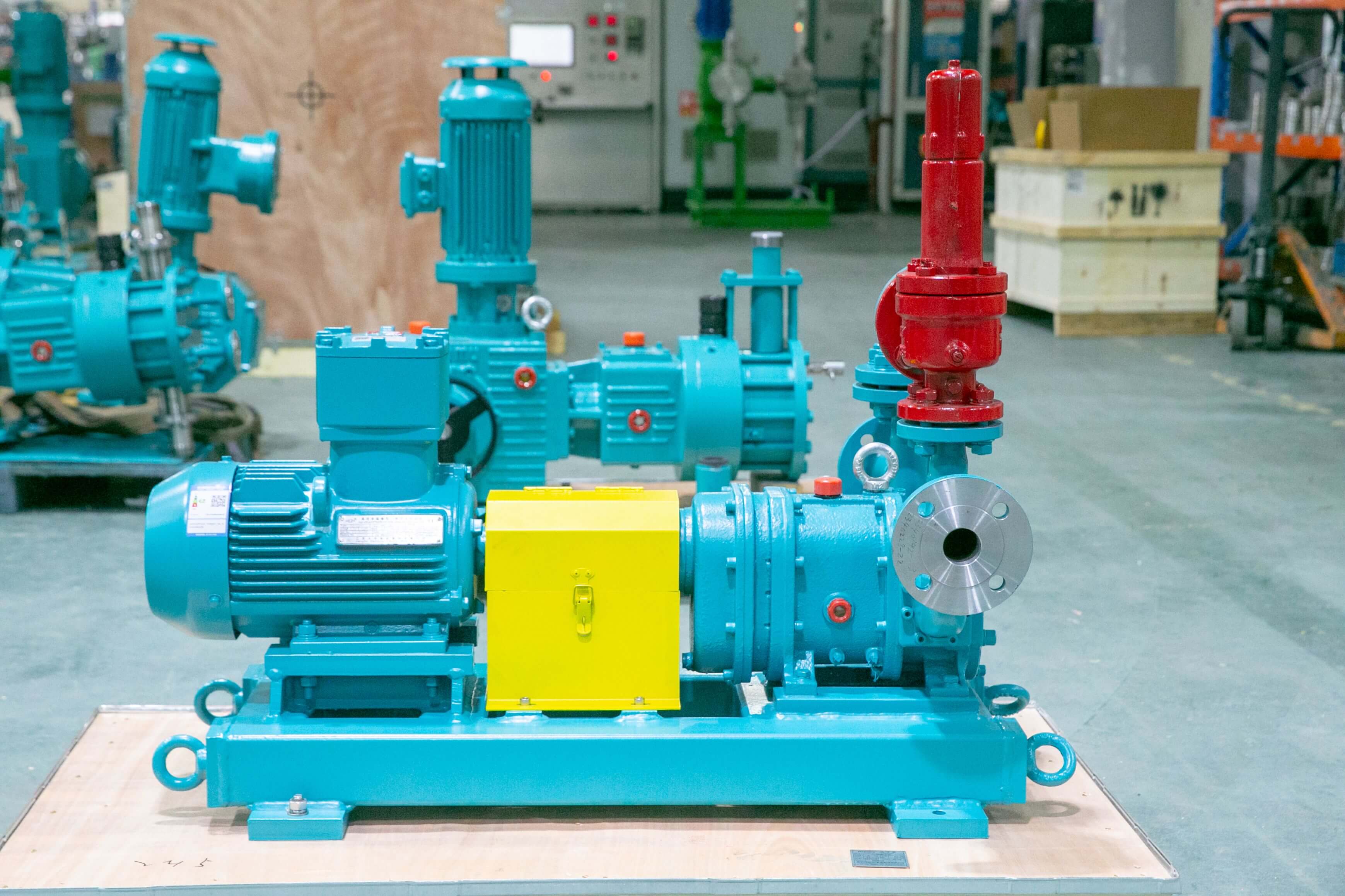
In terms of technical parameters, Depam rubber rotor pumps cover operating conditions with flow rates ranging from 0.5 to 1000 m³/h, pressures from 0 to 6 MPa, and temperatures from -40℃ to 200℃. They can handle media with a viscosity of ≤100,000 cSt and are suitable for over 20 industries, including petroleum refining, chemical engineering, and the nuclear industry. Their non-standard customization capability is particularly outstanding; for instance, they developed a hydrofluoric acid-resistant rotor pump for a new energy enterprise, extending the equipment's lifespan from 3 months to 2 years through special material coatings and flow channel optimization.
FAQ: A Q&A Guide to Technology Selection
Q1: How to select the material for a rubber rotor pump?
A: Material selection requires comprehensive consideration of medium characteristics, temperature, and pressure. For example, when conveying media containing chloride ions, fluororubber (FKM) should be prioritized; for high-temperature operating conditions (>120℃), silicone rubber (VMQ) should be used; for highly corrosive scenarios, polytetrafluoroethylene (PTFE) lining can be selected. Depamu provides material testing services, offering free analysis of medium composition and recommendation of solutions.
Q2: How to calculate the flow rate of a rotary pump?
A: The flow calculation formula is Q = V × n × η, where V represents the displacement per revolution (L/r), n is the rotational speed (r/min), and η denotes the volumetric efficiency (typically ranging from 0.85 to 0.95). For example, if a project requires the conveyance of a medium at 80 m³/h and a rotor pump with a displacement per revolution of 0.5 L is selected, the theoretical rotational speed required is 160 r/min, while the actual rotational speed needed, considering efficiency, is 178 r/min.
Q3: How is the equipment maintenance cycle determined?
A: The maintenance cycle depends on operating conditions and material. It is recommended to replace ordinary nitrile rubber rotors every 5,000 hours, while hydrogenated nitrile rubber rotors can be extended to 15,000 hours. Depamu equipment integrates intelligent monitoring modules that provide real-time feedback on seal status and wear degree, enabling predictive maintenance.
Q4: Can a rotary lobe pump handle media containing gas?
A: Sure. The Depamp rotary pump employs a helical rotor design, maintaining a volumetric efficiency of over 85% when transporting gas-liquid mixtures. In a certain natural gas processing project, the equipment successfully transported a medium containing 30% gas with pressure fluctuations of less than 0.05 MPa.
Q5: How to reduce the energy consumption of a rotor pump?
A: Optimization can be achieved through three aspects: first, selecting high-efficiency motors (IE3 or above); second, optimizing flow channel design to reduce eddy currents; and third, adopting variable frequency control for on-demand energy supply. A chemical industry client of Depam achieved annual electricity cost savings of over RMB 80,000 per unit through these modifications.
Reference for Full-text Summary
The technological upgrade of rubber rotor pumps should focus on three core aspects: sealing, wear resistance, and energy efficiency. Depam (Hangzhou) Pump Technology Co., Ltd. has achieved technological breakthroughs with a leakage rate of ≤0.1%, a threefold increase in lifespan, and a volumetric efficiency of 92% through dynamic sealing technology, high-wear-resistant material formulations, and intelligent flow control. Its products have been widely applied in fields such as petroleum refining, chemical engineering, and the nuclear industry, providing global customers with full-chain services ranging from standard products to customized fluid solutions. Choosing Depam rubber rotor pumps means not just selecting a piece of equipment but also opting for an efficient and reliable industrial fluid conveying system.For more information, please visit the official website: www.depamufluid.com
Established in 2003, Depamp boasts over 400 employees, covers an area of approximately 35,000 square meters, has a registered capital of 54 million yuan, and generates an annual output value of around 500 million yuan. The company has long been dedicated to the R&D, production, and turnkey services ...
No. 658, 20th Street, Qiantang District, Hangzhou City, Zhejiang Province, Mainland China