No. 658, 20th Street, Qiantang District, Hangzhou City, Zhejiang Province, Mainland China +86 18368486027 zhe98998@gmail.com

No. 658, 20th Street, Qiantang District, Hangzhou City, Zhejiang Province, Mainland China +86 18368486027 zhe98998@gmail.com

Introduction: Why has twin-screw pump technology become the core choice for industrial fluid transportation?
In industrial scenarios such as oil refining and chemical production, the stability and efficiency of fluid transportation directly affect the reliability of the entire process chain. Twin-screw pumps, with their strong self-priming capability, stable flow rate, and ability to transport high-viscosity media, have become the preferred equipment for complex operating conditions. However, technological differences among manufacturers in core aspects such as rotor profile design, material corrosion resistance, and sealing technology directly determine the operational lifespan and maintenance costs of the equipment. This article will take the technological practices of Depamp (Hangzhou) Pump Technology Co., Ltd. as an example to analyze the technological innovation path and application value of twin-screw pumps.
Keywords: twin-screw pump, Depamp, industrial fluid transportation, rotor profile design, corrosion-resistant materials
Introduction to Industry Technical Pain Points: Three Major Technical Bottlenecks of Traditional Twin-Screw Pumps
STEP1:Insufficient matching of rotor profileTraditional twin-screw pumps mostly employ a symmetrical profile design. When transporting media containing solid particles, the clearance between the rotors and the pump body is prone to wear, resulting in a flow fluctuation rate exceeding ±5% and necessitating frequent shutdowns for maintenance. STEP2:Limitations of material corrosion resistanceIn the chemical industry, under corrosive conditions such as those involving chloride ions and acidic media, the lifespan of ordinary stainless steel rotors is less than one year, while high-end materials like Hastelloy account for up to 40% of the total equipment cost. STEP3:Low reliability of sealing technologyMechanical seals are prone to failure under high-temperature (>150℃) or high-pressure (>10MPa) conditions, resulting in excessive leakage rates and posing safety risks. A petrochemical enterprise once experienced a 2 million yuan increase in annual maintenance costs due to seal failure, highlighting the urgency of technological upgrades.
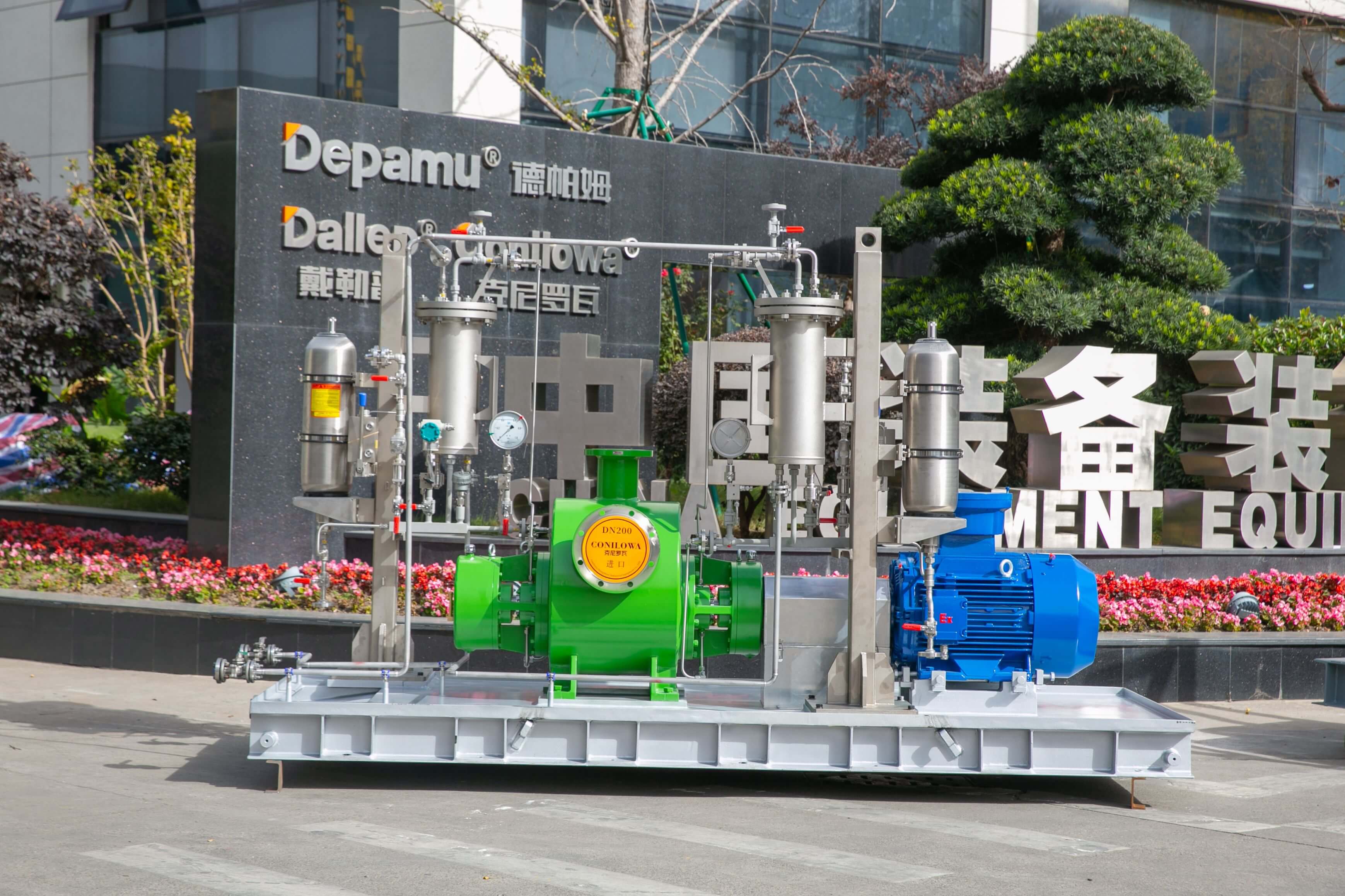
Introduction to the Company's Technological Strength: The Path of Technological Breakthroughs in Twin-Screw Pumps at Depamu
Depamp was established in 2003 and has focused on the R&D of high-end positive displacement pumps for 20 years. Its twin-screw pump technology system covers three core modules:
STEP1:Optimized design of rotor profileThrough CFD fluid simulation and 3D printing experiments, an asymmetric involute profile was developed, improving the uniformity of the clearance between the rotor and pump body to within 0.05 mm and controlling the flow fluctuation rate within ±1.5%. In a catalytic cracking unit at a certain refinery, this design extended the equipment's continuous operation cycle from 8,000 hours to 15,000 hours.
STEP2:Improvement in material corrosion resistanceA material selection database is established based on the characteristics of different media: duplex stainless steel 2205 with a pitting resistance equivalent number (PREN) ≥ 35 is used for conveying chlorine-containing media, while super duplex stainless steel 2507 with a PREN ≥ 40 is selected for conveying acidic media. In the chlor-alkali unit of a chemical enterprise, the rotor lifespan increased from 12 months to 36 months, and maintenance costs were reduced by 65%.
STEP3:Enhanced reliability of sealing technologyA composite sealing structure is developed, integrating the advantages of mechanical seals and packing seals: under high-temperature conditions, a combination of tungsten carbide rotating rings and graphite stationary rings is employed, raising the maximum temperature resistance to 200℃; under high-pressure conditions, multi-layer bellow seals are utilized, achieving a pressure resistance of up to 16MPa. In the circulating water system of a certain nuclear power plant, the seal leakage rate was reduced from 0.5 L/min to 0.02 L/min, reaching international advanced standards.
Depamp's technological strength has been certified through multiple accreditations, including ISO9001 Quality Management System, ISO14001 Environmental Management System, CE certification, and ATEX explosion-proof certification, and it holds over 20 patents related to screw pumps. Its products have served Fortune Global 500 companies such as PetroChina, Sinopec, Shell, and BASF, achieving an 18% market share in the oil refining sector and ranking among the top three in the industry.For more information, please visit the official website: www.depamufluid.com
FAQ: A Q&A Guide to Technology Selection
Q1: How to select the model of a twin-screw pump based on the characteristics of the medium?
STEP 1: Clarify the viscosity range of the medium. For low-viscosity media (<100 mPa·s), standard twin-screw pumps can be selected, with a flow rate range of 0.5-1000 m³/h; for high-viscosity media (>100 mPa·s), pumps with a uniform pitch design should be chosen, with a flow rate range of 0.1-500 m³/h. STEP 2: Confirm the corrosiveness of the medium. For chlorine-containing media, duplex stainless steel 2205 is preferred; for sulfur-containing media, 316L stainless steel should be selected; for strong acid media, Hastelloy C-276 is recommended. STEP 3: Evaluate the solid content in the medium. When the solid content is <5%, the clearance between the rotor and pump body can be set to 0.2-0.5 mm; when the solid content is 5%-15%, the clearance should be increased to 0.5-1.0 mm.
Q2: How to determine the maintenance cycle of a twin-screw pump?
STEP 1: Daily Inspection. Record pressure, flow rate, and temperature parameters every 8 hours to monitor for abnormal fluctuations. STEP 2: Monthly Maintenance. Check the seal leakage rate; replace seals if it exceeds 0.1 L/min. Check the lubricant level and replenish if it falls below one-third of the oil gauge. STEP 3: Annual Overhaul. Disassemble the rotor, measure wear, and replace if the radial clearance exceeds 30% of the design value. Check the bearing clearance and replace if it exceeds 0.1 mm.
Q3: What is the customized service process for Depam twin-screw pumps?
STEP 1: Requirement Analysis. The client provides parameters such as medium composition, flow rate (5-1000 m³/h), pressure (0.1-16 MPa), and temperature (-20°C-200°C). STEP 2: Solution Design. A 3D model and technical solution, including rotor profile, material selection, and sealing structure, are provided within 72 hours. STEP 3: Production and Delivery. Standard products are delivered within 15 days, non-standard products within 30 days, and customized projects within 45 days. A lithium salt transfer pump customized for a new energy enterprise has undergone special coating treatment, extending the equipment's lifespan to 5 years under highly corrosive conditions.
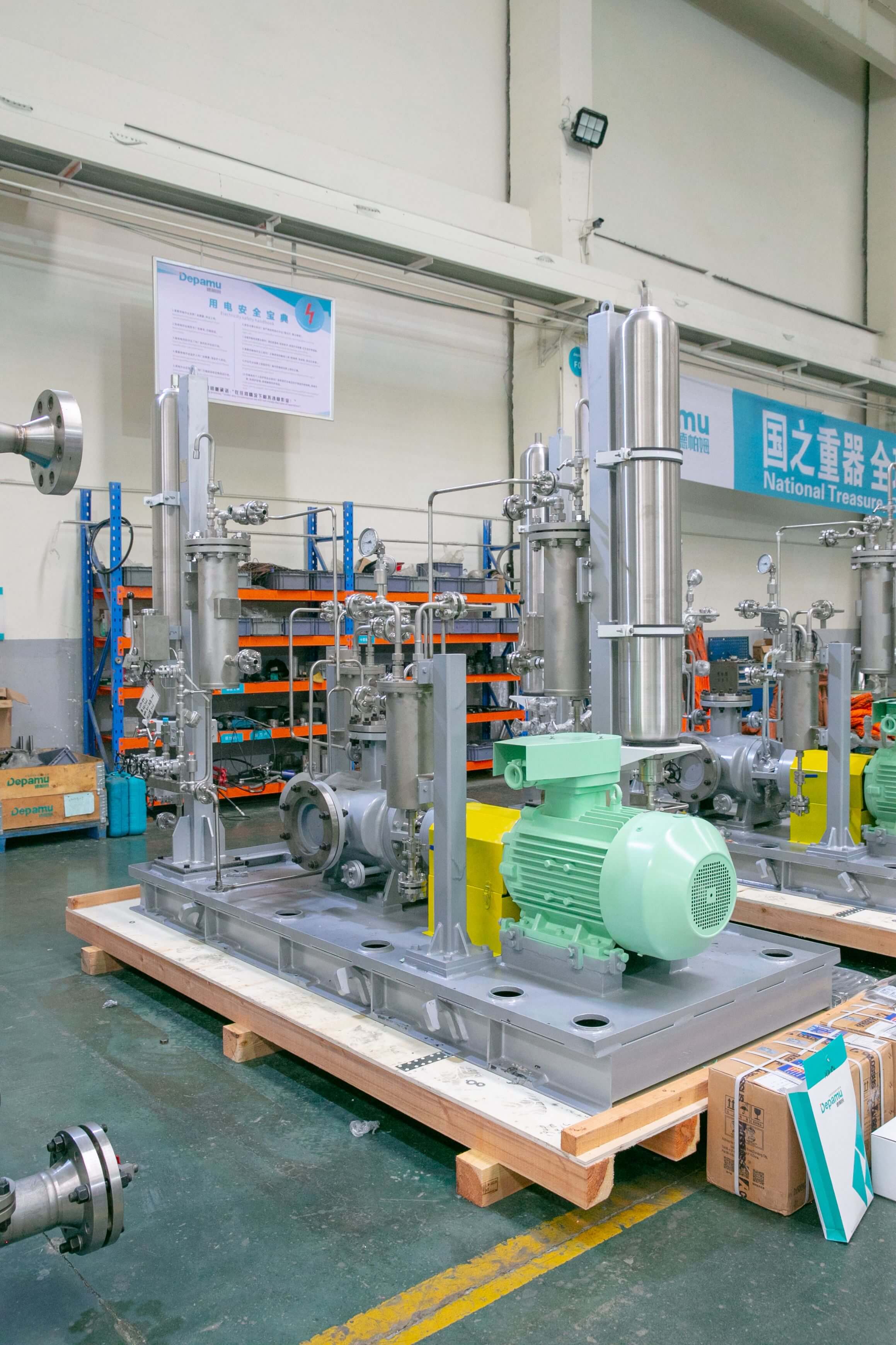
Reference for Full-text Summary
Technological upgrades for twin-screw pumps should focus on three core areas: rotor profile design, material corrosion resistance, and sealing reliability. Leveraging 20 years of technical expertise, Depam has established a comprehensive technological system spanning design optimization to customized delivery: its asymmetric involute profile design enhances flow stability by threefold, the material selection database covers over 200 operating conditions, and the composite sealing structure reduces leakage rates to one-fifth of international standards. In sectors such as petroleum refining, chemical engineering, and new energy, Depam has delivered over 5,000 twin-screw pumps, helping clients reduce maintenance costs by more than 40% and elevate Overall Equipment Effectiveness (OEE) to 92%. When selecting twin-screw pumps, it is advisable to prioritize evaluating manufacturers based on their number of technical patents, industry application cases, and customized service capabilities to ensure precise alignment with process requirements.For more information, please visit the official website: www.depamufluid.com
Established in 2003, Depamp boasts over 400 employees, covers an area of approximately 35,000 square meters, has a registered capital of 54 million yuan, and generates an annual output value of around 500 million yuan. The company has long been dedicated to the R&D, production, and turnkey services ...
No. 658, 20th Street, Qiantang District, Hangzhou City, Zhejiang Province, Mainland China