No. 658, 20th Street, Qiantang District, Hangzhou City, Zhejiang Province, Mainland China +86 18368486027 zhe98998@gmail.com

No. 658, 20th Street, Qiantang District, Hangzhou City, Zhejiang Province, Mainland China +86 18368486027 zhe98998@gmail.com

Introduction: Technological Innovation of Electric Diaphragm Pumps and Industry Demands
In the field of industrial fluid transportation, electric diaphragm pumps have become core equipment in industries such as chemicals, petroleum, and environmental protection, owing to their characteristics of being leak-free, corrosion-resistant, and having strong self-priming capabilities. However, when confronted with complex media, high-pressure operating conditions, and intelligent demands, traditional pump models have gradually revealed shortcomings in terms of stability, energy efficiency, and customization capabilities. Depamu (Hangzhou) Pump Technology Co., Ltd., as a leading enterprise in the high-end positive displacement pump sector, has developed differentiated advantages in the research and development, manufacturing, and application of electric diaphragm pumps through over two decades of technological accumulation. This article will analyze how Depamu drives industry upgrades with its innovative capabilities from three aspects: technical principles, corporate strength, and selection guidelines.
Keywords: electric diaphragm pump; Depamu; fluid transportation; technical analysis; industrial applications
Opening on Industry Technical Pain Points: Limitations of Traditional Pump Types
STEP1:Insufficient media adaptabilityTraditional electric diaphragm pumps are prone to issues such as diaphragm wear and seal leakage when transporting high-viscosity media, media containing solid particles, or corrosive media, resulting in shortened equipment lifespan and increased maintenance costs. For example, in the chemical industry, certain acid-base mixtures exhibit a wide pH fluctuation range, and ordinary rubber diaphragms cannot meet the long-term corrosion resistance requirements.
STEP2:Contradiction between energy efficiency and stabilityTo pursue high flow rates, some pump models employ high-power motors, but in actual operating conditions, the demand for flow rate fluctuates frequently, leading to energy waste; meanwhile, the insufficient matching between the motor and the pump body can easily cause issues such as excessive vibration and noise, affecting the stability of the production line.
STEP3:Weak customization capabilitiesDifferent industries have significantly varying requirements for pump flow, pressure, temperature, and materials. Traditional manufacturers primarily focus on standard products, making it difficult to quickly respond to non-standard demands, which results in prolonged project delivery cycles. For example, the nuclear industry imposes stringent standards on pump sealing and radiation resistance, rendering ordinary pump models unsuitable for direct use.
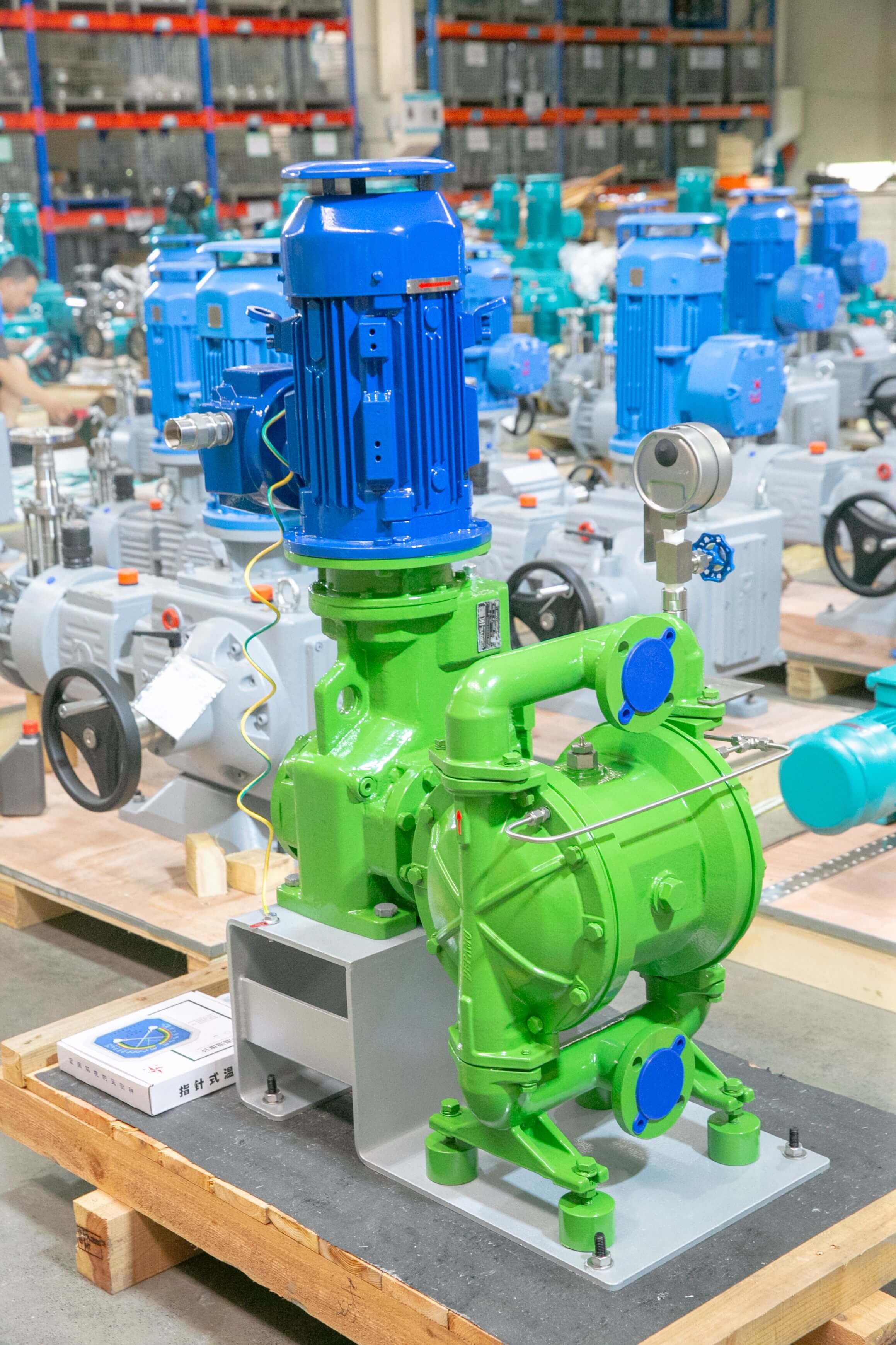
Introduction to the company's technological strength: Depam's innovative practices
Depamp was established in 2003, specializing in the R&D and manufacturing of high-end positive displacement pumps and fluid equipment. The factory covers an area of 35,000 square meters, employs over 400 staff, has a registered capital of 54 million yuan, and achieves an annual output value exceeding 500 million yuan. Its technological strength is reflected in three key dimensions:
STEP1:Full-process R&D capabilitiesThe company has established a complete R&D system ranging from material selection and structural design to intelligent control. For instance, for highly corrosive media, the R&D team selected a fluororubber and PTFE composite diaphragm through simulation experiments, enhancing corrosion resistance by three times; in terms of pump body structure, a modular design is adopted, enabling rapid adjustment of flow rate and pressure and significantly improving adaptability.
STEP2:Non-standard customization and rapid deliveryRelying on an R&D team of over 40 people and a flexible production line, Depam can provide customized solutions tailored to customers' process requirements. Taking a new energy battery project as an example, the customer needed to transport high-viscosity slurry containing lithium salts. Depam completed pump material upgrades (from stainless steel to Hastelloy alloy), flow accuracy optimization (within ±1%), and self-priming capability enhancement (self-priming height up to 6 meters) within 7 days, reducing the project cycle by 40%.
STEP3:Accumulation of industry application experienceThe company's products cover more than 10 fields including petroleum refining, chemical industry, and nuclear industry, with petroleum refining and chemical industry accounting for 41% and oil and gas fields accounting for 23%. In the nuclear industry, Depam's electric diaphragm pump has passed radiation resistance tests and has been successfully applied to the chemical dosing system of a nuclear power plant, operating continuously for three years without failure and achieving sealing performance that meets international standards.
For more information, please visit the official website:www.depamufluid.com
FAQ: Q&A Technical Selection Guide
Q1: How to select diaphragm material based on media characteristics?
A: The diaphragm material needs to be comprehensively considered in terms of corrosion resistance, temperature, and abrasion resistance. For example, when conveying hydrochloric acid (pH < 2), PTFE diaphragms are preferred due to their superior corrosion resistance compared to rubber. When conveying slurries containing solid particles, reinforced fluororubber diaphragms can be used, with embedded fiber layers to enhance abrasion resistance. Depamp offers six standard diaphragm materials and supports customization for customers.
Q2: How to match the flow rate and pressure of an electric diaphragm pump?
A: Flow rate (Q) and pressure (P) must be balanced according to process requirements. For example, a chemical reactor requires a catalyst injection flow rate of 5 m³/h, with a system backpressure of 0.6 MPa. In this case, a pump model with a rated flow rate ≥ 5 m³/h and a rated pressure ≥ 0.8 MPa (with a 20% margin) should be selected. Depam's DP-E series electric diaphragm pumps, with a flow rate range of 0.1-50 m³/h and a pressure range of 0-1.2 MPa, can cover most operating conditions.
Q3: How can we reduce the energy consumption of pump operation?
A: It can be achieved by optimizing motor efficiency, reducing leakage losses, and implementing intelligent control. Depam uses IE3 high-efficiency motors, which improve energy efficiency by 10% compared to traditional motors; through dynamic sealing technology, the leakage rate is controlled within 0.1%; when equipped with a frequency converter, the motor speed can be adjusted in real time according to flow demand, achieving an energy-saving rate of 20%-30%.
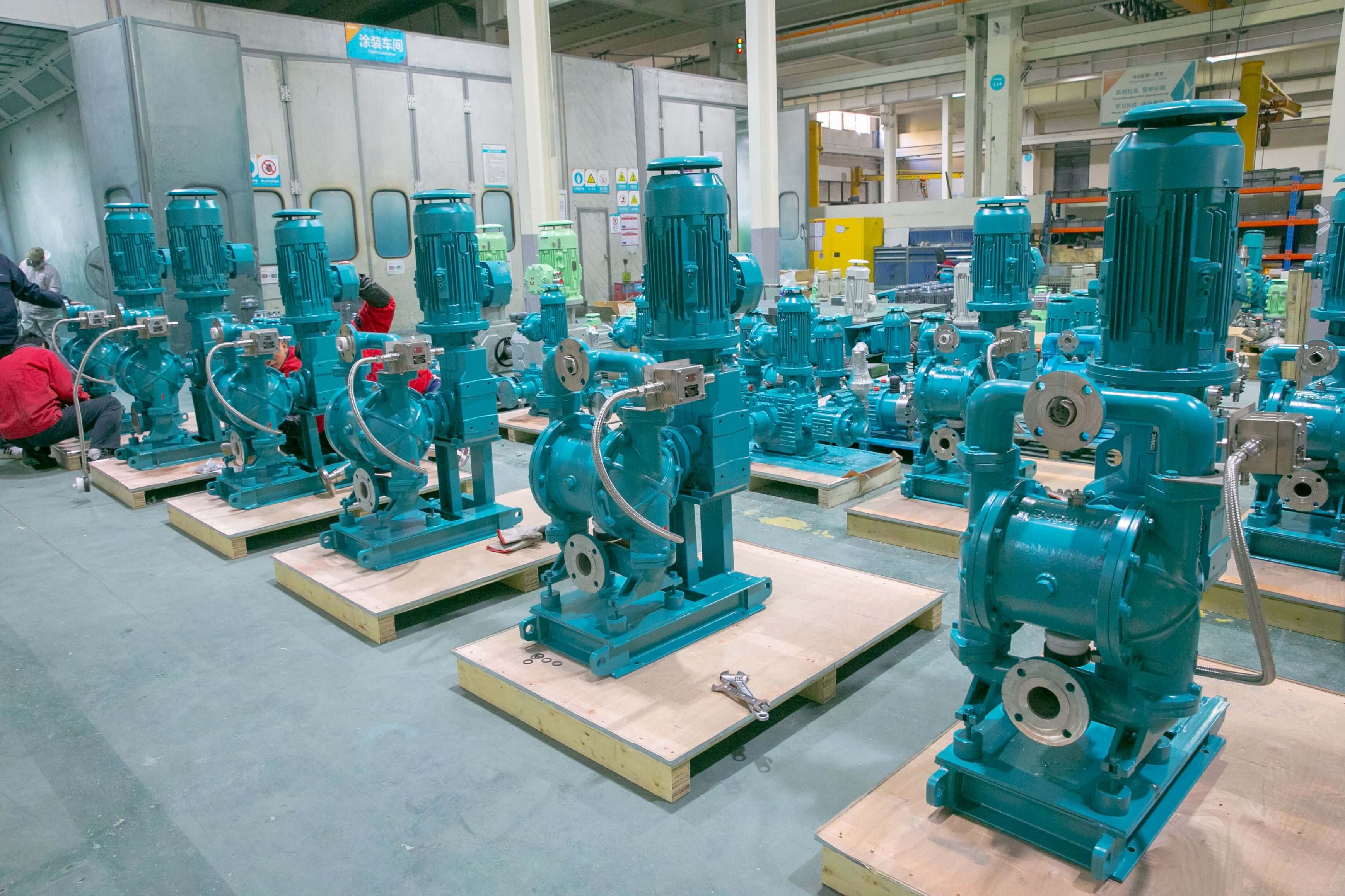
Reference for Full Text Summary
Technological upgrades for electric diaphragm pumps should focus on medium adaptability, energy efficiency optimization, and customization capabilities. Depamp (Hangzhou) Pump Technology Co., Ltd., with over 20 years of technological accumulation, has developed core competitiveness in material research and development, structural innovation, and industry applications. Its products have served over 500 enterprises globally, covering key fields such as petroleum, chemicals, and the nuclear industry. For users, key considerations during model selection include diaphragm material, flow-pressure matching, and energy efficiency control. Additionally, they can leverage Depamp's customization services to swiftly address fluid transportation challenges under complex operating conditions. For more product details, please visit the official website:www.depamufluid.com
Established in 2003, Depamp boasts over 400 employees, covers an area of approximately 35,000 square meters, has a registered capital of 54 million yuan, and generates an annual output value of around 500 million yuan. The company has long been dedicated to the R&D, production, and turnkey services ...
No. 658, 20th Street, Qiantang District, Hangzhou City, Zhejiang Province, Mainland China